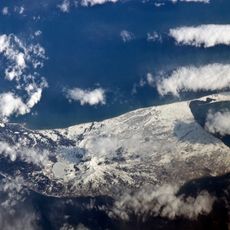
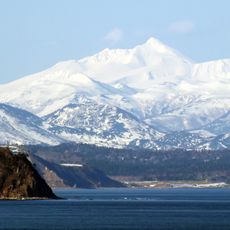
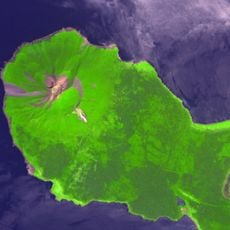
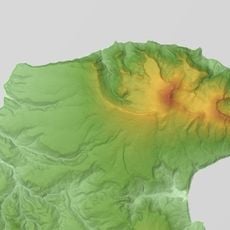
Bogdan Khmelnitsky, Volcanic peak in Kurilsky District, Russia
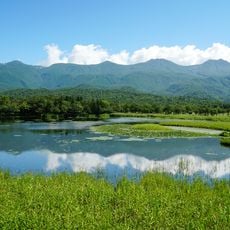
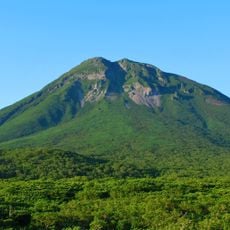
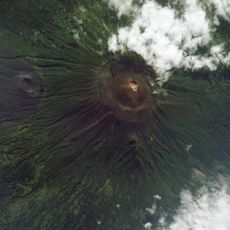
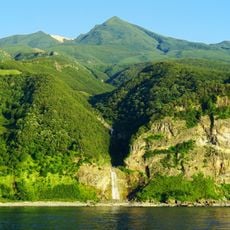
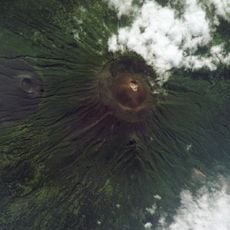
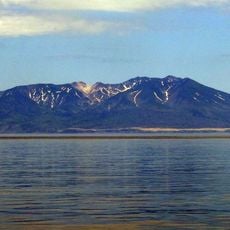
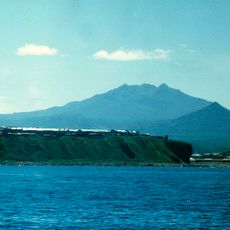
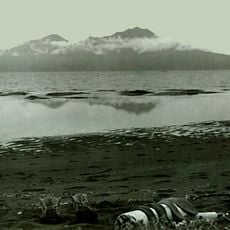
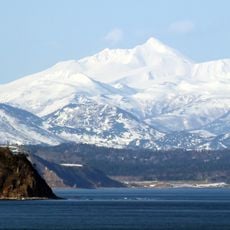
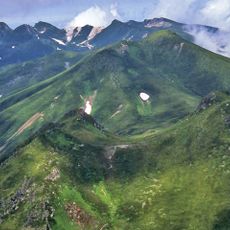
Bogdan Khmelnitsky is a Holocene stratovolcano on the Chirip Peninsula of Iturup Island in the Kuril archipelago. It rises to 1585 meters and is composed mainly of basalt, with andesite also present. It forms the Dvugorby Range together with the neighbouring Chirip volcano, 4 km to the north.
The territory changed from Russian to Japanese control through the Treaty of Shimoda in 1855 and returned to Russian administration in 1945. These boundary shifts shaped the island's political history and its current status remains contested between the two nations.
The volcano is named after Bohdan Khmelnytsky, the 17th-century hetman who led the uprising against Polish rule. Its Japanese name, Chirippusan, means "South Chirip", distinguishing it from the neighbouring Chirip volcano 4 km to the north. In 1948 the Soviet geologist Georgy Vlasov found and photographed pictographs in the caldera; from 1979 the linguist Yuri Knorozov worked on deciphering them as early forms of Ainu writing.
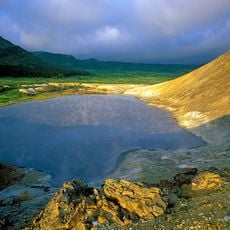
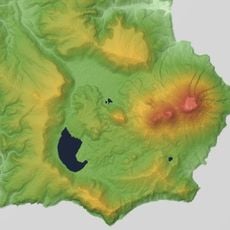
The volcano sits on the Chirip peninsula in the southern part of the Dvugorby ridge, about 4 km south of Chirip volcano. Fumarolic activity shows on the south-western slope and near the foot of Goryachaya mountain. Reaching Iturup requires permits and a long journey from the Russian mainland; no facilities exist on the slopes.
The mountain slopes host specialized plant species that thrive in mineral-rich volcanic soils and vary by elevation zone. This botanical diversity makes the area interesting for nature observers but often goes unnoticed by visitors.
The community of curious travelers
AroundUs brings together thousands of curated places, local tips, and hidden gems, enriched daily by 94,362 contributors worldwide.