See the monuments around you in AROpen chests in the app
Around Us is built for your phone — point your camera at the streets and discover the monuments and places around you in augmented reality.Around Us is built for your phone — chests unlock when you walk, explore and capture nearby places.
Across France, you'll find places dedicated to World War I that tell the story of what happened between 1914 and 1918. These are not just buildings or collections—they are where the war actually took place. You can visit monuments that stand on former battlefields, walk through military cemeteries with thousands of graves, explore old forts that once defended towns, and descend into underground quarries where soldiers took shelter. Museums and information centers help you understand the major battles, including Verdun and the Somme, two of the deadliest confrontations of the war. Through objects, photographs, letters, and documents on display, you learn about the soldiers who fought there—French troops, Germans, British, Americans, and others who came from many countries. These sites preserve what remains from the battles themselves: the trenches, the fortifications, and the personal belongings left behind. Together, they create a portrait of what soldiers and civilians experienced during those four years of fighting.
Across France, you'll find places dedicated to World War I that tell the story of what happened between 1914 and 1918. These are not just buildings or collections—they are where the war actually took place. You can visit monuments that stand on former battlefields, walk through military cemeteries with thousands of graves, explore old forts that once defended towns, and descend into underground quarries where soldiers took shelter. Museums and information centers help you understand the major battles, including Verdun and the Somme, two of the deadliest confrontations of the war. Through objects, photographs, letters, and documents on display, you learn about the soldiers who fought there—French troops, Germans, British, Americans, and others who came from many countries. These sites preserve what remains from the battles themselves: the trenches, the fortifications, and the personal belongings left behind. Together, they create a portrait of what soldiers and civilians experienced during those four years of fighting.
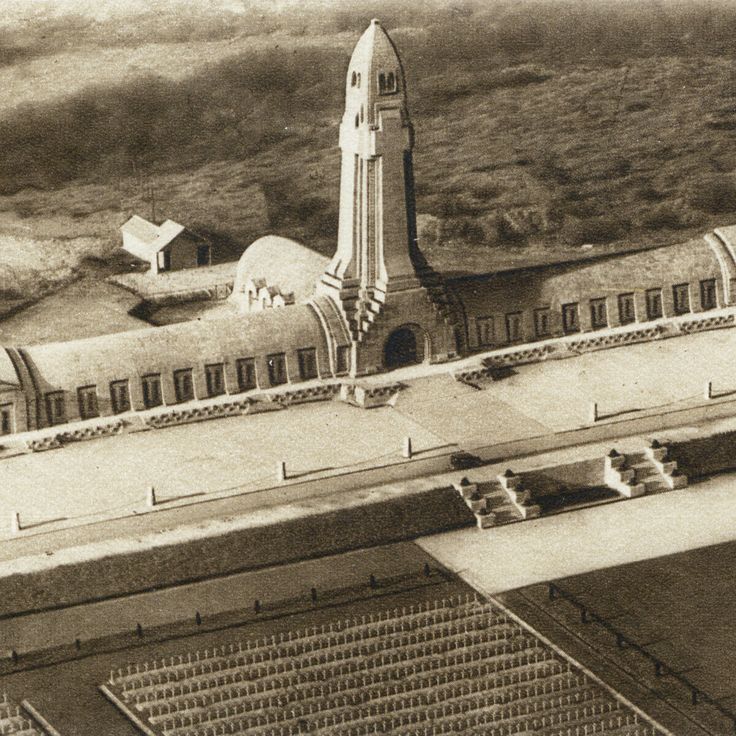
The Douaumont Ossuary is a memorial that holds the remains of 130,000 French and German soldiers who fell during the Battle of Verdun in 1916. Completed in 1932, this monument stands as a witness to one of the fiercest confrontations of World War I. The long structure, with its central tower, rises above the former battlefields and marks a cemetery where thousands of white crosses spread across the hills.
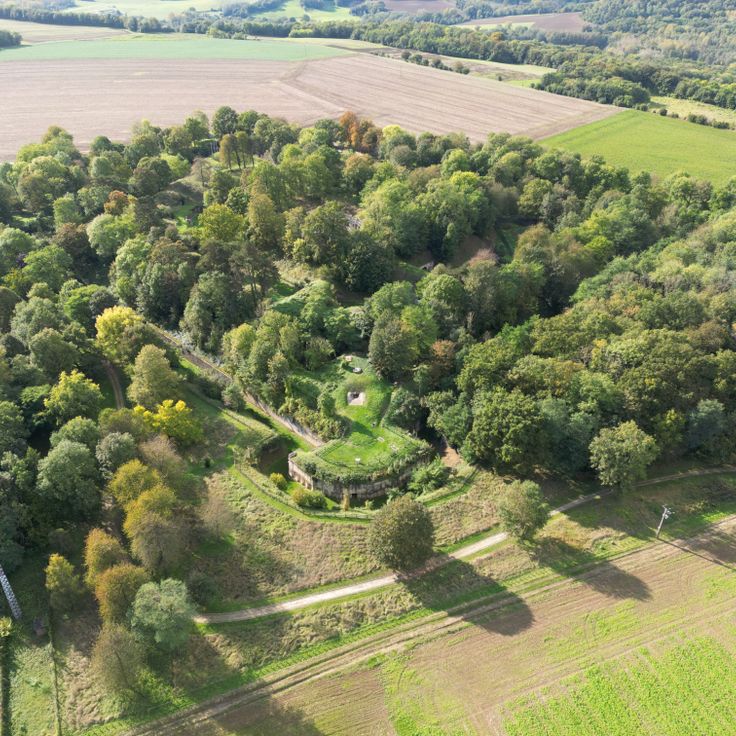
This military installation from the late 19th century protected the towns along the Aisne valley. The fort preserves casemates, galleries, and military facilities that show the layout of a French defense position before the 1914 war. The museum displays equipment, uniforms, and personal items of soldiers who served during the fighting on the Western Front. Guided tours explain garrison life and the role of the site in World War I.
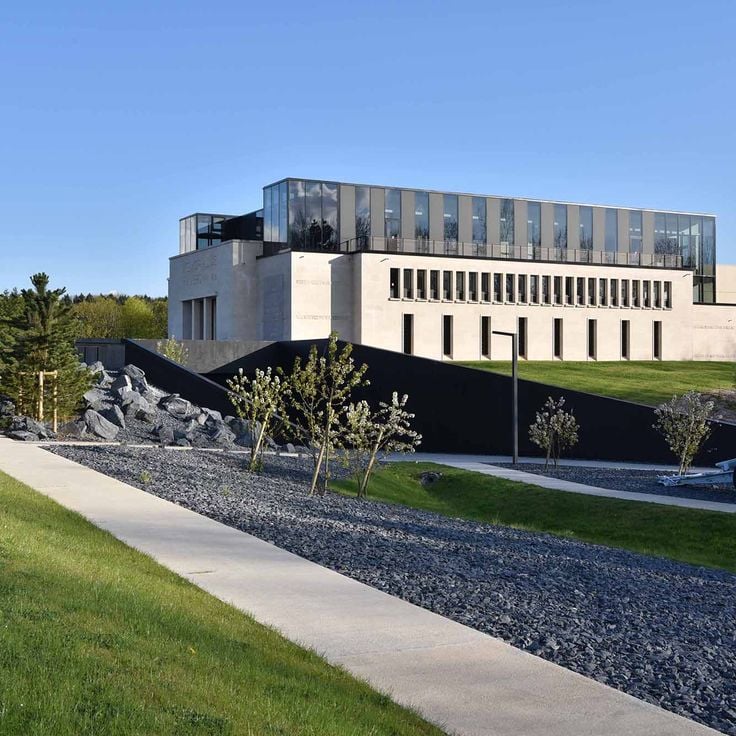
The Verdun Memorial documents the battle of 1916 through uniforms, weapons, documents and personal items of soldiers. The building presents three levels of permanent exhibitions about the French and German sides of the fighting. Visitors see equipment, letters and photographs from the time of the offensive and discover the life of men in the trenches.
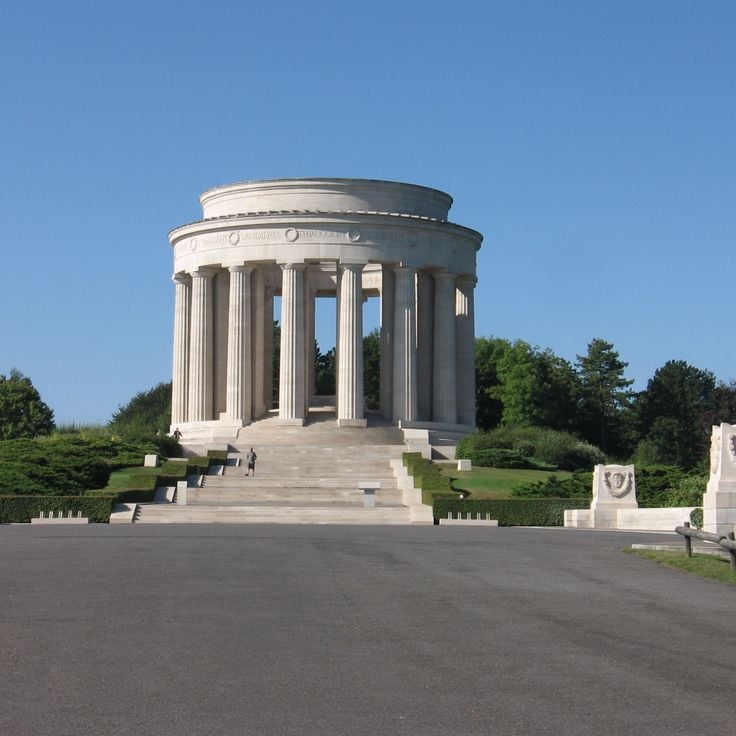
The American Memorial of Montsec was built in 1932 from white limestone to honor the American soldiers who fought in this region during World War I. This monument is part of the French memorial sites documenting the war of 1914 to 1918 and stands on a hilltop that offers views of the surrounding countryside. A circular colonnade surrounds a central plaza where an orientation table shows the main military operations carried out by American forces in the area. The design is simple, with columns and arches that give the memorial a solemn feel. From here you can see the plains and hills where battles once took place.
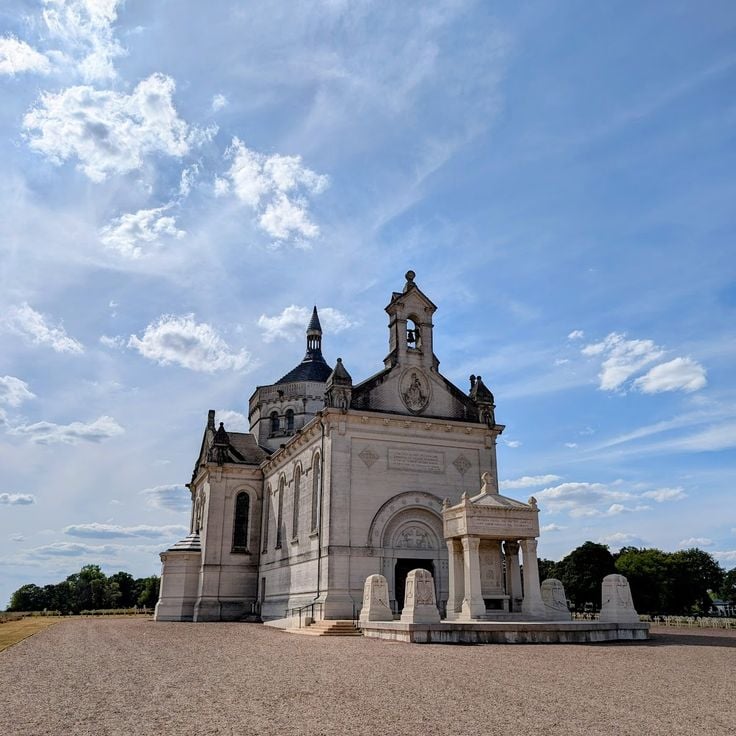
This French military cemetery covers the hills above Ablain-Saint-Nazaire and recalls the battles that spread across the Artois region from 1914 to 1915. The Notre-Dame-de-Lorette National Necropolis gathers over 42,000 graves in long white rows, a basilica in Byzantine style, and a lantern tower rising 170 feet (52 meters) into the air. Visitors walk between the headstones, each carved with the names of fallen soldiers. From a distance, the tower is visible across the plain and serves as a landmark. The basilica preserves memorial plaques and inscriptions. On clear days, the hilltop offers views over the surrounding fields where the battles took place. The grounds remain a place of silence and remembrance for the losses of the First World War.
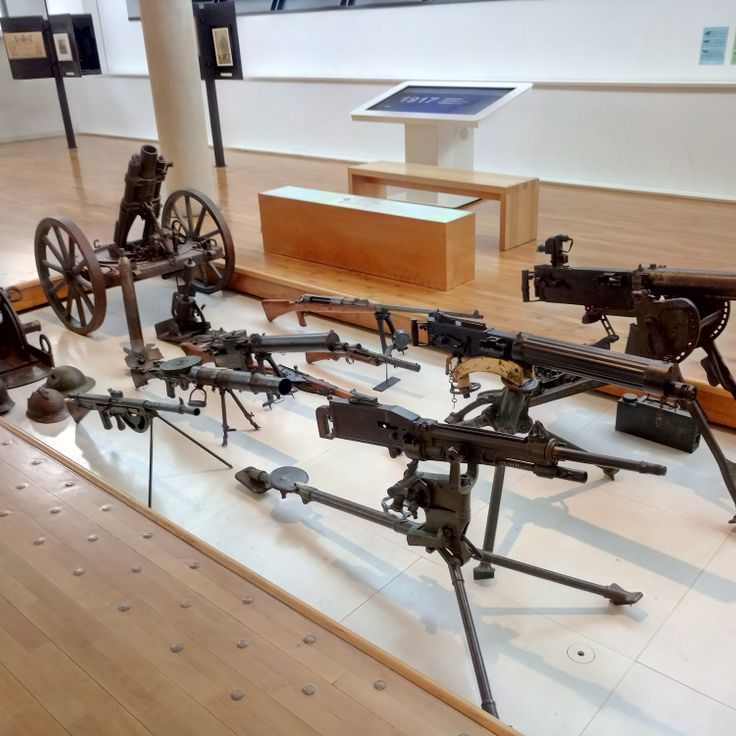
This museum in Péronne displays uniforms, weapons, and everyday objects of soldiers along with civilian items from World War I. The collections at the Historial of the Great War document life at the front and on the home front between 1914 and 1918. Visitors see photographs, letters, and personal belongings that illustrate daily life during the battles of the Somme.
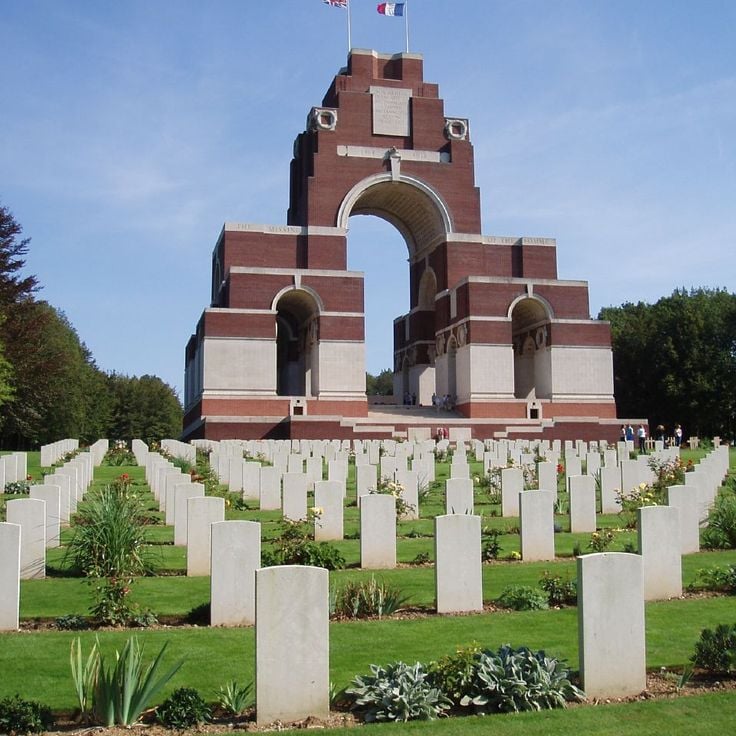
The Thiepval Memorial rises on a hilltop above the Somme countryside, honoring the British and South African soldiers who fell in the battles of 1916. The arches of red brick and white stone carry the names of 72,000 men who have no known grave. Visitors walk through the open galleries and find endless rows of engraved names on the walls, organized by regiment. The central arch frames the view over the surrounding fields where trenches once ran. A cemetery lies at the foot of the monument. People come here to remember and understand the scale of loss.
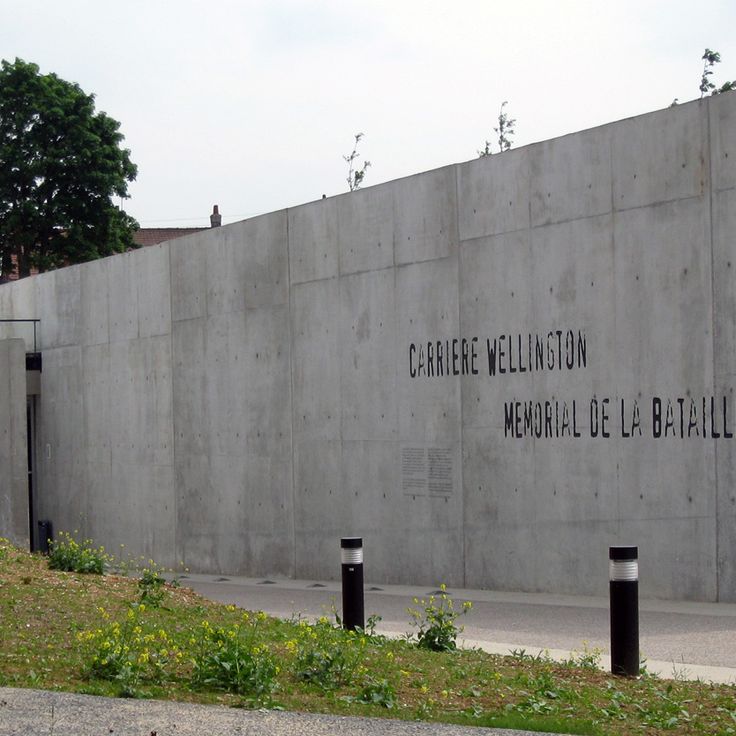
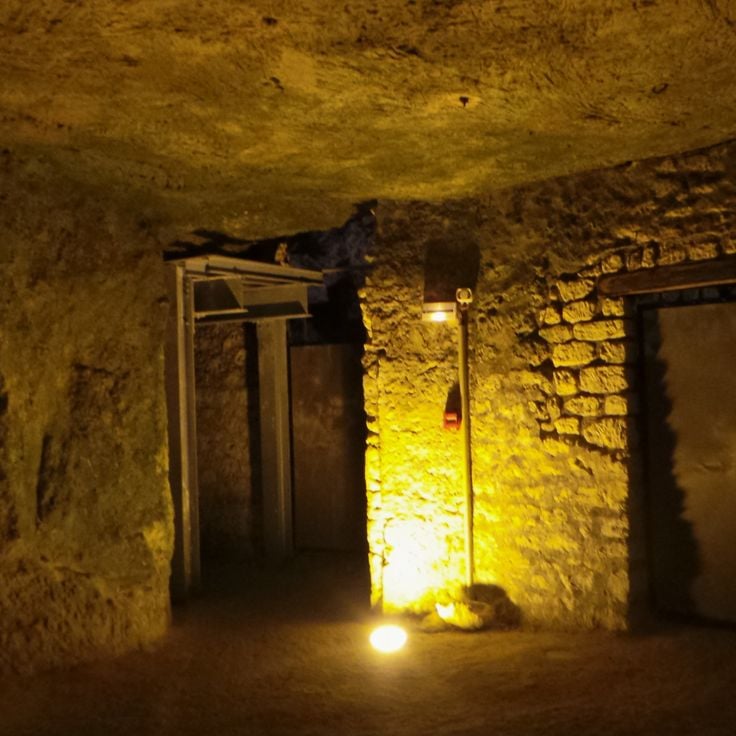
The Wellington Quarry is a network of underground passages carved into chalk beneath the city of Arras. New Zealand soldiers dug these tunnels during World War I to shelter British troops from German attacks. In April 1917, thousands of soldiers gathered here before advancing into the Battle of Arras. The passages extend for many kilometers below ground. Today this site shows the life of soldiers before the offensive, with rooms, inscriptions on the walls, and personal items left behind.
This old limestone quarry was converted into an underground barracks during the war. French and German forces fought for control of the cave between 1915 and 1918. Soldiers used the rock shelter to protect themselves from artillery fire and left traces of their presence on the walls. Today visitors can walk through the passages where troops lived and waited during the battle. The site preserves inscriptions and remnants from both sides of the conflict.
This memorial stands in the forest clearing of Rethondes where the armistice was signed on November 11, 1918, ending World War I. A railway carriage has been set up as a museum and shows the conditions of the signing. The clearing is surrounded by forest and conveys the quiet of this historic moment. Memorial stones and information panels explain the course of negotiations between the Allies and Germany. The site documents the transition from war to peace through photographs, papers, and personal items of those involved.
This museum follows the events of July 1916, when British units fought against German troops. The exhibition rooms display uniforms, personal belongings of soldiers, weapons and equipment from that time. Visitors find photographs, letters and documents describing daily life at the front. The museum stands near the battlefield and shows through its collections how the battle unfolded and what consequences it had for the soldiers involved.
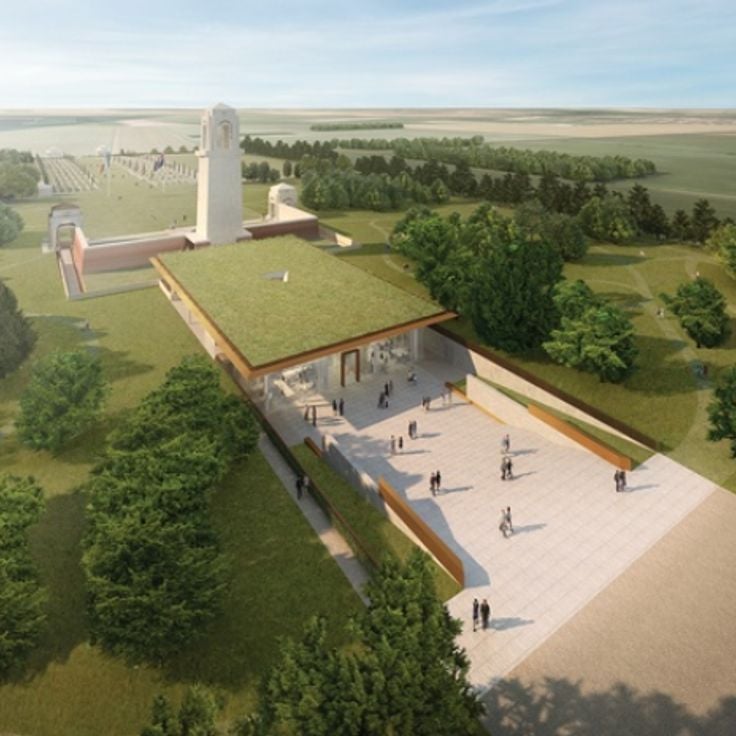
The Sir John Monash Centre in Villers-Bretonneux presents the story of Australian soldiers who fought on the Western Front during World War I. This place gives visitors a sense of what these men experienced far from home and how they contributed to major battles. Through personal items, letters and recordings, you can follow individual lives and understand the impact of the fighting. The center explains how Australian forces took part in the April 1918 battle for Villers-Bretonneux and what daily life was like in the trenches. You leave with a clearer picture of the human side of this distant conflict and the connections between Australia and France.
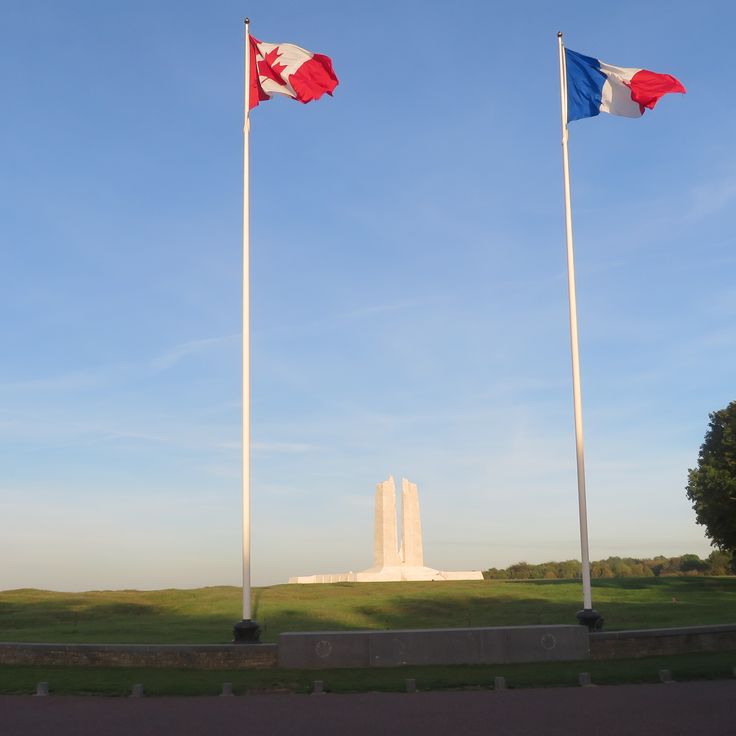
The Canadian National Vimy Memorial rises on Vimy Ridge and honors the Canadian soldiers who fell during the April 1917 battle. This monument of white limestone stands above the former battlefield where Canadian forces captured German positions. The two tall pylons can be seen from a distance and bear the names of more than 11,000 Canadian soldiers who died in France and have no known grave. Around the memorial, preserved trenches, craters, and tunnel systems show what the terrain looked like at that time. This site is one of the major memorials of World War I in France and draws visitors from Canada and many other countries.
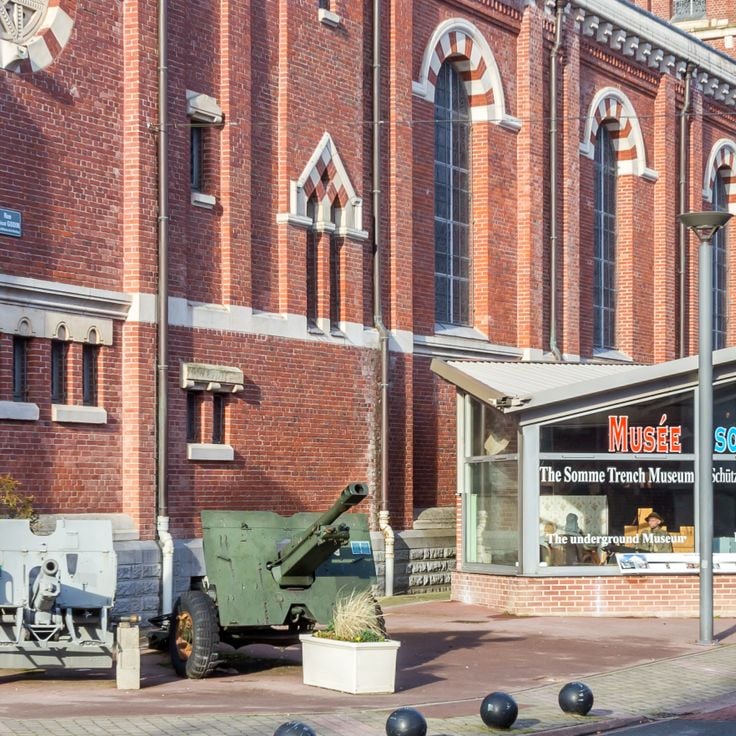
This museum sits in an underground tunnel from World War I and displays the history of the Battle of the Somme 1916 across 250 square meters (2,700 square feet). It holds uniforms, weapons, and personal items from French, British, and German soldiers. The collection includes helmets, gas masks, grenades, letters, and photographs from the months of fighting. The tunnel itself served as a shelter during the war and keeps traces of that time. This museum is in Albert, a town at the center of the battle, where the basilica with its leaning Madonna statue became a symbol of the front.
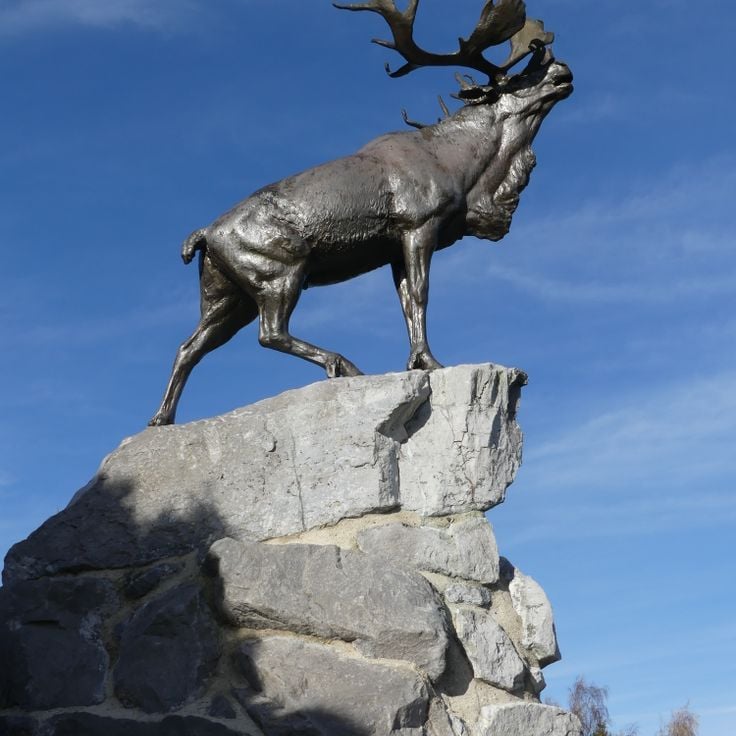
This memorial site in Beaumont-Hamel preserves trenches from World War I and honors soldiers from Newfoundland who died during the Battle of the Somme in July 1916. The place shows the front line as it remained after the fighting, with shell craters and earth banks still marking the ground. A bronze caribou on a stone mound stands at the highest point, recalling the regiment. Visitors can walk through the preserved trenches and see how close the opposing lines were to each other. White headstones stand among the trenches. The grounds give a direct sense of what the battlefield looked like.
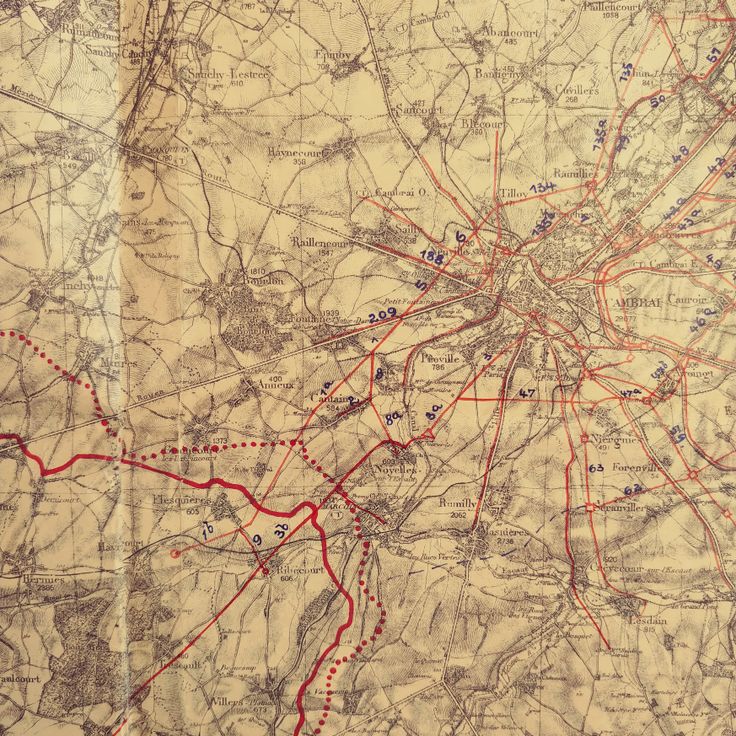
Cambrai Tank 1917 is a documentation center about the Battle of Cambrai in November 1917, when more than four hundred tanks were used in large numbers for the first time in the history of warfare. This museum preserves evidence of that battle and shows how armored vehicles changed combat. On display are photographs, military equipment, uniforms, and personal items belonging to soldiers from that period. The rooms explain the course of the offensive, the initial successes, and the later counterattacks. Visitors can understand how this technical innovation attempted to break the trench warfare and what consequences it had for troops on both sides.
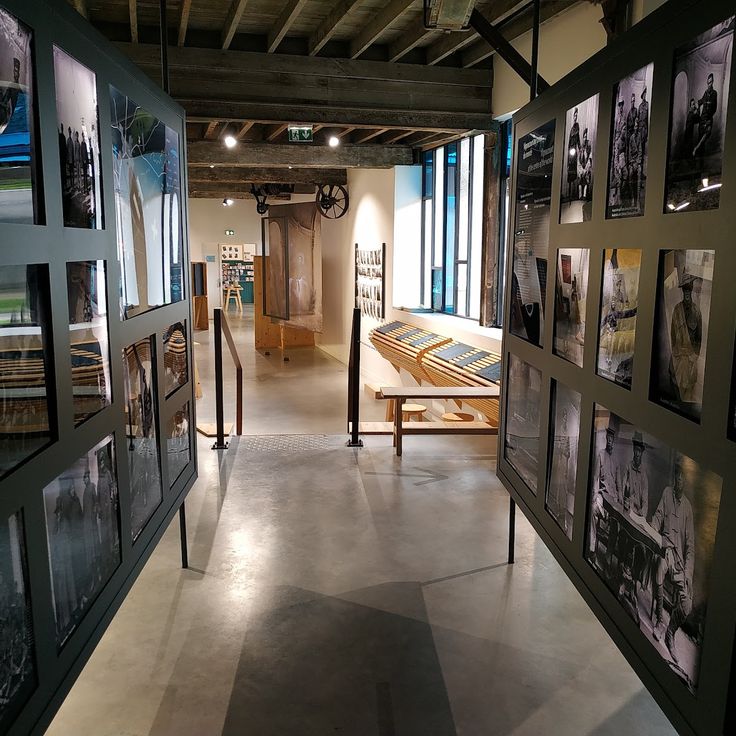
The Vignacourt 14-18 Interpretation Center displays historical military photographs from World War I. This collection documents everyday life of soldiers, their living conditions, and contact with local residents. The images come from a local photo studio and show soldiers from different nations during rest periods between front-line service. The center preserves these testimonies of wartime life away from the battlefields.
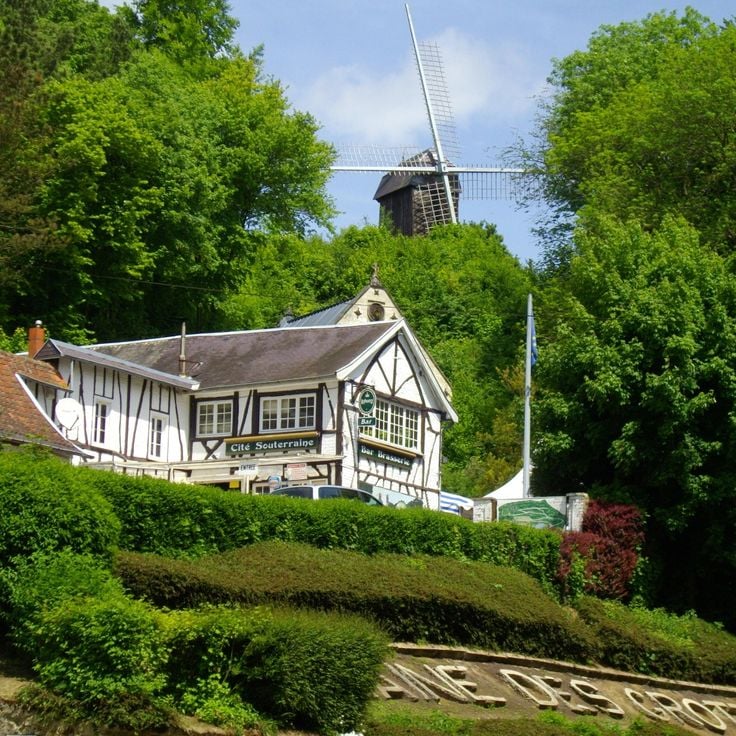
This underground city of tunnels and galleries on three levels carries the traces of soldiers from World War I. On the walls are inscriptions and graffiti that soldiers left during their time in these spaces. The site documents the presence of French and allied troops in this region and adds to the testimonies of the fighting on the Western Front.
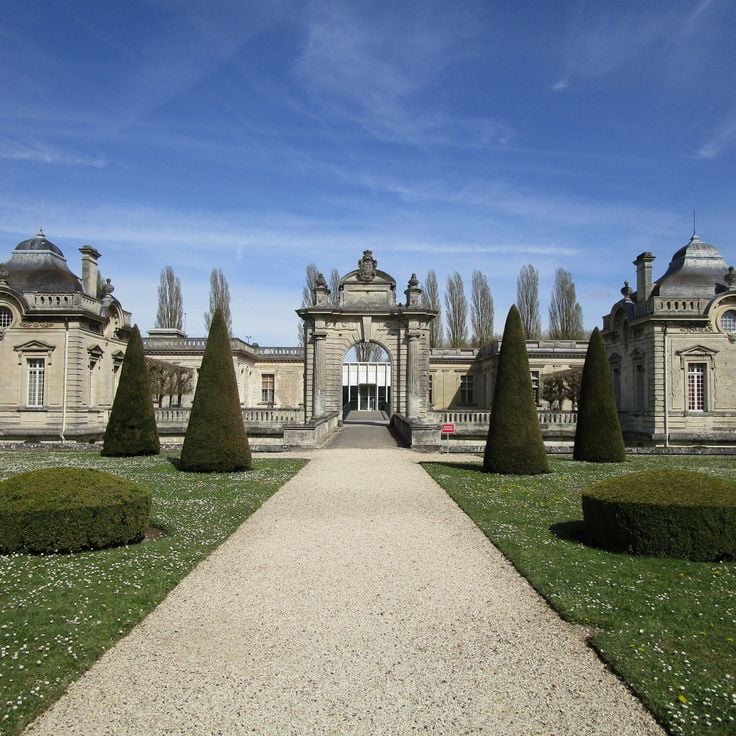
The Franco-American Museum at Château de Blérancourt presents objects, documents, and artworks documenting humanitarian aid and cooperation between France and the United States during World War I. The collections recall American volunteers and soldiers who fought in France. Photographs, personal items, and written records tell of field hospitals, supply convoys, and reconstruction projects after 1918. This 17th-century château houses permanent exhibitions on the shared history of both nations and the role of American organizations during the war.
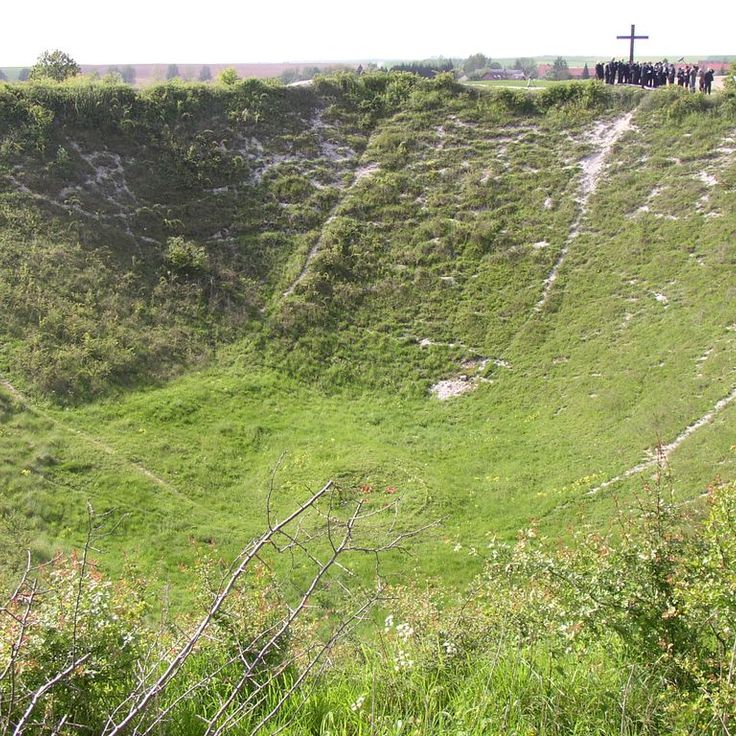
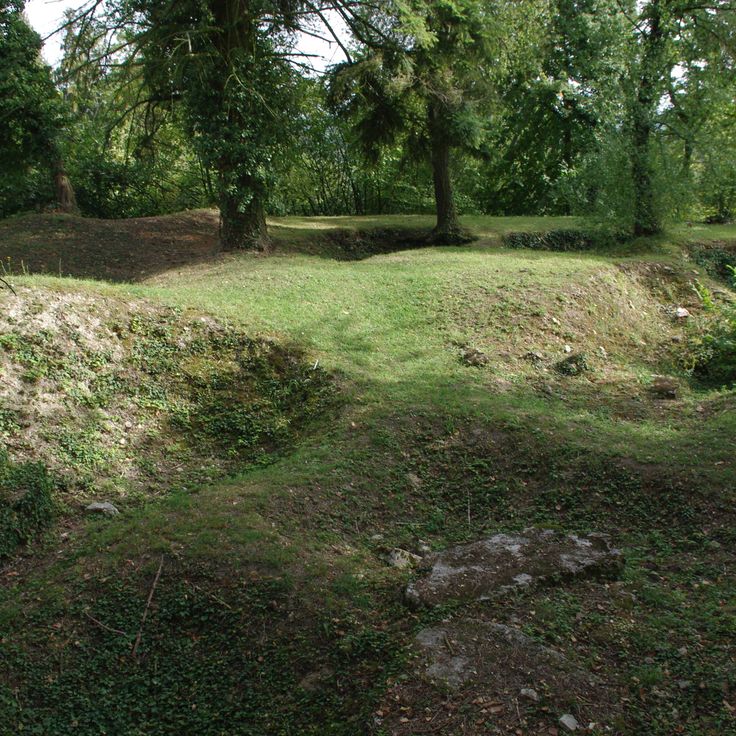
This crater in La Boisselle shows traces of a massive mine explosion that marked the start of the Battle of the Somme on July 1, 1916. The British Army dug tunnels for months under German positions and filled them with tons of explosives. The blast tore a crater about 30 meters (100 feet) deep into the ground, changing the landscape forever. Today visitors can walk to the edge of the crater and see the scale of destruction. Grass and wildflowers now cover the slopes, but the shape of the hole recalls the violence of the attack. This site is part of the Somme memorial landscape, where soldiers from several nations fought and died.
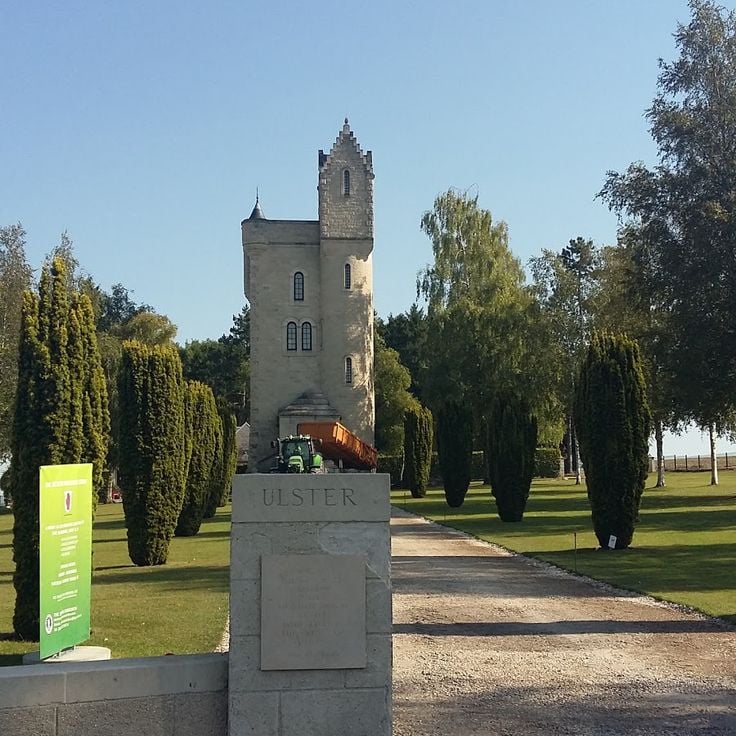
This round stone tower stands 21 meters (69 feet) high and honors the Irish soldiers who fell during the Battle of the Somme. Built in 1921, the Ulster Tower carries the names of the dead on its walls and takes its design from a 17th-century tower in Northern Ireland. From this spot, the 36th Division launched its attack on July 1, 1916. The gray stone structure overlooks the former battlefields and serves as a place of remembrance for visitors from Ireland and beyond. Remnants of old trenches still run through the surrounding land.
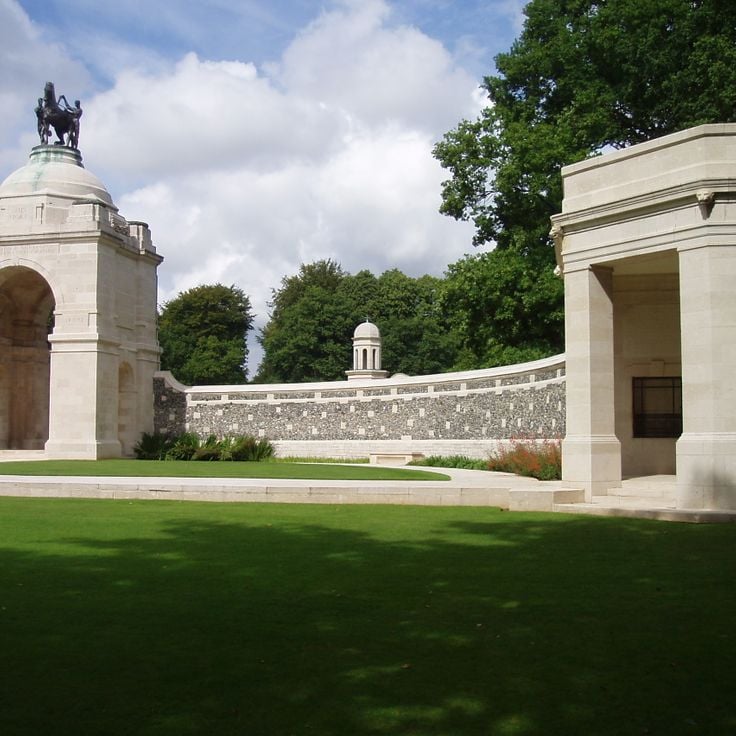
This stone monument features a central arch and a museum built in 1926. The exhibition documents the involvement of South African troops during World War I. Visitors see objects, photographs, and documents from the time of the Somme battles, when South African soldiers fought on the Western Front. The memorial honors the fallen and the museum presents their experiences through personal testimonies.
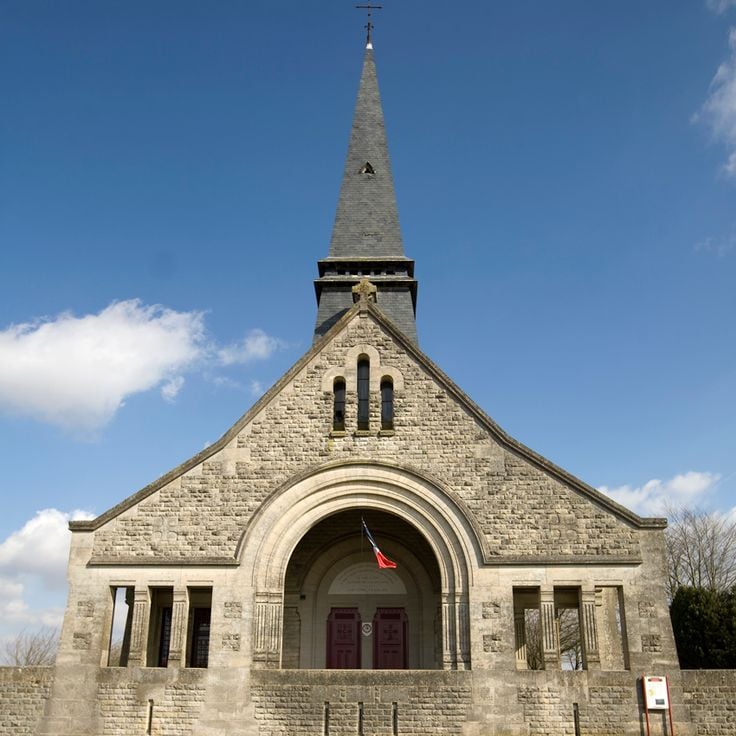
This remembrance chapel preserves the memory of soldiers who fell during World War I. The crypt houses commemorative plaques honoring those who fought in the battles of the Somme region. Stained-glass windows depict scenes from the war years, adding to the reflective character of this memorial site built in the 1930s.
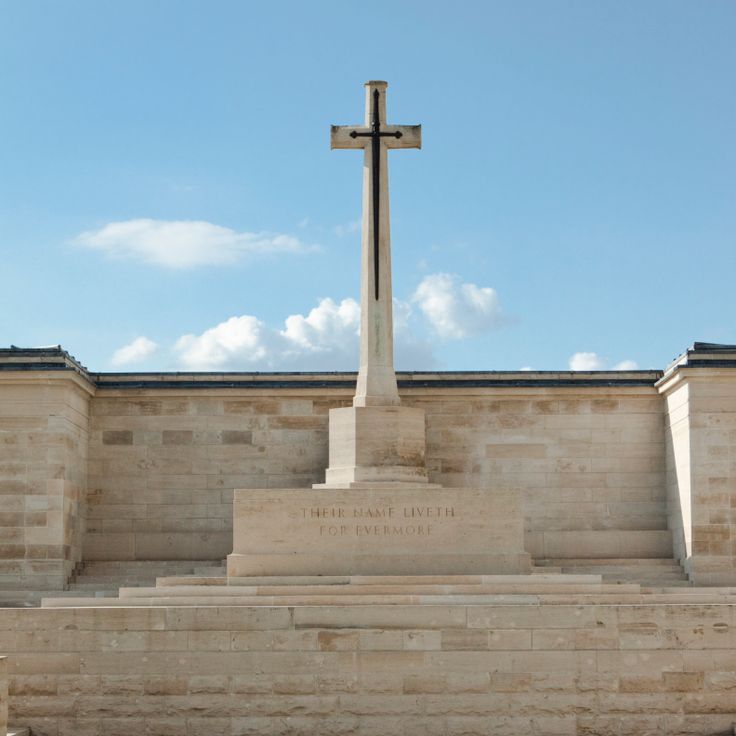
These monuments bring together several memorials marking the 1916 battles. The Australian obelisk, erected in 1935, stands beside a British stele, while a Mark IV tank marks the former fighting lines. The site documents the involvement of Australian and British units in the offensives along this section of the Somme front during World War I.
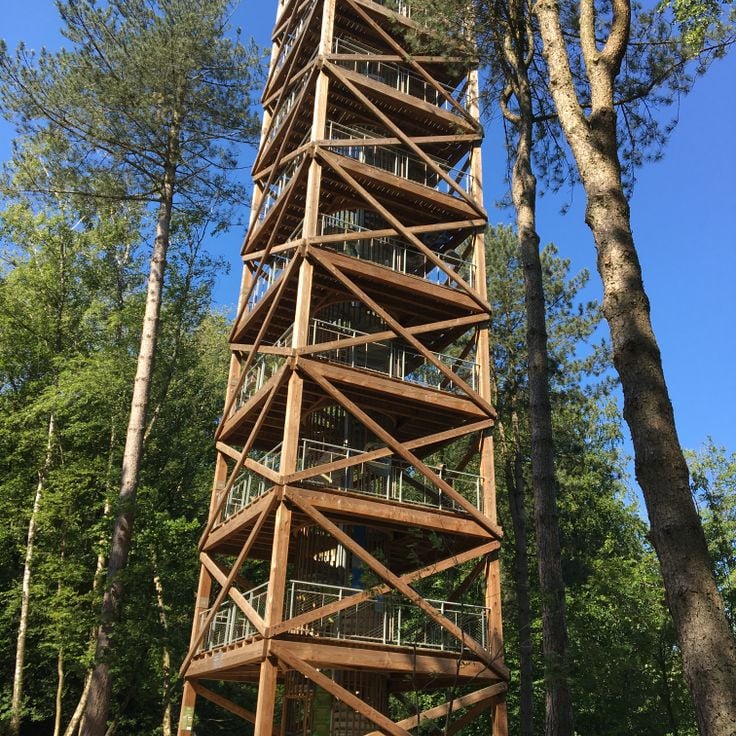
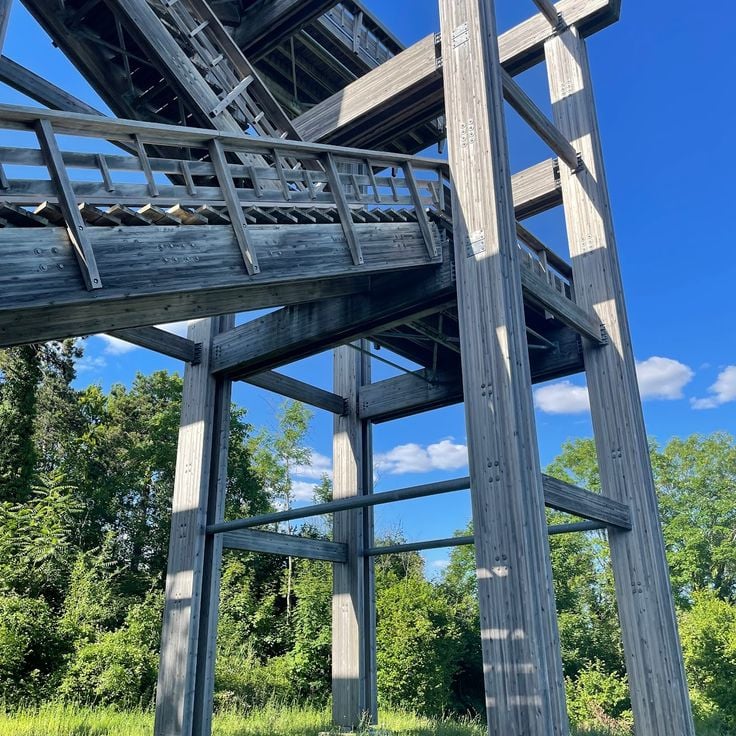
This site on the Chemin des Dames shows traces of the fighting from 1914 to 1918 through marked paths and a 20-meter observation tower. The location belongs to the French memorial sites of World War I and preserves the remains of trenches that played a central role during the Battle of Craonne. Visitors can explore the landscape shaped by the battles and gain an impression of the daily life of soldiers in this region.
This destroyed settlement stands as evidence of the 1917 fighting along the Chemin des Dames front. Paths wind between remnants of old streets where houses and shops once stood. You can trace the foundations of the church, remains of cellars and wells. The cemetery preserves old gravestones that speak of the community before the war. Trees and grass now cover the ruins, but the shape of the village remains visible in the landscape. Information panels explain daily life before 1914 and the battles that destroyed everything. The village was never rebuilt, its inhabitants founded a new Craonne nearby.
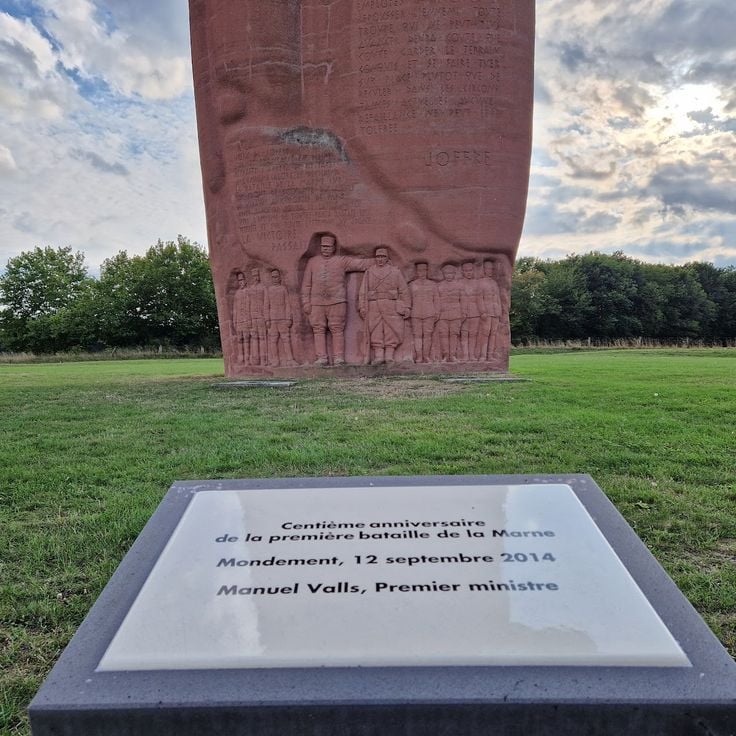
This monument rises above the fields of Mondement and marks the first Battle of the Marne in September 1914. The tower was built to remember French soldiers who fought here. From the top you can see the plains where the battle took place. Inside, a spiral staircase leads upward. The facade carries inscriptions and symbols from the time of World War I.
This observation tower in the Retz forest stands 25 meters (82 feet) tall and marks the site of the French counter-offensive in July 1918. The structure takes its name from General Charles Mangin, who led the troops during the Battle of Villers-Cotterêts. From the top, you can see above the tree canopy and across the landscape where soldiers advanced. The forest itself preserves traces of the fighting. The tower serves as a place of memory for the turning point in the war, when French and allied units regained the initiative after months of retreat and defense. Today, hikers and history enthusiasts visit the site to understand its historical importance and take in the view over the battlefield.
The Douaumont Ossuary is a memorial that holds the remains of 130,000 French and German soldiers who fell during the Battle of Verdun in 1916. Completed in 1932, this monument stands as a witness to one of the fiercest confrontations of World War I. The long structure, with its central tower, rises above the former battlefields and marks a cemetery where thousands of white crosses spread across the hills.
This military installation from the late 19th century protected the towns along the Aisne valley. The fort preserves casemates, galleries, and military facilities that show the layout of a French defense position before the 1914 war. The museum displays equipment, uniforms, and personal items of soldiers who served during the fighting on the Western Front. Guided tours explain garrison life and the role of the site in World War I.
The Verdun Memorial documents the battle of 1916 through uniforms, weapons, documents and personal items of soldiers. The building presents three levels of permanent exhibitions about the French and German sides of the fighting. Visitors see equipment, letters and photographs from the time of the offensive and discover the life of men in the trenches.
The American Memorial of Montsec was built in 1932 from white limestone to honor the American soldiers who fought in this region during World War I. This monument is part of the French memorial sites documenting the war of 1914 to 1918 and stands on a hilltop that offers views of the surrounding countryside. A circular colonnade surrounds a central plaza where an orientation table shows the main military operations carried out by American forces in the area. The design is simple, with columns and arches that give the memorial a solemn feel. From here you can see the plains and hills where battles once took place.
This French military cemetery covers the hills above Ablain-Saint-Nazaire and recalls the battles that spread across the Artois region from 1914 to 1915. The Notre-Dame-de-Lorette National Necropolis gathers over 42,000 graves in long white rows, a basilica in Byzantine style, and a lantern tower rising 170 feet (52 meters) into the air. Visitors walk between the headstones, each carved with the names of fallen soldiers. From a distance, the tower is visible across the plain and serves as a landmark. The basilica preserves memorial plaques and inscriptions. On clear days, the hilltop offers views over the surrounding fields where the battles took place. The grounds remain a place of silence and remembrance for the losses of the First World War.
This museum in Péronne displays uniforms, weapons, and everyday objects of soldiers along with civilian items from World War I. The collections at the Historial of the Great War document life at the front and on the home front between 1914 and 1918. Visitors see photographs, letters, and personal belongings that illustrate daily life during the battles of the Somme.
The Thiepval Memorial rises on a hilltop above the Somme countryside, honoring the British and South African soldiers who fell in the battles of 1916. The arches of red brick and white stone carry the names of 72,000 men who have no known grave. Visitors walk through the open galleries and find endless rows of engraved names on the walls, organized by regiment. The central arch frames the view over the surrounding fields where trenches once ran. A cemetery lies at the foot of the monument. People come here to remember and understand the scale of loss.
The Wellington Quarry is a network of underground passages carved into chalk beneath the city of Arras. New Zealand soldiers dug these tunnels during World War I to shelter British troops from German attacks. In April 1917, thousands of soldiers gathered here before advancing into the Battle of Arras. The passages extend for many kilometers below ground. Today this site shows the life of soldiers before the offensive, with rooms, inscriptions on the walls, and personal items left behind.
This old limestone quarry was converted into an underground barracks during the war. French and German forces fought for control of the cave between 1915 and 1918. Soldiers used the rock shelter to protect themselves from artillery fire and left traces of their presence on the walls. Today visitors can walk through the passages where troops lived and waited during the battle. The site preserves inscriptions and remnants from both sides of the conflict.
This memorial stands in the forest clearing of Rethondes where the armistice was signed on November 11, 1918, ending World War I. A railway carriage has been set up as a museum and shows the conditions of the signing. The clearing is surrounded by forest and conveys the quiet of this historic moment. Memorial stones and information panels explain the course of negotiations between the Allies and Germany. The site documents the transition from war to peace through photographs, papers, and personal items of those involved.
This museum follows the events of July 1916, when British units fought against German troops. The exhibition rooms display uniforms, personal belongings of soldiers, weapons and equipment from that time. Visitors find photographs, letters and documents describing daily life at the front. The museum stands near the battlefield and shows through its collections how the battle unfolded and what consequences it had for the soldiers involved.
The Sir John Monash Centre in Villers-Bretonneux presents the story of Australian soldiers who fought on the Western Front during World War I. This place gives visitors a sense of what these men experienced far from home and how they contributed to major battles. Through personal items, letters and recordings, you can follow individual lives and understand the impact of the fighting. The center explains how Australian forces took part in the April 1918 battle for Villers-Bretonneux and what daily life was like in the trenches. You leave with a clearer picture of the human side of this distant conflict and the connections between Australia and France.
The Canadian National Vimy Memorial rises on Vimy Ridge and honors the Canadian soldiers who fell during the April 1917 battle. This monument of white limestone stands above the former battlefield where Canadian forces captured German positions. The two tall pylons can be seen from a distance and bear the names of more than 11,000 Canadian soldiers who died in France and have no known grave. Around the memorial, preserved trenches, craters, and tunnel systems show what the terrain looked like at that time. This site is one of the major memorials of World War I in France and draws visitors from Canada and many other countries.
This museum sits in an underground tunnel from World War I and displays the history of the Battle of the Somme 1916 across 250 square meters (2,700 square feet). It holds uniforms, weapons, and personal items from French, British, and German soldiers. The collection includes helmets, gas masks, grenades, letters, and photographs from the months of fighting. The tunnel itself served as a shelter during the war and keeps traces of that time. This museum is in Albert, a town at the center of the battle, where the basilica with its leaning Madonna statue became a symbol of the front.
This memorial site in Beaumont-Hamel preserves trenches from World War I and honors soldiers from Newfoundland who died during the Battle of the Somme in July 1916. The place shows the front line as it remained after the fighting, with shell craters and earth banks still marking the ground. A bronze caribou on a stone mound stands at the highest point, recalling the regiment. Visitors can walk through the preserved trenches and see how close the opposing lines were to each other. White headstones stand among the trenches. The grounds give a direct sense of what the battlefield looked like.
Cambrai Tank 1917 is a documentation center about the Battle of Cambrai in November 1917, when more than four hundred tanks were used in large numbers for the first time in the history of warfare. This museum preserves evidence of that battle and shows how armored vehicles changed combat. On display are photographs, military equipment, uniforms, and personal items belonging to soldiers from that period. The rooms explain the course of the offensive, the initial successes, and the later counterattacks. Visitors can understand how this technical innovation attempted to break the trench warfare and what consequences it had for troops on both sides.
The Vignacourt 14-18 Interpretation Center displays historical military photographs from World War I. This collection documents everyday life of soldiers, their living conditions, and contact with local residents. The images come from a local photo studio and show soldiers from different nations during rest periods between front-line service. The center preserves these testimonies of wartime life away from the battlefields.
This underground city of tunnels and galleries on three levels carries the traces of soldiers from World War I. On the walls are inscriptions and graffiti that soldiers left during their time in these spaces. The site documents the presence of French and allied troops in this region and adds to the testimonies of the fighting on the Western Front.
The Franco-American Museum at Château de Blérancourt presents objects, documents, and artworks documenting humanitarian aid and cooperation between France and the United States during World War I. The collections recall American volunteers and soldiers who fought in France. Photographs, personal items, and written records tell of field hospitals, supply convoys, and reconstruction projects after 1918. This 17th-century château houses permanent exhibitions on the shared history of both nations and the role of American organizations during the war.
This crater in La Boisselle shows traces of a massive mine explosion that marked the start of the Battle of the Somme on July 1, 1916. The British Army dug tunnels for months under German positions and filled them with tons of explosives. The blast tore a crater about 30 meters (100 feet) deep into the ground, changing the landscape forever. Today visitors can walk to the edge of the crater and see the scale of destruction. Grass and wildflowers now cover the slopes, but the shape of the hole recalls the violence of the attack. This site is part of the Somme memorial landscape, where soldiers from several nations fought and died.
This round stone tower stands 21 meters (69 feet) high and honors the Irish soldiers who fell during the Battle of the Somme. Built in 1921, the Ulster Tower carries the names of the dead on its walls and takes its design from a 17th-century tower in Northern Ireland. From this spot, the 36th Division launched its attack on July 1, 1916. The gray stone structure overlooks the former battlefields and serves as a place of remembrance for visitors from Ireland and beyond. Remnants of old trenches still run through the surrounding land.
This stone monument features a central arch and a museum built in 1926. The exhibition documents the involvement of South African troops during World War I. Visitors see objects, photographs, and documents from the time of the Somme battles, when South African soldiers fought on the Western Front. The memorial honors the fallen and the museum presents their experiences through personal testimonies.
This remembrance chapel preserves the memory of soldiers who fell during World War I. The crypt houses commemorative plaques honoring those who fought in the battles of the Somme region. Stained-glass windows depict scenes from the war years, adding to the reflective character of this memorial site built in the 1930s.
These monuments bring together several memorials marking the 1916 battles. The Australian obelisk, erected in 1935, stands beside a British stele, while a Mark IV tank marks the former fighting lines. The site documents the involvement of Australian and British units in the offensives along this section of the Somme front during World War I.
This site on the Chemin des Dames shows traces of the fighting from 1914 to 1918 through marked paths and a 20-meter observation tower. The location belongs to the French memorial sites of World War I and preserves the remains of trenches that played a central role during the Battle of Craonne. Visitors can explore the landscape shaped by the battles and gain an impression of the daily life of soldiers in this region.
This destroyed settlement stands as evidence of the 1917 fighting along the Chemin des Dames front. Paths wind between remnants of old streets where houses and shops once stood. You can trace the foundations of the church, remains of cellars and wells. The cemetery preserves old gravestones that speak of the community before the war. Trees and grass now cover the ruins, but the shape of the village remains visible in the landscape. Information panels explain daily life before 1914 and the battles that destroyed everything. The village was never rebuilt, its inhabitants founded a new Craonne nearby.
This monument rises above the fields of Mondement and marks the first Battle of the Marne in September 1914. The tower was built to remember French soldiers who fought here. From the top you can see the plains where the battle took place. Inside, a spiral staircase leads upward. The facade carries inscriptions and symbols from the time of World War I.
This observation tower in the Retz forest stands 25 meters (82 feet) tall and marks the site of the French counter-offensive in July 1918. The structure takes its name from General Charles Mangin, who led the troops during the Battle of Villers-Cotterêts. From the top, you can see above the tree canopy and across the landscape where soldiers advanced. The forest itself preserves traces of the fighting. The tower serves as a place of memory for the turning point in the war, when French and allied units regained the initiative after months of retreat and defense. Today, hikers and history enthusiasts visit the site to understand its historical importance and take in the view over the battlefield.
The Douaumont Ossuary is a memorial that holds the remains of 130,000 French and German soldiers who fell during the Battle of Verdun in 1916. Completed in 1932, this monument stands as a witness to one of the fiercest confrontations of World War I. The long structure, with its central tower, rises above the former battlefields and marks a cemetery where thousands of white crosses spread across the hills.
This military installation from the late 19th century protected the towns along the Aisne valley. The fort preserves casemates, galleries, and military facilities that show the layout of a French defense position before the 1914 war. The museum displays equipment, uniforms, and personal items of soldiers who served during the fighting on the Western Front. Guided tours explain garrison life and the role of the site in World War I.
The Verdun Memorial documents the battle of 1916 through uniforms, weapons, documents and personal items of soldiers. The building presents three levels of permanent exhibitions about the French and German sides of the fighting. Visitors see equipment, letters and photographs from the time of the offensive and discover the life of men in the trenches.
The American Memorial of Montsec was built in 1932 from white limestone to honor the American soldiers who fought in this region during World War I. This monument is part of the French memorial sites documenting the war of 1914 to 1918 and stands on a hilltop that offers views of the surrounding countryside. A circular colonnade surrounds a central plaza where an orientation table shows the main military operations carried out by American forces in the area. The design is simple, with columns and arches that give the memorial a solemn feel. From here you can see the plains and hills where battles once took place.
This French military cemetery covers the hills above Ablain-Saint-Nazaire and recalls the battles that spread across the Artois region from 1914 to 1915. The Notre-Dame-de-Lorette National Necropolis gathers over 42,000 graves in long white rows, a basilica in Byzantine style, and a lantern tower rising 170 feet (52 meters) into the air. Visitors walk between the headstones, each carved with the names of fallen soldiers. From a distance, the tower is visible across the plain and serves as a landmark. The basilica preserves memorial plaques and inscriptions. On clear days, the hilltop offers views over the surrounding fields where the battles took place. The grounds remain a place of silence and remembrance for the losses of the First World War.
This museum in Péronne displays uniforms, weapons, and everyday objects of soldiers along with civilian items from World War I. The collections at the Historial of the Great War document life at the front and on the home front between 1914 and 1918. Visitors see photographs, letters, and personal belongings that illustrate daily life during the battles of the Somme.
The Thiepval Memorial rises on a hilltop above the Somme countryside, honoring the British and South African soldiers who fell in the battles of 1916. The arches of red brick and white stone carry the names of 72,000 men who have no known grave. Visitors walk through the open galleries and find endless rows of engraved names on the walls, organized by regiment. The central arch frames the view over the surrounding fields where trenches once ran. A cemetery lies at the foot of the monument. People come here to remember and understand the scale of loss.
The Wellington Quarry is a network of underground passages carved into chalk beneath the city of Arras. New Zealand soldiers dug these tunnels during World War I to shelter British troops from German attacks. In April 1917, thousands of soldiers gathered here before advancing into the Battle of Arras. The passages extend for many kilometers below ground. Today this site shows the life of soldiers before the offensive, with rooms, inscriptions on the walls, and personal items left behind.
This old limestone quarry was converted into an underground barracks during the war. French and German forces fought for control of the cave between 1915 and 1918. Soldiers used the rock shelter to protect themselves from artillery fire and left traces of their presence on the walls. Today visitors can walk through the passages where troops lived and waited during the battle. The site preserves inscriptions and remnants from both sides of the conflict.
This memorial stands in the forest clearing of Rethondes where the armistice was signed on November 11, 1918, ending World War I. A railway carriage has been set up as a museum and shows the conditions of the signing. The clearing is surrounded by forest and conveys the quiet of this historic moment. Memorial stones and information panels explain the course of negotiations between the Allies and Germany. The site documents the transition from war to peace through photographs, papers, and personal items of those involved.
This museum follows the events of July 1916, when British units fought against German troops. The exhibition rooms display uniforms, personal belongings of soldiers, weapons and equipment from that time. Visitors find photographs, letters and documents describing daily life at the front. The museum stands near the battlefield and shows through its collections how the battle unfolded and what consequences it had for the soldiers involved.
The Sir John Monash Centre in Villers-Bretonneux presents the story of Australian soldiers who fought on the Western Front during World War I. This place gives visitors a sense of what these men experienced far from home and how they contributed to major battles. Through personal items, letters and recordings, you can follow individual lives and understand the impact of the fighting. The center explains how Australian forces took part in the April 1918 battle for Villers-Bretonneux and what daily life was like in the trenches. You leave with a clearer picture of the human side of this distant conflict and the connections between Australia and France.
The Canadian National Vimy Memorial rises on Vimy Ridge and honors the Canadian soldiers who fell during the April 1917 battle. This monument of white limestone stands above the former battlefield where Canadian forces captured German positions. The two tall pylons can be seen from a distance and bear the names of more than 11,000 Canadian soldiers who died in France and have no known grave. Around the memorial, preserved trenches, craters, and tunnel systems show what the terrain looked like at that time. This site is one of the major memorials of World War I in France and draws visitors from Canada and many other countries.
This museum sits in an underground tunnel from World War I and displays the history of the Battle of the Somme 1916 across 250 square meters (2,700 square feet). It holds uniforms, weapons, and personal items from French, British, and German soldiers. The collection includes helmets, gas masks, grenades, letters, and photographs from the months of fighting. The tunnel itself served as a shelter during the war and keeps traces of that time. This museum is in Albert, a town at the center of the battle, where the basilica with its leaning Madonna statue became a symbol of the front.
This memorial site in Beaumont-Hamel preserves trenches from World War I and honors soldiers from Newfoundland who died during the Battle of the Somme in July 1916. The place shows the front line as it remained after the fighting, with shell craters and earth banks still marking the ground. A bronze caribou on a stone mound stands at the highest point, recalling the regiment. Visitors can walk through the preserved trenches and see how close the opposing lines were to each other. White headstones stand among the trenches. The grounds give a direct sense of what the battlefield looked like.
Cambrai Tank 1917 is a documentation center about the Battle of Cambrai in November 1917, when more than four hundred tanks were used in large numbers for the first time in the history of warfare. This museum preserves evidence of that battle and shows how armored vehicles changed combat. On display are photographs, military equipment, uniforms, and personal items belonging to soldiers from that period. The rooms explain the course of the offensive, the initial successes, and the later counterattacks. Visitors can understand how this technical innovation attempted to break the trench warfare and what consequences it had for troops on both sides.
The Vignacourt 14-18 Interpretation Center displays historical military photographs from World War I. This collection documents everyday life of soldiers, their living conditions, and contact with local residents. The images come from a local photo studio and show soldiers from different nations during rest periods between front-line service. The center preserves these testimonies of wartime life away from the battlefields.
This underground city of tunnels and galleries on three levels carries the traces of soldiers from World War I. On the walls are inscriptions and graffiti that soldiers left during their time in these spaces. The site documents the presence of French and allied troops in this region and adds to the testimonies of the fighting on the Western Front.
The Franco-American Museum at Château de Blérancourt presents objects, documents, and artworks documenting humanitarian aid and cooperation between France and the United States during World War I. The collections recall American volunteers and soldiers who fought in France. Photographs, personal items, and written records tell of field hospitals, supply convoys, and reconstruction projects after 1918. This 17th-century château houses permanent exhibitions on the shared history of both nations and the role of American organizations during the war.
This crater in La Boisselle shows traces of a massive mine explosion that marked the start of the Battle of the Somme on July 1, 1916. The British Army dug tunnels for months under German positions and filled them with tons of explosives. The blast tore a crater about 30 meters (100 feet) deep into the ground, changing the landscape forever. Today visitors can walk to the edge of the crater and see the scale of destruction. Grass and wildflowers now cover the slopes, but the shape of the hole recalls the violence of the attack. This site is part of the Somme memorial landscape, where soldiers from several nations fought and died.
This round stone tower stands 21 meters (69 feet) high and honors the Irish soldiers who fell during the Battle of the Somme. Built in 1921, the Ulster Tower carries the names of the dead on its walls and takes its design from a 17th-century tower in Northern Ireland. From this spot, the 36th Division launched its attack on July 1, 1916. The gray stone structure overlooks the former battlefields and serves as a place of remembrance for visitors from Ireland and beyond. Remnants of old trenches still run through the surrounding land.
This stone monument features a central arch and a museum built in 1926. The exhibition documents the involvement of South African troops during World War I. Visitors see objects, photographs, and documents from the time of the Somme battles, when South African soldiers fought on the Western Front. The memorial honors the fallen and the museum presents their experiences through personal testimonies.
This remembrance chapel preserves the memory of soldiers who fell during World War I. The crypt houses commemorative plaques honoring those who fought in the battles of the Somme region. Stained-glass windows depict scenes from the war years, adding to the reflective character of this memorial site built in the 1930s.
These monuments bring together several memorials marking the 1916 battles. The Australian obelisk, erected in 1935, stands beside a British stele, while a Mark IV tank marks the former fighting lines. The site documents the involvement of Australian and British units in the offensives along this section of the Somme front during World War I.
This site on the Chemin des Dames shows traces of the fighting from 1914 to 1918 through marked paths and a 20-meter observation tower. The location belongs to the French memorial sites of World War I and preserves the remains of trenches that played a central role during the Battle of Craonne. Visitors can explore the landscape shaped by the battles and gain an impression of the daily life of soldiers in this region.
This destroyed settlement stands as evidence of the 1917 fighting along the Chemin des Dames front. Paths wind between remnants of old streets where houses and shops once stood. You can trace the foundations of the church, remains of cellars and wells. The cemetery preserves old gravestones that speak of the community before the war. Trees and grass now cover the ruins, but the shape of the village remains visible in the landscape. Information panels explain daily life before 1914 and the battles that destroyed everything. The village was never rebuilt, its inhabitants founded a new Craonne nearby.
This monument rises above the fields of Mondement and marks the first Battle of the Marne in September 1914. The tower was built to remember French soldiers who fought here. From the top you can see the plains where the battle took place. Inside, a spiral staircase leads upward. The facade carries inscriptions and symbols from the time of World War I.
This observation tower in the Retz forest stands 25 meters (82 feet) tall and marks the site of the French counter-offensive in July 1918. The structure takes its name from General Charles Mangin, who led the troops during the Battle of Villers-Cotterêts. From the top, you can see above the tree canopy and across the landscape where soldiers advanced. The forest itself preserves traces of the fighting. The tower serves as a place of memory for the turning point in the war, when French and allied units regained the initiative after months of retreat and defense. Today, hikers and history enthusiasts visit the site to understand its historical importance and take in the view over the battlefield.