See the monuments around you in AROpen chests in the app
Around Us is built for your phone — point your camera at the streets and discover the monuments and places around you in augmented reality.Around Us is built for your phone — chests unlock when you walk, explore and capture nearby places.
Italian historic fountains demonstrate five centuries of craftsmanship in sculpture, hydraulic engineering, and urban design. From the 15th to the 19th century, Italian artisans shaped marble, bronze, and stone to create works combining practicality and artistic expression. These fountains tell stories from classical mythology, such as Neptune and marine deities, or from the Bible, like Moses drawing water from the rock. They also celebrate the political power of great families and the identity of Italian cities.
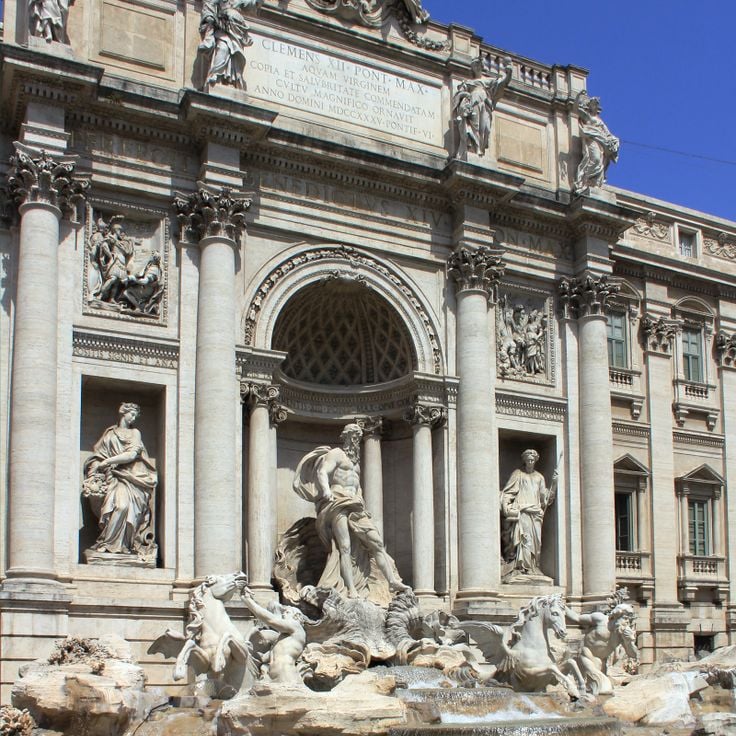
In Rome, the Trevi Fountain extends 86 feet (26 meters) high with baroque sculptures, while Bernini's Fountain of the Four Rivers symbolizes continents on Piazza Navona. In Florence, Neptune sits above the Piazza della Signoria, recalling the Medici family's maritime ambitions. The gardens of Villa d'Este in Tivoli feature 51 fountains spread across multiple terraces, showcasing Renaissance hydraulic mastery. These works reveal how water has shaped Italy’s architecture and urban life, from papal Rome to squares in Palermo and Siena.
Italian historic fountains demonstrate five centuries of craftsmanship in sculpture, hydraulic engineering, and urban design. From the 15th to the 19th century, Italian artisans shaped marble, bronze, and stone to create works combining practicality and artistic expression. These fountains tell stories from classical mythology, such as Neptune and marine deities, or from the Bible, like Moses drawing water from the rock. They also celebrate the political power of great families and the identity of Italian cities.
In Rome, the Trevi Fountain extends 86 feet (26 meters) high with baroque sculptures, while Bernini's Fountain of the Four Rivers symbolizes continents on Piazza Navona. In Florence, Neptune sits above the Piazza della Signoria, recalling the Medici family's maritime ambitions. The gardens of Villa d'Este in Tivoli feature 51 fountains spread across multiple terraces, showcasing Renaissance hydraulic mastery. These works reveal how water has shaped Italy’s architecture and urban life, from papal Rome to squares in Palermo and Siena.
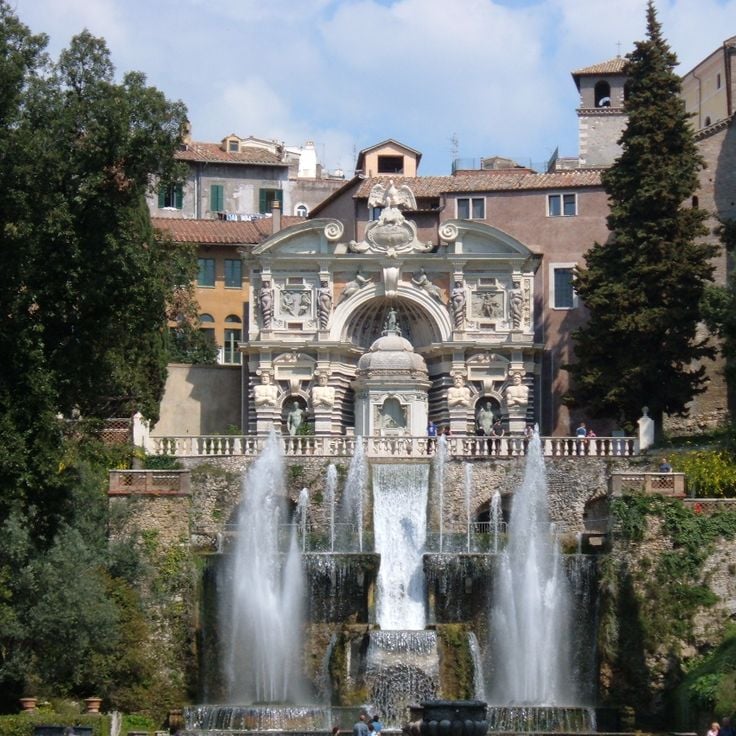
The gardens of Villa d'Este in Tivoli were created in the 16th century and demonstrate Italian Renaissance water engineering. These fountains spread across multiple terraces and use the natural slope of the hillside for their water system. The 51 fountains were crafted from marble, stone, and bronze, featuring mythological figures including representations of Diana, Neptune, and Pegasus. The fountains include water displays, cascades, and basins fed through an elaborate network of channels and aqueducts. The complex was built for Cardinal Ippolito II d'Este and served as a summer residence. The fountains of Villa d'Este document Renaissance hydraulic knowledge and the connection between architecture, water engineering, and garden design in 16th-century Italy.
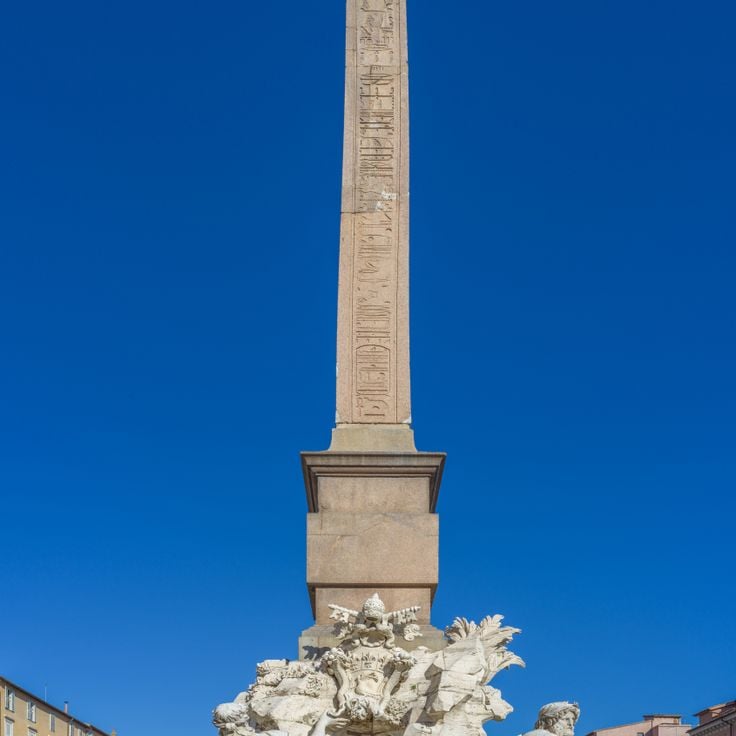
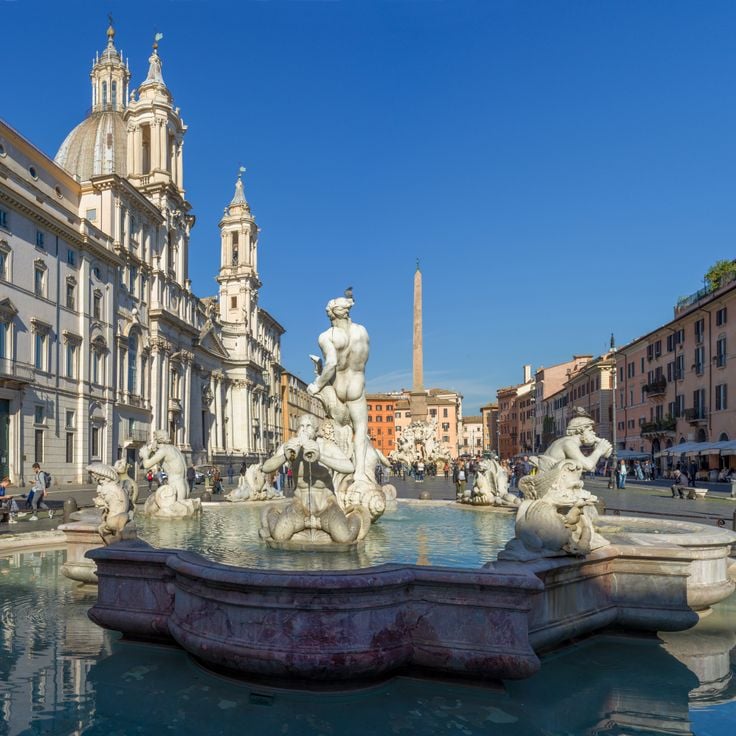
This fountain was created by Bernini in 1651 and depicts four major rivers of the continents known at the time: the Nile for Africa, the Danube for Europe, the Ganges for Asia, and the Rio de la Plata for the Americas. The marble and travertine sculptures stand at the four corners of the central obelisk. Each figure represents a river through symbolic elements including animals, plants, and coins. The fountain stands in Piazza Navona and is among the notable works of 17th-century Roman Baroque.
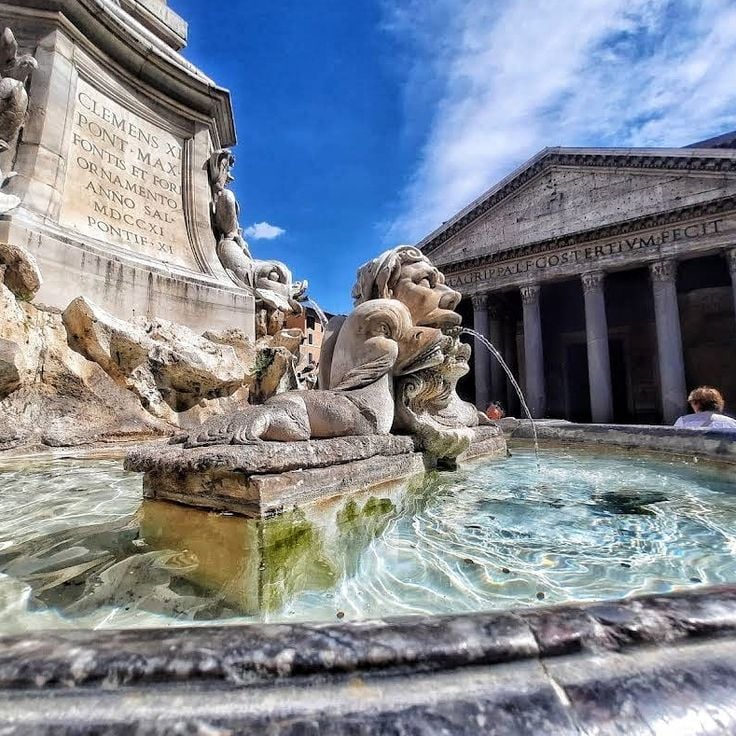
This fountain at the Pantheon was created in the 16th century and features an Egyptian obelisk of red granite resting on a base with four dolphins. The obelisk dates from ancient times and was placed at its current location under Pope Clement XI in 1711. The dolphins serve as water spouts and connect Roman fountain tradition with Egyptian monumental art. The ensemble illustrates the practice of papal urban design in Baroque Rome, where ancient monuments were integrated into new urban contexts.
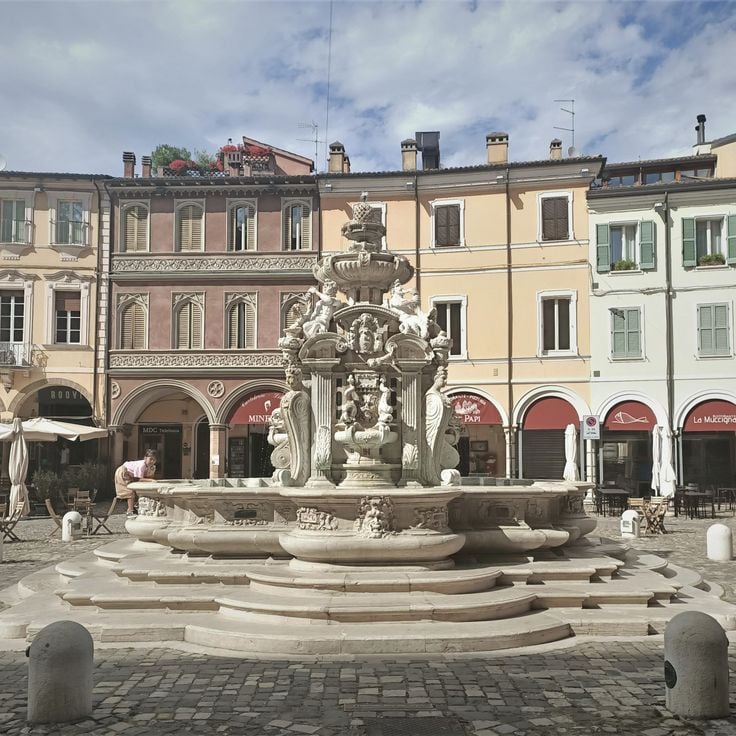
The Masini Fountain was built in 1591 and displays sea gods, tritons, and gargoyles carved from white marble with bronze elements. This fountain was commissioned by Cesare Masini and represents the style of the Italian Renaissance at the end of the sixteenth century. The sculptural motifs refer to classical mythology and reflect the technical and artistic skills of craftsmen from Emilia-Romagna, known for their work with marble and bronze. The fountain belongs to the cultural heritage of the city and documents the importance of public water structures during the Renaissance period.
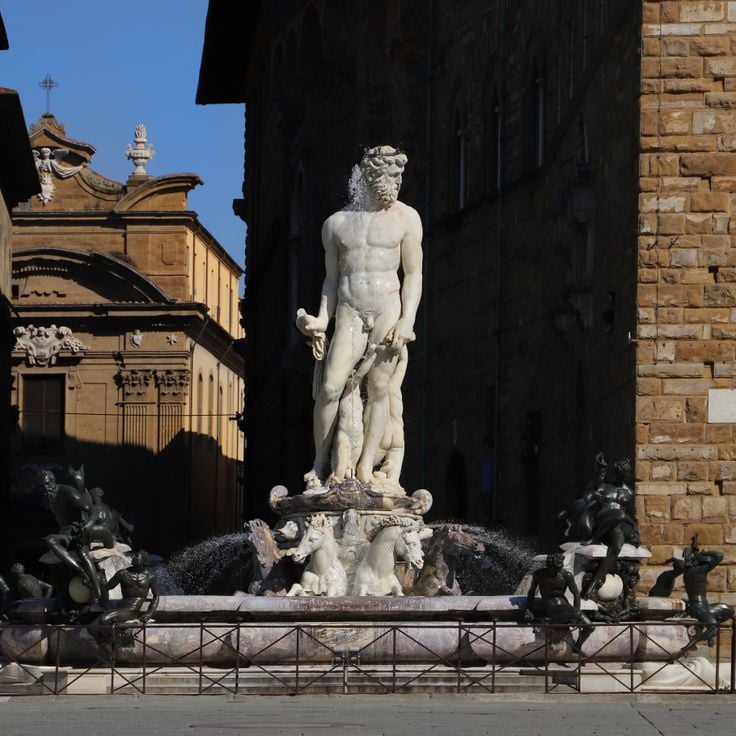
This fountain was completed in 1565 and features a bronze statue of the sea god standing on a shell-shaped chariot drawn by four horses. The central figure is surrounded by marine deities and represents the maritime power of the Tuscan city. The fountain was commissioned by the Medici family and stands in Piazza della Signoria. The bronze work demonstrates the craftsmanship of 16th-century Italian artisans and combines mythological representations with the political history of Florence.
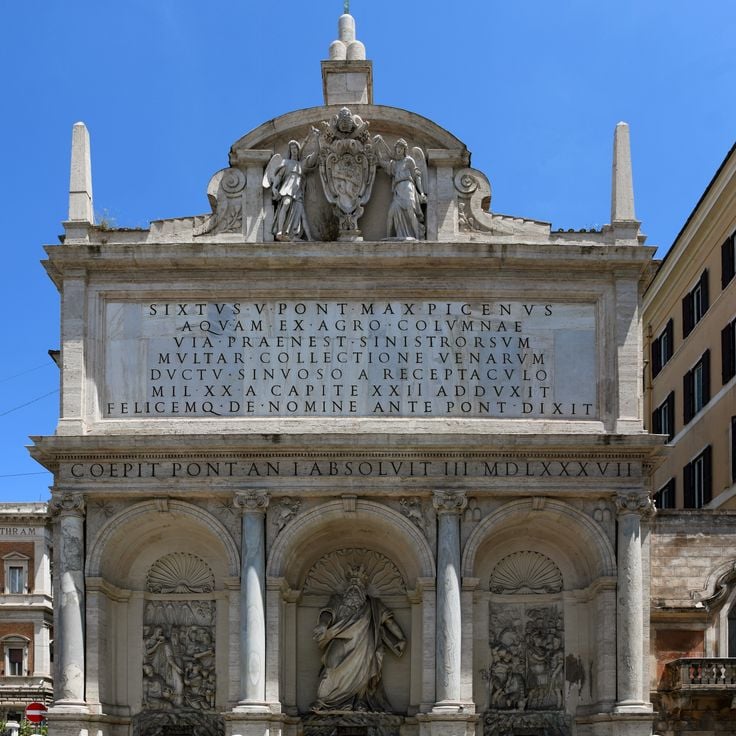
This fountain was built in 1587 and shows four lions along with a central figure of Moses striking water from the rock. The sculpture represents the biblical episode from the Book of Exodus and belongs to the important bronze works of the late Renaissance in Rome. The four lions rest on raised pedestals and surround the Moses figure. The fountain was commissioned by Pope Sixtus V and marked the terminus of a new aqueduct that brought water to the city. The overall structure combines religious symbolism with practical function as a public water supply.
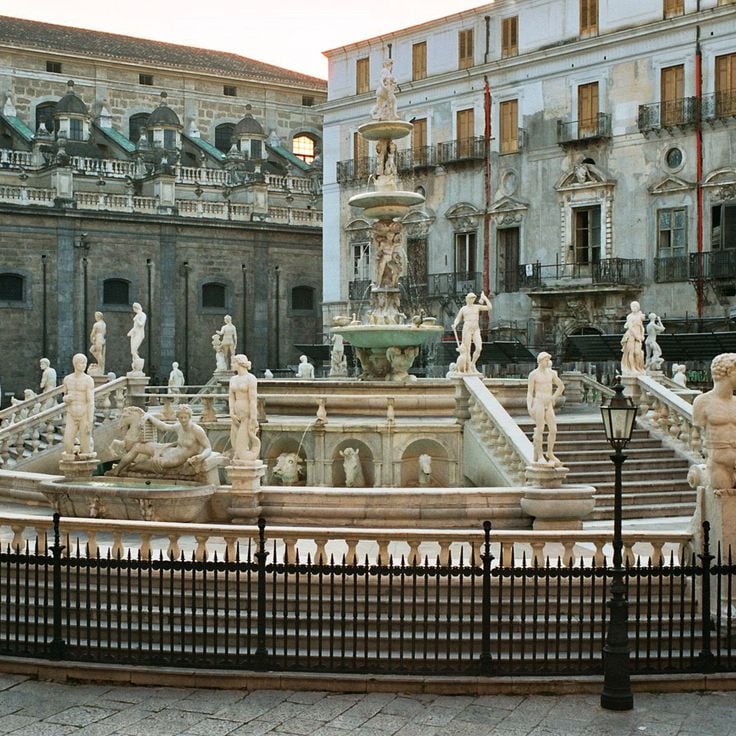
The Fontana Pretoria was built in 1554 and consists of three levels with mythological statues, animal figures, and representations of rivers in white marble. This fountain demonstrates Italian craftsmanship from the 16th century and combines architectural design with classical mythology. The structure includes multiple basins and over 40 sculptures depicting various deities, mythical creatures, and allegorical figures. Originally created for a Florentine garden, it was later moved to Palermo.
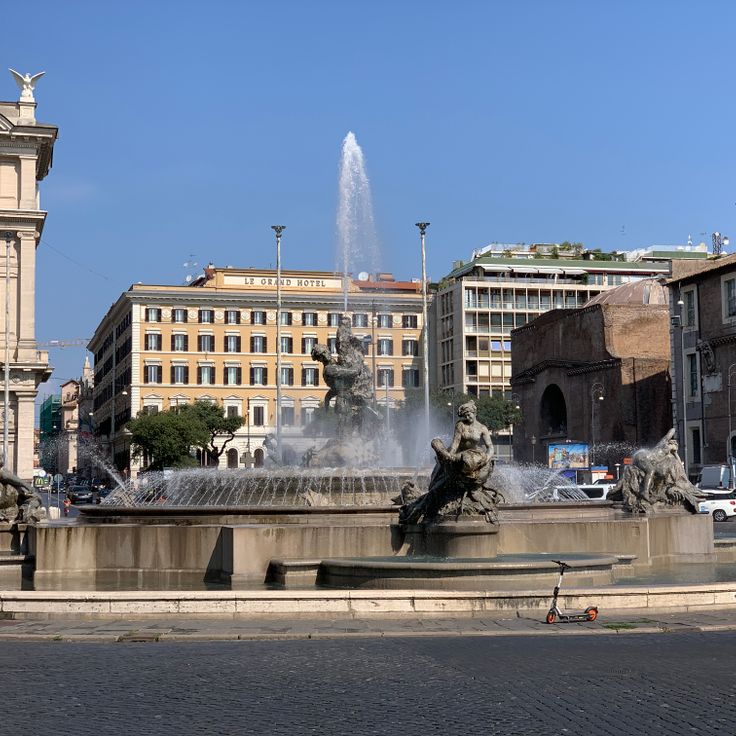
This fountain was built in 1901 at Piazza della Repubblica and features four bronze nymphs representing different forms of water: the nymph of lakes reclines on a swan, the river nymph rests on a river monster, the nymph of underground waters subdues a mysterious dragon, and the ocean nymph rides a horse. At the center stands the sculpture of Glaucus, added in 1912. The fountain represents Italian sculptural craftsmanship from the turn of the century and complements the urban renewal of Rome following Italian unification.
This 18th-century baroque fountain measures 85 feet (26 meters) in height and 160 feet (49 meters) in width. The Fontana di Trevi displays Italian craftsmanship of the period with marble statues of sea creatures and mythological figures. Water flows between the sculptures, which surround Neptune at the center and other representations. The fountain represents Roman fountain art of the 18th century and forms part of the city's historical water landscape. The construction combines architectural design with the urban water supply of the period.
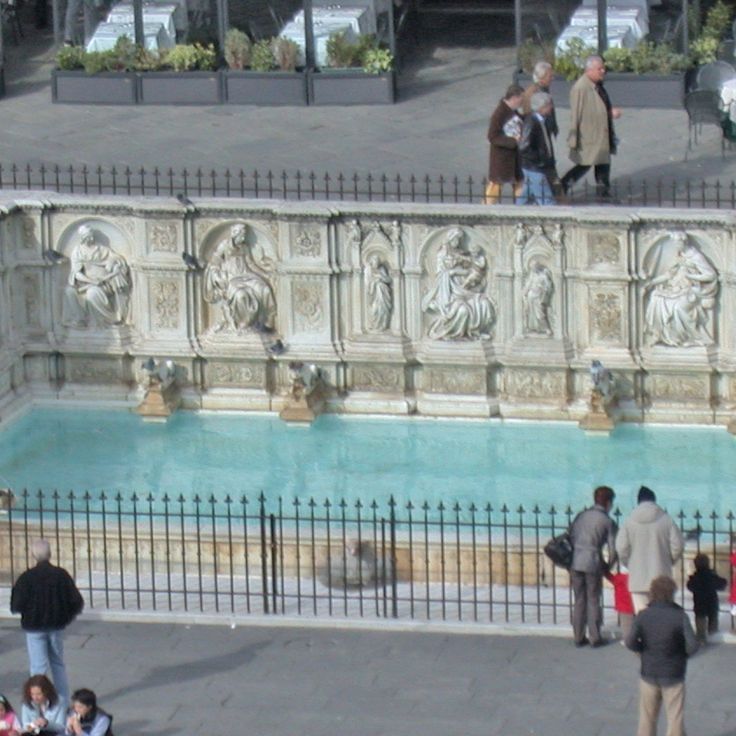
This stone fountain at the Palazzo Pubblico features two wolves spouting water. The sculptures refer to Romulus and Remus, the legendary founders of Rome, and connect the history of Siena with Roman mythology. The fountain was crafted from local stone and demonstrates the skills of Italian stonemasons between the 15th and 19th centuries. The depiction of the nursing she-wolf is a recurring motif in Italian art and symbolizes the mythological roots of the region. The work fits into the collection of historical fountains that represent religious, mythological, and historical themes from Italian history.
This medieval fountain in the center of Perugia consists of two marble basins arranged one above the other. The Fontana Maggiore was built in the 13th century and displays 25 sculptures depicting biblical scenes, Roman history, and local events. Water flows through 50 different pipes to supply both basins. The reliefs and statues were created by Nicola and Giovanni Pisano and illustrate the medieval sculptural craftsmanship of Umbria. The fountain marks the endpoint of an aqueduct that transported water from Monte Pacciano into the city.
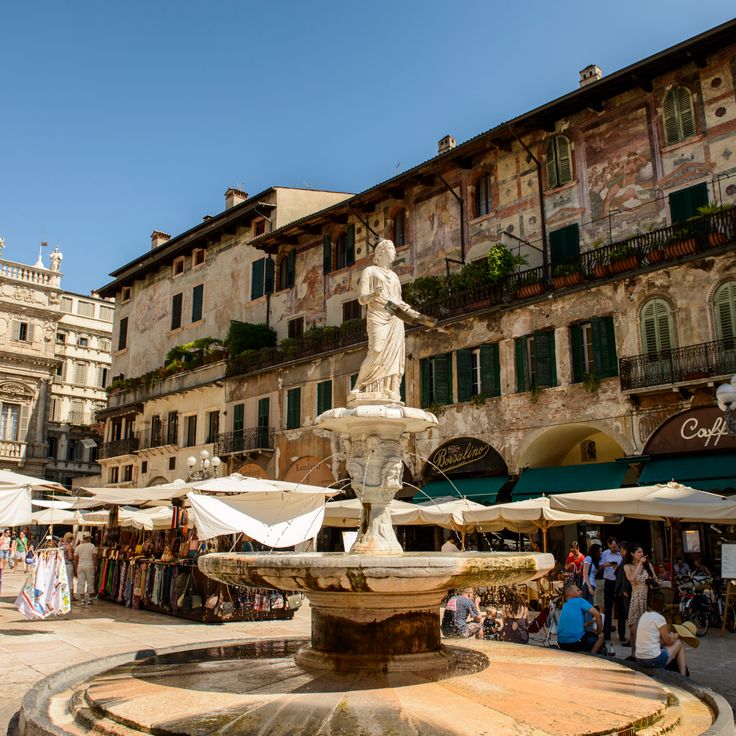
This fountain displays a Roman structure from the 4th century that was enhanced with a Renaissance statue. The base of the Fontana di Madonna Verona presents reliefs featuring emblems of the city of Verona. The combination of Roman and Renaissance elements reflects the artistic development of the city across several centuries. The statue was added later to complete the ancient structure. The civic symbols depicted on the base connect the monument to the local history of Verona.
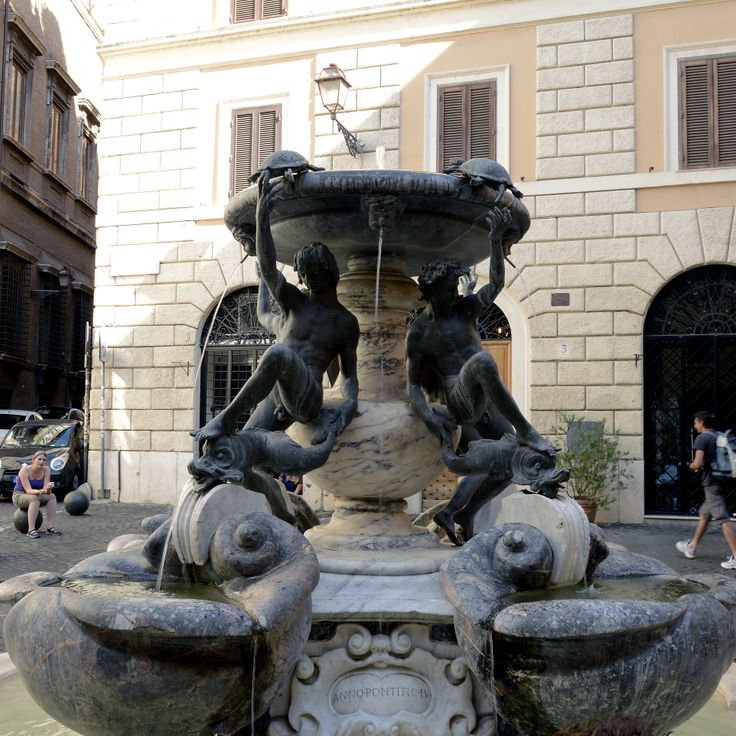
This Fontana delle Tartarughe from the 16th century features four bronze youths holding dolphins while turtles drink from the upper basin rim. The Renaissance fountain was created by Taddeo Landini following designs by Giacomo della Porta and combines mythological motifs with playful elements. The turtles were added in the 17th century and give the work its characteristic form. This fountain stands in Piazza Mattei in the Roman Ghetto and demonstrates the craftsmanship of Roman bronze casting during the Renaissance period.
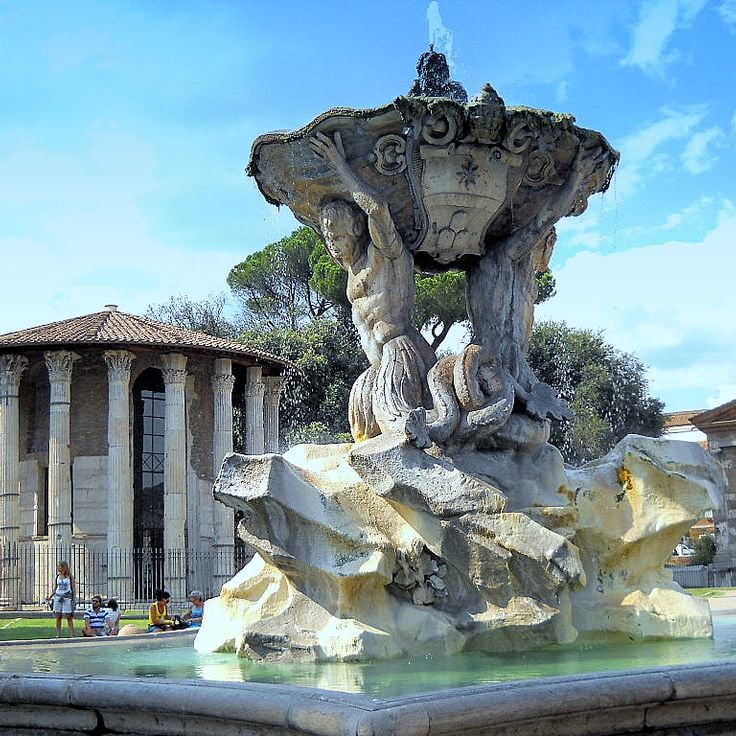
The baroque Fontaine des Tritons in Bologna is crafted from marble and features four tritons holding conch shells from which water flows into the central basin. This fountain exemplifies Italian craftsmanship during the baroque period and combines mythological representations with urban water distribution. The tritons, as sea deities from Greek mythology, symbolize the connection between the city and water as an element. The fountain represents the decorative treatment of public squares in Bologna during the 17th or 18th century.
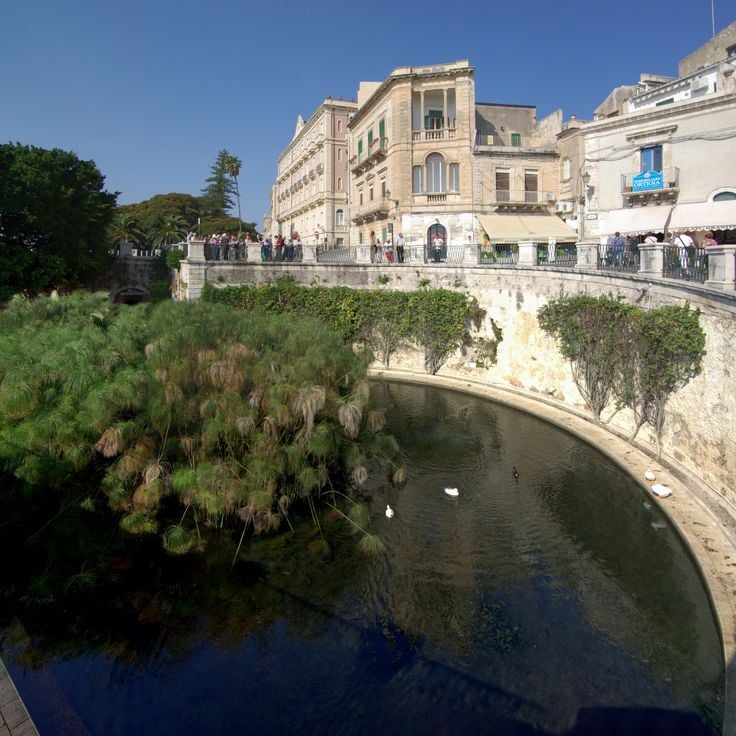
The Fontana Arethusa in Syracuse is a historic spring that flows directly into the Mediterranean Sea and contains papyrus plants. According to legend, the nymph Arethusa transformed herself into a spring at this location to escape the river god Alpheus. This natural source was architecturally framed over the centuries and demonstrates the connection between Greek mythology and Sicilian history. The Fontana Arethusa is one of the few places in Europe where papyrus grows wild, representing a significant example of the integration of natural water sources into the urban structure of the ancient city.
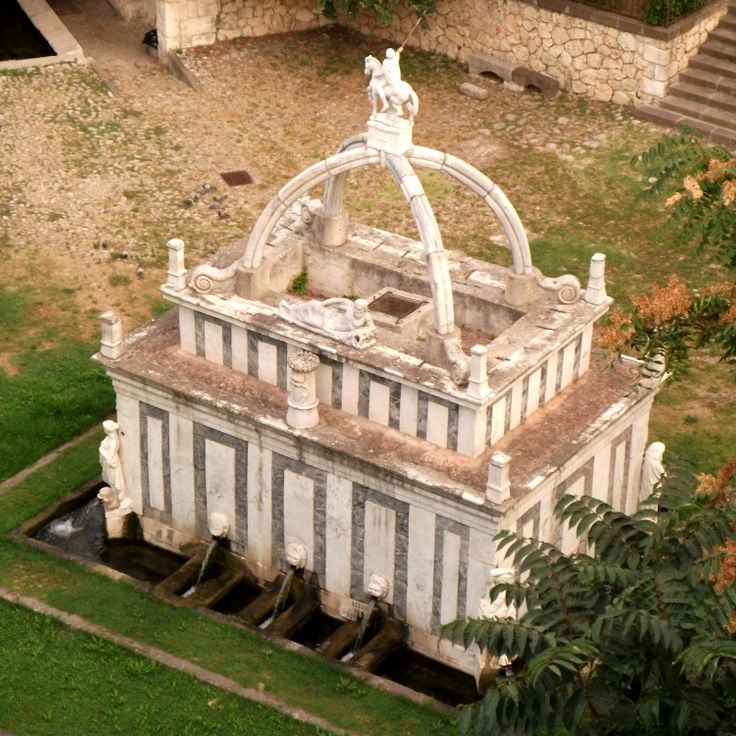
This Renaissance fountain from 1585 features twelve water jets and four equestrian statues representing the seasons. The Fontana Rosello demonstrates Renaissance craftsmanship in Sassari and combines architectural elements with allegorical symbolism. The fountain was built as a public water source and served the city's water supply for centuries. The equestrian statues represent spring, summer, autumn, and winter in classical iconography. The twelve water jets correspond to the months of the year and create a geometric structure characteristic of fountains from this period.
This fountain in Rome features a 16th-century marble sculpture depicting a male figure with African features holding a dolphin in the water. The work dates from the Renaissance period and reflects the Italian tradition of incorporating mythological and allegorical representations in public fountains. The white marble sculpture combines religious symbolism with secular motifs, demonstrating the artistic development of this era. As part of the urban water supply system, the fountain served practical purposes while also representing the power and wealth of the city.
This 17th-century stone fountain displays relief depictions that portray the martyrdom of Saint Lucy. The Fontaine Santa Lucia is an important site of religious tradition in Syracuse and reflects the craftsmanship of Italian stonemasons from this era. The depictions illustrate scenes from the life of the saint who is venerated as the city's patron.
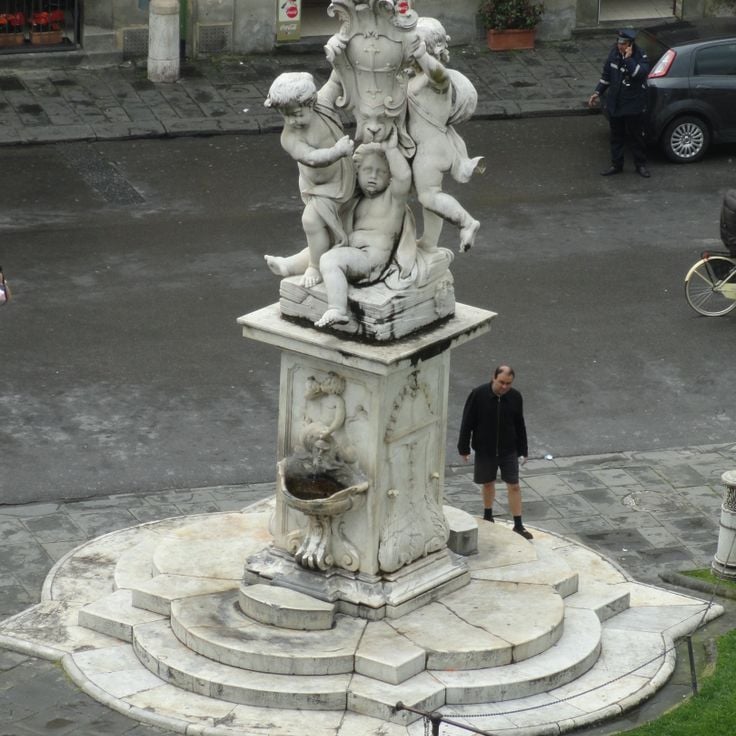
This stone fountain from the 1920s stands in front of the cathedral at the Piazza dei Miracoli. It features an octagonal basin with water spouts and geometric decorations. As part of the historic complex in Pisa, the fountain complements the medieval architecture of the cathedral square and demonstrates the continuation of Italian stonemasonry into the 20th century. The geometric decorations reflect the style of the interwar period, while the octagonal basin follows traditional Tuscan fountain forms.
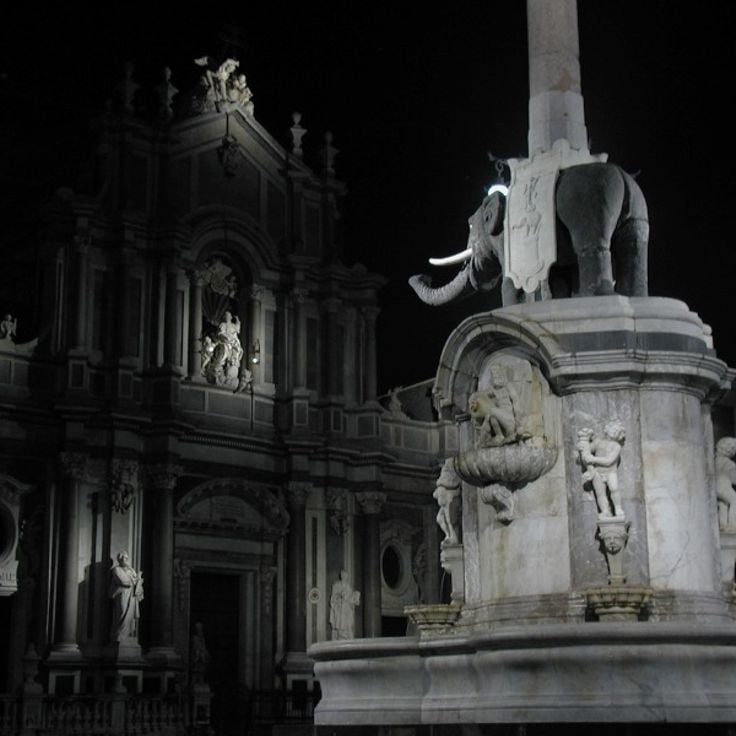
The Fontana dell'Elefante from 1736 features an elephant carved from black basalt carrying an Egyptian obelisk on its back. This statue has served as the city's symbol since the 18th century. The fountain belongs to a collection of Italian fountains from the 15th to 19th centuries, crafted in marble, bronze, or stone, representing mythological figures, religious scenes, and historical events. The monument combines ancient Egyptian elements with Baroque design and stands in the city center.
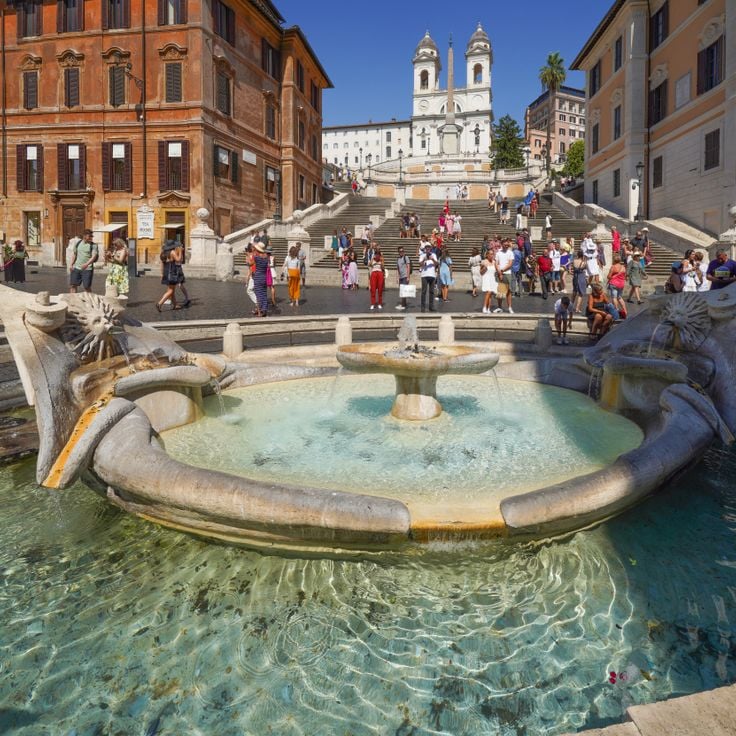
The Fontana della Barcaccia is a stone fountain built in 1629 by Pietro and Gian Lorenzo Bernini at the foot of the Spanish Steps. The fountain represents a sinking boat and was designed at street level due to the low water pressure from the aqueduct. The boat form references a historical flood of the Tiber River in 1598, when a barge washed up at this location. The work displays typical characteristics of 17th century Italian fountain craftsmanship with religious and mythological connections to Roman history.
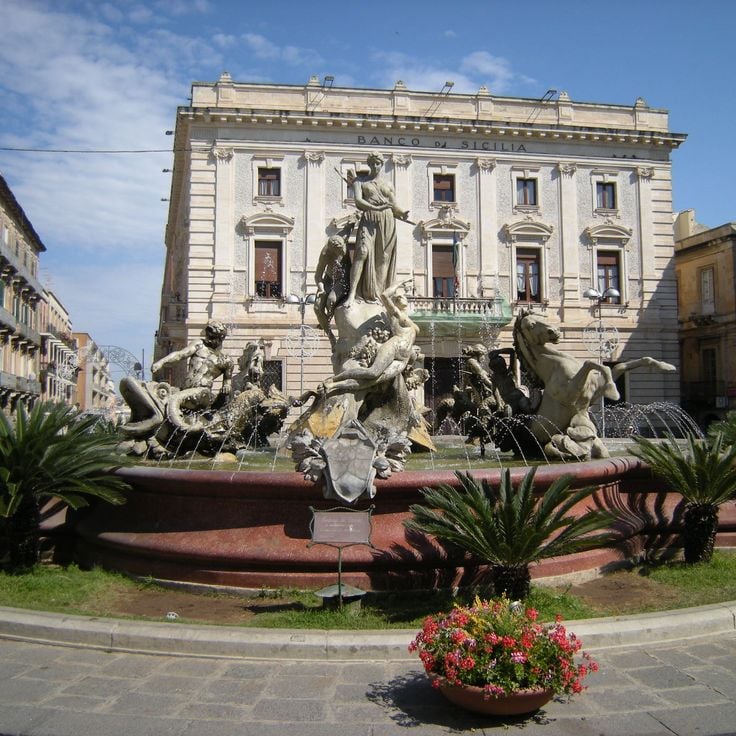
This marble fountain from 1907 depicts Diana, goddess of the hunt, with water flowing from several jets. The Fontaine de Diane stands in Piazza Archimede on the island of Ortygia and represents Italian fountain craftsmanship from the early 20th century, featuring mythological figures as shown in this collection of historic fountains spanning the 15th to 19th centuries.
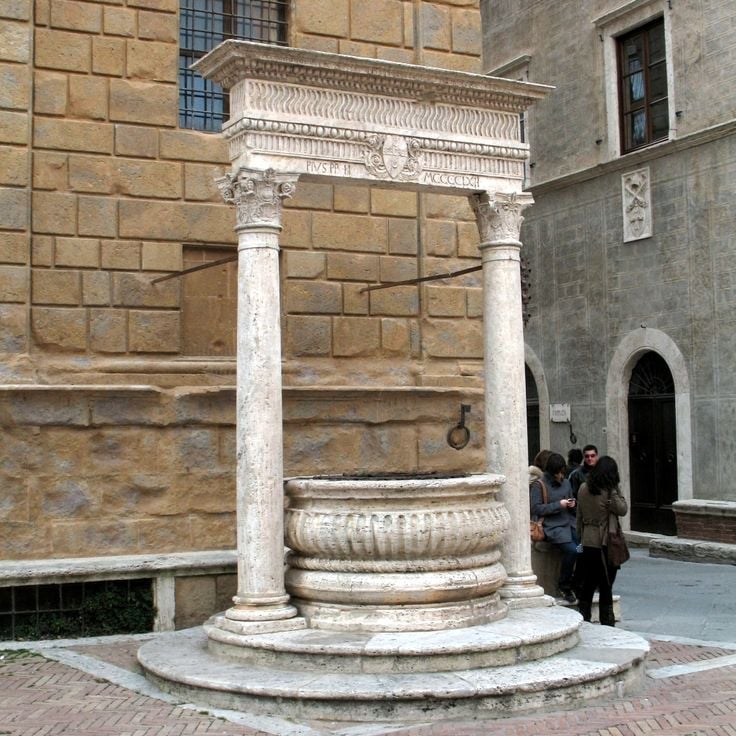
This stone fountain stands at the entrance to the Palazzo Piccolomini and features carved motifs and water spouts. The Fontaine Piccolomini was built in the 15th century during the Renaissance and demonstrates the skill of Italian stonemasons of the period. As part of the architectural ensemble of Pienza, it combines functional water supply with decorative elements characteristic of Renaissance humanistic culture.
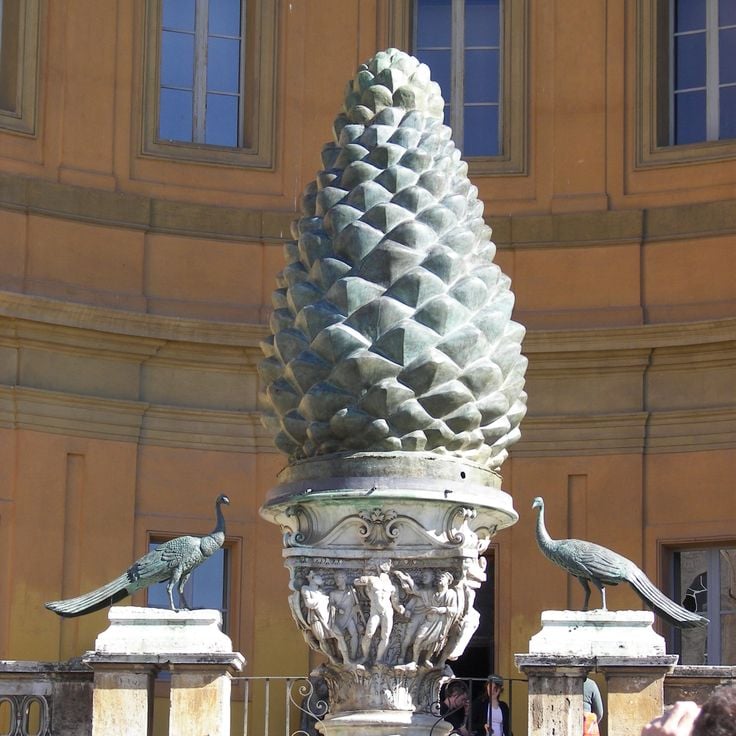
This fountain features a large bronze pinecone from ancient Rome. The pinecone dates to the 1st or 2nd century and originally stood near the Pantheon, possibly as part of a fountain in the Temple of Isis. In 1608, Pope Paul V moved the sculpture to the Cortile della Pigna in the Vatican, where it remains the central element of the fountain. The bronze pinecone stands approximately 13 feet (4 meters) tall and is flanked by two bronze peacocks that are copies of Roman originals. This fountain represents the Italian tradition of repurposing ancient artworks in later architectural settings.
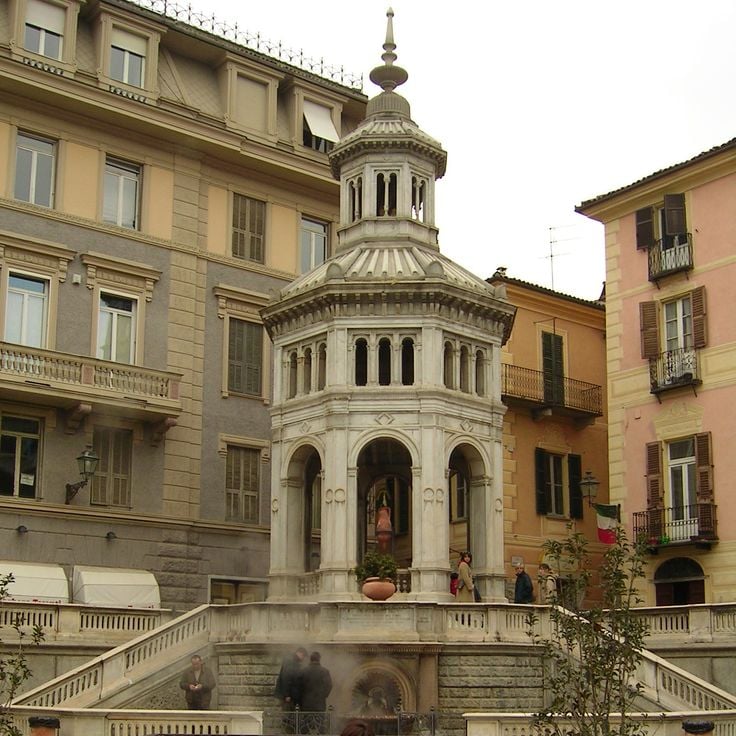
This marble fountain delivers naturally hot water at 167 degrees Fahrenheit (75 degrees Celsius) through a bronze spout. The octagonal structure was built in 1879 and features eight columns supporting a dome. The Fontaine Bouillante utilizes the thermal springs of Acqui Terme and demonstrates the town's connection to its centuries-old bathing tradition.
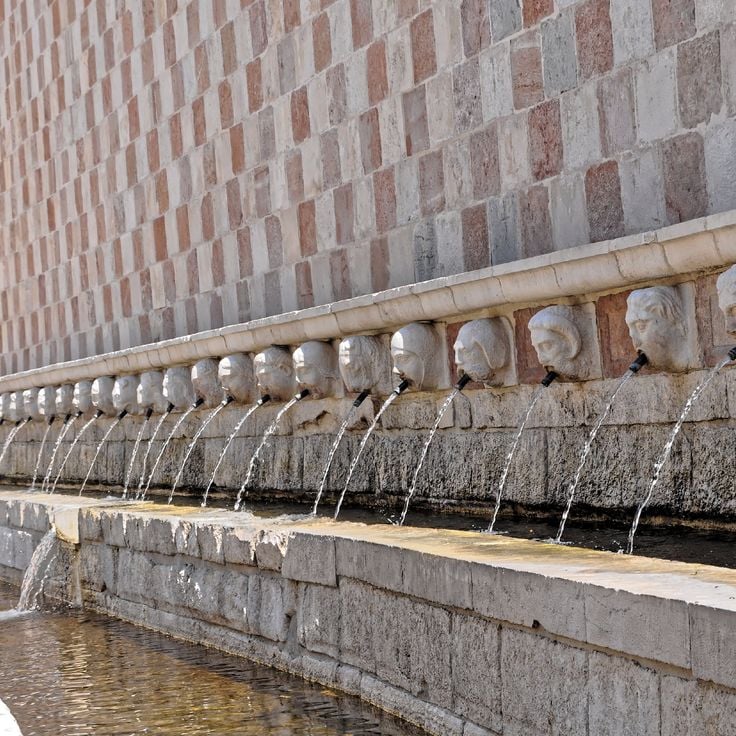
This fountain from 1272 features 93 stone faces and 6 simple channels arranged in three rows along rectangular walls. The structure documents the medieval craftsmanship of the city and provided the population with continuously flowing water. The stone faces represent various persons and symbolic figures connected to the local history of L'Aquila.
This medieval fountain from 1474 features five bronze spouts set into a limestone wall. The water flows into a rectangular basin that was historically used for washing. The Fountain of the Five Spouts demonstrates Italian craftsmanship of the 15th century and is connected to the local history of Sulmona, where it served as a public water source.
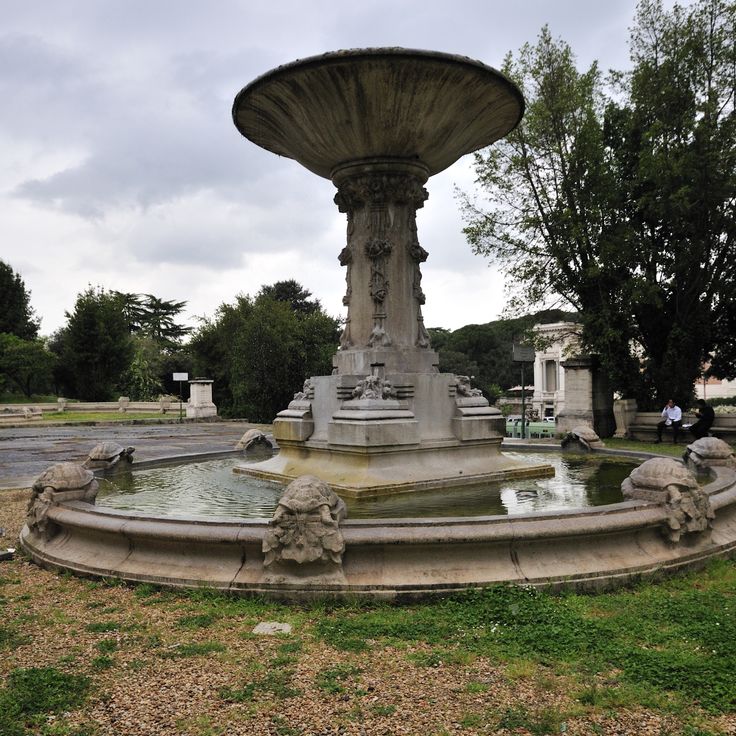
This 1920s fountain in the Vallé Giulia features a central marble basin with water flowing through stone masks into three lower basins. It belongs to the collection of historic fountains demonstrating Italian craftsmanship from the 15th to 19th centuries, though this example dates from the 20th century and reflects the local history of Rome.
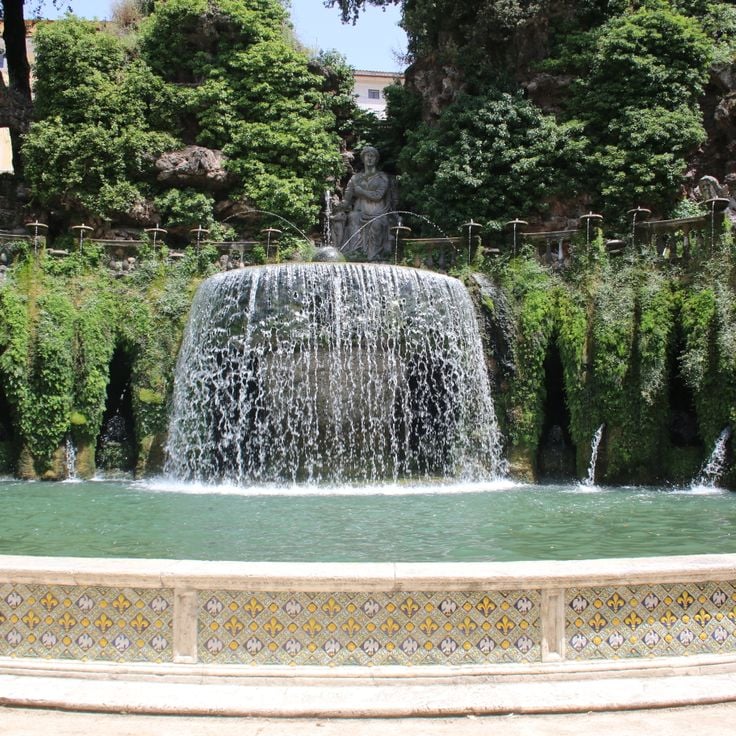
This Renaissance water feature spans 40 meters (131 feet) in width and features multiple cascading levels that create complex water patterns. The stone basin collects water from 200 jets, demonstrating the technical capabilities of Italian craftsmanship from the 15th to 19th centuries. The Fontana dell'Ovato illustrates the hydraulic developments of its era and displays mythological representations executed in marble and bronze. This installation in Tivoli embodies the local history of the city through its architectural and artistic elements, incorporating religious and historical scenes within its design.
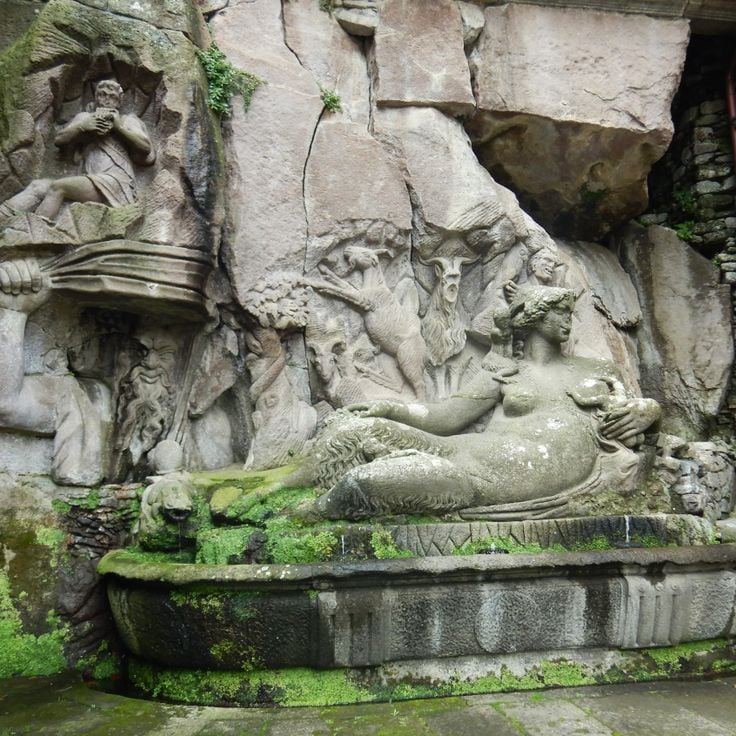
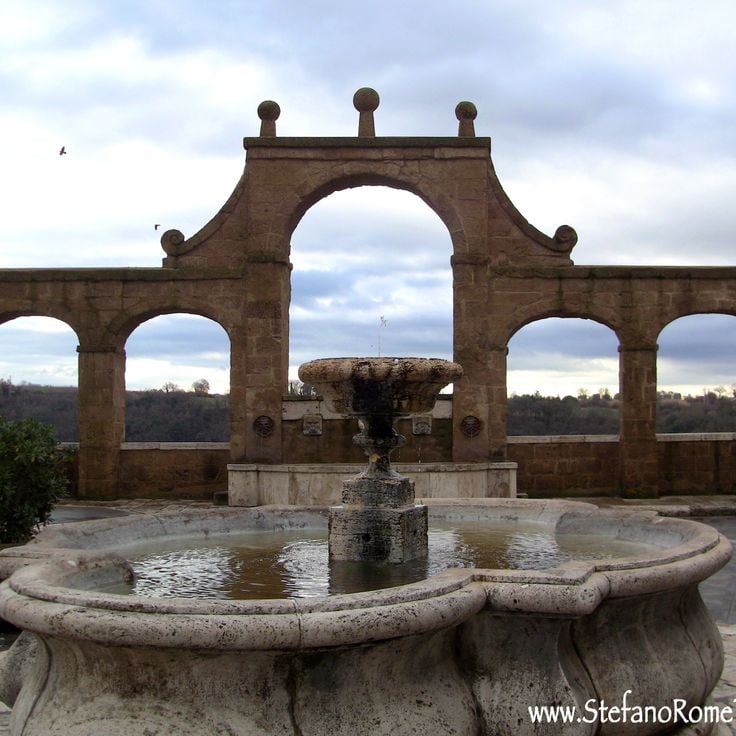
The Fontana Papacqua dates from the 16th century and displays full-size stone sculptures of human figures. Water flows through multiple levels into a rectangular basin surrounded by mosaic decorations. This fountain documents Renaissance stoneworking techniques in the Lazio region and forms part of the historical heritage of Soriano nel Cimino.
The gardens of Villa d'Este in Tivoli were created in the 16th century and demonstrate Italian Renaissance water engineering. These fountains spread across multiple terraces and use the natural slope of the hillside for their water system. The 51 fountains were crafted from marble, stone, and bronze, featuring mythological figures including representations of Diana, Neptune, and Pegasus. The fountains include water displays, cascades, and basins fed through an elaborate network of channels and aqueducts. The complex was built for Cardinal Ippolito II d'Este and served as a summer residence. The fountains of Villa d'Este document Renaissance hydraulic knowledge and the connection between architecture, water engineering, and garden design in 16th-century Italy.
This fountain was created by Bernini in 1651 and depicts four major rivers of the continents known at the time: the Nile for Africa, the Danube for Europe, the Ganges for Asia, and the Rio de la Plata for the Americas. The marble and travertine sculptures stand at the four corners of the central obelisk. Each figure represents a river through symbolic elements including animals, plants, and coins. The fountain stands in Piazza Navona and is among the notable works of 17th-century Roman Baroque.
This fountain at the Pantheon was created in the 16th century and features an Egyptian obelisk of red granite resting on a base with four dolphins. The obelisk dates from ancient times and was placed at its current location under Pope Clement XI in 1711. The dolphins serve as water spouts and connect Roman fountain tradition with Egyptian monumental art. The ensemble illustrates the practice of papal urban design in Baroque Rome, where ancient monuments were integrated into new urban contexts.
The Masini Fountain was built in 1591 and displays sea gods, tritons, and gargoyles carved from white marble with bronze elements. This fountain was commissioned by Cesare Masini and represents the style of the Italian Renaissance at the end of the sixteenth century. The sculptural motifs refer to classical mythology and reflect the technical and artistic skills of craftsmen from Emilia-Romagna, known for their work with marble and bronze. The fountain belongs to the cultural heritage of the city and documents the importance of public water structures during the Renaissance period.
This fountain was completed in 1565 and features a bronze statue of the sea god standing on a shell-shaped chariot drawn by four horses. The central figure is surrounded by marine deities and represents the maritime power of the Tuscan city. The fountain was commissioned by the Medici family and stands in Piazza della Signoria. The bronze work demonstrates the craftsmanship of 16th-century Italian artisans and combines mythological representations with the political history of Florence.
This fountain was built in 1587 and shows four lions along with a central figure of Moses striking water from the rock. The sculpture represents the biblical episode from the Book of Exodus and belongs to the important bronze works of the late Renaissance in Rome. The four lions rest on raised pedestals and surround the Moses figure. The fountain was commissioned by Pope Sixtus V and marked the terminus of a new aqueduct that brought water to the city. The overall structure combines religious symbolism with practical function as a public water supply.
The Fontana Pretoria was built in 1554 and consists of three levels with mythological statues, animal figures, and representations of rivers in white marble. This fountain demonstrates Italian craftsmanship from the 16th century and combines architectural design with classical mythology. The structure includes multiple basins and over 40 sculptures depicting various deities, mythical creatures, and allegorical figures. Originally created for a Florentine garden, it was later moved to Palermo.
This fountain was built in 1901 at Piazza della Repubblica and features four bronze nymphs representing different forms of water: the nymph of lakes reclines on a swan, the river nymph rests on a river monster, the nymph of underground waters subdues a mysterious dragon, and the ocean nymph rides a horse. At the center stands the sculpture of Glaucus, added in 1912. The fountain represents Italian sculptural craftsmanship from the turn of the century and complements the urban renewal of Rome following Italian unification.
This 18th-century baroque fountain measures 85 feet (26 meters) in height and 160 feet (49 meters) in width. The Fontana di Trevi displays Italian craftsmanship of the period with marble statues of sea creatures and mythological figures. Water flows between the sculptures, which surround Neptune at the center and other representations. The fountain represents Roman fountain art of the 18th century and forms part of the city's historical water landscape. The construction combines architectural design with the urban water supply of the period.
This stone fountain at the Palazzo Pubblico features two wolves spouting water. The sculptures refer to Romulus and Remus, the legendary founders of Rome, and connect the history of Siena with Roman mythology. The fountain was crafted from local stone and demonstrates the skills of Italian stonemasons between the 15th and 19th centuries. The depiction of the nursing she-wolf is a recurring motif in Italian art and symbolizes the mythological roots of the region. The work fits into the collection of historical fountains that represent religious, mythological, and historical themes from Italian history.
This medieval fountain in the center of Perugia consists of two marble basins arranged one above the other. The Fontana Maggiore was built in the 13th century and displays 25 sculptures depicting biblical scenes, Roman history, and local events. Water flows through 50 different pipes to supply both basins. The reliefs and statues were created by Nicola and Giovanni Pisano and illustrate the medieval sculptural craftsmanship of Umbria. The fountain marks the endpoint of an aqueduct that transported water from Monte Pacciano into the city.
This fountain displays a Roman structure from the 4th century that was enhanced with a Renaissance statue. The base of the Fontana di Madonna Verona presents reliefs featuring emblems of the city of Verona. The combination of Roman and Renaissance elements reflects the artistic development of the city across several centuries. The statue was added later to complete the ancient structure. The civic symbols depicted on the base connect the monument to the local history of Verona.
This Fontana delle Tartarughe from the 16th century features four bronze youths holding dolphins while turtles drink from the upper basin rim. The Renaissance fountain was created by Taddeo Landini following designs by Giacomo della Porta and combines mythological motifs with playful elements. The turtles were added in the 17th century and give the work its characteristic form. This fountain stands in Piazza Mattei in the Roman Ghetto and demonstrates the craftsmanship of Roman bronze casting during the Renaissance period.
The baroque Fontaine des Tritons in Bologna is crafted from marble and features four tritons holding conch shells from which water flows into the central basin. This fountain exemplifies Italian craftsmanship during the baroque period and combines mythological representations with urban water distribution. The tritons, as sea deities from Greek mythology, symbolize the connection between the city and water as an element. The fountain represents the decorative treatment of public squares in Bologna during the 17th or 18th century.
The Fontana Arethusa in Syracuse is a historic spring that flows directly into the Mediterranean Sea and contains papyrus plants. According to legend, the nymph Arethusa transformed herself into a spring at this location to escape the river god Alpheus. This natural source was architecturally framed over the centuries and demonstrates the connection between Greek mythology and Sicilian history. The Fontana Arethusa is one of the few places in Europe where papyrus grows wild, representing a significant example of the integration of natural water sources into the urban structure of the ancient city.
This Renaissance fountain from 1585 features twelve water jets and four equestrian statues representing the seasons. The Fontana Rosello demonstrates Renaissance craftsmanship in Sassari and combines architectural elements with allegorical symbolism. The fountain was built as a public water source and served the city's water supply for centuries. The equestrian statues represent spring, summer, autumn, and winter in classical iconography. The twelve water jets correspond to the months of the year and create a geometric structure characteristic of fountains from this period.
This fountain in Rome features a 16th-century marble sculpture depicting a male figure with African features holding a dolphin in the water. The work dates from the Renaissance period and reflects the Italian tradition of incorporating mythological and allegorical representations in public fountains. The white marble sculpture combines religious symbolism with secular motifs, demonstrating the artistic development of this era. As part of the urban water supply system, the fountain served practical purposes while also representing the power and wealth of the city.
This 17th-century stone fountain displays relief depictions that portray the martyrdom of Saint Lucy. The Fontaine Santa Lucia is an important site of religious tradition in Syracuse and reflects the craftsmanship of Italian stonemasons from this era. The depictions illustrate scenes from the life of the saint who is venerated as the city's patron.
This stone fountain from the 1920s stands in front of the cathedral at the Piazza dei Miracoli. It features an octagonal basin with water spouts and geometric decorations. As part of the historic complex in Pisa, the fountain complements the medieval architecture of the cathedral square and demonstrates the continuation of Italian stonemasonry into the 20th century. The geometric decorations reflect the style of the interwar period, while the octagonal basin follows traditional Tuscan fountain forms.
The Fontana dell'Elefante from 1736 features an elephant carved from black basalt carrying an Egyptian obelisk on its back. This statue has served as the city's symbol since the 18th century. The fountain belongs to a collection of Italian fountains from the 15th to 19th centuries, crafted in marble, bronze, or stone, representing mythological figures, religious scenes, and historical events. The monument combines ancient Egyptian elements with Baroque design and stands in the city center.
The Fontana della Barcaccia is a stone fountain built in 1629 by Pietro and Gian Lorenzo Bernini at the foot of the Spanish Steps. The fountain represents a sinking boat and was designed at street level due to the low water pressure from the aqueduct. The boat form references a historical flood of the Tiber River in 1598, when a barge washed up at this location. The work displays typical characteristics of 17th century Italian fountain craftsmanship with religious and mythological connections to Roman history.
This marble fountain from 1907 depicts Diana, goddess of the hunt, with water flowing from several jets. The Fontaine de Diane stands in Piazza Archimede on the island of Ortygia and represents Italian fountain craftsmanship from the early 20th century, featuring mythological figures as shown in this collection of historic fountains spanning the 15th to 19th centuries.
This stone fountain stands at the entrance to the Palazzo Piccolomini and features carved motifs and water spouts. The Fontaine Piccolomini was built in the 15th century during the Renaissance and demonstrates the skill of Italian stonemasons of the period. As part of the architectural ensemble of Pienza, it combines functional water supply with decorative elements characteristic of Renaissance humanistic culture.
This fountain features a large bronze pinecone from ancient Rome. The pinecone dates to the 1st or 2nd century and originally stood near the Pantheon, possibly as part of a fountain in the Temple of Isis. In 1608, Pope Paul V moved the sculpture to the Cortile della Pigna in the Vatican, where it remains the central element of the fountain. The bronze pinecone stands approximately 13 feet (4 meters) tall and is flanked by two bronze peacocks that are copies of Roman originals. This fountain represents the Italian tradition of repurposing ancient artworks in later architectural settings.
This marble fountain delivers naturally hot water at 167 degrees Fahrenheit (75 degrees Celsius) through a bronze spout. The octagonal structure was built in 1879 and features eight columns supporting a dome. The Fontaine Bouillante utilizes the thermal springs of Acqui Terme and demonstrates the town's connection to its centuries-old bathing tradition.
This fountain from 1272 features 93 stone faces and 6 simple channels arranged in three rows along rectangular walls. The structure documents the medieval craftsmanship of the city and provided the population with continuously flowing water. The stone faces represent various persons and symbolic figures connected to the local history of L'Aquila.
This medieval fountain from 1474 features five bronze spouts set into a limestone wall. The water flows into a rectangular basin that was historically used for washing. The Fountain of the Five Spouts demonstrates Italian craftsmanship of the 15th century and is connected to the local history of Sulmona, where it served as a public water source.
This 1920s fountain in the Vallé Giulia features a central marble basin with water flowing through stone masks into three lower basins. It belongs to the collection of historic fountains demonstrating Italian craftsmanship from the 15th to 19th centuries, though this example dates from the 20th century and reflects the local history of Rome.
This Renaissance water feature spans 40 meters (131 feet) in width and features multiple cascading levels that create complex water patterns. The stone basin collects water from 200 jets, demonstrating the technical capabilities of Italian craftsmanship from the 15th to 19th centuries. The Fontana dell'Ovato illustrates the hydraulic developments of its era and displays mythological representations executed in marble and bronze. This installation in Tivoli embodies the local history of the city through its architectural and artistic elements, incorporating religious and historical scenes within its design.
The Fontana Papacqua dates from the 16th century and displays full-size stone sculptures of human figures. Water flows through multiple levels into a rectangular basin surrounded by mosaic decorations. This fountain documents Renaissance stoneworking techniques in the Lazio region and forms part of the historical heritage of Soriano nel Cimino.
The gardens of Villa d'Este in Tivoli were created in the 16th century and demonstrate Italian Renaissance water engineering. These fountains spread across multiple terraces and use the natural slope of the hillside for their water system. The 51 fountains were crafted from marble, stone, and bronze, featuring mythological figures including representations of Diana, Neptune, and Pegasus. The fountains include water displays, cascades, and basins fed through an elaborate network of channels and aqueducts. The complex was built for Cardinal Ippolito II d'Este and served as a summer residence. The fountains of Villa d'Este document Renaissance hydraulic knowledge and the connection between architecture, water engineering, and garden design in 16th-century Italy.
This fountain was created by Bernini in 1651 and depicts four major rivers of the continents known at the time: the Nile for Africa, the Danube for Europe, the Ganges for Asia, and the Rio de la Plata for the Americas. The marble and travertine sculptures stand at the four corners of the central obelisk. Each figure represents a river through symbolic elements including animals, plants, and coins. The fountain stands in Piazza Navona and is among the notable works of 17th-century Roman Baroque.
This fountain at the Pantheon was created in the 16th century and features an Egyptian obelisk of red granite resting on a base with four dolphins. The obelisk dates from ancient times and was placed at its current location under Pope Clement XI in 1711. The dolphins serve as water spouts and connect Roman fountain tradition with Egyptian monumental art. The ensemble illustrates the practice of papal urban design in Baroque Rome, where ancient monuments were integrated into new urban contexts.
The Masini Fountain was built in 1591 and displays sea gods, tritons, and gargoyles carved from white marble with bronze elements. This fountain was commissioned by Cesare Masini and represents the style of the Italian Renaissance at the end of the sixteenth century. The sculptural motifs refer to classical mythology and reflect the technical and artistic skills of craftsmen from Emilia-Romagna, known for their work with marble and bronze. The fountain belongs to the cultural heritage of the city and documents the importance of public water structures during the Renaissance period.
This fountain was completed in 1565 and features a bronze statue of the sea god standing on a shell-shaped chariot drawn by four horses. The central figure is surrounded by marine deities and represents the maritime power of the Tuscan city. The fountain was commissioned by the Medici family and stands in Piazza della Signoria. The bronze work demonstrates the craftsmanship of 16th-century Italian artisans and combines mythological representations with the political history of Florence.
This fountain was built in 1587 and shows four lions along with a central figure of Moses striking water from the rock. The sculpture represents the biblical episode from the Book of Exodus and belongs to the important bronze works of the late Renaissance in Rome. The four lions rest on raised pedestals and surround the Moses figure. The fountain was commissioned by Pope Sixtus V and marked the terminus of a new aqueduct that brought water to the city. The overall structure combines religious symbolism with practical function as a public water supply.
The Fontana Pretoria was built in 1554 and consists of three levels with mythological statues, animal figures, and representations of rivers in white marble. This fountain demonstrates Italian craftsmanship from the 16th century and combines architectural design with classical mythology. The structure includes multiple basins and over 40 sculptures depicting various deities, mythical creatures, and allegorical figures. Originally created for a Florentine garden, it was later moved to Palermo.
This fountain was built in 1901 at Piazza della Repubblica and features four bronze nymphs representing different forms of water: the nymph of lakes reclines on a swan, the river nymph rests on a river monster, the nymph of underground waters subdues a mysterious dragon, and the ocean nymph rides a horse. At the center stands the sculpture of Glaucus, added in 1912. The fountain represents Italian sculptural craftsmanship from the turn of the century and complements the urban renewal of Rome following Italian unification.
This 18th-century baroque fountain measures 85 feet (26 meters) in height and 160 feet (49 meters) in width. The Fontana di Trevi displays Italian craftsmanship of the period with marble statues of sea creatures and mythological figures. Water flows between the sculptures, which surround Neptune at the center and other representations. The fountain represents Roman fountain art of the 18th century and forms part of the city's historical water landscape. The construction combines architectural design with the urban water supply of the period.
This stone fountain at the Palazzo Pubblico features two wolves spouting water. The sculptures refer to Romulus and Remus, the legendary founders of Rome, and connect the history of Siena with Roman mythology. The fountain was crafted from local stone and demonstrates the skills of Italian stonemasons between the 15th and 19th centuries. The depiction of the nursing she-wolf is a recurring motif in Italian art and symbolizes the mythological roots of the region. The work fits into the collection of historical fountains that represent religious, mythological, and historical themes from Italian history.
This medieval fountain in the center of Perugia consists of two marble basins arranged one above the other. The Fontana Maggiore was built in the 13th century and displays 25 sculptures depicting biblical scenes, Roman history, and local events. Water flows through 50 different pipes to supply both basins. The reliefs and statues were created by Nicola and Giovanni Pisano and illustrate the medieval sculptural craftsmanship of Umbria. The fountain marks the endpoint of an aqueduct that transported water from Monte Pacciano into the city.
This fountain displays a Roman structure from the 4th century that was enhanced with a Renaissance statue. The base of the Fontana di Madonna Verona presents reliefs featuring emblems of the city of Verona. The combination of Roman and Renaissance elements reflects the artistic development of the city across several centuries. The statue was added later to complete the ancient structure. The civic symbols depicted on the base connect the monument to the local history of Verona.
This Fontana delle Tartarughe from the 16th century features four bronze youths holding dolphins while turtles drink from the upper basin rim. The Renaissance fountain was created by Taddeo Landini following designs by Giacomo della Porta and combines mythological motifs with playful elements. The turtles were added in the 17th century and give the work its characteristic form. This fountain stands in Piazza Mattei in the Roman Ghetto and demonstrates the craftsmanship of Roman bronze casting during the Renaissance period.
The baroque Fontaine des Tritons in Bologna is crafted from marble and features four tritons holding conch shells from which water flows into the central basin. This fountain exemplifies Italian craftsmanship during the baroque period and combines mythological representations with urban water distribution. The tritons, as sea deities from Greek mythology, symbolize the connection between the city and water as an element. The fountain represents the decorative treatment of public squares in Bologna during the 17th or 18th century.
The Fontana Arethusa in Syracuse is a historic spring that flows directly into the Mediterranean Sea and contains papyrus plants. According to legend, the nymph Arethusa transformed herself into a spring at this location to escape the river god Alpheus. This natural source was architecturally framed over the centuries and demonstrates the connection between Greek mythology and Sicilian history. The Fontana Arethusa is one of the few places in Europe where papyrus grows wild, representing a significant example of the integration of natural water sources into the urban structure of the ancient city.
This Renaissance fountain from 1585 features twelve water jets and four equestrian statues representing the seasons. The Fontana Rosello demonstrates Renaissance craftsmanship in Sassari and combines architectural elements with allegorical symbolism. The fountain was built as a public water source and served the city's water supply for centuries. The equestrian statues represent spring, summer, autumn, and winter in classical iconography. The twelve water jets correspond to the months of the year and create a geometric structure characteristic of fountains from this period.
This fountain in Rome features a 16th-century marble sculpture depicting a male figure with African features holding a dolphin in the water. The work dates from the Renaissance period and reflects the Italian tradition of incorporating mythological and allegorical representations in public fountains. The white marble sculpture combines religious symbolism with secular motifs, demonstrating the artistic development of this era. As part of the urban water supply system, the fountain served practical purposes while also representing the power and wealth of the city.
This 17th-century stone fountain displays relief depictions that portray the martyrdom of Saint Lucy. The Fontaine Santa Lucia is an important site of religious tradition in Syracuse and reflects the craftsmanship of Italian stonemasons from this era. The depictions illustrate scenes from the life of the saint who is venerated as the city's patron.
This stone fountain from the 1920s stands in front of the cathedral at the Piazza dei Miracoli. It features an octagonal basin with water spouts and geometric decorations. As part of the historic complex in Pisa, the fountain complements the medieval architecture of the cathedral square and demonstrates the continuation of Italian stonemasonry into the 20th century. The geometric decorations reflect the style of the interwar period, while the octagonal basin follows traditional Tuscan fountain forms.
The Fontana dell'Elefante from 1736 features an elephant carved from black basalt carrying an Egyptian obelisk on its back. This statue has served as the city's symbol since the 18th century. The fountain belongs to a collection of Italian fountains from the 15th to 19th centuries, crafted in marble, bronze, or stone, representing mythological figures, religious scenes, and historical events. The monument combines ancient Egyptian elements with Baroque design and stands in the city center.
The Fontana della Barcaccia is a stone fountain built in 1629 by Pietro and Gian Lorenzo Bernini at the foot of the Spanish Steps. The fountain represents a sinking boat and was designed at street level due to the low water pressure from the aqueduct. The boat form references a historical flood of the Tiber River in 1598, when a barge washed up at this location. The work displays typical characteristics of 17th century Italian fountain craftsmanship with religious and mythological connections to Roman history.
This marble fountain from 1907 depicts Diana, goddess of the hunt, with water flowing from several jets. The Fontaine de Diane stands in Piazza Archimede on the island of Ortygia and represents Italian fountain craftsmanship from the early 20th century, featuring mythological figures as shown in this collection of historic fountains spanning the 15th to 19th centuries.
This stone fountain stands at the entrance to the Palazzo Piccolomini and features carved motifs and water spouts. The Fontaine Piccolomini was built in the 15th century during the Renaissance and demonstrates the skill of Italian stonemasons of the period. As part of the architectural ensemble of Pienza, it combines functional water supply with decorative elements characteristic of Renaissance humanistic culture.
This fountain features a large bronze pinecone from ancient Rome. The pinecone dates to the 1st or 2nd century and originally stood near the Pantheon, possibly as part of a fountain in the Temple of Isis. In 1608, Pope Paul V moved the sculpture to the Cortile della Pigna in the Vatican, where it remains the central element of the fountain. The bronze pinecone stands approximately 13 feet (4 meters) tall and is flanked by two bronze peacocks that are copies of Roman originals. This fountain represents the Italian tradition of repurposing ancient artworks in later architectural settings.
This marble fountain delivers naturally hot water at 167 degrees Fahrenheit (75 degrees Celsius) through a bronze spout. The octagonal structure was built in 1879 and features eight columns supporting a dome. The Fontaine Bouillante utilizes the thermal springs of Acqui Terme and demonstrates the town's connection to its centuries-old bathing tradition.
This fountain from 1272 features 93 stone faces and 6 simple channels arranged in three rows along rectangular walls. The structure documents the medieval craftsmanship of the city and provided the population with continuously flowing water. The stone faces represent various persons and symbolic figures connected to the local history of L'Aquila.
This medieval fountain from 1474 features five bronze spouts set into a limestone wall. The water flows into a rectangular basin that was historically used for washing. The Fountain of the Five Spouts demonstrates Italian craftsmanship of the 15th century and is connected to the local history of Sulmona, where it served as a public water source.
This 1920s fountain in the Vallé Giulia features a central marble basin with water flowing through stone masks into three lower basins. It belongs to the collection of historic fountains demonstrating Italian craftsmanship from the 15th to 19th centuries, though this example dates from the 20th century and reflects the local history of Rome.
This Renaissance water feature spans 40 meters (131 feet) in width and features multiple cascading levels that create complex water patterns. The stone basin collects water from 200 jets, demonstrating the technical capabilities of Italian craftsmanship from the 15th to 19th centuries. The Fontana dell'Ovato illustrates the hydraulic developments of its era and displays mythological representations executed in marble and bronze. This installation in Tivoli embodies the local history of the city through its architectural and artistic elements, incorporating religious and historical scenes within its design.
The Fontana Papacqua dates from the 16th century and displays full-size stone sculptures of human figures. Water flows through multiple levels into a rectangular basin surrounded by mosaic decorations. This fountain documents Renaissance stoneworking techniques in the Lazio region and forms part of the historical heritage of Soriano nel Cimino.