See the monuments around you in AROpen chests in the app
Around Us is built for your phone — point your camera at the streets and discover the monuments and places around you in augmented reality.Around Us is built for your phone — chests unlock when you walk, explore and capture nearby places.
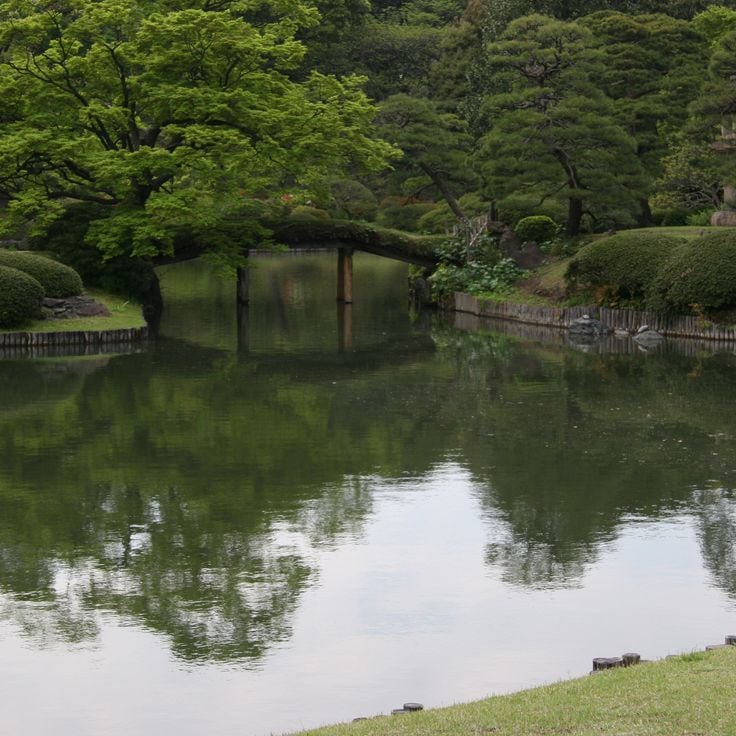
Moon bridges form semicircles that reflect as complete circles in the water. These structures originated in East Asia and combine practical function with deliberate design. The constructions appear in public gardens, botanical spaces and historic landscapes from Japan to California.
The collection includes examples from different countries and periods. In Tokyo, the Drum Bridge spans a pond in Golden Gate Park, while the bridge at Kameido Tenjin Shrine forms part of a traditional shrine complex. Dahu Park in Taipei and Rikugien Garden in Tokyo show further variations of this building form. In China, examples range from the Jade Belt Arch in Beijing to multi-arched structures like the Twenty-Four Arch Bridge in Yangzhou. The Anshun Lang Bridge in Chengdu and the Stone Moon Bridge in Suzhou document different regional building styles.
The form spread beyond Asia into botanical gardens and park settings worldwide. In the United States, moon bridges appear at Kubota Garden in Seattle, the Huntington Library in San Marino, and as the Humpback Bridge in Virginia. The Japanese garden in Toulouse presents a European example, while Hamilton Gardens in New Zealand holds the southernmost variation. Taiko Bashi in Kanagawa and Sorihashi in Sumiyoshi rank among the most traditional Japanese versions. Each location demonstrates its own interpretation of this architectural form.
Moon bridges form semicircles that reflect as complete circles in the water. These structures originated in East Asia and combine practical function with deliberate design. The constructions appear in public gardens, botanical spaces and historic landscapes from Japan to California.
The collection includes examples from different countries and periods. In Tokyo, the Drum Bridge spans a pond in Golden Gate Park, while the bridge at Kameido Tenjin Shrine forms part of a traditional shrine complex. Dahu Park in Taipei and Rikugien Garden in Tokyo show further variations of this building form. In China, examples range from the Jade Belt Arch in Beijing to multi-arched structures like the Twenty-Four Arch Bridge in Yangzhou. The Anshun Lang Bridge in Chengdu and the Stone Moon Bridge in Suzhou document different regional building styles.
The form spread beyond Asia into botanical gardens and park settings worldwide. In the United States, moon bridges appear at Kubota Garden in Seattle, the Huntington Library in San Marino, and as the Humpback Bridge in Virginia. The Japanese garden in Toulouse presents a European example, while Hamilton Gardens in New Zealand holds the southernmost variation. Taiko Bashi in Kanagawa and Sorihashi in Sumiyoshi rank among the most traditional Japanese versions. Each location demonstrates its own interpretation of this architectural form.
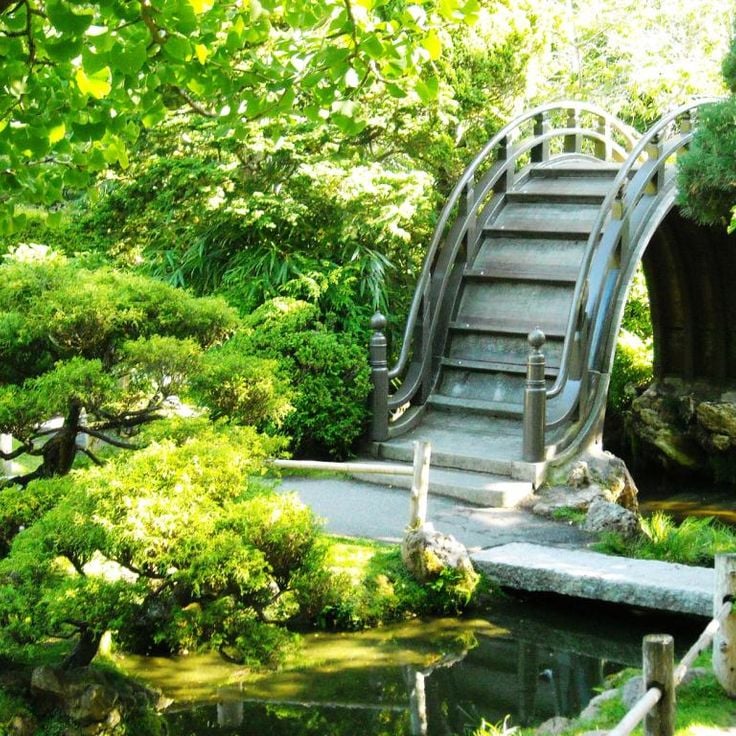
This red wooden bridge in the Japanese Tea Garden follows an East Asian building tradition where the steep arch forms a complete circle when reflected in the water below. The structure connects two banks across a pond and serves both as a practical crossing and a garden design element. The elevated construction requires steps on both sides. The bridge is among the characteristic features of this late 19th-century garden in Golden Gate Park.
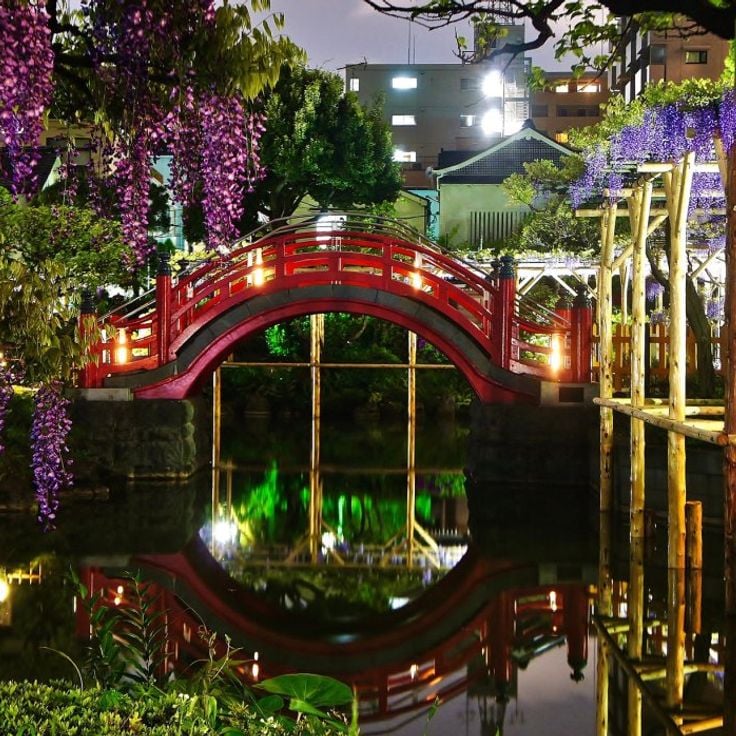
This red arch spans a pond at Kameido Tenjin Shrine and forms one of two wooden bridges on the grounds. Wisteria blooms here each spring, creating a frame of purple flower cascades. The bridge follows the traditional East Asian moon bridge form, where its arcs reflect circles in the water. The shrine dates to the 17th century and serves as a pilgrimage site for students honoring the deified scholar Sugawara no Michizane. The combination of architecture and seasonal vegetation demonstrates Japanese garden tradition.
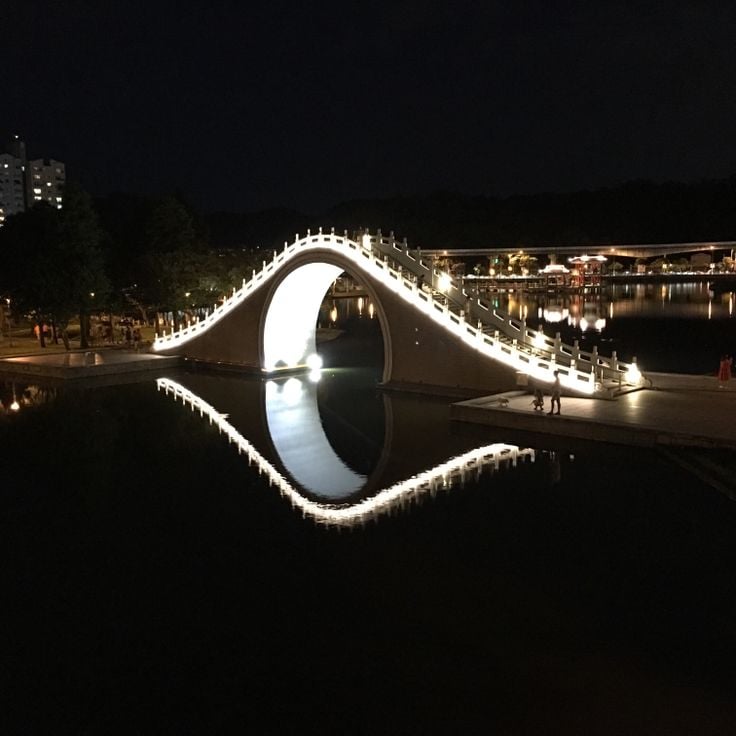
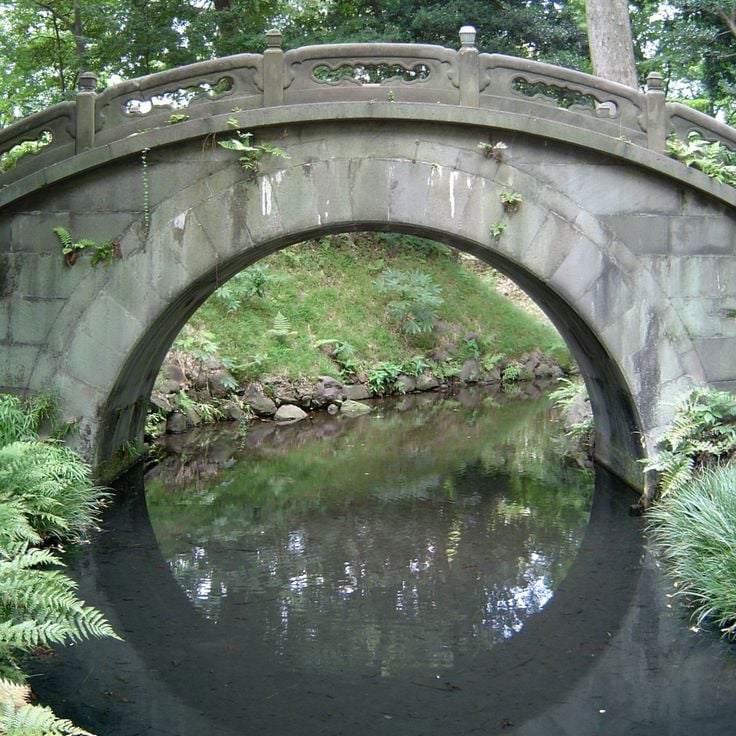
This stone arch bridge at Dahu Park in Taipei represents traditional East Asian bridge design adapted to a modern urban park setting. The bridge forms a semicircle that reflects in the still water below, creating the appearance of a complete circle. The structure spans a pond and serves both as a functional crossing and a design feature within the park landscape. Visitors can walk across the bridge while taking in views of the water and surrounding vegetation. The reflection effect is most pronounced when the water surface remains calm.
This 18th-century garden bridge at Rikugien forms a gentle arch over a narrow pond filled with water lilies, connecting two shores within one of Tokyo's most significant Edo-period landscape gardens. The wooden structure follows the traditional moon bridge form found in East Asian gardens, where the semicircular span reflects in the still water to create a complete circle. The bridge allows visitors to experience different perspectives of the carefully composed garden landscape as they cross the pond surface.
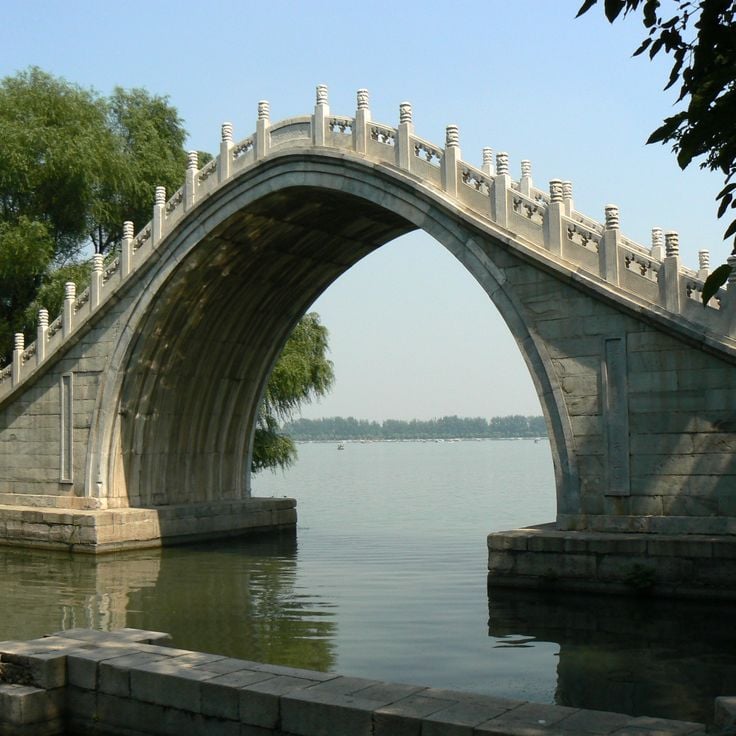
This bridge in the Summer Palace displays traditional Chinese architectural elements with stone carvings. The Jade Belt Bridge forms a high semicircle over the water, connecting the shores of Kunming Lake. The 18th-century structure served imperial processions and provides access to different areas of the palace grounds. The bridge follows the typical design of East Asian moon bridges, whose reflection in still water creates a complete circle.
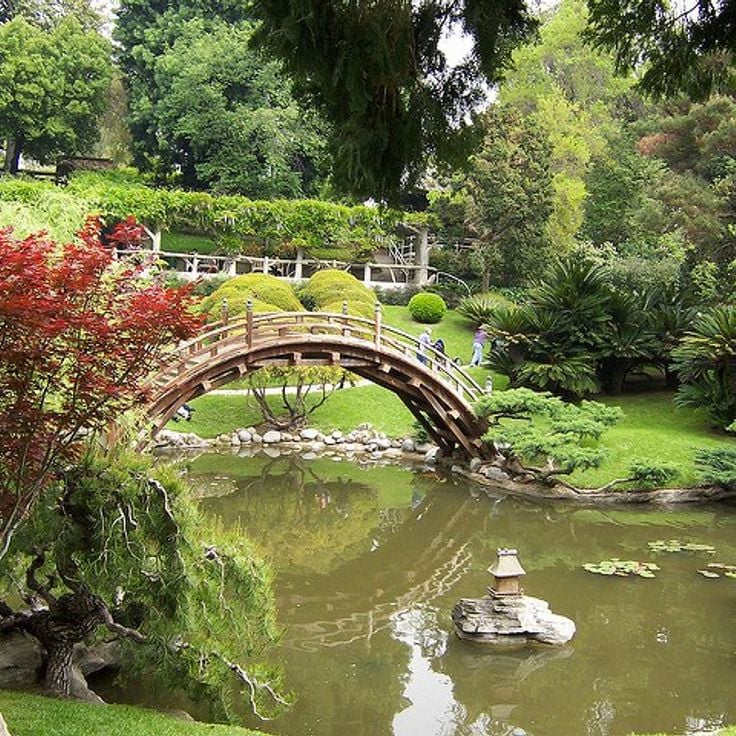
This moon bridge spans a pond within the Chinese Garden at the Huntington Library. The semicircular arch reflects in the water below, creating a complete circle. Bamboo groves and traditional pavilions frame the setting, bringing East Asian garden design to San Marino. The bridge forms part of a complex that presents various garden traditions. Visitors can walk across the arched structure, shifting their perspective over the pond. The design follows a style developed centuries ago in China, characterized by its clean geometric form and functional elegance.
This red wooden bridge in Kiyosumi Garden in Tokyo forms a semicircle that reflects in the pond to create the complete circle characteristic of East Asian garden design. The Engetsukyo (Full Moon Bridge) was built following historical models and connects two shores of the central pond. The structure, with its precise arch and bright red lacquer finish, represents the Japanese garden tradition where bridges serve both practical and symbolic functions. Visitors can best observe the symmetrical reflection from the northern shore of the pond, where the circular form becomes fully visible when the water is calm.
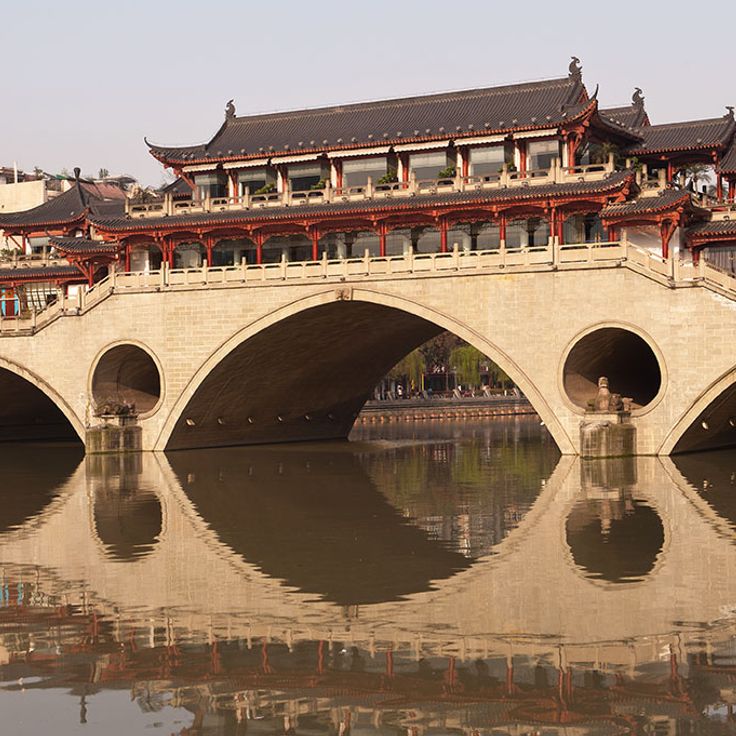
This covered bridge connects teahouses and restaurants along the banks of the Jinjiang River in Chengdu, serving as a culinary hub for the city. The structure was rebuilt in the traditional Qing Dynasty style with multiple levels and curved rooflines. Visitors will find local Sichuan cuisine specialties and can walk along the wooden galleries that run above the water. Anshun Lang Bridge sits in the historic quarter and is illuminated in the evenings. The arch reflects in the calm river waters below.
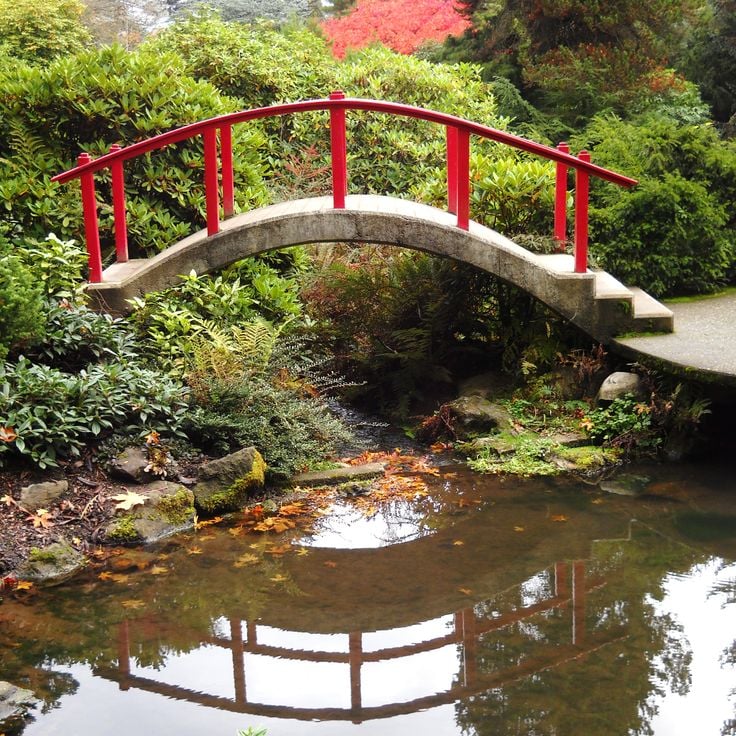
This traditional wooden bridge in red lacquer forms a half circle that represents one of the signature moon bridges at Kubota Garden. The structure connects two sections of the five-acre Japanese garden and spans a small pond with koi and water plants. The arched design follows East Asian principles where architecture and landscape complement each other.
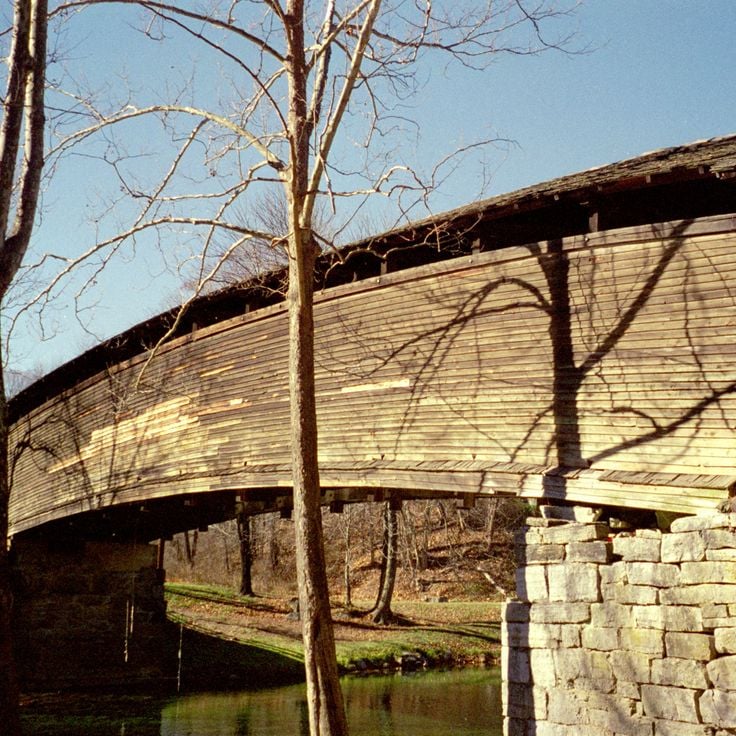
This wooden bridge at the Virginia Arboretum dates to 1857 and spans Dunlap Creek with a distinctive arch that reflects a complete circle in still water. Designed after Chinese models, the structure connects two sections of the garden and demonstrates the influence of East Asian landscape design on 19th-century American botanical sites. Visitors can cross the bridge and examine its functional construction up close.
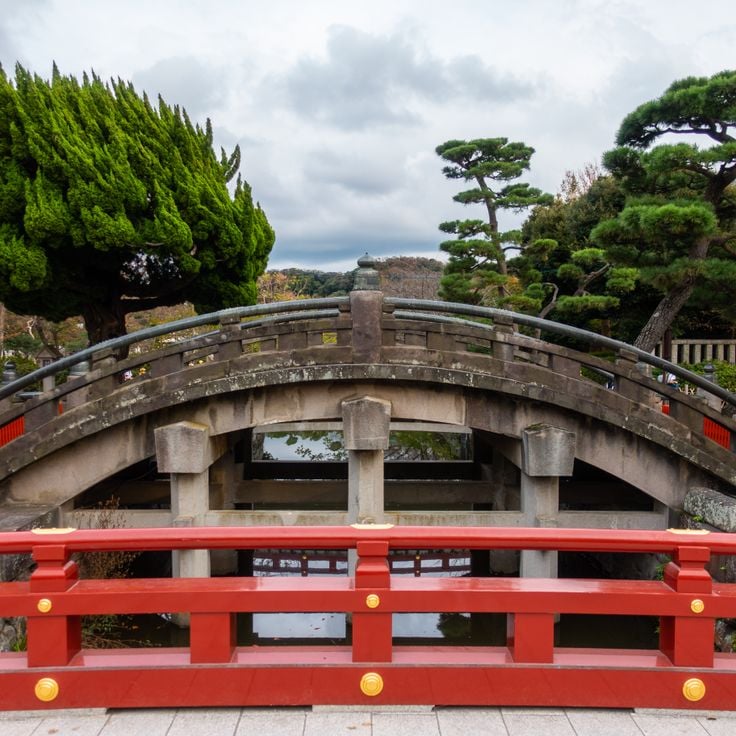
The red-painted wooden bridge spans the pond at Sanno Matsuri Shrine in Kanagawa with a pronounced arch. This Taiko Bashi bridge takes its name from the traditional Japanese drum and connects the shoreline to the shrine's main entrance. The curved structure follows the classic design of East Asian moon bridges, where the arch and its reflection combine to form a complete circle. The red-lacquered railings and steep gradient are characteristic of bridge construction from the Edo period. Maple trees and azaleas frame the structure during growing season, adding seasonal color to the composition.
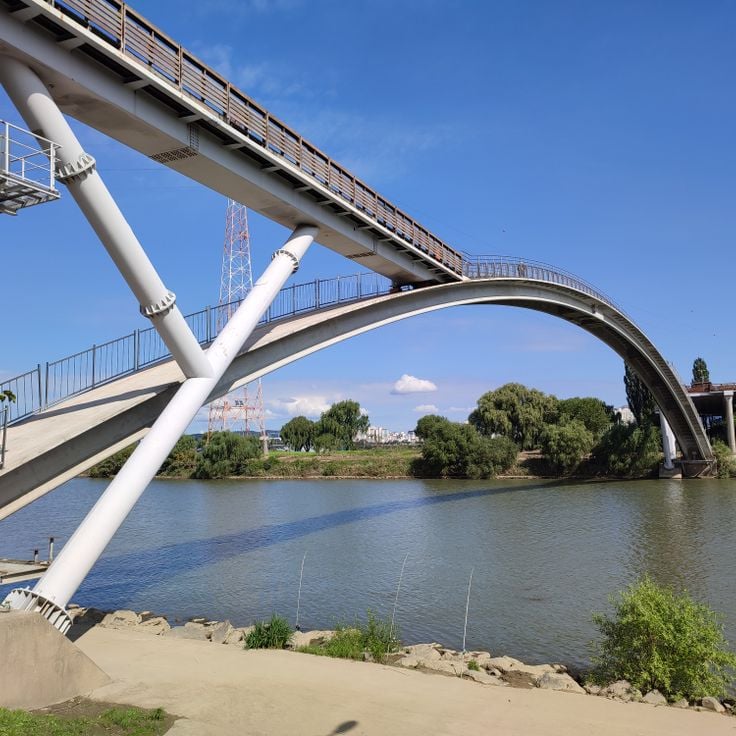
This pedestrian bridge in Seoul connects the mainland to Seonyudo Island in the Han River through an arched crossing made of steel beams and wooden planks. The construction follows the traditional principle of Asian moon bridges, whose curved form reflects in the water. The arch reaches its highest point at mid-span and leads visitors from the urban riverside park to the former water treatment facility now serving as a public garden. The combination of modern materials and classical lines makes this bridge a functional element in the South Korean park system.
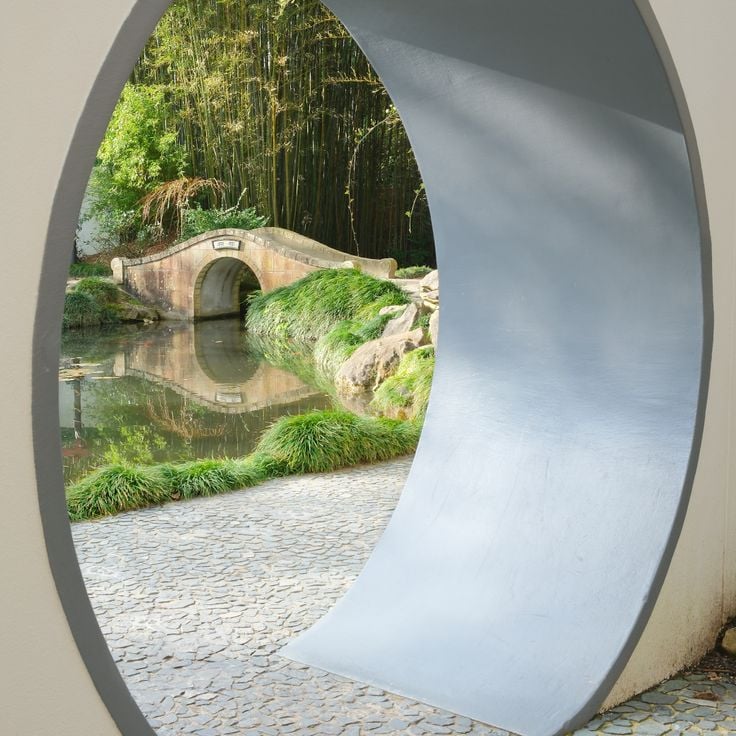
The 18th-century stone bridge at the Master of the Nets Garden connects two sections across a narrow canal, its reflection in the water completing a full circle. The Ponte di Pietra della Luna follows traditional Chinese garden design principles where architectural elements complement natural surroundings. The semicircular gray stone arch spans the calm water and creates a sight line through the garden. Visitors use the crossing to reach different pavilions and planted areas of this classical Ming Dynasty garden.
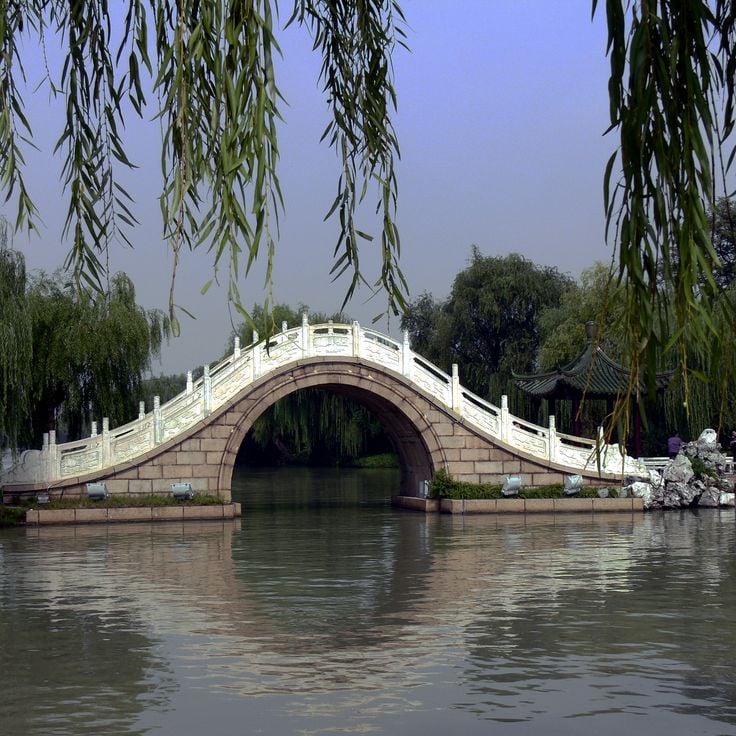
The Twenty-Four Arch Bridge in Yangzhou ranks among China's most notable historic moon bridges, connecting several islands across the Slender West Lake. The Qing Dynasty structure spans roughly 2,000 feet (610 meters) and uses its characteristic arched form to reflect a complete circle on the water's surface. The bridge serves both as a pedestrian pathway and a vantage point over the lake and surrounding gardens, its traditional construction demonstrating the union of function and aesthetic design characteristic of East Asian garden architecture.
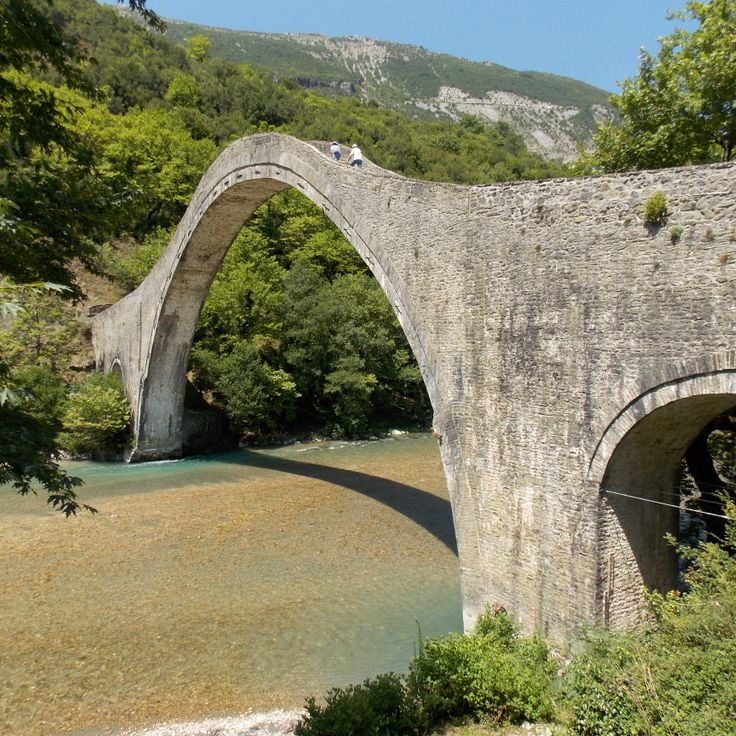
The Plaka Bridge, one of the oldest single-arch stone bridges in the Balkans, spanned the Arachthos River in Epirus until its collapse in 2015. The traditional structure dated from 1866, replacing an earlier Ottoman-era bridge. The arch reached a span of 130 feet (40 meters) at a height of 64 feet (19.5 meters) above the water. Following the collapse during floods, the bridge was faithfully reconstructed between 2019 and 2020. This bridge connects the villages of Plaka and Agia Paraskevi and serves as an example of regional stone masonry. The surrounding landscape of the Tzoumerka Mountains offers hiking trails along the river. The reconstruction followed original building plans and employed traditional techniques.
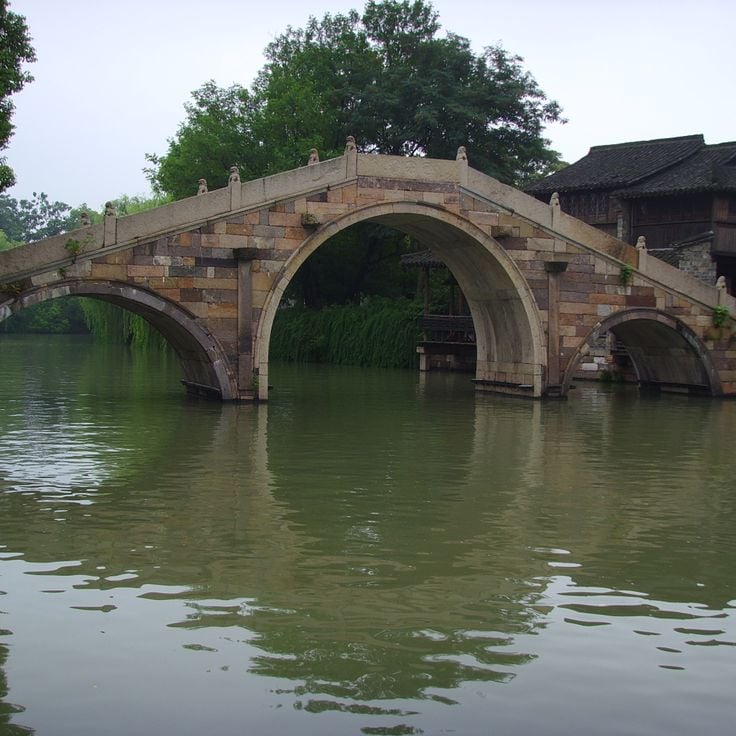
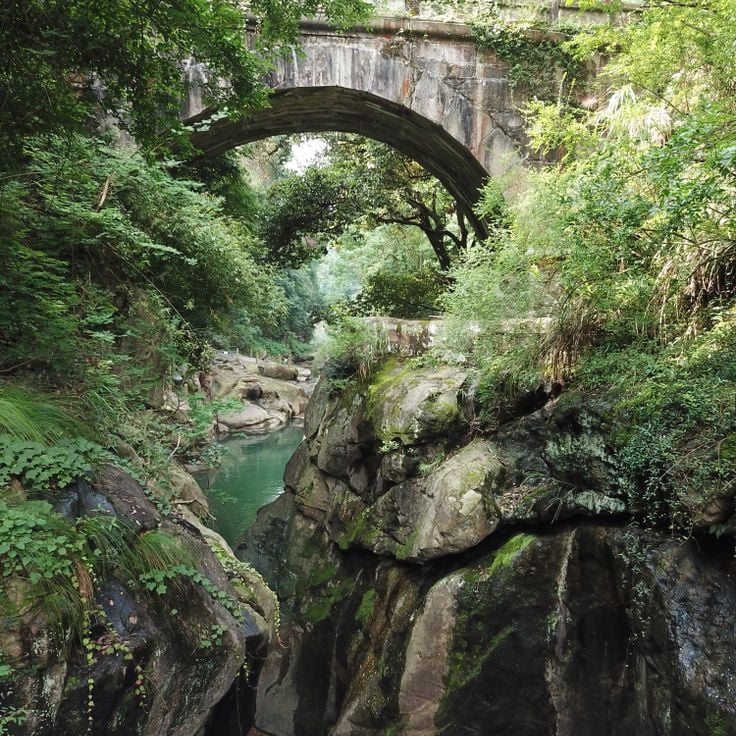
The Dingsheng Bridge in Jiaxing demonstrates the classic construction of Chinese moon bridges with its high arch that forms a complete circle when reflected in the water. This historic stone bridge has connected both banks of the waterways in Zhejiang region for centuries, serving as both a practical crossing and an architectural example of traditional Chinese engineering. The construction follows principles from the Song and Ming dynasties with vaulted stone blocks that hold together without mortar. Visitors can cross the bridge while taking in views of the surrounding canals and historic buildings of Jiaxing.
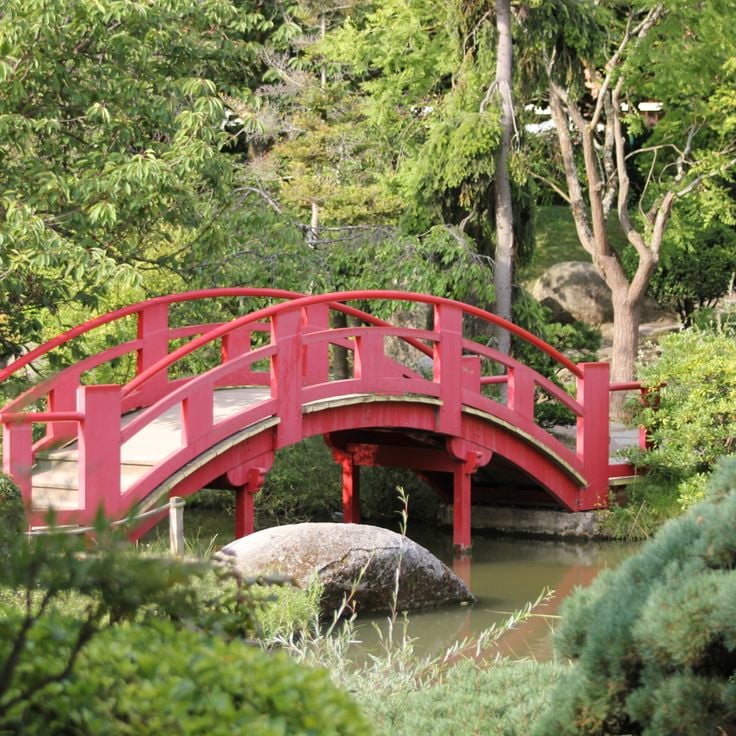
This Japanese garden within the Pierre Baudis complex features a red moon bridge arching over a pond stocked with koi carp. The bridge forms a semicircle that reflects in the still water below, creating a complete circle. The garden occupies part of a modern cultural complex in the southern city, combining traditional Japanese design principles with a contemporary public space. The site is freely accessible and provides a retreat within the urban setting.
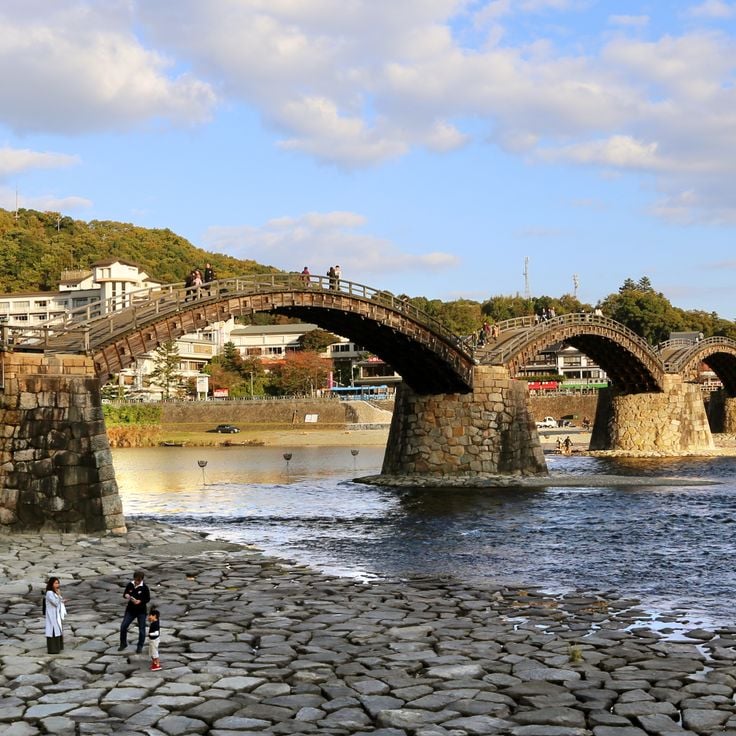
This wooden bridge from 1673 spans the Nishiki River with five arches and was built without nails. The Kintai Bridge is one of Japan's traditional moon bridges, whose semicircles reflect in the water to form complete circles. The structure combines Eastern engineering with aesthetic design and serves as a functional river crossing in Iwakuni. The bridge has been restored multiple times while maintaining the original nail-free construction method.
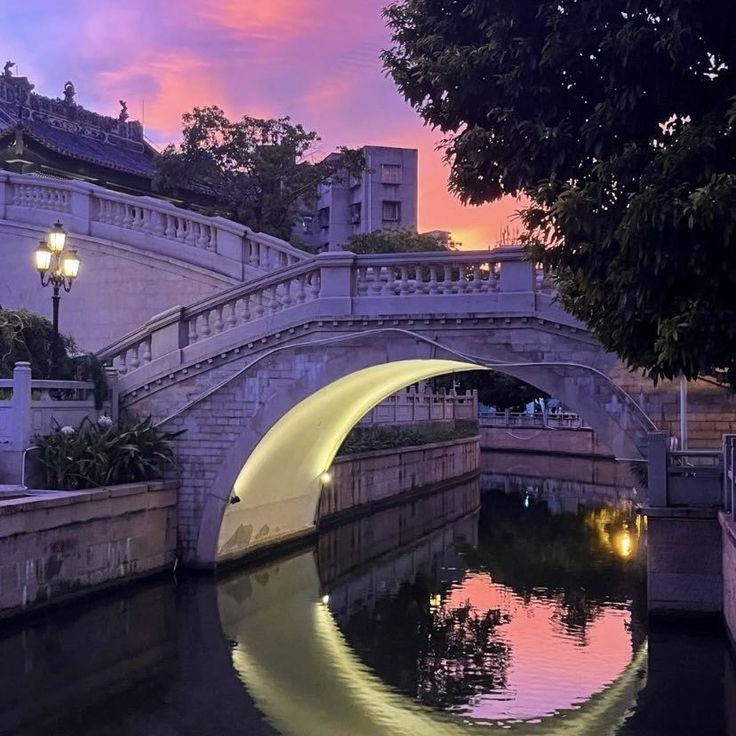
This stone arch bridge in Liwan Qu forms a semicircle that reflects in the water to create a complete circle. The bridge connects two banks of a pond where lotus flowers and water lilies grow. Moon bridges originated in East Asia and combine practical function with design intention. The arched structure allows crossing the water while creating a symmetrical reflection. The pond and aquatic plants complete the traditional garden composition.
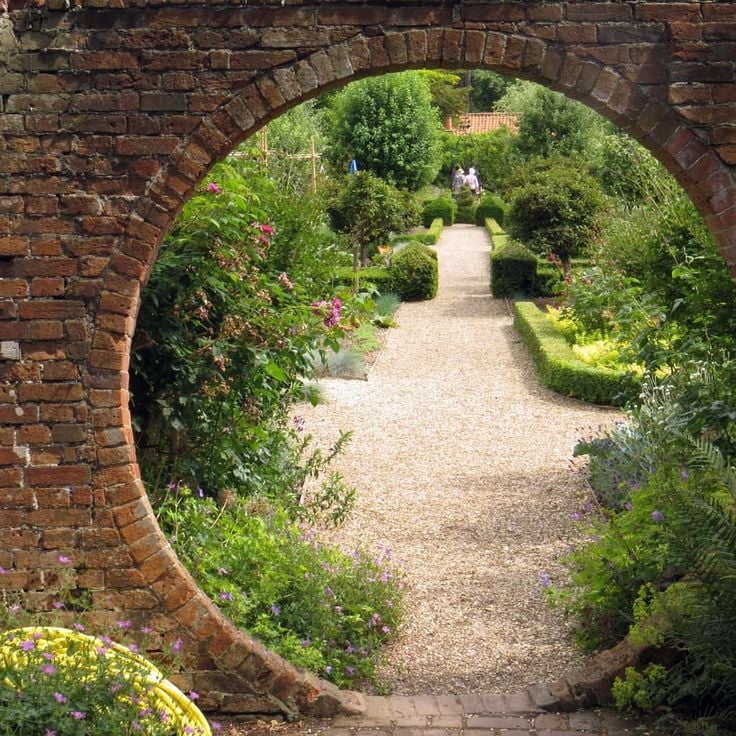
This circular brick gateway leads into the formal gardens at West Green House in Hampshire. The round opening is surrounded by climbing plants that grow along the adjoining wall. The gate connects different garden sections and follows the moon gate design principle traditionally used in East Asian gardens to create passageways that frame the landscape and mark transitions between garden spaces. The red brick construction fits within the estate's historic architecture while serving as a functional and decorative element in the garden's layout.
This stone arch in the Moling Guanyin Garden forms a high semicircle over the pond, with its reflection creating a complete circle in the water below. The construction demonstrates traditional East Asian bridge design, where form and function work together. The arch allows visitors to cross the pond while integrating into the botanical setting of the garden. The stone structure follows design principles found in classical Chinese garden architecture, present in parks and traditional landscapes throughout Nanjing.
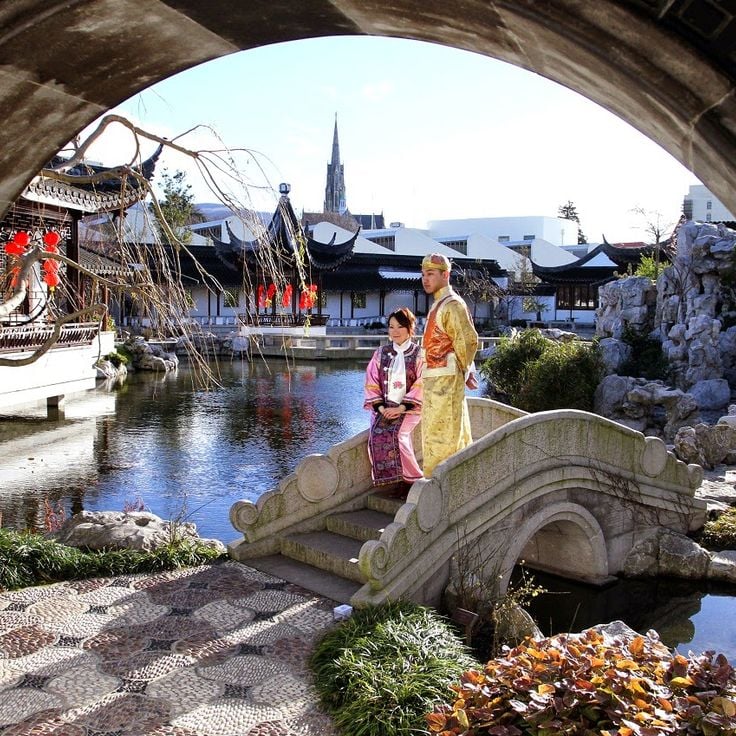
This wooden red arch spans the pond in the Chinese garden styled after the Ming Dynasty at Hamilton Gardens. The structure connects two shores and reflects the traditional construction of East Asian moon bridges, which complete a circle when mirrored in the water. The garden was built as an authentic recreation of a Ming garden and includes pavilions, courtyards and designed ponds alongside the bridge. The red lacquer finish follows historical models and creates contrast against the surrounding greenery. This site belongs to a thematic garden collection showcasing different horticultural traditions from around the world.
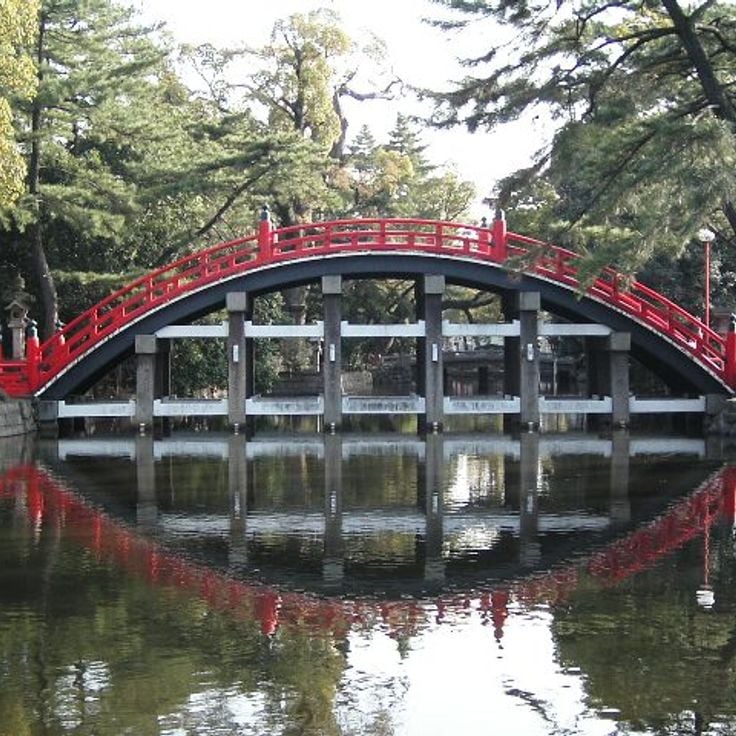
The Sorihashi bridge at Sumiyoshi Taisha shrine in Osaka spans a pond as a wooden drum bridge. First built in the 13th century, the red-lacquered structure connects the entrance to the main hall. Its steep arched form is part of Japanese shrine design and represents the passage between secular and sacred space. Visitors can cross the bridge and view the pond from the elevated position.
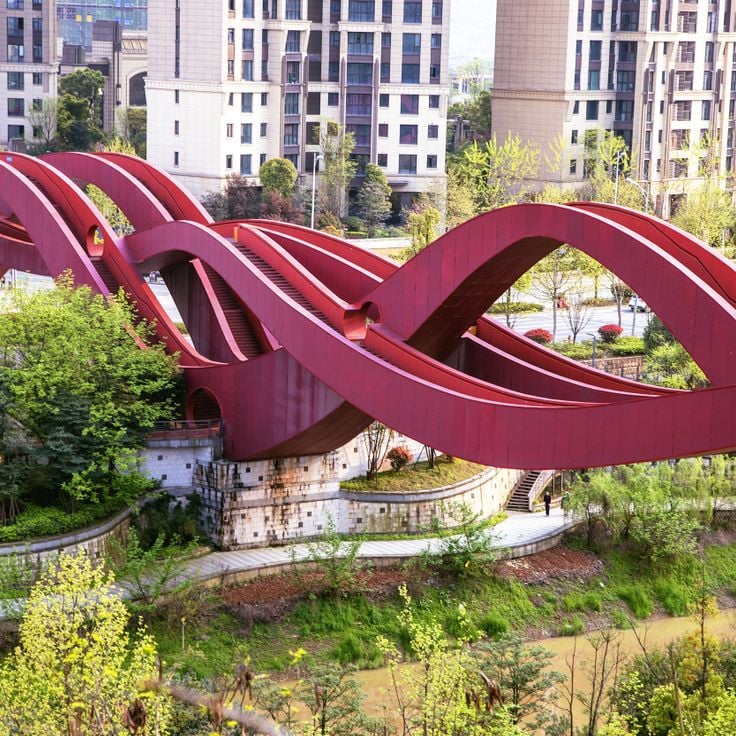
This red steel bridge in Changsha winds across the Xiangjiang River, connecting multiple levels through interwoven pathways. The structure forms a semicircle that reflects in the water, following the traditional moon bridge design from East Asia. Several pedestrian routes intersect within the framework, creating connections between the riverbanks. The bridge serves both as a river crossing and as an architectural landmark along the urban waterfront.
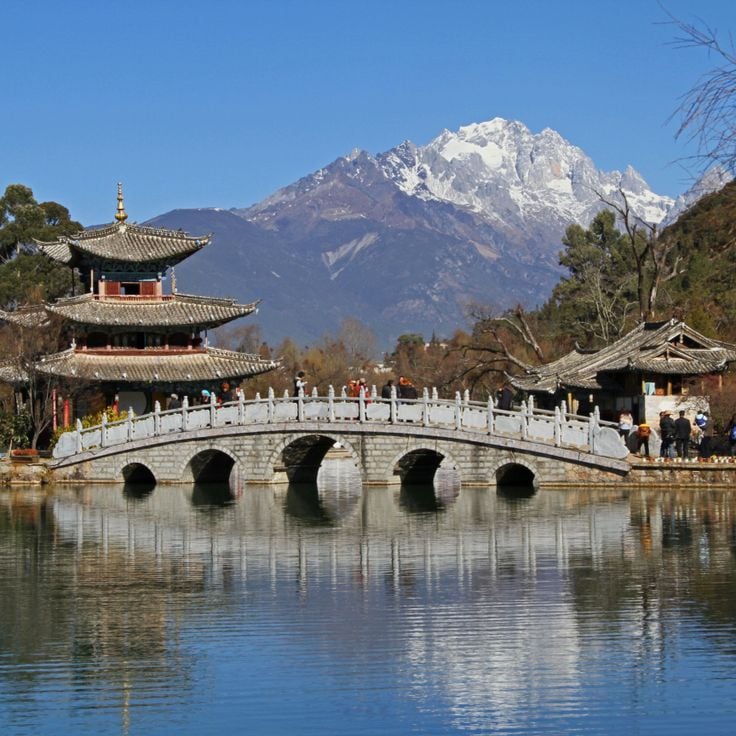
The Suocui Bridge in Yunnan consists of stone construction and spans a stream in the southern part of the province with five symmetrical arches. This traditional structure connects both banks and fits within the Chinese garden design tradition, where bridges serve both practical connections and compositional elements in landscapes. The arched form follows East Asian bridge engineering principles, where the structure reflects in the water to create a visual circle. This bridge stands among numerous historic stone bridges in Yunnan, a region known for its traditional architecture and waterscapes.
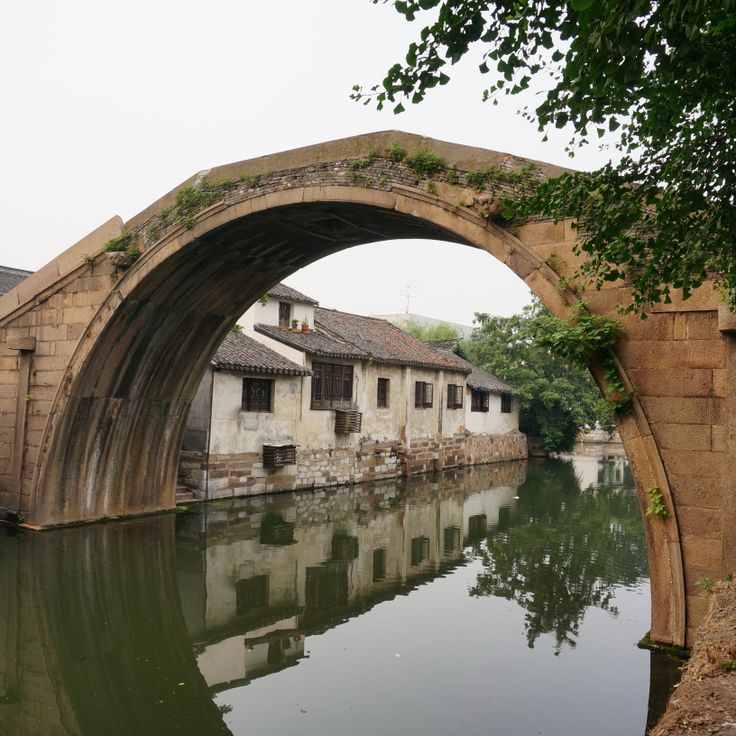
This Ming Dynasty stone bridge spans a canal in Zhejiang with a single arch, demonstrating traditional Chinese construction methods from that period. The Hongji Bridge forms a semicircular span that reflects in the water below, displaying the characteristic appearance of moon bridges found throughout East Asia. The structure combines practical function with balanced design and stands as an example of the craftsmanship developed during the Ming era. This bridge belongs to the tradition of arched waterway crossings that connected canals and streams across China for centuries.
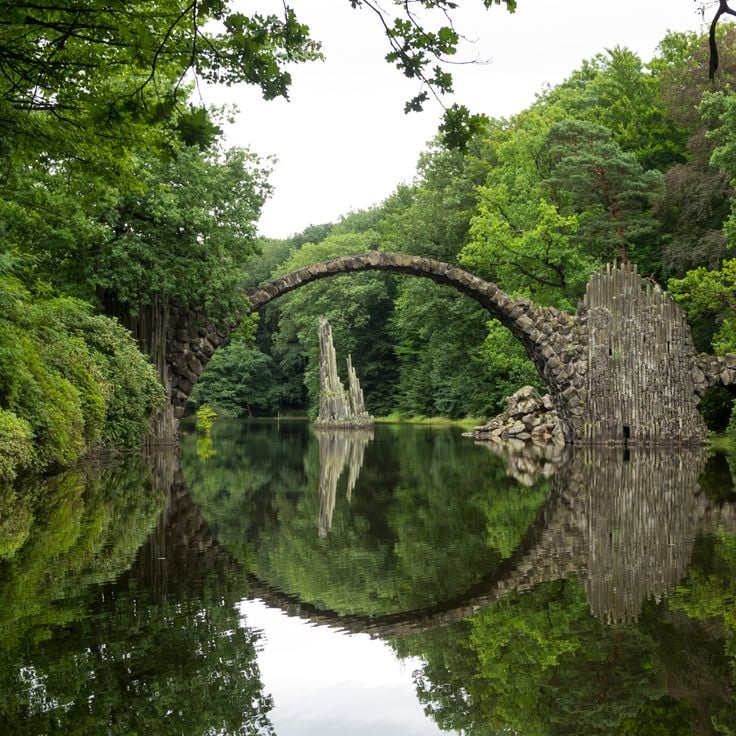
The Rakotzbrücke in Kromlau Park forms a perfect semicircle that reflects into a complete circle on calm water. This stone bridge was built in 1860 under commission from estate owner Friedrich Hermann Rötschke and stands as one of Europe's most recognized examples of this architectural form. The structure rests on natural basalt columns at the edges of Rakotzsee lake and demonstrates the technical precision of period stonework. The park itself developed between 1844 and 1882 as an English landscape garden covering roughly 500 acres (200 hectares). This bridge forms part of a designed scene with rhododendrons, azaleas and exotic plantings.
This red wooden bridge in the Japanese Tea Garden follows an East Asian building tradition where the steep arch forms a complete circle when reflected in the water below. The structure connects two banks across a pond and serves both as a practical crossing and a garden design element. The elevated construction requires steps on both sides. The bridge is among the characteristic features of this late 19th-century garden in Golden Gate Park.
This red arch spans a pond at Kameido Tenjin Shrine and forms one of two wooden bridges on the grounds. Wisteria blooms here each spring, creating a frame of purple flower cascades. The bridge follows the traditional East Asian moon bridge form, where its arcs reflect circles in the water. The shrine dates to the 17th century and serves as a pilgrimage site for students honoring the deified scholar Sugawara no Michizane. The combination of architecture and seasonal vegetation demonstrates Japanese garden tradition.
This stone arch bridge at Dahu Park in Taipei represents traditional East Asian bridge design adapted to a modern urban park setting. The bridge forms a semicircle that reflects in the still water below, creating the appearance of a complete circle. The structure spans a pond and serves both as a functional crossing and a design feature within the park landscape. Visitors can walk across the bridge while taking in views of the water and surrounding vegetation. The reflection effect is most pronounced when the water surface remains calm.
This 18th-century garden bridge at Rikugien forms a gentle arch over a narrow pond filled with water lilies, connecting two shores within one of Tokyo's most significant Edo-period landscape gardens. The wooden structure follows the traditional moon bridge form found in East Asian gardens, where the semicircular span reflects in the still water to create a complete circle. The bridge allows visitors to experience different perspectives of the carefully composed garden landscape as they cross the pond surface.
This bridge in the Summer Palace displays traditional Chinese architectural elements with stone carvings. The Jade Belt Bridge forms a high semicircle over the water, connecting the shores of Kunming Lake. The 18th-century structure served imperial processions and provides access to different areas of the palace grounds. The bridge follows the typical design of East Asian moon bridges, whose reflection in still water creates a complete circle.
This moon bridge spans a pond within the Chinese Garden at the Huntington Library. The semicircular arch reflects in the water below, creating a complete circle. Bamboo groves and traditional pavilions frame the setting, bringing East Asian garden design to San Marino. The bridge forms part of a complex that presents various garden traditions. Visitors can walk across the arched structure, shifting their perspective over the pond. The design follows a style developed centuries ago in China, characterized by its clean geometric form and functional elegance.
This red wooden bridge in Kiyosumi Garden in Tokyo forms a semicircle that reflects in the pond to create the complete circle characteristic of East Asian garden design. The Engetsukyo (Full Moon Bridge) was built following historical models and connects two shores of the central pond. The structure, with its precise arch and bright red lacquer finish, represents the Japanese garden tradition where bridges serve both practical and symbolic functions. Visitors can best observe the symmetrical reflection from the northern shore of the pond, where the circular form becomes fully visible when the water is calm.
This covered bridge connects teahouses and restaurants along the banks of the Jinjiang River in Chengdu, serving as a culinary hub for the city. The structure was rebuilt in the traditional Qing Dynasty style with multiple levels and curved rooflines. Visitors will find local Sichuan cuisine specialties and can walk along the wooden galleries that run above the water. Anshun Lang Bridge sits in the historic quarter and is illuminated in the evenings. The arch reflects in the calm river waters below.
This traditional wooden bridge in red lacquer forms a half circle that represents one of the signature moon bridges at Kubota Garden. The structure connects two sections of the five-acre Japanese garden and spans a small pond with koi and water plants. The arched design follows East Asian principles where architecture and landscape complement each other.
This wooden bridge at the Virginia Arboretum dates to 1857 and spans Dunlap Creek with a distinctive arch that reflects a complete circle in still water. Designed after Chinese models, the structure connects two sections of the garden and demonstrates the influence of East Asian landscape design on 19th-century American botanical sites. Visitors can cross the bridge and examine its functional construction up close.
The red-painted wooden bridge spans the pond at Sanno Matsuri Shrine in Kanagawa with a pronounced arch. This Taiko Bashi bridge takes its name from the traditional Japanese drum and connects the shoreline to the shrine's main entrance. The curved structure follows the classic design of East Asian moon bridges, where the arch and its reflection combine to form a complete circle. The red-lacquered railings and steep gradient are characteristic of bridge construction from the Edo period. Maple trees and azaleas frame the structure during growing season, adding seasonal color to the composition.
This pedestrian bridge in Seoul connects the mainland to Seonyudo Island in the Han River through an arched crossing made of steel beams and wooden planks. The construction follows the traditional principle of Asian moon bridges, whose curved form reflects in the water. The arch reaches its highest point at mid-span and leads visitors from the urban riverside park to the former water treatment facility now serving as a public garden. The combination of modern materials and classical lines makes this bridge a functional element in the South Korean park system.
The 18th-century stone bridge at the Master of the Nets Garden connects two sections across a narrow canal, its reflection in the water completing a full circle. The Ponte di Pietra della Luna follows traditional Chinese garden design principles where architectural elements complement natural surroundings. The semicircular gray stone arch spans the calm water and creates a sight line through the garden. Visitors use the crossing to reach different pavilions and planted areas of this classical Ming Dynasty garden.
The Twenty-Four Arch Bridge in Yangzhou ranks among China's most notable historic moon bridges, connecting several islands across the Slender West Lake. The Qing Dynasty structure spans roughly 2,000 feet (610 meters) and uses its characteristic arched form to reflect a complete circle on the water's surface. The bridge serves both as a pedestrian pathway and a vantage point over the lake and surrounding gardens, its traditional construction demonstrating the union of function and aesthetic design characteristic of East Asian garden architecture.
The Plaka Bridge, one of the oldest single-arch stone bridges in the Balkans, spanned the Arachthos River in Epirus until its collapse in 2015. The traditional structure dated from 1866, replacing an earlier Ottoman-era bridge. The arch reached a span of 130 feet (40 meters) at a height of 64 feet (19.5 meters) above the water. Following the collapse during floods, the bridge was faithfully reconstructed between 2019 and 2020. This bridge connects the villages of Plaka and Agia Paraskevi and serves as an example of regional stone masonry. The surrounding landscape of the Tzoumerka Mountains offers hiking trails along the river. The reconstruction followed original building plans and employed traditional techniques.
The Dingsheng Bridge in Jiaxing demonstrates the classic construction of Chinese moon bridges with its high arch that forms a complete circle when reflected in the water. This historic stone bridge has connected both banks of the waterways in Zhejiang region for centuries, serving as both a practical crossing and an architectural example of traditional Chinese engineering. The construction follows principles from the Song and Ming dynasties with vaulted stone blocks that hold together without mortar. Visitors can cross the bridge while taking in views of the surrounding canals and historic buildings of Jiaxing.
This Japanese garden within the Pierre Baudis complex features a red moon bridge arching over a pond stocked with koi carp. The bridge forms a semicircle that reflects in the still water below, creating a complete circle. The garden occupies part of a modern cultural complex in the southern city, combining traditional Japanese design principles with a contemporary public space. The site is freely accessible and provides a retreat within the urban setting.
This wooden bridge from 1673 spans the Nishiki River with five arches and was built without nails. The Kintai Bridge is one of Japan's traditional moon bridges, whose semicircles reflect in the water to form complete circles. The structure combines Eastern engineering with aesthetic design and serves as a functional river crossing in Iwakuni. The bridge has been restored multiple times while maintaining the original nail-free construction method.
This stone arch bridge in Liwan Qu forms a semicircle that reflects in the water to create a complete circle. The bridge connects two banks of a pond where lotus flowers and water lilies grow. Moon bridges originated in East Asia and combine practical function with design intention. The arched structure allows crossing the water while creating a symmetrical reflection. The pond and aquatic plants complete the traditional garden composition.
This circular brick gateway leads into the formal gardens at West Green House in Hampshire. The round opening is surrounded by climbing plants that grow along the adjoining wall. The gate connects different garden sections and follows the moon gate design principle traditionally used in East Asian gardens to create passageways that frame the landscape and mark transitions between garden spaces. The red brick construction fits within the estate's historic architecture while serving as a functional and decorative element in the garden's layout.
This stone arch in the Moling Guanyin Garden forms a high semicircle over the pond, with its reflection creating a complete circle in the water below. The construction demonstrates traditional East Asian bridge design, where form and function work together. The arch allows visitors to cross the pond while integrating into the botanical setting of the garden. The stone structure follows design principles found in classical Chinese garden architecture, present in parks and traditional landscapes throughout Nanjing.
This wooden red arch spans the pond in the Chinese garden styled after the Ming Dynasty at Hamilton Gardens. The structure connects two shores and reflects the traditional construction of East Asian moon bridges, which complete a circle when mirrored in the water. The garden was built as an authentic recreation of a Ming garden and includes pavilions, courtyards and designed ponds alongside the bridge. The red lacquer finish follows historical models and creates contrast against the surrounding greenery. This site belongs to a thematic garden collection showcasing different horticultural traditions from around the world.
The Sorihashi bridge at Sumiyoshi Taisha shrine in Osaka spans a pond as a wooden drum bridge. First built in the 13th century, the red-lacquered structure connects the entrance to the main hall. Its steep arched form is part of Japanese shrine design and represents the passage between secular and sacred space. Visitors can cross the bridge and view the pond from the elevated position.
This red steel bridge in Changsha winds across the Xiangjiang River, connecting multiple levels through interwoven pathways. The structure forms a semicircle that reflects in the water, following the traditional moon bridge design from East Asia. Several pedestrian routes intersect within the framework, creating connections between the riverbanks. The bridge serves both as a river crossing and as an architectural landmark along the urban waterfront.
The Suocui Bridge in Yunnan consists of stone construction and spans a stream in the southern part of the province with five symmetrical arches. This traditional structure connects both banks and fits within the Chinese garden design tradition, where bridges serve both practical connections and compositional elements in landscapes. The arched form follows East Asian bridge engineering principles, where the structure reflects in the water to create a visual circle. This bridge stands among numerous historic stone bridges in Yunnan, a region known for its traditional architecture and waterscapes.
This Ming Dynasty stone bridge spans a canal in Zhejiang with a single arch, demonstrating traditional Chinese construction methods from that period. The Hongji Bridge forms a semicircular span that reflects in the water below, displaying the characteristic appearance of moon bridges found throughout East Asia. The structure combines practical function with balanced design and stands as an example of the craftsmanship developed during the Ming era. This bridge belongs to the tradition of arched waterway crossings that connected canals and streams across China for centuries.
The Rakotzbrücke in Kromlau Park forms a perfect semicircle that reflects into a complete circle on calm water. This stone bridge was built in 1860 under commission from estate owner Friedrich Hermann Rötschke and stands as one of Europe's most recognized examples of this architectural form. The structure rests on natural basalt columns at the edges of Rakotzsee lake and demonstrates the technical precision of period stonework. The park itself developed between 1844 and 1882 as an English landscape garden covering roughly 500 acres (200 hectares). This bridge forms part of a designed scene with rhododendrons, azaleas and exotic plantings.
This red wooden bridge in the Japanese Tea Garden follows an East Asian building tradition where the steep arch forms a complete circle when reflected in the water below. The structure connects two banks across a pond and serves both as a practical crossing and a garden design element. The elevated construction requires steps on both sides. The bridge is among the characteristic features of this late 19th-century garden in Golden Gate Park.
This red arch spans a pond at Kameido Tenjin Shrine and forms one of two wooden bridges on the grounds. Wisteria blooms here each spring, creating a frame of purple flower cascades. The bridge follows the traditional East Asian moon bridge form, where its arcs reflect circles in the water. The shrine dates to the 17th century and serves as a pilgrimage site for students honoring the deified scholar Sugawara no Michizane. The combination of architecture and seasonal vegetation demonstrates Japanese garden tradition.
This stone arch bridge at Dahu Park in Taipei represents traditional East Asian bridge design adapted to a modern urban park setting. The bridge forms a semicircle that reflects in the still water below, creating the appearance of a complete circle. The structure spans a pond and serves both as a functional crossing and a design feature within the park landscape. Visitors can walk across the bridge while taking in views of the water and surrounding vegetation. The reflection effect is most pronounced when the water surface remains calm.
This 18th-century garden bridge at Rikugien forms a gentle arch over a narrow pond filled with water lilies, connecting two shores within one of Tokyo's most significant Edo-period landscape gardens. The wooden structure follows the traditional moon bridge form found in East Asian gardens, where the semicircular span reflects in the still water to create a complete circle. The bridge allows visitors to experience different perspectives of the carefully composed garden landscape as they cross the pond surface.
This bridge in the Summer Palace displays traditional Chinese architectural elements with stone carvings. The Jade Belt Bridge forms a high semicircle over the water, connecting the shores of Kunming Lake. The 18th-century structure served imperial processions and provides access to different areas of the palace grounds. The bridge follows the typical design of East Asian moon bridges, whose reflection in still water creates a complete circle.
This moon bridge spans a pond within the Chinese Garden at the Huntington Library. The semicircular arch reflects in the water below, creating a complete circle. Bamboo groves and traditional pavilions frame the setting, bringing East Asian garden design to San Marino. The bridge forms part of a complex that presents various garden traditions. Visitors can walk across the arched structure, shifting their perspective over the pond. The design follows a style developed centuries ago in China, characterized by its clean geometric form and functional elegance.
This red wooden bridge in Kiyosumi Garden in Tokyo forms a semicircle that reflects in the pond to create the complete circle characteristic of East Asian garden design. The Engetsukyo (Full Moon Bridge) was built following historical models and connects two shores of the central pond. The structure, with its precise arch and bright red lacquer finish, represents the Japanese garden tradition where bridges serve both practical and symbolic functions. Visitors can best observe the symmetrical reflection from the northern shore of the pond, where the circular form becomes fully visible when the water is calm.
This covered bridge connects teahouses and restaurants along the banks of the Jinjiang River in Chengdu, serving as a culinary hub for the city. The structure was rebuilt in the traditional Qing Dynasty style with multiple levels and curved rooflines. Visitors will find local Sichuan cuisine specialties and can walk along the wooden galleries that run above the water. Anshun Lang Bridge sits in the historic quarter and is illuminated in the evenings. The arch reflects in the calm river waters below.
This traditional wooden bridge in red lacquer forms a half circle that represents one of the signature moon bridges at Kubota Garden. The structure connects two sections of the five-acre Japanese garden and spans a small pond with koi and water plants. The arched design follows East Asian principles where architecture and landscape complement each other.
This wooden bridge at the Virginia Arboretum dates to 1857 and spans Dunlap Creek with a distinctive arch that reflects a complete circle in still water. Designed after Chinese models, the structure connects two sections of the garden and demonstrates the influence of East Asian landscape design on 19th-century American botanical sites. Visitors can cross the bridge and examine its functional construction up close.
The red-painted wooden bridge spans the pond at Sanno Matsuri Shrine in Kanagawa with a pronounced arch. This Taiko Bashi bridge takes its name from the traditional Japanese drum and connects the shoreline to the shrine's main entrance. The curved structure follows the classic design of East Asian moon bridges, where the arch and its reflection combine to form a complete circle. The red-lacquered railings and steep gradient are characteristic of bridge construction from the Edo period. Maple trees and azaleas frame the structure during growing season, adding seasonal color to the composition.
This pedestrian bridge in Seoul connects the mainland to Seonyudo Island in the Han River through an arched crossing made of steel beams and wooden planks. The construction follows the traditional principle of Asian moon bridges, whose curved form reflects in the water. The arch reaches its highest point at mid-span and leads visitors from the urban riverside park to the former water treatment facility now serving as a public garden. The combination of modern materials and classical lines makes this bridge a functional element in the South Korean park system.
The 18th-century stone bridge at the Master of the Nets Garden connects two sections across a narrow canal, its reflection in the water completing a full circle. The Ponte di Pietra della Luna follows traditional Chinese garden design principles where architectural elements complement natural surroundings. The semicircular gray stone arch spans the calm water and creates a sight line through the garden. Visitors use the crossing to reach different pavilions and planted areas of this classical Ming Dynasty garden.
The Twenty-Four Arch Bridge in Yangzhou ranks among China's most notable historic moon bridges, connecting several islands across the Slender West Lake. The Qing Dynasty structure spans roughly 2,000 feet (610 meters) and uses its characteristic arched form to reflect a complete circle on the water's surface. The bridge serves both as a pedestrian pathway and a vantage point over the lake and surrounding gardens, its traditional construction demonstrating the union of function and aesthetic design characteristic of East Asian garden architecture.
The Plaka Bridge, one of the oldest single-arch stone bridges in the Balkans, spanned the Arachthos River in Epirus until its collapse in 2015. The traditional structure dated from 1866, replacing an earlier Ottoman-era bridge. The arch reached a span of 130 feet (40 meters) at a height of 64 feet (19.5 meters) above the water. Following the collapse during floods, the bridge was faithfully reconstructed between 2019 and 2020. This bridge connects the villages of Plaka and Agia Paraskevi and serves as an example of regional stone masonry. The surrounding landscape of the Tzoumerka Mountains offers hiking trails along the river. The reconstruction followed original building plans and employed traditional techniques.
The Dingsheng Bridge in Jiaxing demonstrates the classic construction of Chinese moon bridges with its high arch that forms a complete circle when reflected in the water. This historic stone bridge has connected both banks of the waterways in Zhejiang region for centuries, serving as both a practical crossing and an architectural example of traditional Chinese engineering. The construction follows principles from the Song and Ming dynasties with vaulted stone blocks that hold together without mortar. Visitors can cross the bridge while taking in views of the surrounding canals and historic buildings of Jiaxing.
This Japanese garden within the Pierre Baudis complex features a red moon bridge arching over a pond stocked with koi carp. The bridge forms a semicircle that reflects in the still water below, creating a complete circle. The garden occupies part of a modern cultural complex in the southern city, combining traditional Japanese design principles with a contemporary public space. The site is freely accessible and provides a retreat within the urban setting.
This wooden bridge from 1673 spans the Nishiki River with five arches and was built without nails. The Kintai Bridge is one of Japan's traditional moon bridges, whose semicircles reflect in the water to form complete circles. The structure combines Eastern engineering with aesthetic design and serves as a functional river crossing in Iwakuni. The bridge has been restored multiple times while maintaining the original nail-free construction method.
This stone arch bridge in Liwan Qu forms a semicircle that reflects in the water to create a complete circle. The bridge connects two banks of a pond where lotus flowers and water lilies grow. Moon bridges originated in East Asia and combine practical function with design intention. The arched structure allows crossing the water while creating a symmetrical reflection. The pond and aquatic plants complete the traditional garden composition.
This circular brick gateway leads into the formal gardens at West Green House in Hampshire. The round opening is surrounded by climbing plants that grow along the adjoining wall. The gate connects different garden sections and follows the moon gate design principle traditionally used in East Asian gardens to create passageways that frame the landscape and mark transitions between garden spaces. The red brick construction fits within the estate's historic architecture while serving as a functional and decorative element in the garden's layout.
This stone arch in the Moling Guanyin Garden forms a high semicircle over the pond, with its reflection creating a complete circle in the water below. The construction demonstrates traditional East Asian bridge design, where form and function work together. The arch allows visitors to cross the pond while integrating into the botanical setting of the garden. The stone structure follows design principles found in classical Chinese garden architecture, present in parks and traditional landscapes throughout Nanjing.
This wooden red arch spans the pond in the Chinese garden styled after the Ming Dynasty at Hamilton Gardens. The structure connects two shores and reflects the traditional construction of East Asian moon bridges, which complete a circle when mirrored in the water. The garden was built as an authentic recreation of a Ming garden and includes pavilions, courtyards and designed ponds alongside the bridge. The red lacquer finish follows historical models and creates contrast against the surrounding greenery. This site belongs to a thematic garden collection showcasing different horticultural traditions from around the world.
The Sorihashi bridge at Sumiyoshi Taisha shrine in Osaka spans a pond as a wooden drum bridge. First built in the 13th century, the red-lacquered structure connects the entrance to the main hall. Its steep arched form is part of Japanese shrine design and represents the passage between secular and sacred space. Visitors can cross the bridge and view the pond from the elevated position.
This red steel bridge in Changsha winds across the Xiangjiang River, connecting multiple levels through interwoven pathways. The structure forms a semicircle that reflects in the water, following the traditional moon bridge design from East Asia. Several pedestrian routes intersect within the framework, creating connections between the riverbanks. The bridge serves both as a river crossing and as an architectural landmark along the urban waterfront.
The Suocui Bridge in Yunnan consists of stone construction and spans a stream in the southern part of the province with five symmetrical arches. This traditional structure connects both banks and fits within the Chinese garden design tradition, where bridges serve both practical connections and compositional elements in landscapes. The arched form follows East Asian bridge engineering principles, where the structure reflects in the water to create a visual circle. This bridge stands among numerous historic stone bridges in Yunnan, a region known for its traditional architecture and waterscapes.
This Ming Dynasty stone bridge spans a canal in Zhejiang with a single arch, demonstrating traditional Chinese construction methods from that period. The Hongji Bridge forms a semicircular span that reflects in the water below, displaying the characteristic appearance of moon bridges found throughout East Asia. The structure combines practical function with balanced design and stands as an example of the craftsmanship developed during the Ming era. This bridge belongs to the tradition of arched waterway crossings that connected canals and streams across China for centuries.
The Rakotzbrücke in Kromlau Park forms a perfect semicircle that reflects into a complete circle on calm water. This stone bridge was built in 1860 under commission from estate owner Friedrich Hermann Rötschke and stands as one of Europe's most recognized examples of this architectural form. The structure rests on natural basalt columns at the edges of Rakotzsee lake and demonstrates the technical precision of period stonework. The park itself developed between 1844 and 1882 as an English landscape garden covering roughly 500 acres (200 hectares). This bridge forms part of a designed scene with rhododendrons, azaleas and exotic plantings.