See the monuments around you in AROpen chests in the app
Around Us is built for your phone — point your camera at the streets and discover the monuments and places around you in augmented reality.Around Us is built for your phone — chests unlock when you walk, explore and capture nearby places.
Campuses where history is written in stone and glass, and where the thinking that shapes the world is born every day.
This collection brings together some of the most well-known universities in the world, spread across four continents. You see institutions founded hundreds of years ago, with campuses full of history, standing next to research centers working on future technologies. These places host students, researchers, and teachers from many countries. Their lively academic life often spills into nearby neighborhoods.
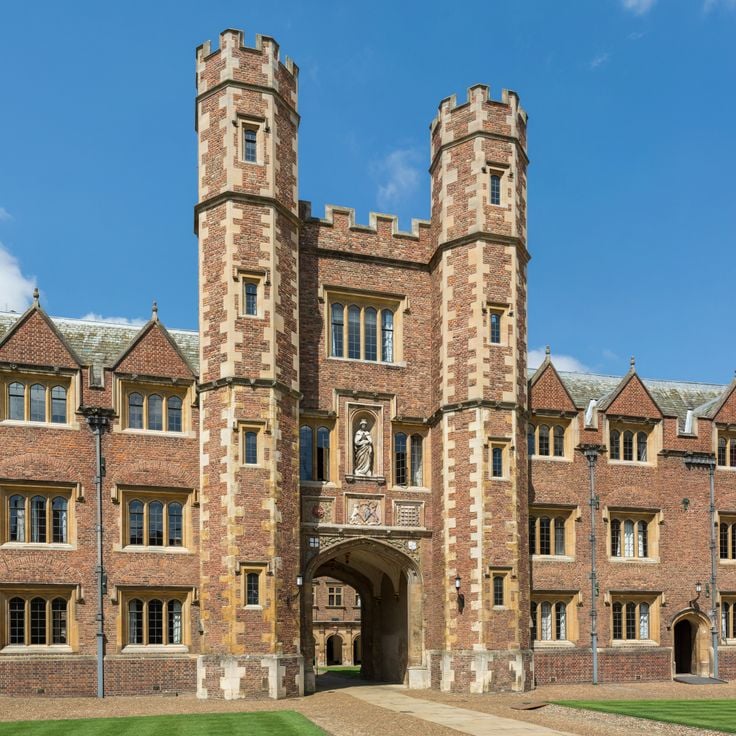
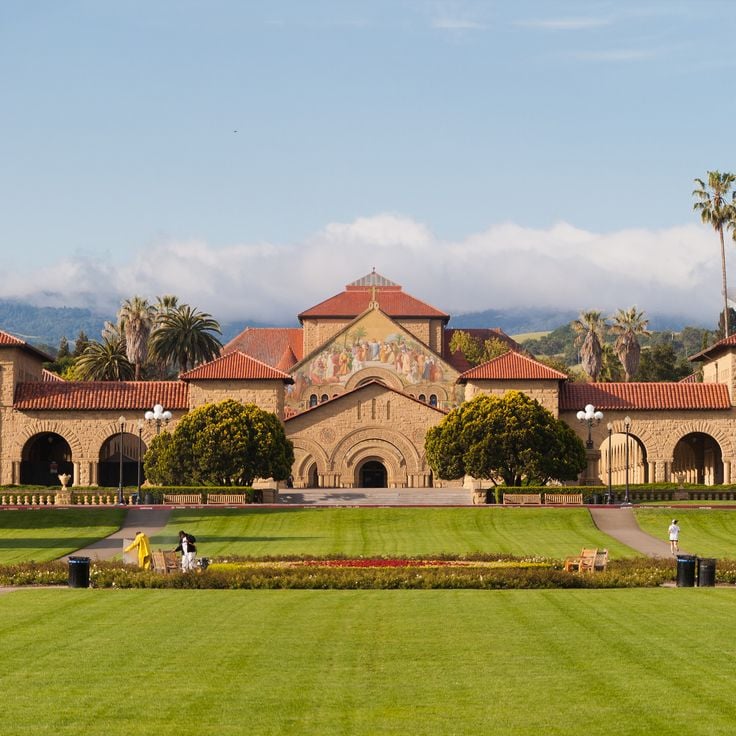
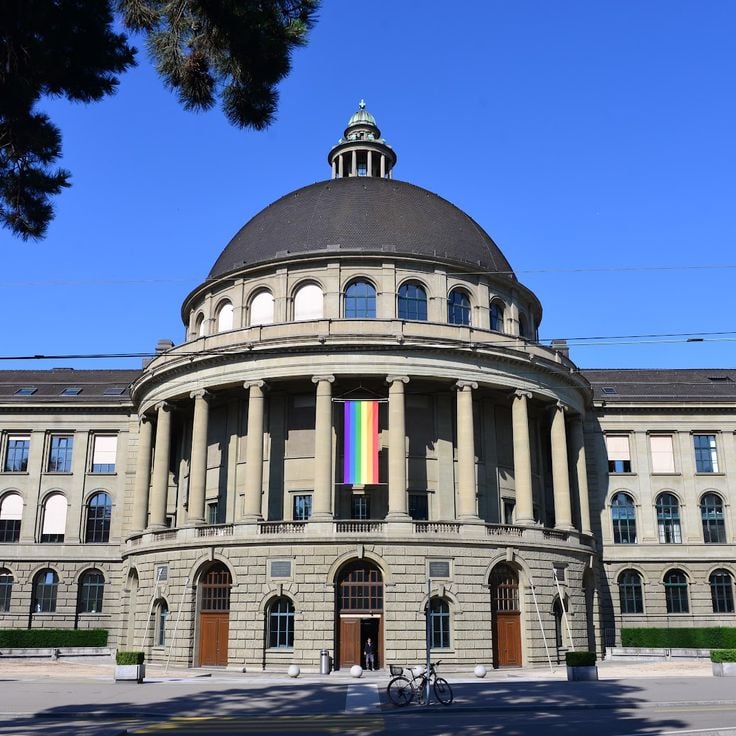
In Oxford and Cambridge, old colleges line narrow cobbled streets where students ride bikes. In Boston, Harvard’s brick buildings and the modern labs of MIT stretch along the Charles River. In California, Stanford’s arcades shine in the sun, while in Zurich, ETH overlooks the city from the hills. In Singapore, the tropical campus blends into the thick green of the island. Each university shapes the city around it, attracting visitors with its buildings, history, or simply the curiosity to see where some of today’s ideas are made.
Campuses where history is written in stone and glass, and where the thinking that shapes the world is born every day.
This collection brings together some of the most well-known universities in the world, spread across four continents. You see institutions founded hundreds of years ago, with campuses full of history, standing next to research centers working on future technologies. These places host students, researchers, and teachers from many countries. Their lively academic life often spills into nearby neighborhoods.
In Oxford and Cambridge, old colleges line narrow cobbled streets where students ride bikes. In Boston, Harvard’s brick buildings and the modern labs of MIT stretch along the Charles River. In California, Stanford’s arcades shine in the sun, while in Zurich, ETH overlooks the city from the hills. In Singapore, the tropical campus blends into the thick green of the island. Each university shapes the city around it, attracting visitors with its buildings, history, or simply the curiosity to see where some of today’s ideas are made.
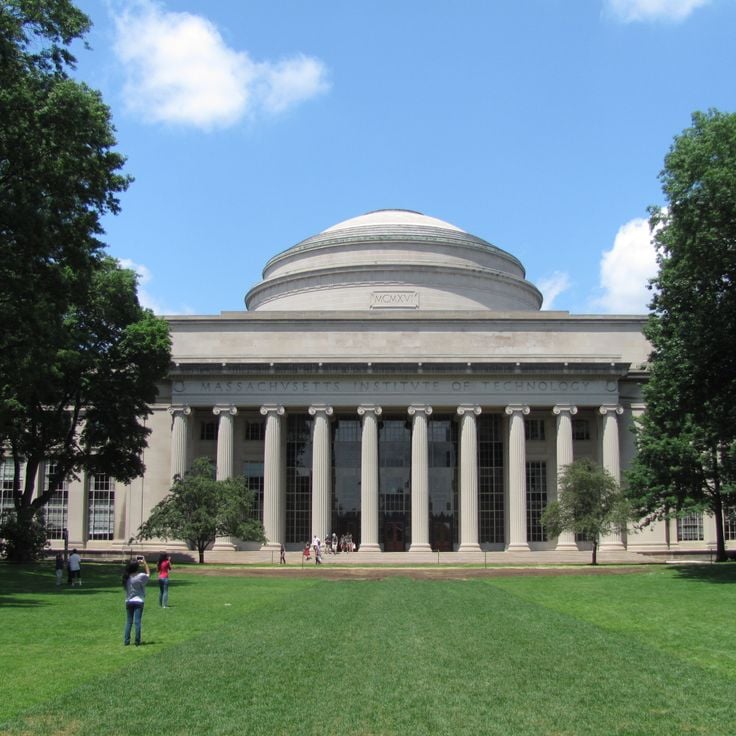
The Massachusetts Institute of Technology stretches along the Charles River, spanning several blocks between Cambridge and Boston. Buildings from different eras show how architecture has evolved over time, from early stone facades of the early 20th century to more recent glass and concrete structures. Students move between lecture halls and laboratories, often by bicycle or on foot. Paths along the river invite walking, while research facilities continue their work in the background. Around the institute, cafés, bookstores and small restaurants have settled. The feel is marked by concentration and movement, with signs pointing to departments, classrooms and public lectures. The campus remains open, visitors can cross many areas and observe different building styles, from the main building topped with a dome to experimental constructions from recent years.
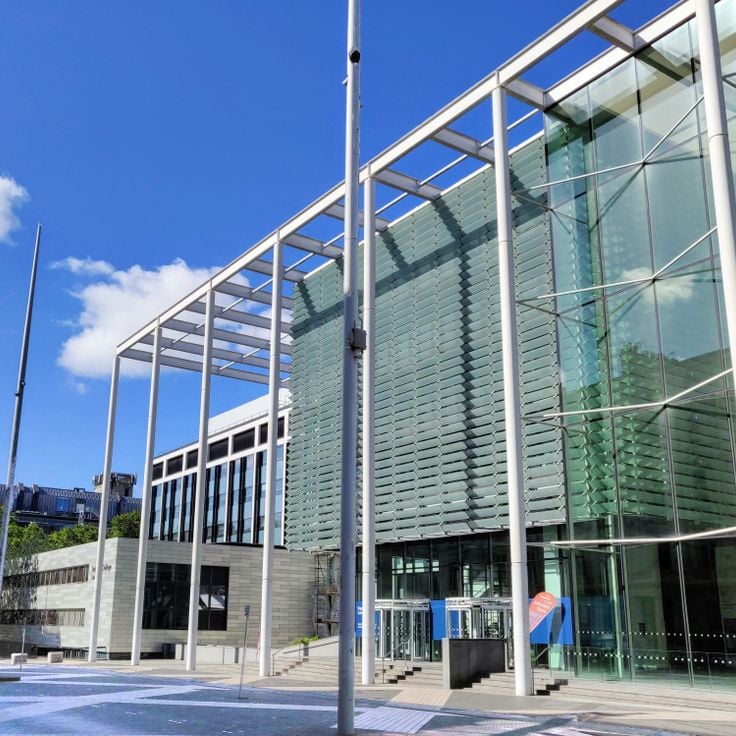
Imperial College London sits in South Kensington, where research buildings alternate with historic museums. The campus combines Victorian structures and glass facades, arranged between parks and wide streets. Students move between lecture halls and libraries while researchers work in the laboratories. The neighborhood attracts visitors who come to see the museums as much as the academic environment. The college connects university life to the daily rhythm of a large city.
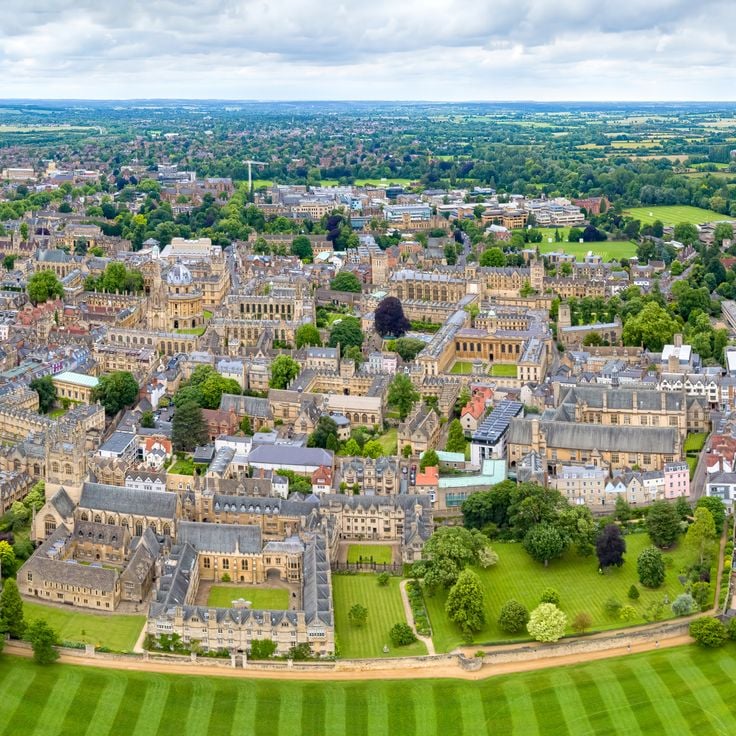
The University of Oxford spreads across the old town, where around forty colleges stand among narrow lanes and green spaces. Most buildings date from the Middle Ages and the Renaissance, their honey-colored sandstone shapes the cityscape. You walk through tidy lawns, past Gothic chapels and libraries with tall windows. Students cycle through the streets, bookshops and cafés bring life to the areas around the colleges. The quarter of the Bodleian Library, the Radcliffe Camera with its round dome and the university church of St. Mary belong to daily life for residents and draw visitors who stroll among the old stones and breathe the scholarly air of this town.
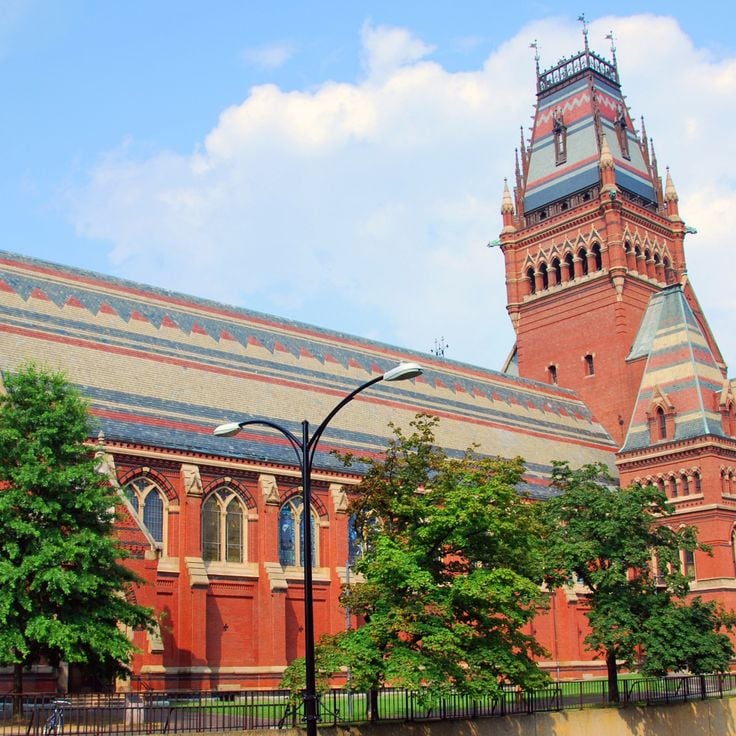
This university spreads across open lawns and brick walkways lined with red-brick buildings, many dating from the 18th and 19th centuries. Harvard Yard, the historic center, gathers libraries, administrative halls, and student residences behind wrought-iron gates. Old elms shade benches where students read or talk. Along the Charles River, boathouses and athletic fields run in a loose row. The Widener Library, fronted by tall columns, overlooks the main axis, while newer buildings of glass and concrete stand at the campus edges. Tourists stop to photograph the John Harvard statue, and students cross the paths between lectures. The feel mixes academic focus with the busy routines of a young city.
This university is made of over thirty colleges spread across Cambridge. Medieval brick buildings stand beside Renaissance courtyards and Victorian chapels. Students move through narrow streets on bicycles or glide along the Cam in wooden boats. The colleges open their gardens to the street or the river, some with lawns where only professors may walk. On winter days the libraries fill up, in summer groups sit on the grass. The city lives by the academic calendar: during term breaks it grows quieter, during exams it runs at full speed. In the pubs lecturers and students meet, in the bookshops textbooks and old editions pile up. The center is small, you can cross it on foot, but each college forms a world of its own with dining hall, chapel and rooms around the courtyard.
Stanford University sits on a wide stretch of land in California, a former ranch turned into a campus under open sky. The buildings are recognizable by their sandstone arches in a Hispanic style, with red tile roofs and long covered walkways. Golden hills rise around the grounds, staying dry most of the year, while palm trees and eucalyptus provide shade along the paths. Between the older structures, lawns open where students pause on their way between lectures. The architecture recalls old California missions, with courtyards and repeated arches framing views of the surrounding land. Newer research buildings in glass and concrete stand nearby, but the historic core defines the place. The campus spreads close to the foothills, in a zone where the climate stays mild and fog sometimes drifts in from the Pacific. The feeling is open and spacious, with wide paths and little traffic. Biking is common, and many people move slowly through the grounds. The university draws visitors who walk the arcades and sense the connection between learning and the California landscape.
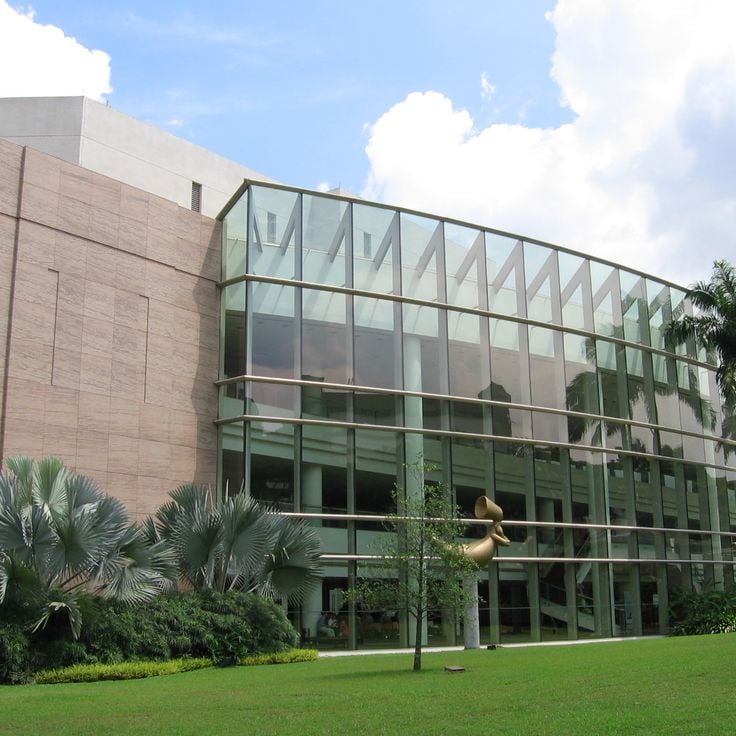
This campus spreads across gentle hills, where teaching buildings, research centers, and student residences sit among tropical trees and gardens. The architecture combines open structures with glass facades that let in daylight while providing shade. Students move along covered walkways that protect from sun and rain. Green spaces surround the libraries, lecture halls, and laboratories, while the grounds extend to the edge of a nature reserve. During breaks, young people sit under palm trees or in air-conditioned common rooms. The place feels like a small city of its own, with cafeterias, sports facilities, and quiet corners for studying. The atmosphere remains lively without being hectic, shaped by the comings and goings of students from around the world.
ETH Zurich sits on a hill above the city, combining historic buildings with modern laboratories made of glass and concrete. From the terraces you see the rooftops of Zurich and beyond them the snow-covered peaks of the Alps. In the lecture halls and research labs, students and scientists from many countries work on mathematical, physical and engineering projects. The streets around the campus are lined with bookshops, cafeterias and coffee shops where you often see groups of young people in discussion. Walking through the wide staircases and corridors, you feel the concentration that fills this school for science and engineering. Some buildings date from the 19th century, others were built just a few decades ago, and everywhere you find plaques and displays recalling great names in physics and mathematics.
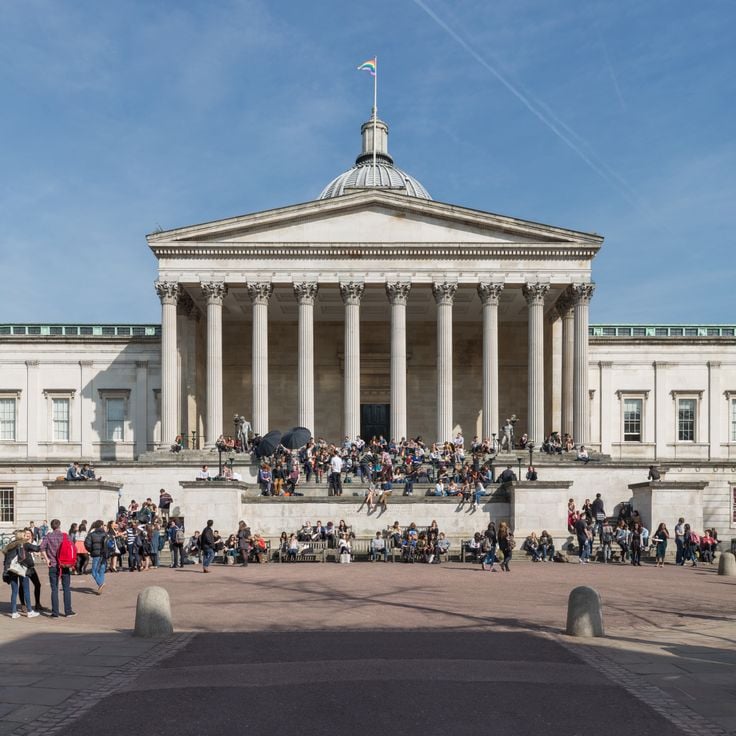
University College London stands at the heart of Bloomsbury, a neighborhood filled with bookshops and museums. The main building displays a neoclassical front with tall columns and a dome visible from a distance. The streets around it are quiet, with trees lining the sidewalks and small cafés where students work. Several institutes spread across adjoining buildings, some from the 19th century, others modern. You meet researchers moving between libraries and visitors browsing the university's museum. The neighborhood keeps an academic character, with many pedestrians and little traffic, despite being close to the busy city center.
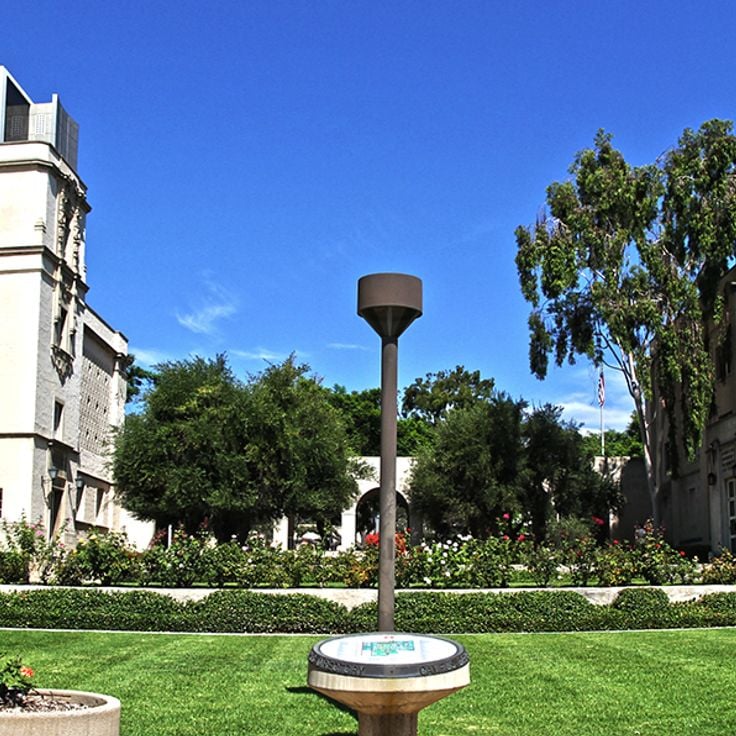
The California Institute of Technology sits in Pasadena, a few miles from downtown Los Angeles. The campus spreads across a modest area, lined with low brick and concrete buildings that house laboratories and lecture halls. Trees shade the walkways where students and researchers move between buildings. The architecture stays simple, without historical references or grand gestures. Small groups gather at outdoor tables scattered across the grounds. The mood remains calm, even during the academic year. Lawns and planted areas break up the built environment, with palms and other trees offering cover from the sun. The size of the campus makes it easy to walk from one end to the other. Few visitors from the city pass through; the institute remains a place for those who work or study here.
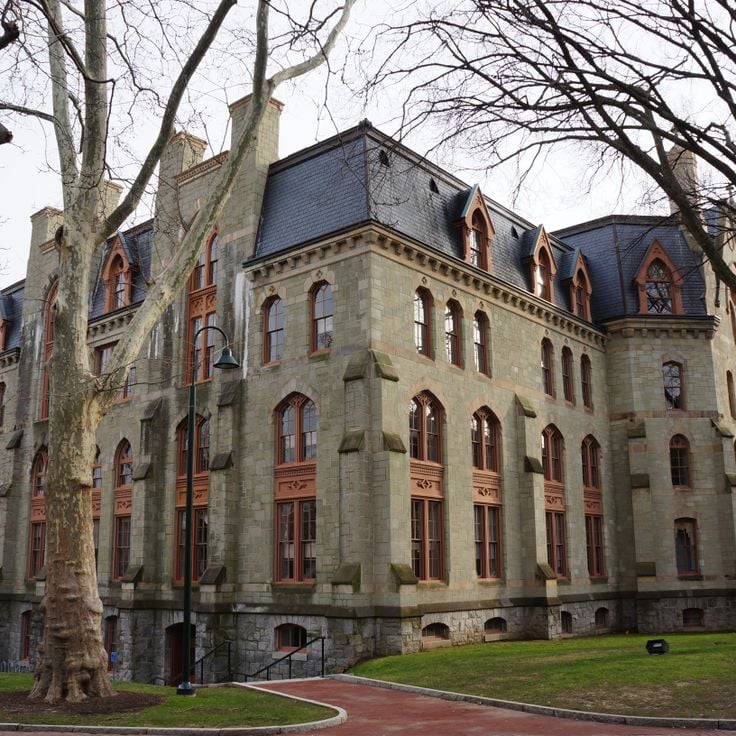
This campus sits in the heart of Philadelphia and brings together stone buildings from earlier centuries with the daily rhythm of the city. Dark stone structures, columns and Gothic towers stand beside wide avenues and contemporary facilities. Students move between lecture halls and the surrounding neighborhoods, where cafes and bookstores set the tone. The University of Pennsylvania has been part of the city for over two hundred years, and its architecture reflects this long history. Parks and interior courtyards offer places to read or talk, while the surrounding streets carry the life of the neighborhood.
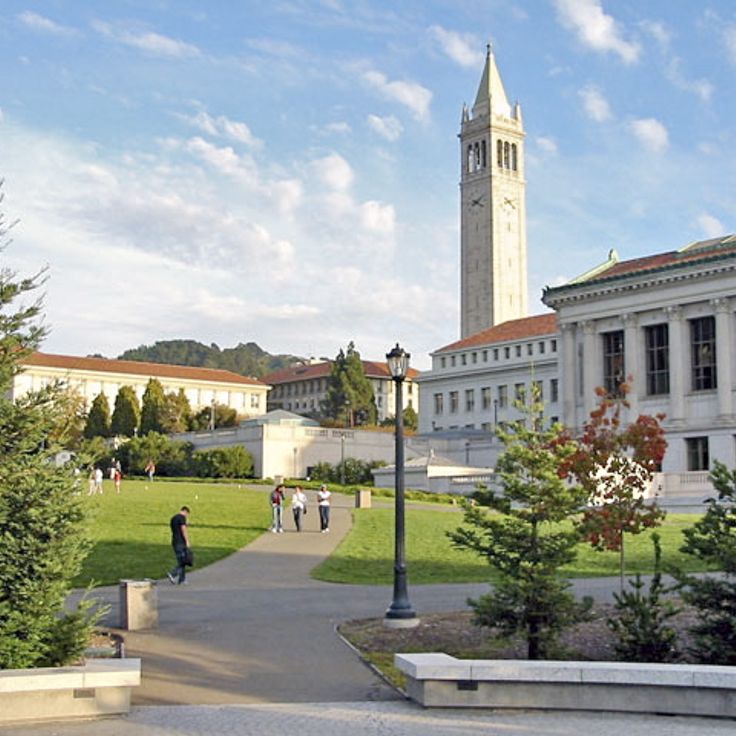
This campus spreads across gentle hills above Berkeley, offering wide views over San Francisco Bay. The university began in the late 1800s and grew into a large research institution. Red brick buildings, tall bell towers, and shaded plazas shape the landscape. Students sit on the grass, bicycles lean against walls, conversations happen under plane trees. In the 1960s, this place became the starting point for political and social movements that reached beyond California. Today, visitors come to walk the broad avenues, discover the old libraries, and experience the feel of a place where scientific research and public debate come together.
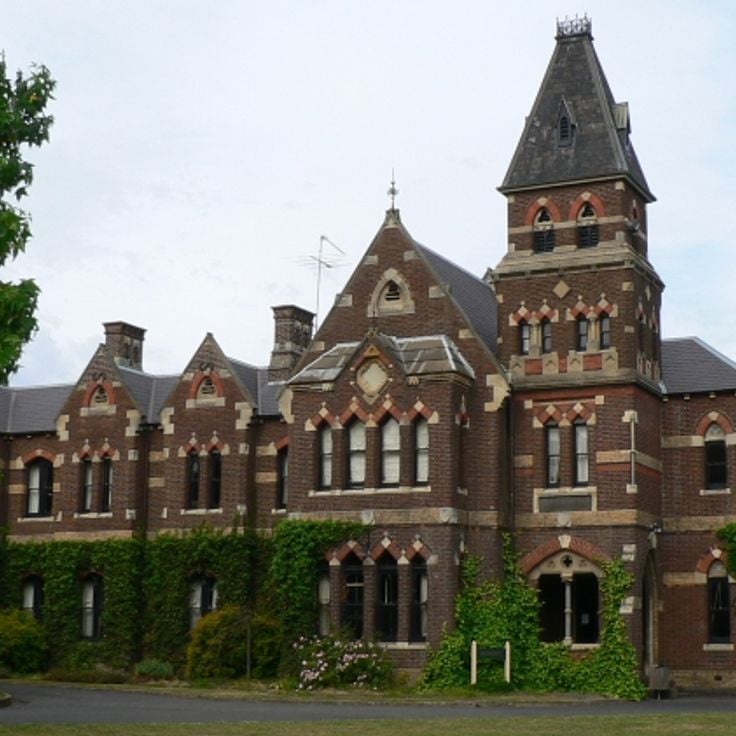
The University of Melbourne groups its buildings over several blocks near the center, joining Victorian stone structures from the 1800s with glass and concrete constructions from later decades. Lawns and old trees separate the faculties while students move along the paths between classes. The library stands behind columns, the cafés fill at noon, and the lecture halls empty in the evening. Around the university stand bookshops, pubs and student residences, so academic life spills into the neighboring streets of Carlton.
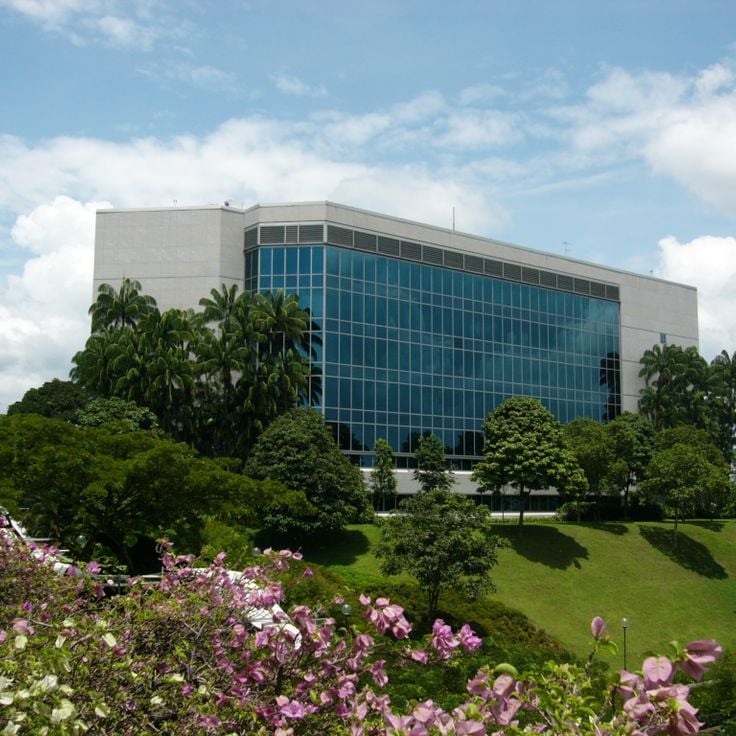
Nanyang Technological University spreads across a large site in western Singapore, where modern buildings stand among dense greenery and open lawns. The campus architecture appears experimental: curved lines, green roofs, and glass facades shape the landscape. Some structures nestle into slopes, while others rise like sculptural forms above the canopy. Students move along covered walkways between faculties, cross courtyards lined with water pools, and rest under trees that provide shade. The location away from the city center gives the campus a quiet, almost secluded feel. Visitors discover a university landscape that connects research and nature in an unusual way.
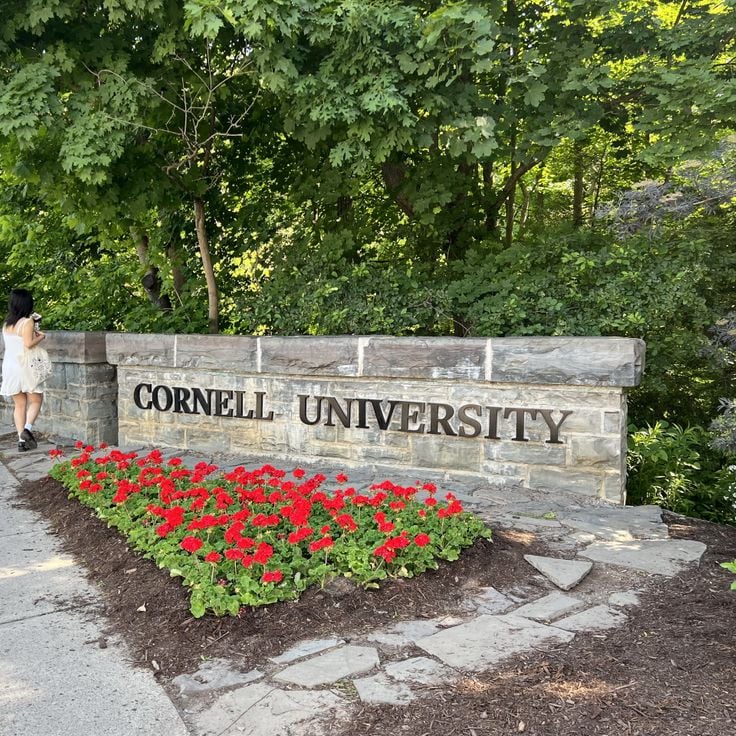
Cornell University sits on a plateau above deep gorges, where waterfalls tumble down steep rock walls. The campus spreads across a wide area in the middle of a region of forests and lakes in upstate New York. Paths lead to viewpoints from which you can see the valleys below. The buildings date from different periods, some in stone, others modern with glass and concrete. Between them lie lawns where students gather. In fall, the surrounding trees turn red and yellow, in winter snow covers the ground and paths. Bridges cross the gorges and connect the different parts of the campus. The university was founded in the 19th century and has since drawn people from many countries. The town of Ithaca lies below, with its cafés, bookstores and small restaurants where locals and university members meet.
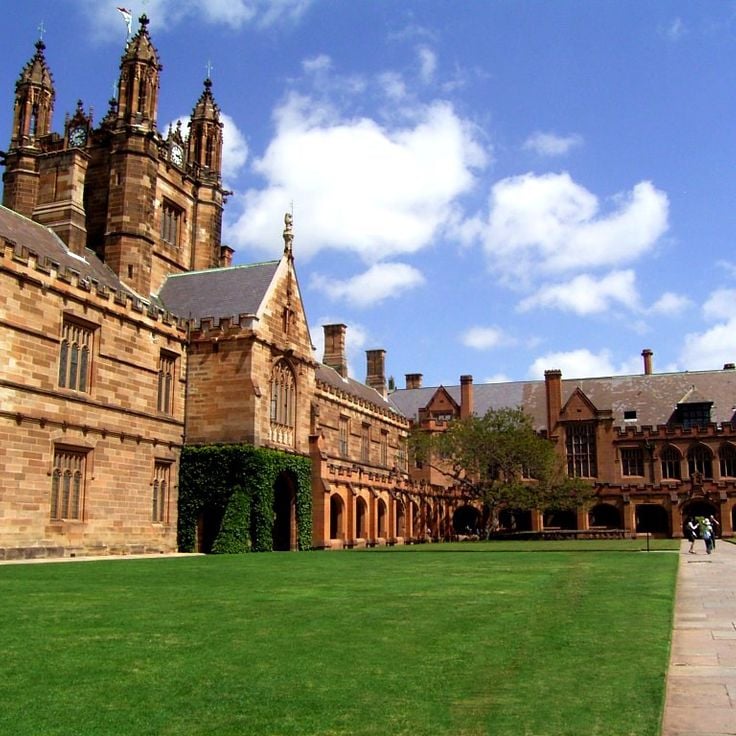
The University of Sydney spreads across wide green spaces in the heart of Sydney. Its neo-Gothic buildings in yellow sandstone recall the old universities of England. The towers, arches and arcades date from the mid-19th century and stand under the Australian sun, which lights up the honey-colored facades. Students sit beneath trees or cross the courtyards, where lecture halls, libraries and research buildings follow one another. Broad lawns open between the structures, creating places to rest. Around the campus lie the neighborhoods of Camperdown and Darlington, with their cafés and bookshops in the streets. This university ranks among the oldest in the country and draws visitors who walk through the corridors and contemplate the architecture, which brings together European models with the feel of Sydney.
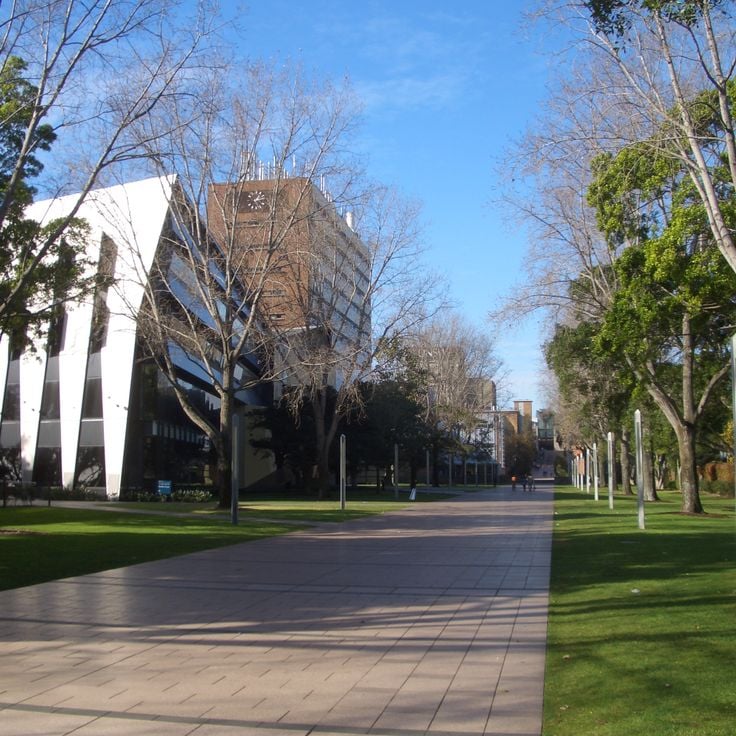
The University of New South Wales sits on a hill east of the city center, a few miles from the coast. Faculty buildings spread across a large campus where eucalyptus trees grow between concrete structures and glass facades. Students move on foot or by bicycle between lecture halls, libraries and cafes. From the campus, you can reach the beaches of Coogee and Maroubra in a short time, which gives daily life a relaxed rhythm. During breaks, groups settle on the lawns or under the shade of trees. Proximity to the ocean shapes the mood: backpacks with towels and surfboards are part of the usual scene. Research laboratories and computing centers work on projects in engineering, medicine and renewable energy. In the evening, the campus empties as life shifts to the neighboring coastal neighborhoods.
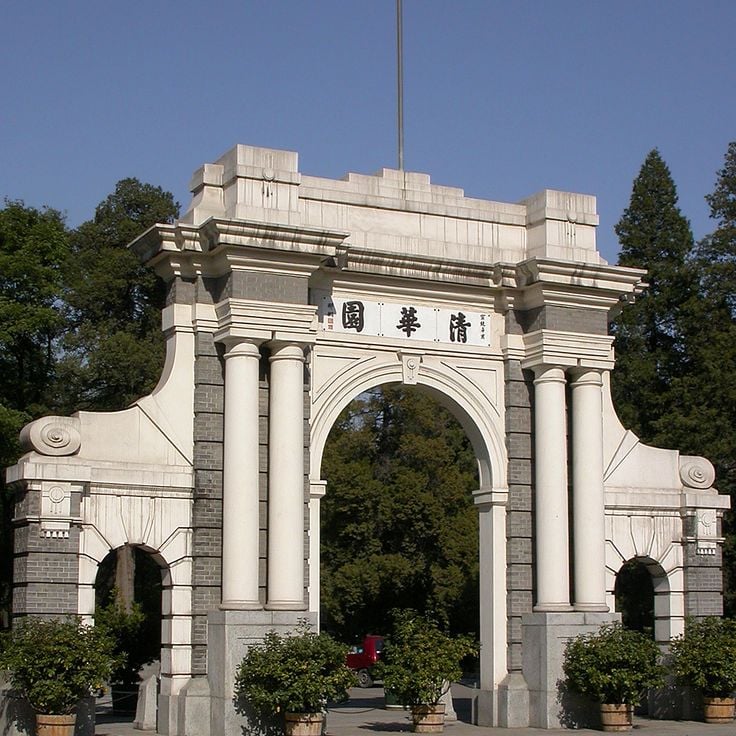
Tsinghua University stands on the grounds of a former imperial garden and preserves this character through its classical Chinese pavilions, rock gardens and willow-lined ponds. The buildings combine traditional forms with modern research facilities. Students cross bridges over the ponds and pass through historic courtyards on their way to laboratories and libraries. The campus covers a wide area in northwestern Beijing and forms a quiet space away from the denser parts of the city.
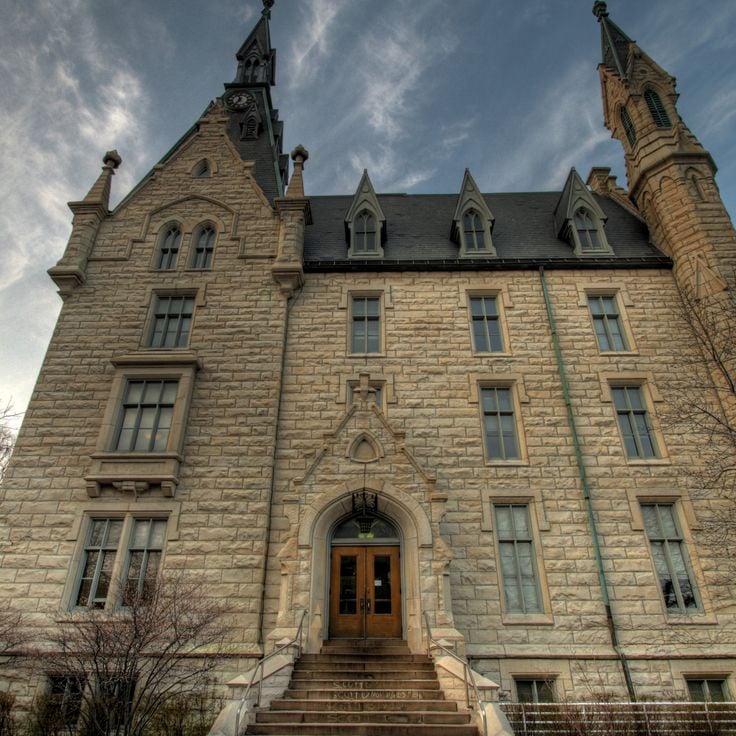
This university spreads across a large campus on the south side of the city, in the Hyde Park neighborhood. Most buildings are in the Gothic Revival style and gather around rectangular courtyards shaded by trees. You see lecture halls, libraries, and residential buildings in gray limestone that recall the architecture of English colleges. Modern buildings for research and teaching stand among them. Students sit on the lawns or walk between the courtyards. The streets around the campus are quiet and lined with houses, small shops, and cafes that support the academic life.
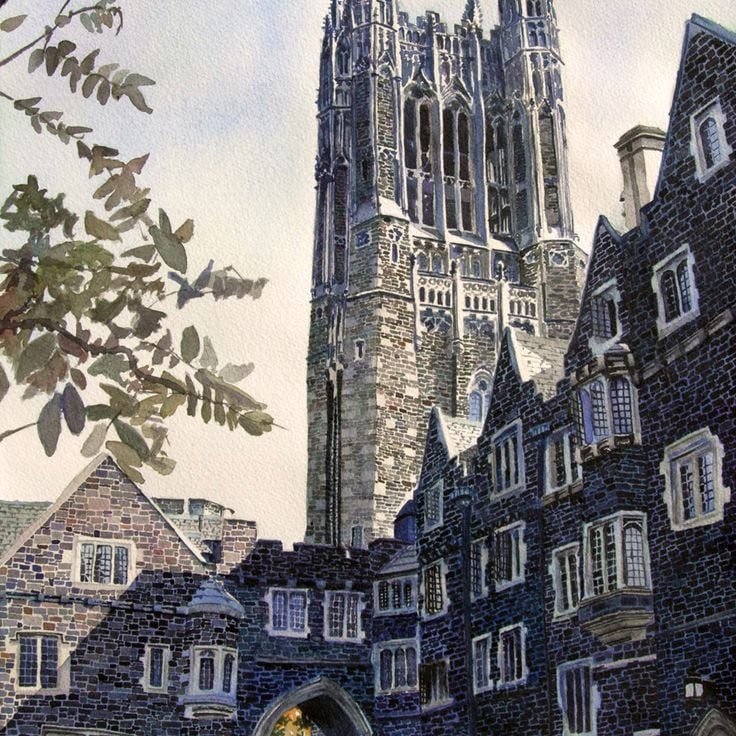
Princeton University sits on grounds that spread between tree-lined avenues and lawns running through this small town in New Jersey. The buildings mix Gothic towers in sandstone with colonial structures featuring columns. Students move on foot or by bicycle across the grounds, meeting in interior courtyards between lecture halls. Brick pathways lead past the library with its arcades, the residence halls and research buildings. The university shapes the character of the town, where bookstores, cafes and shops line Nassau Street. On weekends, visitors come to see the chapel architecture, the museum collections or simply to experience the feel of a university grounds that has existed since the 18th century.
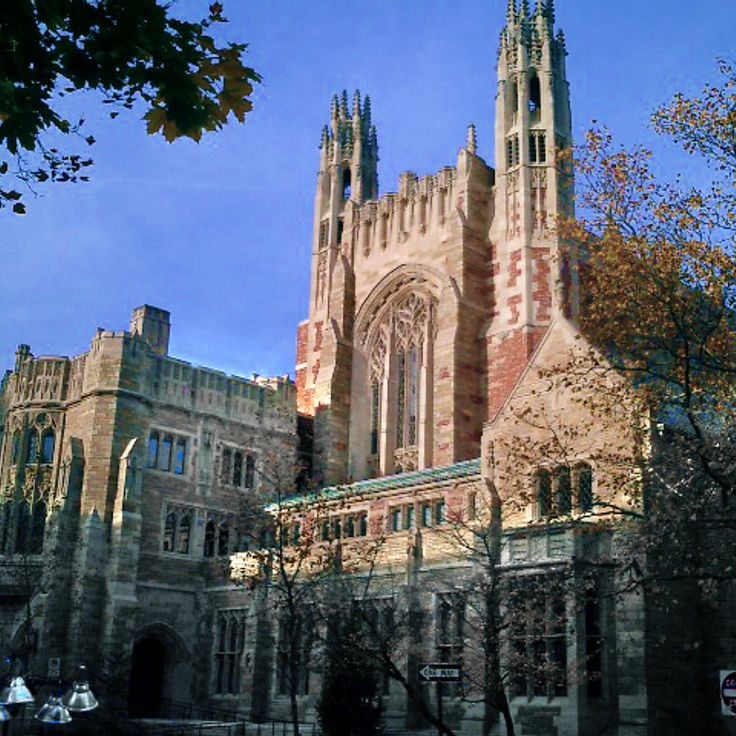
Yale University has shaped New Haven since 1701 with its Gothic stone buildings that recall medieval English colleges. The gray sandstone facades rise along narrow streets, where ivy climbs the walls and wrought iron gates open onto tree-lined inner courtyards. Students cross paved walkways between towers and pointed arches, while libraries hide behind tall windows. Around campus, bookstores, cafes and brick rowhouses alternate. The architecture gives the impression of a European university town inserted into the life of an American coastal city.
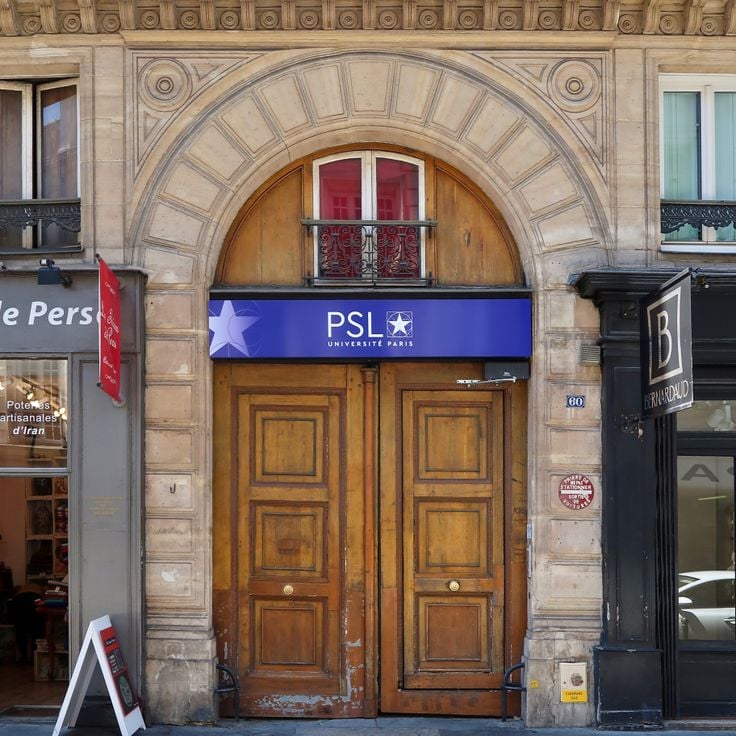
This university connects buildings in the Latin Quarter, Saint-Germain-des-Prés, and the Marais. Each building keeps its own history: former monasteries, 18th-century townhouses, laboratory buildings from the early 20th century. Students and researchers move on foot or by metro from one place to another, through narrow streets, past bookshops and cafés. They meet in interior courtyards, libraries, or on the surrounding squares. PSL University operates as a federation without a central campus, embedded in the urban fabric of Paris.
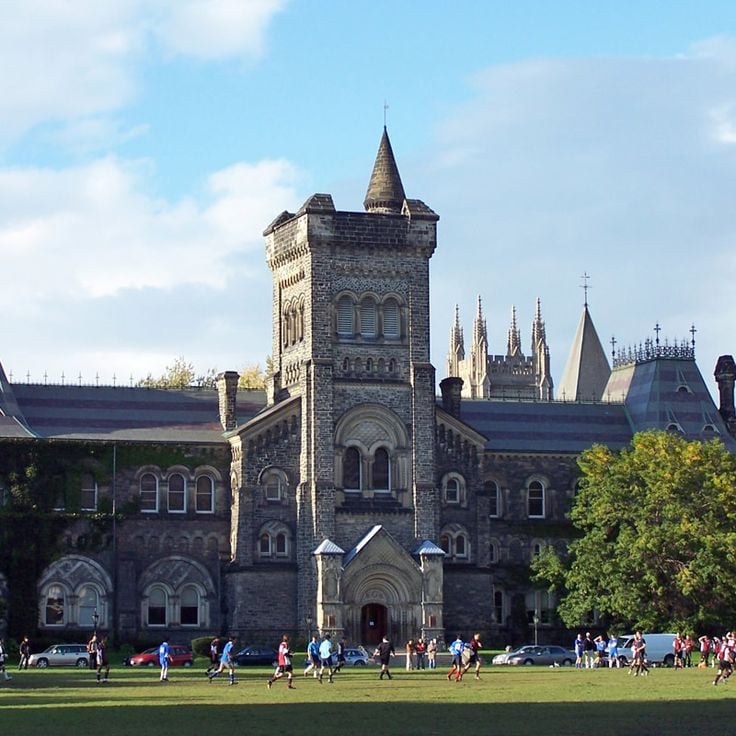
The University of Toronto covers several blocks in the downtown area and combines Victorian stone buildings with modern glass structures. Lecture halls, libraries and research facilities stand around open lawns crossed by pathways. Students move between the old colleges, whose towers and courtyards recall the 19th-century founding, and the newer faculty buildings. The university forms its own neighborhood within the city, where academic life meets daily urban routines. Streets and public spaces border the buildings directly, so visitors and passersby can walk through parts of the campus. In the courtyards and under the trees, people sit on benches while lectures and seminars take place in the surrounding rooms.
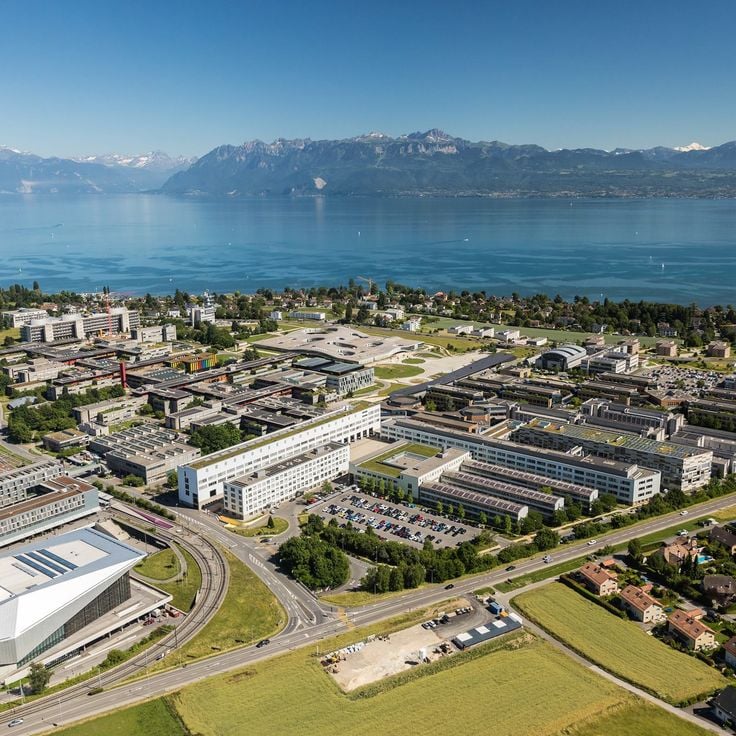
The École polytechnique fédérale de Lausanne stands on the shore of Lake Geneva and rises across several levels up the hillside. Buildings of glass and concrete follow the slope and open toward the lake and the mountains. Wide passages connect the different faculties to one another. Students and researchers move between the laboratories and the terraces that look out over the water and the Alps. The architecture plays with transparency and natural light. Green spaces slip between the structures. This campus feels like a small city where science occupies the center of the stage.
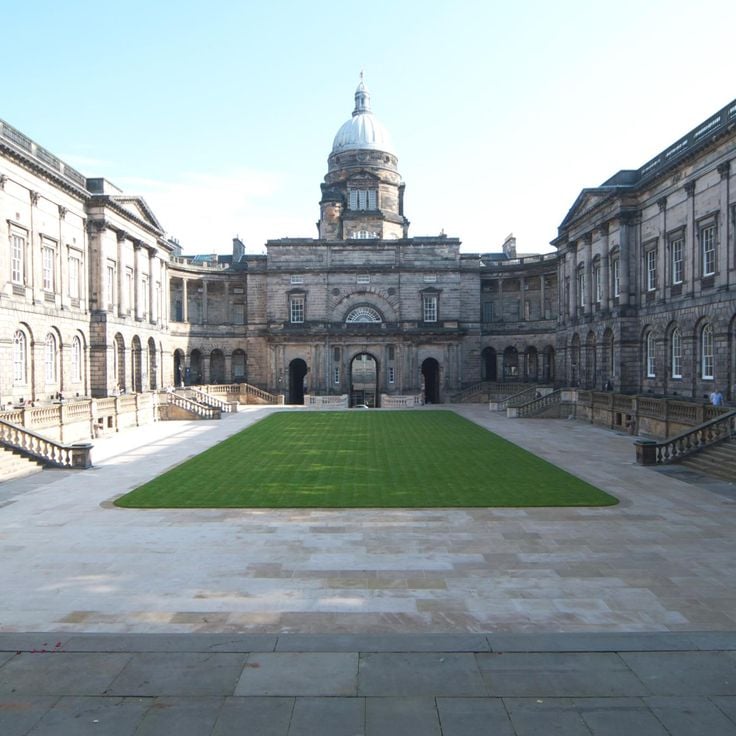
The University of Edinburgh spreads across several Georgian and Victorian buildings in the old town. There is no enclosed campus, just individual structures scattered between hills and cobbled lanes. Some lecture halls and libraries occupy former townhouses, others sit in 19th-century buildings with tall windows and stone facades. Students move through narrow streets, passing cafés and bookshops. The buildings blend into the historic cityscape and often only small plaques reveal they are part of the university.
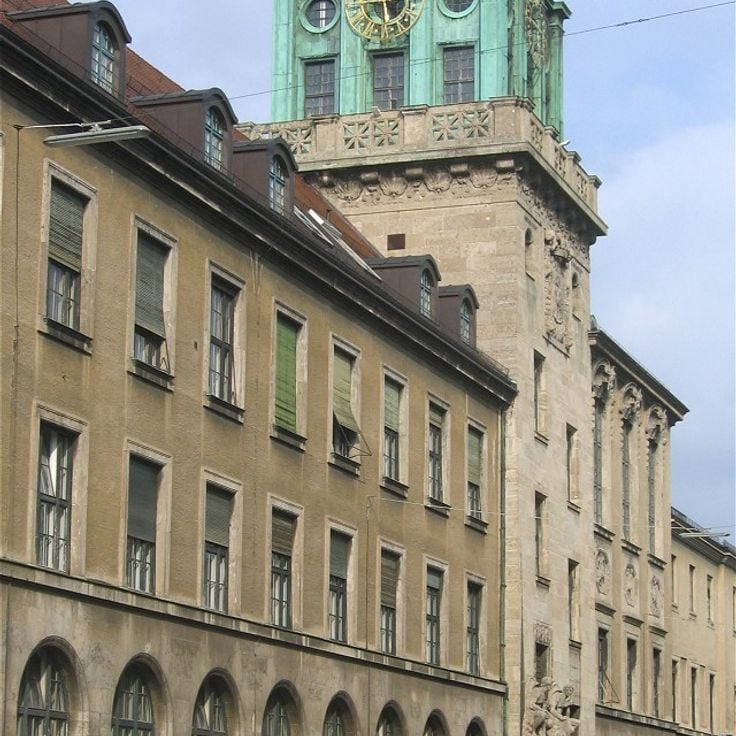
The Technical University of Munich spreads across several locations around the city, with the Garching campus being the largest. The buildings date from different decades and show modern architecture in glass and concrete. Wide paths connect the structures, and students move by bicycle or on foot. The cafeteria and several cafes occupy central positions and fill up during meal times. Trees and green spaces surround the campus, offering places to sit and rest. In the inner courtyards, students meet on benches or talk with each other. This university attracts students from many countries, and you hear different languages on campus. Research teams work in laboratories focused on engineering, physics, and computer science. The atmosphere is open and functional, with little attention to decoration.
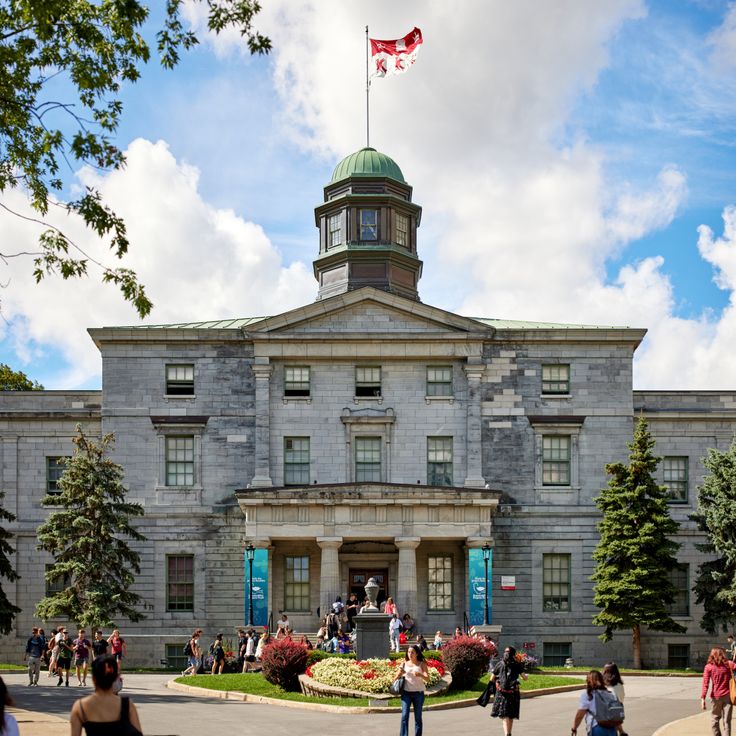
McGill University sits at the foot of Mount Royal and occupies several blocks in the city center. Buildings of grey stone stand near modern towers. Students pass through the wide Roddick Gate and cross lawns where colored leaves fall in autumn. Libraries fill in the afternoon, and in winter people walk through snow between pavilions. The neighborhood around the campus is busy, with cafes and small shops in the streets that descend toward the old city. The university was founded in the 19th century and its architecture has expanded over the decades, with old facades next to recent constructions.
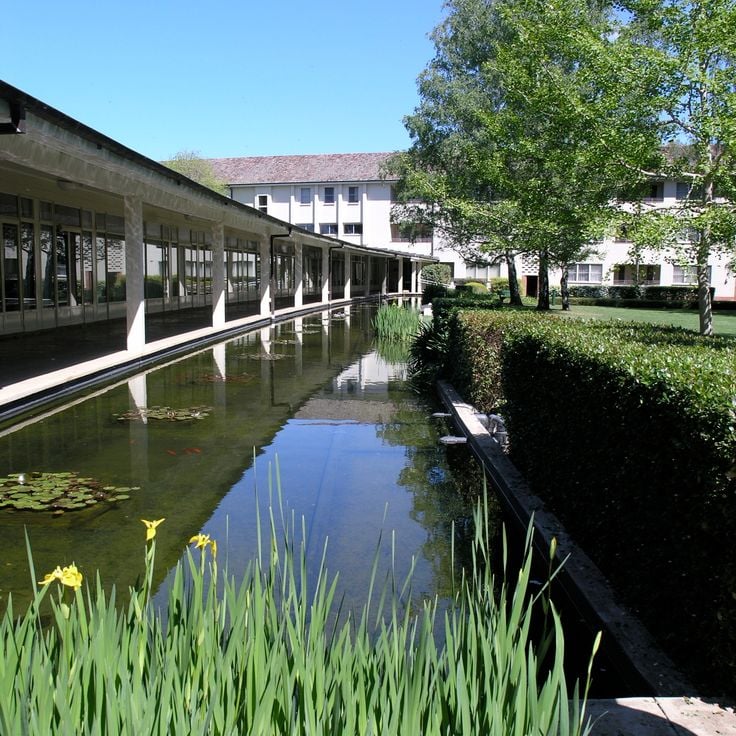
The Australian National University sits in Canberra, the capital of Australia, surrounded by hills and nature reserves. This campus spreads across a large site planted with trees, lawns and low buildings scattered through the greenery. Students move on foot or by bicycle between faculties, and the open layout invites people to stay outdoors. The closeness of parks and wooded areas shapes daily life: you pass joggers on the paths, groups working on the grass, birds nesting in the branches. The university ranks among the country's leading research centers and draws scholars from around the world. Libraries and laboratories hold a quiet, focused rhythm, while cafés and common rooms are places for conversation. The architecture mixes older brick structures with modern buildings in glass and concrete. Around the campus lie residences, small shops and restaurants that form a separate neighborhood. Canberra itself is a planned city with wide streets and plentiful green spaces, and the university fits into this fabric. Visitors appreciate the calm of the site and the chance to walk into the surrounding reserves after touring the campus.
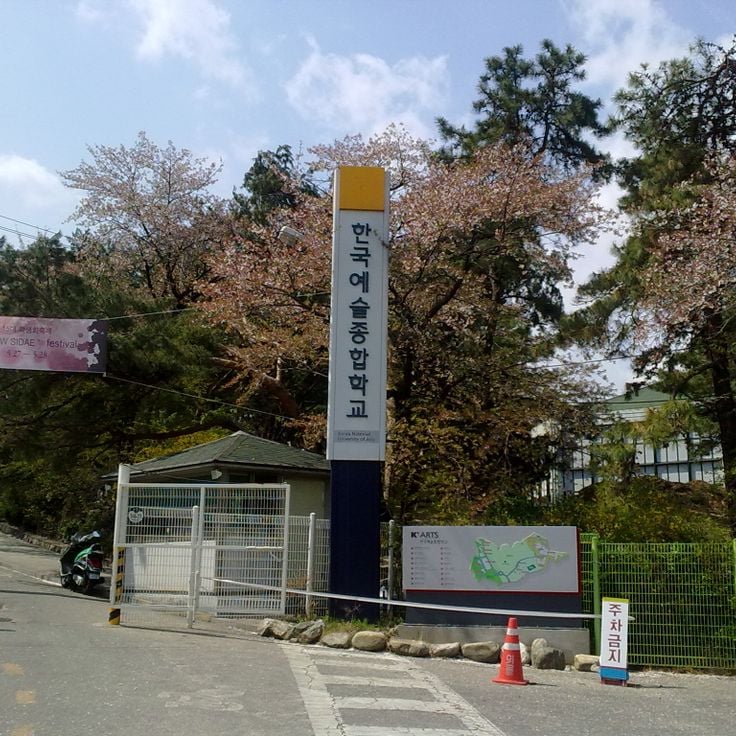
Seoul National University sits on a hilly campus in the northern part of the South Korean capital. Founded in 1946, the university combines traditional Korean architecture with modern research facilities. Curved roofs in classic style alternate with concrete structures and glass facades across the site. Small parks nestle between the faculties, where students work or rest beneath cherry trees. The library, one of the largest buildings, draws thousands of visitors every day. From the upper part of the campus, the view extends over the city to the mountains on the horizon. The university lies away from the center, accessible by subway, and offers a quiet contrast to the urban rush.
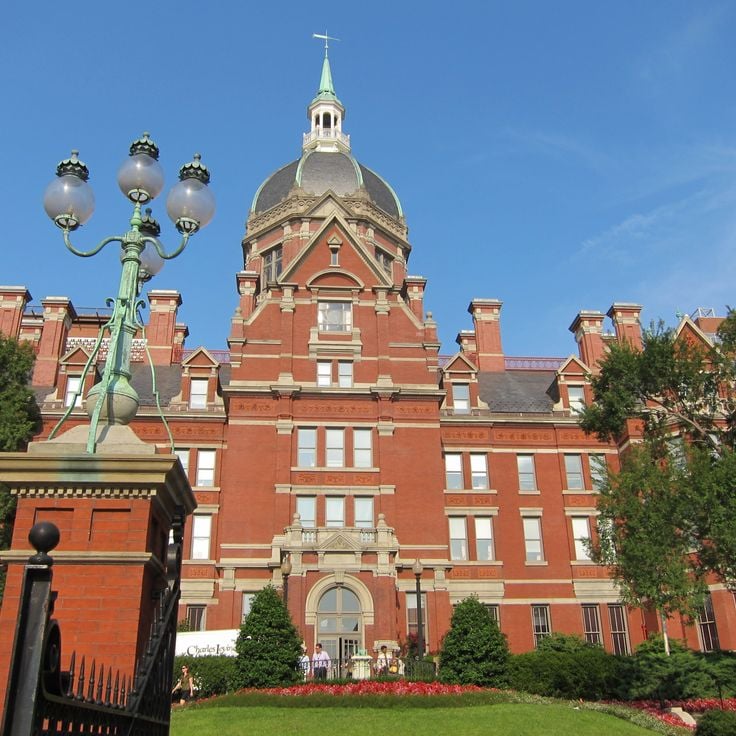
Johns Hopkins University sits in a residential neighborhood of Baltimore, combining green spaces with brick buildings. The campus extends through quiet streets where students move between libraries and research centers. The architecture ranges from 19th-century constructions to modern laboratories dedicated to medical research. Old trees shade outdoor meeting places that come alive in spring with seminars. The neighborhood around the university has bookstores and cafes frequented by the academic community.
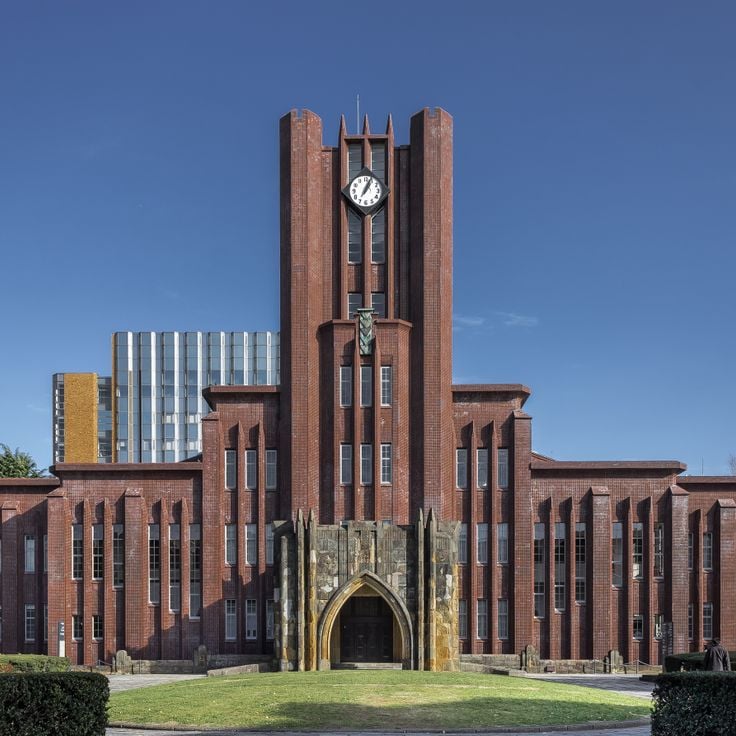
The University of Tokyo was founded during the Meiji era and sits across several sites in the city. The main campus in Hongo opens through traditional red gates standing in the streets. Old ginkgo trees grow among low brick buildings, and students move along quiet paths between lecture halls, libraries, and research centers. The Yasuda auditorium tower rises above the surrounding structures and marks the central square. In autumn, the trees along the paths turn golden yellow. Nearby parks and small restaurants invite walking. Several museums belong to the university, including one devoted to natural history. The campus combines academic life with the densely built environment of the Japanese capital.
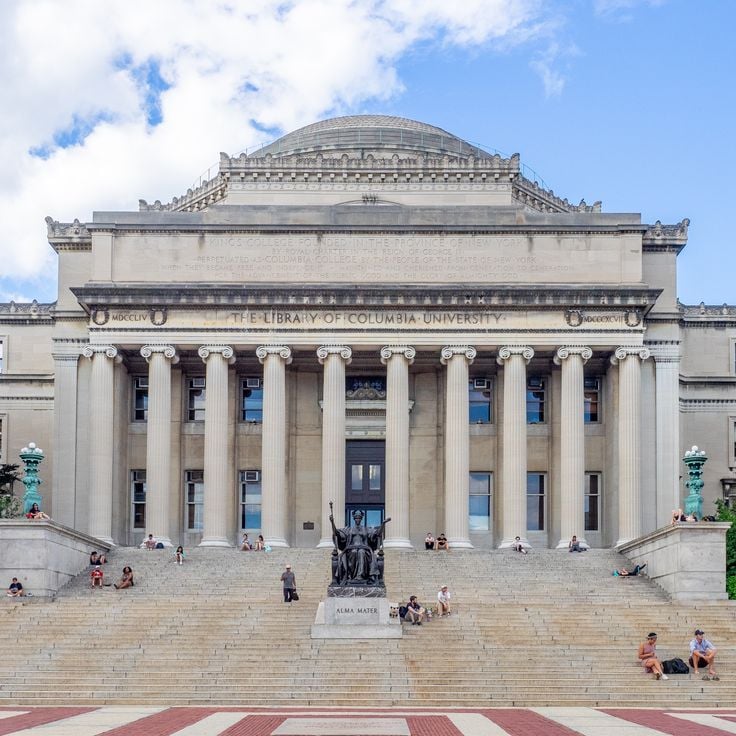
Columbia University stands on a hill in northern Manhattan, spread across several city blocks. The campus is organized around a central terrace, where students gather on wide steps between two courtyards. The domed library forms the center, surrounded by brick and limestone buildings constructed in the early 20th century. Trees line the walkways, and in autumn the leaves turn red and yellow. The streets nearby are filled with cafes, bookstores and small restaurants where professors and students from many countries meet. On weekends the campus opens to walkers, and music drifts from the practice rooms. The neighborhood carries traces of the academic community that has lived and worked here for more than a century.
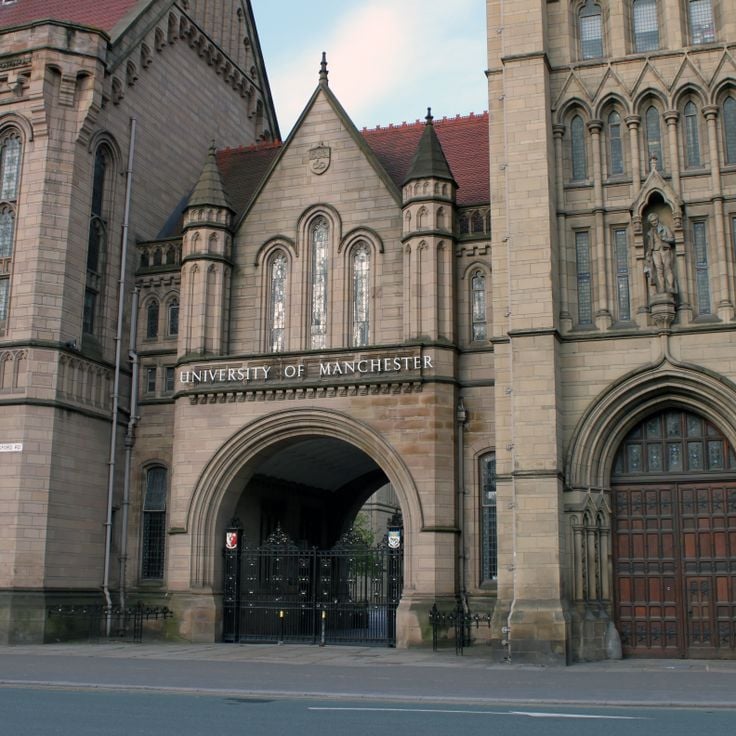
The University of Manchester spreads across several city blocks in the center of town. Its Victorian brick buildings stand alongside research facilities made of glass and steel. Founded in the 19th century, this university has always maintained close ties with industry. The lecture halls and laboratories welcome students from every continent. The libraries hold old manuscripts, while in the newer wings, researchers work on digital technologies. Around the campus, cafés and bookshops have opened where students meet between classes. The old brick facades recall the city's industrial past, while the modern extensions show how research moves forward.
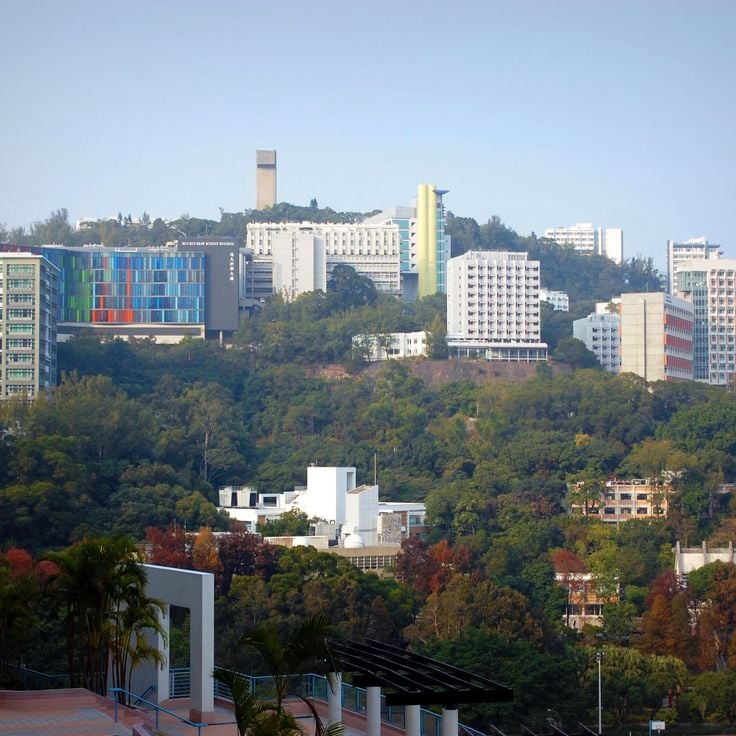
The Chinese University of Hong Kong spreads across wooded hills in the New Territories, overlooking the sea and mountains. The campus climbs over several levels, connecting modern buildings with older structures from the 1960s. Paths link lecture halls, libraries and residences, while stairs and pedestrian bridges join the different parts of the site. Students move between faculties, use the sports facilities or stop in the gardens laid out between the buildings. From many points, the view opens onto Tolo Harbour and the surrounding peaks. Founded in 1963, the university teaches mainly in Chinese and English. The architecture mixes concrete forms with more recent glass facades, and vegetation grows between the buildings, giving the place a green appearance. Buses link the campus to the city, and the journey takes about 30 to 40 minutes.
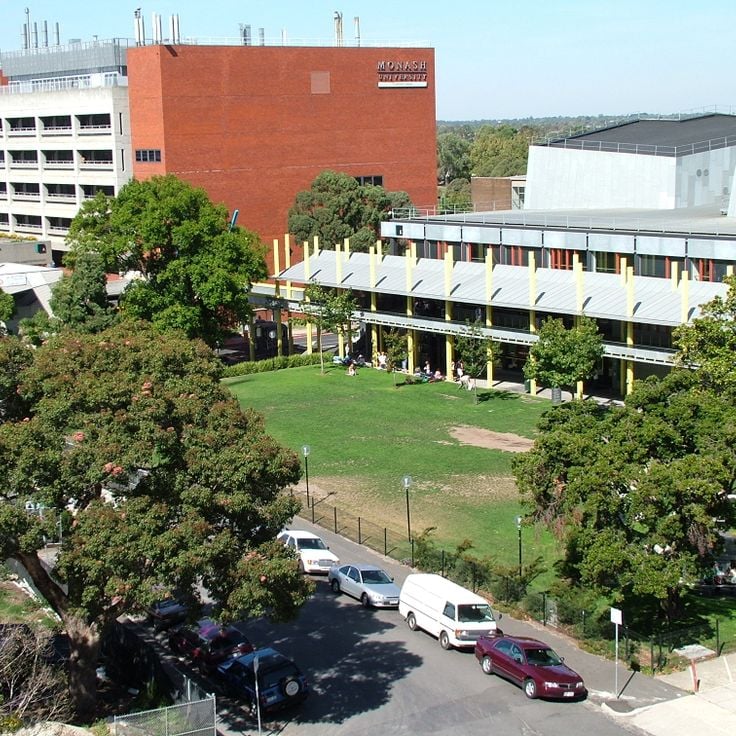
Monash University sits in the southeastern suburbs of Melbourne and combines modernist buildings with wide green spaces. This campus opened in the 1960s and carries the name of engineer John Monash. The architecture reflects the style of that era, with concrete structures and large glass facades. Between the lecture halls and research centers, lawns stretch under old eucalyptus trees that provide shade. Students move on foot or by bicycle between the buildings of different faculties. In the inner courtyards and in front of the libraries, places form where people work or take breaks. The campus grounds border residential neighborhoods and parks, so university life mixes with the suburban setting. Nearby, cafes and shops welcome students and local residents.
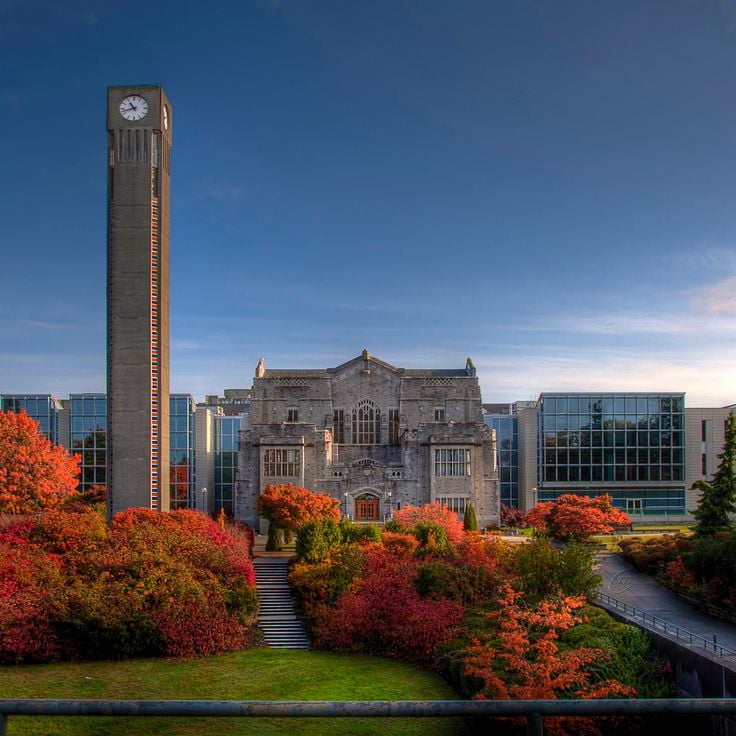
The University of British Columbia sits on a forested peninsula at the western edge of Vancouver. The campus stretches between the Pacific Ocean and the Coast Mountains. Deer cross the grounds between the buildings. The university was founded in the early 20th century and today brings together students from around the world. Forest trails wind through dense woodland to beaches facing the open sea. The architecture ranges from historic brick structures to modern laboratory buildings. The Museum of Anthropology holds art from the Indigenous peoples of the Northwest Coast. On clear days, snow-capped peaks trace the horizon.
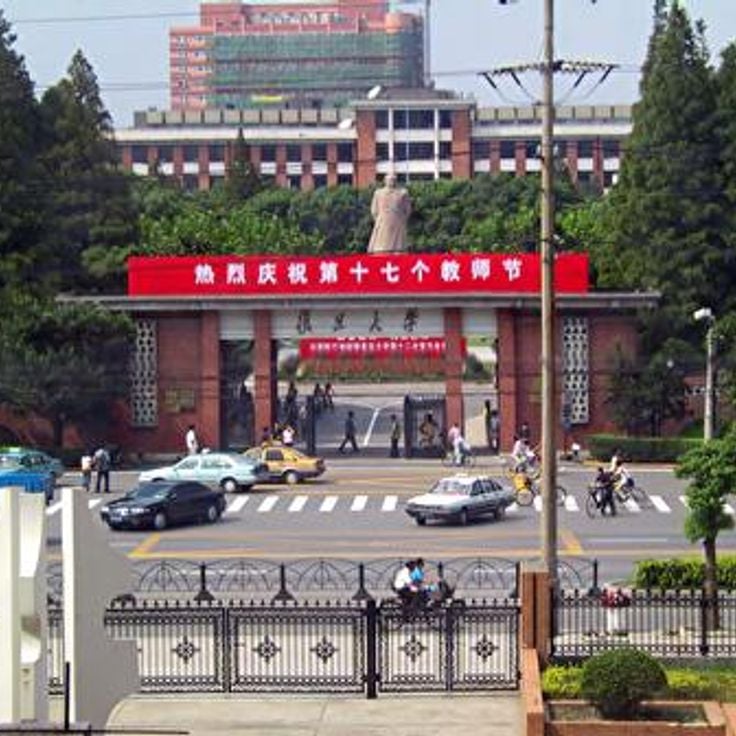
Fudan University spreads across a wide area in Yangpu district, northeast of central Shanghai. This institution was founded in 1905 and belongs among the oldest in modern Chinese higher education. Between residential blocks stand buildings from the republican era, with curved roofs and brick walls, lined by avenues of plane trees. Students cross open squares and walk past libraries and research institutes. Bamboo and old trees grow in the courtyards. Life spills into the neighboring streets, where small restaurants and bookstores have opened near the gates. The campus combines traditional forms with the demands of a contemporary urban university.
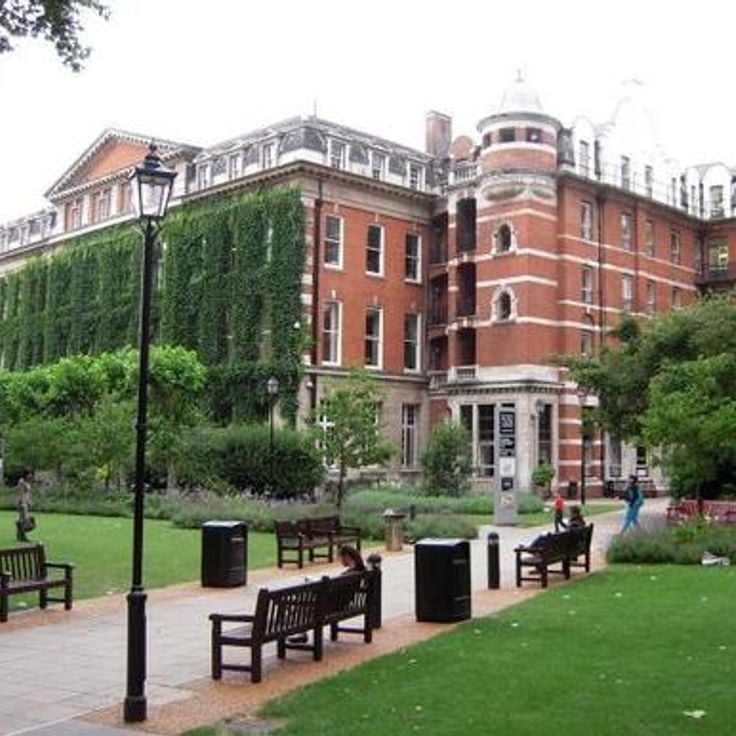
King's College London occupies several sites along the Thames and in the historic center of the city. The buildings range from 19th-century structures to modern lecture halls and research facilities. The main Strand campus sits a few steps from the river and Somerset House. Students move between classes through busy streets they share with tourists and office workers. The faculties are distributed across different neighborhoods, each with its own character. In the courtyards and passageways, you find the usual activity of a large urban university. The location right in the center blends academic life with everyday London.
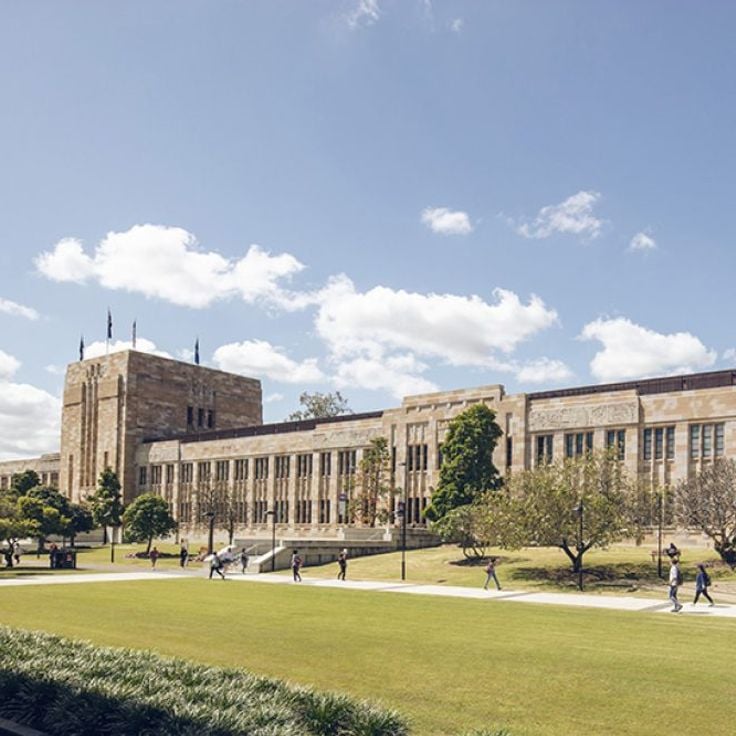
The University of Queensland spreads along the Brisbane River, mixing older sandstone buildings with more recent facilities. The warm ochre facades shape the look of the campus, while gardens filled with palms, banyan trees and flowering shrubs grow between the faculties. Students cross shaded paths lined with tall trees or sit on lawns overlooking the river. The subtropical climate keeps the greenery lush throughout the year. Ferry stops connect the university grounds to other parts of the city, and you often see rowers on the water. The architecture ranges from colonnaded structures in the style of the 1930s to modern glass buildings for research and teaching. The campus feels like a wide park where academic life and nature weave closely together.
New York University spreads across Greenwich Village without clear boundaries, merging with the rest of the neighborhood. Its buildings, often marked by purple flags, stand beside cafés, bookstores, and old brick townhouses. Students sit on the steps of Washington Square Park, where street musicians perform and children play around the fountain. The university has no enclosed campus – lecture halls, libraries, and dormitories share the streets with restaurants and small theaters. Walking from one class to another means crossing busy intersections and passing people who have nothing to do with the university. Academic life here is completely woven into the rhythm of the neighborhood.
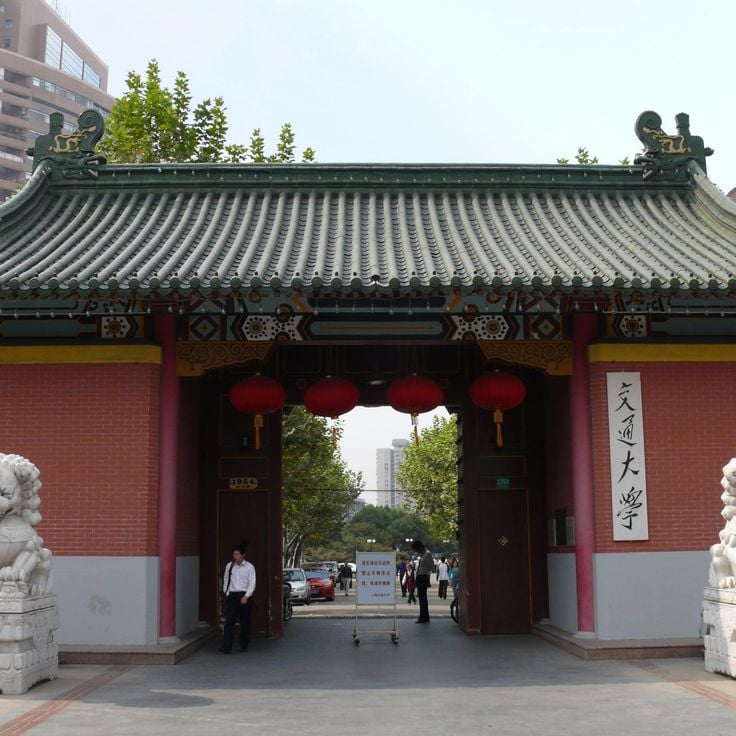
Shanghai Jiao Tong University is a campus set in the former French quarter of the city, where tree-lined avenues run between older buildings and more recent structures. Plane trees shade the pathways where students and faculty move between lecture halls, laboratories, and dormitories. The campus occupies a district where colonial architecture still stands, though the surrounding streets have long been absorbed into the modern metropolis. Research facilities focus on engineering, technology, and sciences, drawing scholars from across the country and beyond. The presence of the university shapes the rhythm of the neighborhood, with bookshops, cafes, and student housing spreading beyond the gates.
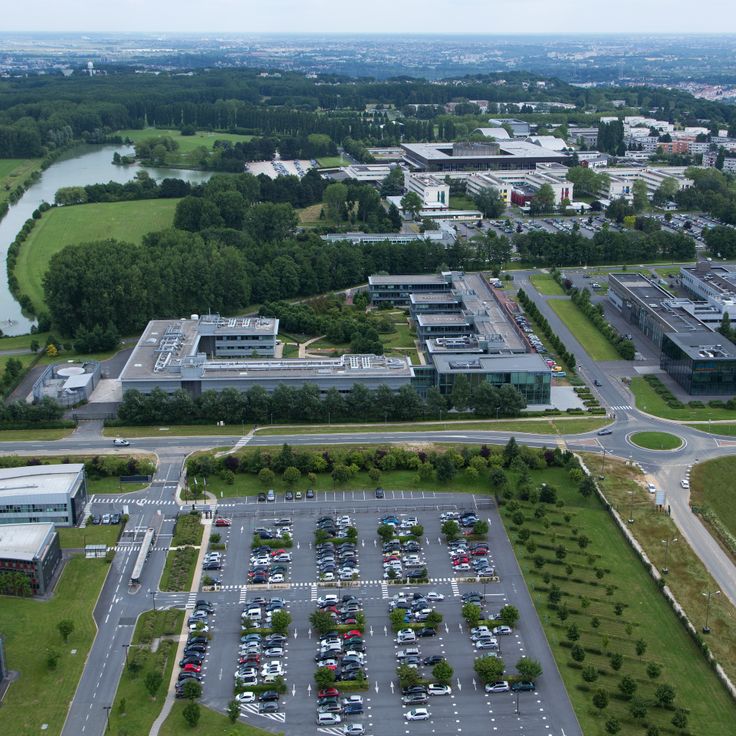
The Institut Polytechnique de Paris brings together several schools on the Plateau de Saclay, south of the French capital. New faculty buildings, laboratories, and dormitories are rising on former farmland in an area still under development. The landscape shifts between modern structures, construction sites, and fields. Students and faculty use connections to Paris, while surrounding villages retain some of their rural character. The campus feels expansive, with large distances between buildings.
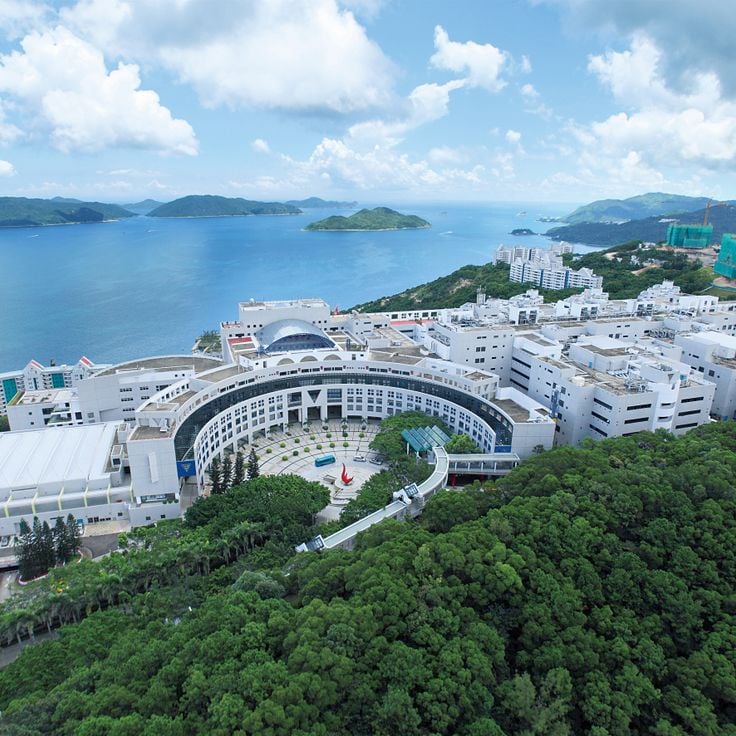
The Hong Kong University of Science and Technology sits on a hillside overlooking the South China Sea. Founded in the early 1990s, the university consists of buildings arranged in terraces that follow the slope downward. Wide staircases and walkways connect the different levels. From the upper platforms, you can see the water and nearby islands. The architecture feels modern and functional, with plenty of glass and concrete. Students move between lecture halls, libraries, and dormitories, all located on the same grounds. On weekdays, the pathways and courtyards are full of activity. The university is among the younger research institutions in the city and attracts students from different countries. Trees grow around the site, thriving in the subtropical climate. The location away from the city center creates a quiet setting focused on teaching and research.
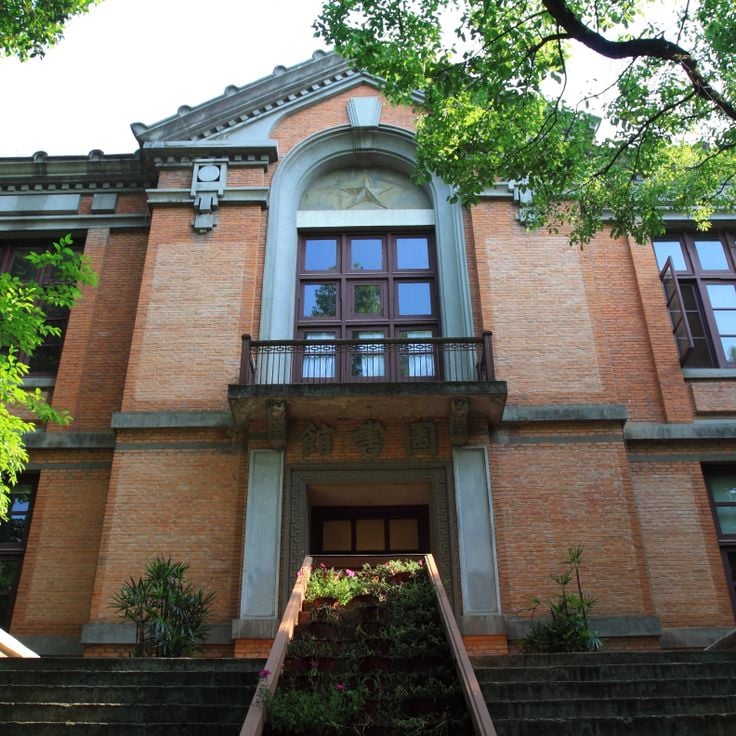
Zhejiang University sits along the shores of West Lake in Hangzhou, where traditional gardens meet modern faculty buildings. The campus spreads across several sites in the city, with the historic core lined by old trees and small ponds. Students cross footbridges on their way to lecture halls, while forested hills remain visible in the background. The proximity to the lake gives the place a particular feel: on sunny days, pavilions reflect in the water, and pathways between buildings follow the gentle slopes of the land. The university houses technical laboratories as well as libraries where researchers from different fields meet. The setting combines city life with an atmosphere that recalls a park, inviting people to walk and linger.
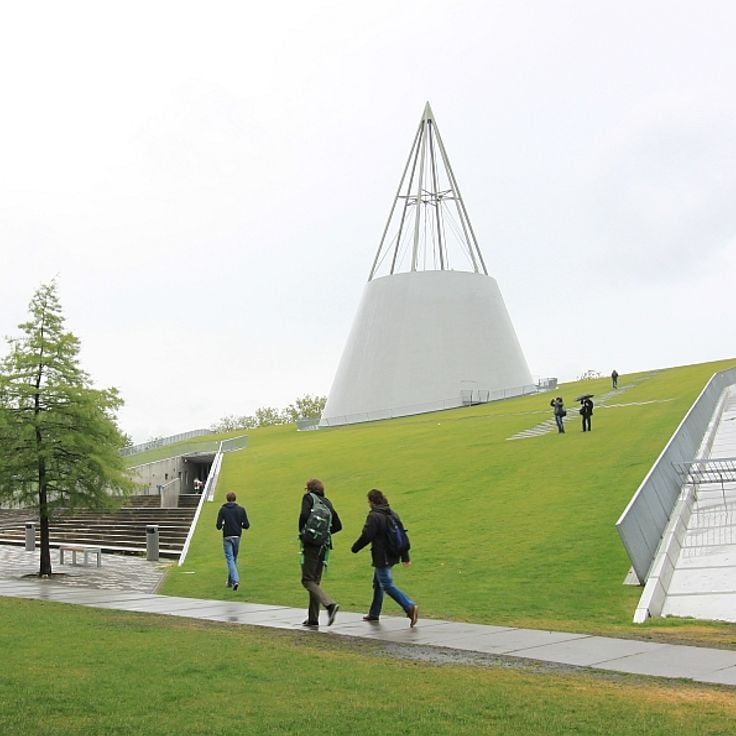
This technical university combines old brick buildings with contemporary architecture in a city crossed by canals. Students work on projects in labs specializing in renewable energy, water technology, or urban planning. Faculty buildings spread across the center and several outer areas. Some lecture halls date from the 1960s, while others were recently added in the form of glass cubes or slanted metal facades. The library, with a grass-covered roof, doubles as a public park. Between sessions, groups gather on the steps or lawns to discuss or sketch. Around the campus, the canals and low houses of the old town form a backdrop where bicycles remain the preferred way to move.
Kyoto University sits in the northern part of the city, where concrete and brick faculty buildings spread across residential neighborhoods and quiet streets. This institution, founded in the 19th century, stands near old temples and landscaped gardens that belong to the historical fabric of the former imperial capital. Students move on foot or by bicycle between buildings scattered over a wide area. The architecture appears understated and blends into the surroundings. Nearby are small shops, bookstores and cafés where young people gather. The university also maintains research facilities in other parts of the city. You can recognize it by the simple entrances and signs at the gates.
The University of Michigan campus spreads across much of Ann Arbor, shaping the rhythm of the entire city. Red brick buildings stand alongside modern glass and concrete structures. Students gather on the Diag, a central lawn crossed by diagonal paths, between classes or during warmer months. Streets around campus fill with bookstores, cafes, and small restaurants where students and faculty meet throughout the day. Michigan Stadium, one of the largest college football venues in the country, sits on the edge of campus. On autumn Saturdays, crowds in the tens of thousands arrive for games. The medical school and its hospitals form a small city within the larger campus. University neighborhoods blend into residential areas where many students live.
The Massachusetts Institute of Technology stretches along the Charles River, spanning several blocks between Cambridge and Boston. Buildings from different eras show how architecture has evolved over time, from early stone facades of the early 20th century to more recent glass and concrete structures. Students move between lecture halls and laboratories, often by bicycle or on foot. Paths along the river invite walking, while research facilities continue their work in the background. Around the institute, cafés, bookstores and small restaurants have settled. The feel is marked by concentration and movement, with signs pointing to departments, classrooms and public lectures. The campus remains open, visitors can cross many areas and observe different building styles, from the main building topped with a dome to experimental constructions from recent years.
Imperial College London sits in South Kensington, where research buildings alternate with historic museums. The campus combines Victorian structures and glass facades, arranged between parks and wide streets. Students move between lecture halls and libraries while researchers work in the laboratories. The neighborhood attracts visitors who come to see the museums as much as the academic environment. The college connects university life to the daily rhythm of a large city.
The University of Oxford spreads across the old town, where around forty colleges stand among narrow lanes and green spaces. Most buildings date from the Middle Ages and the Renaissance, their honey-colored sandstone shapes the cityscape. You walk through tidy lawns, past Gothic chapels and libraries with tall windows. Students cycle through the streets, bookshops and cafés bring life to the areas around the colleges. The quarter of the Bodleian Library, the Radcliffe Camera with its round dome and the university church of St. Mary belong to daily life for residents and draw visitors who stroll among the old stones and breathe the scholarly air of this town.
This university spreads across open lawns and brick walkways lined with red-brick buildings, many dating from the 18th and 19th centuries. Harvard Yard, the historic center, gathers libraries, administrative halls, and student residences behind wrought-iron gates. Old elms shade benches where students read or talk. Along the Charles River, boathouses and athletic fields run in a loose row. The Widener Library, fronted by tall columns, overlooks the main axis, while newer buildings of glass and concrete stand at the campus edges. Tourists stop to photograph the John Harvard statue, and students cross the paths between lectures. The feel mixes academic focus with the busy routines of a young city.
This university is made of over thirty colleges spread across Cambridge. Medieval brick buildings stand beside Renaissance courtyards and Victorian chapels. Students move through narrow streets on bicycles or glide along the Cam in wooden boats. The colleges open their gardens to the street or the river, some with lawns where only professors may walk. On winter days the libraries fill up, in summer groups sit on the grass. The city lives by the academic calendar: during term breaks it grows quieter, during exams it runs at full speed. In the pubs lecturers and students meet, in the bookshops textbooks and old editions pile up. The center is small, you can cross it on foot, but each college forms a world of its own with dining hall, chapel and rooms around the courtyard.
Stanford University sits on a wide stretch of land in California, a former ranch turned into a campus under open sky. The buildings are recognizable by their sandstone arches in a Hispanic style, with red tile roofs and long covered walkways. Golden hills rise around the grounds, staying dry most of the year, while palm trees and eucalyptus provide shade along the paths. Between the older structures, lawns open where students pause on their way between lectures. The architecture recalls old California missions, with courtyards and repeated arches framing views of the surrounding land. Newer research buildings in glass and concrete stand nearby, but the historic core defines the place. The campus spreads close to the foothills, in a zone where the climate stays mild and fog sometimes drifts in from the Pacific. The feeling is open and spacious, with wide paths and little traffic. Biking is common, and many people move slowly through the grounds. The university draws visitors who walk the arcades and sense the connection between learning and the California landscape.
This campus spreads across gentle hills, where teaching buildings, research centers, and student residences sit among tropical trees and gardens. The architecture combines open structures with glass facades that let in daylight while providing shade. Students move along covered walkways that protect from sun and rain. Green spaces surround the libraries, lecture halls, and laboratories, while the grounds extend to the edge of a nature reserve. During breaks, young people sit under palm trees or in air-conditioned common rooms. The place feels like a small city of its own, with cafeterias, sports facilities, and quiet corners for studying. The atmosphere remains lively without being hectic, shaped by the comings and goings of students from around the world.
ETH Zurich sits on a hill above the city, combining historic buildings with modern laboratories made of glass and concrete. From the terraces you see the rooftops of Zurich and beyond them the snow-covered peaks of the Alps. In the lecture halls and research labs, students and scientists from many countries work on mathematical, physical and engineering projects. The streets around the campus are lined with bookshops, cafeterias and coffee shops where you often see groups of young people in discussion. Walking through the wide staircases and corridors, you feel the concentration that fills this school for science and engineering. Some buildings date from the 19th century, others were built just a few decades ago, and everywhere you find plaques and displays recalling great names in physics and mathematics.
University College London stands at the heart of Bloomsbury, a neighborhood filled with bookshops and museums. The main building displays a neoclassical front with tall columns and a dome visible from a distance. The streets around it are quiet, with trees lining the sidewalks and small cafés where students work. Several institutes spread across adjoining buildings, some from the 19th century, others modern. You meet researchers moving between libraries and visitors browsing the university's museum. The neighborhood keeps an academic character, with many pedestrians and little traffic, despite being close to the busy city center.
The California Institute of Technology sits in Pasadena, a few miles from downtown Los Angeles. The campus spreads across a modest area, lined with low brick and concrete buildings that house laboratories and lecture halls. Trees shade the walkways where students and researchers move between buildings. The architecture stays simple, without historical references or grand gestures. Small groups gather at outdoor tables scattered across the grounds. The mood remains calm, even during the academic year. Lawns and planted areas break up the built environment, with palms and other trees offering cover from the sun. The size of the campus makes it easy to walk from one end to the other. Few visitors from the city pass through; the institute remains a place for those who work or study here.
This campus sits in the heart of Philadelphia and brings together stone buildings from earlier centuries with the daily rhythm of the city. Dark stone structures, columns and Gothic towers stand beside wide avenues and contemporary facilities. Students move between lecture halls and the surrounding neighborhoods, where cafes and bookstores set the tone. The University of Pennsylvania has been part of the city for over two hundred years, and its architecture reflects this long history. Parks and interior courtyards offer places to read or talk, while the surrounding streets carry the life of the neighborhood.
This campus spreads across gentle hills above Berkeley, offering wide views over San Francisco Bay. The university began in the late 1800s and grew into a large research institution. Red brick buildings, tall bell towers, and shaded plazas shape the landscape. Students sit on the grass, bicycles lean against walls, conversations happen under plane trees. In the 1960s, this place became the starting point for political and social movements that reached beyond California. Today, visitors come to walk the broad avenues, discover the old libraries, and experience the feel of a place where scientific research and public debate come together.
The University of Melbourne groups its buildings over several blocks near the center, joining Victorian stone structures from the 1800s with glass and concrete constructions from later decades. Lawns and old trees separate the faculties while students move along the paths between classes. The library stands behind columns, the cafés fill at noon, and the lecture halls empty in the evening. Around the university stand bookshops, pubs and student residences, so academic life spills into the neighboring streets of Carlton.
Nanyang Technological University spreads across a large site in western Singapore, where modern buildings stand among dense greenery and open lawns. The campus architecture appears experimental: curved lines, green roofs, and glass facades shape the landscape. Some structures nestle into slopes, while others rise like sculptural forms above the canopy. Students move along covered walkways between faculties, cross courtyards lined with water pools, and rest under trees that provide shade. The location away from the city center gives the campus a quiet, almost secluded feel. Visitors discover a university landscape that connects research and nature in an unusual way.
Cornell University sits on a plateau above deep gorges, where waterfalls tumble down steep rock walls. The campus spreads across a wide area in the middle of a region of forests and lakes in upstate New York. Paths lead to viewpoints from which you can see the valleys below. The buildings date from different periods, some in stone, others modern with glass and concrete. Between them lie lawns where students gather. In fall, the surrounding trees turn red and yellow, in winter snow covers the ground and paths. Bridges cross the gorges and connect the different parts of the campus. The university was founded in the 19th century and has since drawn people from many countries. The town of Ithaca lies below, with its cafés, bookstores and small restaurants where locals and university members meet.
The University of Sydney spreads across wide green spaces in the heart of Sydney. Its neo-Gothic buildings in yellow sandstone recall the old universities of England. The towers, arches and arcades date from the mid-19th century and stand under the Australian sun, which lights up the honey-colored facades. Students sit beneath trees or cross the courtyards, where lecture halls, libraries and research buildings follow one another. Broad lawns open between the structures, creating places to rest. Around the campus lie the neighborhoods of Camperdown and Darlington, with their cafés and bookshops in the streets. This university ranks among the oldest in the country and draws visitors who walk through the corridors and contemplate the architecture, which brings together European models with the feel of Sydney.
The University of New South Wales sits on a hill east of the city center, a few miles from the coast. Faculty buildings spread across a large campus where eucalyptus trees grow between concrete structures and glass facades. Students move on foot or by bicycle between lecture halls, libraries and cafes. From the campus, you can reach the beaches of Coogee and Maroubra in a short time, which gives daily life a relaxed rhythm. During breaks, groups settle on the lawns or under the shade of trees. Proximity to the ocean shapes the mood: backpacks with towels and surfboards are part of the usual scene. Research laboratories and computing centers work on projects in engineering, medicine and renewable energy. In the evening, the campus empties as life shifts to the neighboring coastal neighborhoods.
Tsinghua University stands on the grounds of a former imperial garden and preserves this character through its classical Chinese pavilions, rock gardens and willow-lined ponds. The buildings combine traditional forms with modern research facilities. Students cross bridges over the ponds and pass through historic courtyards on their way to laboratories and libraries. The campus covers a wide area in northwestern Beijing and forms a quiet space away from the denser parts of the city.
This university spreads across a large campus on the south side of the city, in the Hyde Park neighborhood. Most buildings are in the Gothic Revival style and gather around rectangular courtyards shaded by trees. You see lecture halls, libraries, and residential buildings in gray limestone that recall the architecture of English colleges. Modern buildings for research and teaching stand among them. Students sit on the lawns or walk between the courtyards. The streets around the campus are quiet and lined with houses, small shops, and cafes that support the academic life.
Princeton University sits on grounds that spread between tree-lined avenues and lawns running through this small town in New Jersey. The buildings mix Gothic towers in sandstone with colonial structures featuring columns. Students move on foot or by bicycle across the grounds, meeting in interior courtyards between lecture halls. Brick pathways lead past the library with its arcades, the residence halls and research buildings. The university shapes the character of the town, where bookstores, cafes and shops line Nassau Street. On weekends, visitors come to see the chapel architecture, the museum collections or simply to experience the feel of a university grounds that has existed since the 18th century.
Yale University has shaped New Haven since 1701 with its Gothic stone buildings that recall medieval English colleges. The gray sandstone facades rise along narrow streets, where ivy climbs the walls and wrought iron gates open onto tree-lined inner courtyards. Students cross paved walkways between towers and pointed arches, while libraries hide behind tall windows. Around campus, bookstores, cafes and brick rowhouses alternate. The architecture gives the impression of a European university town inserted into the life of an American coastal city.
This university connects buildings in the Latin Quarter, Saint-Germain-des-Prés, and the Marais. Each building keeps its own history: former monasteries, 18th-century townhouses, laboratory buildings from the early 20th century. Students and researchers move on foot or by metro from one place to another, through narrow streets, past bookshops and cafés. They meet in interior courtyards, libraries, or on the surrounding squares. PSL University operates as a federation without a central campus, embedded in the urban fabric of Paris.
The University of Toronto covers several blocks in the downtown area and combines Victorian stone buildings with modern glass structures. Lecture halls, libraries and research facilities stand around open lawns crossed by pathways. Students move between the old colleges, whose towers and courtyards recall the 19th-century founding, and the newer faculty buildings. The university forms its own neighborhood within the city, where academic life meets daily urban routines. Streets and public spaces border the buildings directly, so visitors and passersby can walk through parts of the campus. In the courtyards and under the trees, people sit on benches while lectures and seminars take place in the surrounding rooms.
The École polytechnique fédérale de Lausanne stands on the shore of Lake Geneva and rises across several levels up the hillside. Buildings of glass and concrete follow the slope and open toward the lake and the mountains. Wide passages connect the different faculties to one another. Students and researchers move between the laboratories and the terraces that look out over the water and the Alps. The architecture plays with transparency and natural light. Green spaces slip between the structures. This campus feels like a small city where science occupies the center of the stage.
The University of Edinburgh spreads across several Georgian and Victorian buildings in the old town. There is no enclosed campus, just individual structures scattered between hills and cobbled lanes. Some lecture halls and libraries occupy former townhouses, others sit in 19th-century buildings with tall windows and stone facades. Students move through narrow streets, passing cafés and bookshops. The buildings blend into the historic cityscape and often only small plaques reveal they are part of the university.
The Technical University of Munich spreads across several locations around the city, with the Garching campus being the largest. The buildings date from different decades and show modern architecture in glass and concrete. Wide paths connect the structures, and students move by bicycle or on foot. The cafeteria and several cafes occupy central positions and fill up during meal times. Trees and green spaces surround the campus, offering places to sit and rest. In the inner courtyards, students meet on benches or talk with each other. This university attracts students from many countries, and you hear different languages on campus. Research teams work in laboratories focused on engineering, physics, and computer science. The atmosphere is open and functional, with little attention to decoration.
McGill University sits at the foot of Mount Royal and occupies several blocks in the city center. Buildings of grey stone stand near modern towers. Students pass through the wide Roddick Gate and cross lawns where colored leaves fall in autumn. Libraries fill in the afternoon, and in winter people walk through snow between pavilions. The neighborhood around the campus is busy, with cafes and small shops in the streets that descend toward the old city. The university was founded in the 19th century and its architecture has expanded over the decades, with old facades next to recent constructions.
The Australian National University sits in Canberra, the capital of Australia, surrounded by hills and nature reserves. This campus spreads across a large site planted with trees, lawns and low buildings scattered through the greenery. Students move on foot or by bicycle between faculties, and the open layout invites people to stay outdoors. The closeness of parks and wooded areas shapes daily life: you pass joggers on the paths, groups working on the grass, birds nesting in the branches. The university ranks among the country's leading research centers and draws scholars from around the world. Libraries and laboratories hold a quiet, focused rhythm, while cafés and common rooms are places for conversation. The architecture mixes older brick structures with modern buildings in glass and concrete. Around the campus lie residences, small shops and restaurants that form a separate neighborhood. Canberra itself is a planned city with wide streets and plentiful green spaces, and the university fits into this fabric. Visitors appreciate the calm of the site and the chance to walk into the surrounding reserves after touring the campus.
Seoul National University sits on a hilly campus in the northern part of the South Korean capital. Founded in 1946, the university combines traditional Korean architecture with modern research facilities. Curved roofs in classic style alternate with concrete structures and glass facades across the site. Small parks nestle between the faculties, where students work or rest beneath cherry trees. The library, one of the largest buildings, draws thousands of visitors every day. From the upper part of the campus, the view extends over the city to the mountains on the horizon. The university lies away from the center, accessible by subway, and offers a quiet contrast to the urban rush.
Johns Hopkins University sits in a residential neighborhood of Baltimore, combining green spaces with brick buildings. The campus extends through quiet streets where students move between libraries and research centers. The architecture ranges from 19th-century constructions to modern laboratories dedicated to medical research. Old trees shade outdoor meeting places that come alive in spring with seminars. The neighborhood around the university has bookstores and cafes frequented by the academic community.
The University of Tokyo was founded during the Meiji era and sits across several sites in the city. The main campus in Hongo opens through traditional red gates standing in the streets. Old ginkgo trees grow among low brick buildings, and students move along quiet paths between lecture halls, libraries, and research centers. The Yasuda auditorium tower rises above the surrounding structures and marks the central square. In autumn, the trees along the paths turn golden yellow. Nearby parks and small restaurants invite walking. Several museums belong to the university, including one devoted to natural history. The campus combines academic life with the densely built environment of the Japanese capital.
Columbia University stands on a hill in northern Manhattan, spread across several city blocks. The campus is organized around a central terrace, where students gather on wide steps between two courtyards. The domed library forms the center, surrounded by brick and limestone buildings constructed in the early 20th century. Trees line the walkways, and in autumn the leaves turn red and yellow. The streets nearby are filled with cafes, bookstores and small restaurants where professors and students from many countries meet. On weekends the campus opens to walkers, and music drifts from the practice rooms. The neighborhood carries traces of the academic community that has lived and worked here for more than a century.
The University of Manchester spreads across several city blocks in the center of town. Its Victorian brick buildings stand alongside research facilities made of glass and steel. Founded in the 19th century, this university has always maintained close ties with industry. The lecture halls and laboratories welcome students from every continent. The libraries hold old manuscripts, while in the newer wings, researchers work on digital technologies. Around the campus, cafés and bookshops have opened where students meet between classes. The old brick facades recall the city's industrial past, while the modern extensions show how research moves forward.
The Chinese University of Hong Kong spreads across wooded hills in the New Territories, overlooking the sea and mountains. The campus climbs over several levels, connecting modern buildings with older structures from the 1960s. Paths link lecture halls, libraries and residences, while stairs and pedestrian bridges join the different parts of the site. Students move between faculties, use the sports facilities or stop in the gardens laid out between the buildings. From many points, the view opens onto Tolo Harbour and the surrounding peaks. Founded in 1963, the university teaches mainly in Chinese and English. The architecture mixes concrete forms with more recent glass facades, and vegetation grows between the buildings, giving the place a green appearance. Buses link the campus to the city, and the journey takes about 30 to 40 minutes.
Monash University sits in the southeastern suburbs of Melbourne and combines modernist buildings with wide green spaces. This campus opened in the 1960s and carries the name of engineer John Monash. The architecture reflects the style of that era, with concrete structures and large glass facades. Between the lecture halls and research centers, lawns stretch under old eucalyptus trees that provide shade. Students move on foot or by bicycle between the buildings of different faculties. In the inner courtyards and in front of the libraries, places form where people work or take breaks. The campus grounds border residential neighborhoods and parks, so university life mixes with the suburban setting. Nearby, cafes and shops welcome students and local residents.
The University of British Columbia sits on a forested peninsula at the western edge of Vancouver. The campus stretches between the Pacific Ocean and the Coast Mountains. Deer cross the grounds between the buildings. The university was founded in the early 20th century and today brings together students from around the world. Forest trails wind through dense woodland to beaches facing the open sea. The architecture ranges from historic brick structures to modern laboratory buildings. The Museum of Anthropology holds art from the Indigenous peoples of the Northwest Coast. On clear days, snow-capped peaks trace the horizon.
Fudan University spreads across a wide area in Yangpu district, northeast of central Shanghai. This institution was founded in 1905 and belongs among the oldest in modern Chinese higher education. Between residential blocks stand buildings from the republican era, with curved roofs and brick walls, lined by avenues of plane trees. Students cross open squares and walk past libraries and research institutes. Bamboo and old trees grow in the courtyards. Life spills into the neighboring streets, where small restaurants and bookstores have opened near the gates. The campus combines traditional forms with the demands of a contemporary urban university.
King's College London occupies several sites along the Thames and in the historic center of the city. The buildings range from 19th-century structures to modern lecture halls and research facilities. The main Strand campus sits a few steps from the river and Somerset House. Students move between classes through busy streets they share with tourists and office workers. The faculties are distributed across different neighborhoods, each with its own character. In the courtyards and passageways, you find the usual activity of a large urban university. The location right in the center blends academic life with everyday London.
The University of Queensland spreads along the Brisbane River, mixing older sandstone buildings with more recent facilities. The warm ochre facades shape the look of the campus, while gardens filled with palms, banyan trees and flowering shrubs grow between the faculties. Students cross shaded paths lined with tall trees or sit on lawns overlooking the river. The subtropical climate keeps the greenery lush throughout the year. Ferry stops connect the university grounds to other parts of the city, and you often see rowers on the water. The architecture ranges from colonnaded structures in the style of the 1930s to modern glass buildings for research and teaching. The campus feels like a wide park where academic life and nature weave closely together.
New York University spreads across Greenwich Village without clear boundaries, merging with the rest of the neighborhood. Its buildings, often marked by purple flags, stand beside cafés, bookstores, and old brick townhouses. Students sit on the steps of Washington Square Park, where street musicians perform and children play around the fountain. The university has no enclosed campus – lecture halls, libraries, and dormitories share the streets with restaurants and small theaters. Walking from one class to another means crossing busy intersections and passing people who have nothing to do with the university. Academic life here is completely woven into the rhythm of the neighborhood.
Shanghai Jiao Tong University is a campus set in the former French quarter of the city, where tree-lined avenues run between older buildings and more recent structures. Plane trees shade the pathways where students and faculty move between lecture halls, laboratories, and dormitories. The campus occupies a district where colonial architecture still stands, though the surrounding streets have long been absorbed into the modern metropolis. Research facilities focus on engineering, technology, and sciences, drawing scholars from across the country and beyond. The presence of the university shapes the rhythm of the neighborhood, with bookshops, cafes, and student housing spreading beyond the gates.
The Institut Polytechnique de Paris brings together several schools on the Plateau de Saclay, south of the French capital. New faculty buildings, laboratories, and dormitories are rising on former farmland in an area still under development. The landscape shifts between modern structures, construction sites, and fields. Students and faculty use connections to Paris, while surrounding villages retain some of their rural character. The campus feels expansive, with large distances between buildings.
The Hong Kong University of Science and Technology sits on a hillside overlooking the South China Sea. Founded in the early 1990s, the university consists of buildings arranged in terraces that follow the slope downward. Wide staircases and walkways connect the different levels. From the upper platforms, you can see the water and nearby islands. The architecture feels modern and functional, with plenty of glass and concrete. Students move between lecture halls, libraries, and dormitories, all located on the same grounds. On weekdays, the pathways and courtyards are full of activity. The university is among the younger research institutions in the city and attracts students from different countries. Trees grow around the site, thriving in the subtropical climate. The location away from the city center creates a quiet setting focused on teaching and research.
Zhejiang University sits along the shores of West Lake in Hangzhou, where traditional gardens meet modern faculty buildings. The campus spreads across several sites in the city, with the historic core lined by old trees and small ponds. Students cross footbridges on their way to lecture halls, while forested hills remain visible in the background. The proximity to the lake gives the place a particular feel: on sunny days, pavilions reflect in the water, and pathways between buildings follow the gentle slopes of the land. The university houses technical laboratories as well as libraries where researchers from different fields meet. The setting combines city life with an atmosphere that recalls a park, inviting people to walk and linger.
This technical university combines old brick buildings with contemporary architecture in a city crossed by canals. Students work on projects in labs specializing in renewable energy, water technology, or urban planning. Faculty buildings spread across the center and several outer areas. Some lecture halls date from the 1960s, while others were recently added in the form of glass cubes or slanted metal facades. The library, with a grass-covered roof, doubles as a public park. Between sessions, groups gather on the steps or lawns to discuss or sketch. Around the campus, the canals and low houses of the old town form a backdrop where bicycles remain the preferred way to move.
Kyoto University sits in the northern part of the city, where concrete and brick faculty buildings spread across residential neighborhoods and quiet streets. This institution, founded in the 19th century, stands near old temples and landscaped gardens that belong to the historical fabric of the former imperial capital. Students move on foot or by bicycle between buildings scattered over a wide area. The architecture appears understated and blends into the surroundings. Nearby are small shops, bookstores and cafés where young people gather. The university also maintains research facilities in other parts of the city. You can recognize it by the simple entrances and signs at the gates.
The University of Michigan campus spreads across much of Ann Arbor, shaping the rhythm of the entire city. Red brick buildings stand alongside modern glass and concrete structures. Students gather on the Diag, a central lawn crossed by diagonal paths, between classes or during warmer months. Streets around campus fill with bookstores, cafes, and small restaurants where students and faculty meet throughout the day. Michigan Stadium, one of the largest college football venues in the country, sits on the edge of campus. On autumn Saturdays, crowds in the tens of thousands arrive for games. The medical school and its hospitals form a small city within the larger campus. University neighborhoods blend into residential areas where many students live.
The Massachusetts Institute of Technology stretches along the Charles River, spanning several blocks between Cambridge and Boston. Buildings from different eras show how architecture has evolved over time, from early stone facades of the early 20th century to more recent glass and concrete structures. Students move between lecture halls and laboratories, often by bicycle or on foot. Paths along the river invite walking, while research facilities continue their work in the background. Around the institute, cafés, bookstores and small restaurants have settled. The feel is marked by concentration and movement, with signs pointing to departments, classrooms and public lectures. The campus remains open, visitors can cross many areas and observe different building styles, from the main building topped with a dome to experimental constructions from recent years.
Imperial College London sits in South Kensington, where research buildings alternate with historic museums. The campus combines Victorian structures and glass facades, arranged between parks and wide streets. Students move between lecture halls and libraries while researchers work in the laboratories. The neighborhood attracts visitors who come to see the museums as much as the academic environment. The college connects university life to the daily rhythm of a large city.
The University of Oxford spreads across the old town, where around forty colleges stand among narrow lanes and green spaces. Most buildings date from the Middle Ages and the Renaissance, their honey-colored sandstone shapes the cityscape. You walk through tidy lawns, past Gothic chapels and libraries with tall windows. Students cycle through the streets, bookshops and cafés bring life to the areas around the colleges. The quarter of the Bodleian Library, the Radcliffe Camera with its round dome and the university church of St. Mary belong to daily life for residents and draw visitors who stroll among the old stones and breathe the scholarly air of this town.
This university spreads across open lawns and brick walkways lined with red-brick buildings, many dating from the 18th and 19th centuries. Harvard Yard, the historic center, gathers libraries, administrative halls, and student residences behind wrought-iron gates. Old elms shade benches where students read or talk. Along the Charles River, boathouses and athletic fields run in a loose row. The Widener Library, fronted by tall columns, overlooks the main axis, while newer buildings of glass and concrete stand at the campus edges. Tourists stop to photograph the John Harvard statue, and students cross the paths between lectures. The feel mixes academic focus with the busy routines of a young city.
This university is made of over thirty colleges spread across Cambridge. Medieval brick buildings stand beside Renaissance courtyards and Victorian chapels. Students move through narrow streets on bicycles or glide along the Cam in wooden boats. The colleges open their gardens to the street or the river, some with lawns where only professors may walk. On winter days the libraries fill up, in summer groups sit on the grass. The city lives by the academic calendar: during term breaks it grows quieter, during exams it runs at full speed. In the pubs lecturers and students meet, in the bookshops textbooks and old editions pile up. The center is small, you can cross it on foot, but each college forms a world of its own with dining hall, chapel and rooms around the courtyard.
Stanford University sits on a wide stretch of land in California, a former ranch turned into a campus under open sky. The buildings are recognizable by their sandstone arches in a Hispanic style, with red tile roofs and long covered walkways. Golden hills rise around the grounds, staying dry most of the year, while palm trees and eucalyptus provide shade along the paths. Between the older structures, lawns open where students pause on their way between lectures. The architecture recalls old California missions, with courtyards and repeated arches framing views of the surrounding land. Newer research buildings in glass and concrete stand nearby, but the historic core defines the place. The campus spreads close to the foothills, in a zone where the climate stays mild and fog sometimes drifts in from the Pacific. The feeling is open and spacious, with wide paths and little traffic. Biking is common, and many people move slowly through the grounds. The university draws visitors who walk the arcades and sense the connection between learning and the California landscape.
This campus spreads across gentle hills, where teaching buildings, research centers, and student residences sit among tropical trees and gardens. The architecture combines open structures with glass facades that let in daylight while providing shade. Students move along covered walkways that protect from sun and rain. Green spaces surround the libraries, lecture halls, and laboratories, while the grounds extend to the edge of a nature reserve. During breaks, young people sit under palm trees or in air-conditioned common rooms. The place feels like a small city of its own, with cafeterias, sports facilities, and quiet corners for studying. The atmosphere remains lively without being hectic, shaped by the comings and goings of students from around the world.
ETH Zurich sits on a hill above the city, combining historic buildings with modern laboratories made of glass and concrete. From the terraces you see the rooftops of Zurich and beyond them the snow-covered peaks of the Alps. In the lecture halls and research labs, students and scientists from many countries work on mathematical, physical and engineering projects. The streets around the campus are lined with bookshops, cafeterias and coffee shops where you often see groups of young people in discussion. Walking through the wide staircases and corridors, you feel the concentration that fills this school for science and engineering. Some buildings date from the 19th century, others were built just a few decades ago, and everywhere you find plaques and displays recalling great names in physics and mathematics.
University College London stands at the heart of Bloomsbury, a neighborhood filled with bookshops and museums. The main building displays a neoclassical front with tall columns and a dome visible from a distance. The streets around it are quiet, with trees lining the sidewalks and small cafés where students work. Several institutes spread across adjoining buildings, some from the 19th century, others modern. You meet researchers moving between libraries and visitors browsing the university's museum. The neighborhood keeps an academic character, with many pedestrians and little traffic, despite being close to the busy city center.
The California Institute of Technology sits in Pasadena, a few miles from downtown Los Angeles. The campus spreads across a modest area, lined with low brick and concrete buildings that house laboratories and lecture halls. Trees shade the walkways where students and researchers move between buildings. The architecture stays simple, without historical references or grand gestures. Small groups gather at outdoor tables scattered across the grounds. The mood remains calm, even during the academic year. Lawns and planted areas break up the built environment, with palms and other trees offering cover from the sun. The size of the campus makes it easy to walk from one end to the other. Few visitors from the city pass through; the institute remains a place for those who work or study here.
This campus sits in the heart of Philadelphia and brings together stone buildings from earlier centuries with the daily rhythm of the city. Dark stone structures, columns and Gothic towers stand beside wide avenues and contemporary facilities. Students move between lecture halls and the surrounding neighborhoods, where cafes and bookstores set the tone. The University of Pennsylvania has been part of the city for over two hundred years, and its architecture reflects this long history. Parks and interior courtyards offer places to read or talk, while the surrounding streets carry the life of the neighborhood.
This campus spreads across gentle hills above Berkeley, offering wide views over San Francisco Bay. The university began in the late 1800s and grew into a large research institution. Red brick buildings, tall bell towers, and shaded plazas shape the landscape. Students sit on the grass, bicycles lean against walls, conversations happen under plane trees. In the 1960s, this place became the starting point for political and social movements that reached beyond California. Today, visitors come to walk the broad avenues, discover the old libraries, and experience the feel of a place where scientific research and public debate come together.
The University of Melbourne groups its buildings over several blocks near the center, joining Victorian stone structures from the 1800s with glass and concrete constructions from later decades. Lawns and old trees separate the faculties while students move along the paths between classes. The library stands behind columns, the cafés fill at noon, and the lecture halls empty in the evening. Around the university stand bookshops, pubs and student residences, so academic life spills into the neighboring streets of Carlton.
Nanyang Technological University spreads across a large site in western Singapore, where modern buildings stand among dense greenery and open lawns. The campus architecture appears experimental: curved lines, green roofs, and glass facades shape the landscape. Some structures nestle into slopes, while others rise like sculptural forms above the canopy. Students move along covered walkways between faculties, cross courtyards lined with water pools, and rest under trees that provide shade. The location away from the city center gives the campus a quiet, almost secluded feel. Visitors discover a university landscape that connects research and nature in an unusual way.
Cornell University sits on a plateau above deep gorges, where waterfalls tumble down steep rock walls. The campus spreads across a wide area in the middle of a region of forests and lakes in upstate New York. Paths lead to viewpoints from which you can see the valleys below. The buildings date from different periods, some in stone, others modern with glass and concrete. Between them lie lawns where students gather. In fall, the surrounding trees turn red and yellow, in winter snow covers the ground and paths. Bridges cross the gorges and connect the different parts of the campus. The university was founded in the 19th century and has since drawn people from many countries. The town of Ithaca lies below, with its cafés, bookstores and small restaurants where locals and university members meet.
The University of Sydney spreads across wide green spaces in the heart of Sydney. Its neo-Gothic buildings in yellow sandstone recall the old universities of England. The towers, arches and arcades date from the mid-19th century and stand under the Australian sun, which lights up the honey-colored facades. Students sit beneath trees or cross the courtyards, where lecture halls, libraries and research buildings follow one another. Broad lawns open between the structures, creating places to rest. Around the campus lie the neighborhoods of Camperdown and Darlington, with their cafés and bookshops in the streets. This university ranks among the oldest in the country and draws visitors who walk through the corridors and contemplate the architecture, which brings together European models with the feel of Sydney.
The University of New South Wales sits on a hill east of the city center, a few miles from the coast. Faculty buildings spread across a large campus where eucalyptus trees grow between concrete structures and glass facades. Students move on foot or by bicycle between lecture halls, libraries and cafes. From the campus, you can reach the beaches of Coogee and Maroubra in a short time, which gives daily life a relaxed rhythm. During breaks, groups settle on the lawns or under the shade of trees. Proximity to the ocean shapes the mood: backpacks with towels and surfboards are part of the usual scene. Research laboratories and computing centers work on projects in engineering, medicine and renewable energy. In the evening, the campus empties as life shifts to the neighboring coastal neighborhoods.
Tsinghua University stands on the grounds of a former imperial garden and preserves this character through its classical Chinese pavilions, rock gardens and willow-lined ponds. The buildings combine traditional forms with modern research facilities. Students cross bridges over the ponds and pass through historic courtyards on their way to laboratories and libraries. The campus covers a wide area in northwestern Beijing and forms a quiet space away from the denser parts of the city.
This university spreads across a large campus on the south side of the city, in the Hyde Park neighborhood. Most buildings are in the Gothic Revival style and gather around rectangular courtyards shaded by trees. You see lecture halls, libraries, and residential buildings in gray limestone that recall the architecture of English colleges. Modern buildings for research and teaching stand among them. Students sit on the lawns or walk between the courtyards. The streets around the campus are quiet and lined with houses, small shops, and cafes that support the academic life.
Princeton University sits on grounds that spread between tree-lined avenues and lawns running through this small town in New Jersey. The buildings mix Gothic towers in sandstone with colonial structures featuring columns. Students move on foot or by bicycle across the grounds, meeting in interior courtyards between lecture halls. Brick pathways lead past the library with its arcades, the residence halls and research buildings. The university shapes the character of the town, where bookstores, cafes and shops line Nassau Street. On weekends, visitors come to see the chapel architecture, the museum collections or simply to experience the feel of a university grounds that has existed since the 18th century.
Yale University has shaped New Haven since 1701 with its Gothic stone buildings that recall medieval English colleges. The gray sandstone facades rise along narrow streets, where ivy climbs the walls and wrought iron gates open onto tree-lined inner courtyards. Students cross paved walkways between towers and pointed arches, while libraries hide behind tall windows. Around campus, bookstores, cafes and brick rowhouses alternate. The architecture gives the impression of a European university town inserted into the life of an American coastal city.
This university connects buildings in the Latin Quarter, Saint-Germain-des-Prés, and the Marais. Each building keeps its own history: former monasteries, 18th-century townhouses, laboratory buildings from the early 20th century. Students and researchers move on foot or by metro from one place to another, through narrow streets, past bookshops and cafés. They meet in interior courtyards, libraries, or on the surrounding squares. PSL University operates as a federation without a central campus, embedded in the urban fabric of Paris.
The University of Toronto covers several blocks in the downtown area and combines Victorian stone buildings with modern glass structures. Lecture halls, libraries and research facilities stand around open lawns crossed by pathways. Students move between the old colleges, whose towers and courtyards recall the 19th-century founding, and the newer faculty buildings. The university forms its own neighborhood within the city, where academic life meets daily urban routines. Streets and public spaces border the buildings directly, so visitors and passersby can walk through parts of the campus. In the courtyards and under the trees, people sit on benches while lectures and seminars take place in the surrounding rooms.
The École polytechnique fédérale de Lausanne stands on the shore of Lake Geneva and rises across several levels up the hillside. Buildings of glass and concrete follow the slope and open toward the lake and the mountains. Wide passages connect the different faculties to one another. Students and researchers move between the laboratories and the terraces that look out over the water and the Alps. The architecture plays with transparency and natural light. Green spaces slip between the structures. This campus feels like a small city where science occupies the center of the stage.
The University of Edinburgh spreads across several Georgian and Victorian buildings in the old town. There is no enclosed campus, just individual structures scattered between hills and cobbled lanes. Some lecture halls and libraries occupy former townhouses, others sit in 19th-century buildings with tall windows and stone facades. Students move through narrow streets, passing cafés and bookshops. The buildings blend into the historic cityscape and often only small plaques reveal they are part of the university.
The Technical University of Munich spreads across several locations around the city, with the Garching campus being the largest. The buildings date from different decades and show modern architecture in glass and concrete. Wide paths connect the structures, and students move by bicycle or on foot. The cafeteria and several cafes occupy central positions and fill up during meal times. Trees and green spaces surround the campus, offering places to sit and rest. In the inner courtyards, students meet on benches or talk with each other. This university attracts students from many countries, and you hear different languages on campus. Research teams work in laboratories focused on engineering, physics, and computer science. The atmosphere is open and functional, with little attention to decoration.
McGill University sits at the foot of Mount Royal and occupies several blocks in the city center. Buildings of grey stone stand near modern towers. Students pass through the wide Roddick Gate and cross lawns where colored leaves fall in autumn. Libraries fill in the afternoon, and in winter people walk through snow between pavilions. The neighborhood around the campus is busy, with cafes and small shops in the streets that descend toward the old city. The university was founded in the 19th century and its architecture has expanded over the decades, with old facades next to recent constructions.
The Australian National University sits in Canberra, the capital of Australia, surrounded by hills and nature reserves. This campus spreads across a large site planted with trees, lawns and low buildings scattered through the greenery. Students move on foot or by bicycle between faculties, and the open layout invites people to stay outdoors. The closeness of parks and wooded areas shapes daily life: you pass joggers on the paths, groups working on the grass, birds nesting in the branches. The university ranks among the country's leading research centers and draws scholars from around the world. Libraries and laboratories hold a quiet, focused rhythm, while cafés and common rooms are places for conversation. The architecture mixes older brick structures with modern buildings in glass and concrete. Around the campus lie residences, small shops and restaurants that form a separate neighborhood. Canberra itself is a planned city with wide streets and plentiful green spaces, and the university fits into this fabric. Visitors appreciate the calm of the site and the chance to walk into the surrounding reserves after touring the campus.
Seoul National University sits on a hilly campus in the northern part of the South Korean capital. Founded in 1946, the university combines traditional Korean architecture with modern research facilities. Curved roofs in classic style alternate with concrete structures and glass facades across the site. Small parks nestle between the faculties, where students work or rest beneath cherry trees. The library, one of the largest buildings, draws thousands of visitors every day. From the upper part of the campus, the view extends over the city to the mountains on the horizon. The university lies away from the center, accessible by subway, and offers a quiet contrast to the urban rush.
Johns Hopkins University sits in a residential neighborhood of Baltimore, combining green spaces with brick buildings. The campus extends through quiet streets where students move between libraries and research centers. The architecture ranges from 19th-century constructions to modern laboratories dedicated to medical research. Old trees shade outdoor meeting places that come alive in spring with seminars. The neighborhood around the university has bookstores and cafes frequented by the academic community.
The University of Tokyo was founded during the Meiji era and sits across several sites in the city. The main campus in Hongo opens through traditional red gates standing in the streets. Old ginkgo trees grow among low brick buildings, and students move along quiet paths between lecture halls, libraries, and research centers. The Yasuda auditorium tower rises above the surrounding structures and marks the central square. In autumn, the trees along the paths turn golden yellow. Nearby parks and small restaurants invite walking. Several museums belong to the university, including one devoted to natural history. The campus combines academic life with the densely built environment of the Japanese capital.
Columbia University stands on a hill in northern Manhattan, spread across several city blocks. The campus is organized around a central terrace, where students gather on wide steps between two courtyards. The domed library forms the center, surrounded by brick and limestone buildings constructed in the early 20th century. Trees line the walkways, and in autumn the leaves turn red and yellow. The streets nearby are filled with cafes, bookstores and small restaurants where professors and students from many countries meet. On weekends the campus opens to walkers, and music drifts from the practice rooms. The neighborhood carries traces of the academic community that has lived and worked here for more than a century.
The University of Manchester spreads across several city blocks in the center of town. Its Victorian brick buildings stand alongside research facilities made of glass and steel. Founded in the 19th century, this university has always maintained close ties with industry. The lecture halls and laboratories welcome students from every continent. The libraries hold old manuscripts, while in the newer wings, researchers work on digital technologies. Around the campus, cafés and bookshops have opened where students meet between classes. The old brick facades recall the city's industrial past, while the modern extensions show how research moves forward.
The Chinese University of Hong Kong spreads across wooded hills in the New Territories, overlooking the sea and mountains. The campus climbs over several levels, connecting modern buildings with older structures from the 1960s. Paths link lecture halls, libraries and residences, while stairs and pedestrian bridges join the different parts of the site. Students move between faculties, use the sports facilities or stop in the gardens laid out between the buildings. From many points, the view opens onto Tolo Harbour and the surrounding peaks. Founded in 1963, the university teaches mainly in Chinese and English. The architecture mixes concrete forms with more recent glass facades, and vegetation grows between the buildings, giving the place a green appearance. Buses link the campus to the city, and the journey takes about 30 to 40 minutes.
Monash University sits in the southeastern suburbs of Melbourne and combines modernist buildings with wide green spaces. This campus opened in the 1960s and carries the name of engineer John Monash. The architecture reflects the style of that era, with concrete structures and large glass facades. Between the lecture halls and research centers, lawns stretch under old eucalyptus trees that provide shade. Students move on foot or by bicycle between the buildings of different faculties. In the inner courtyards and in front of the libraries, places form where people work or take breaks. The campus grounds border residential neighborhoods and parks, so university life mixes with the suburban setting. Nearby, cafes and shops welcome students and local residents.
The University of British Columbia sits on a forested peninsula at the western edge of Vancouver. The campus stretches between the Pacific Ocean and the Coast Mountains. Deer cross the grounds between the buildings. The university was founded in the early 20th century and today brings together students from around the world. Forest trails wind through dense woodland to beaches facing the open sea. The architecture ranges from historic brick structures to modern laboratory buildings. The Museum of Anthropology holds art from the Indigenous peoples of the Northwest Coast. On clear days, snow-capped peaks trace the horizon.
Fudan University spreads across a wide area in Yangpu district, northeast of central Shanghai. This institution was founded in 1905 and belongs among the oldest in modern Chinese higher education. Between residential blocks stand buildings from the republican era, with curved roofs and brick walls, lined by avenues of plane trees. Students cross open squares and walk past libraries and research institutes. Bamboo and old trees grow in the courtyards. Life spills into the neighboring streets, where small restaurants and bookstores have opened near the gates. The campus combines traditional forms with the demands of a contemporary urban university.
King's College London occupies several sites along the Thames and in the historic center of the city. The buildings range from 19th-century structures to modern lecture halls and research facilities. The main Strand campus sits a few steps from the river and Somerset House. Students move between classes through busy streets they share with tourists and office workers. The faculties are distributed across different neighborhoods, each with its own character. In the courtyards and passageways, you find the usual activity of a large urban university. The location right in the center blends academic life with everyday London.
The University of Queensland spreads along the Brisbane River, mixing older sandstone buildings with more recent facilities. The warm ochre facades shape the look of the campus, while gardens filled with palms, banyan trees and flowering shrubs grow between the faculties. Students cross shaded paths lined with tall trees or sit on lawns overlooking the river. The subtropical climate keeps the greenery lush throughout the year. Ferry stops connect the university grounds to other parts of the city, and you often see rowers on the water. The architecture ranges from colonnaded structures in the style of the 1930s to modern glass buildings for research and teaching. The campus feels like a wide park where academic life and nature weave closely together.
New York University spreads across Greenwich Village without clear boundaries, merging with the rest of the neighborhood. Its buildings, often marked by purple flags, stand beside cafés, bookstores, and old brick townhouses. Students sit on the steps of Washington Square Park, where street musicians perform and children play around the fountain. The university has no enclosed campus – lecture halls, libraries, and dormitories share the streets with restaurants and small theaters. Walking from one class to another means crossing busy intersections and passing people who have nothing to do with the university. Academic life here is completely woven into the rhythm of the neighborhood.
Shanghai Jiao Tong University is a campus set in the former French quarter of the city, where tree-lined avenues run between older buildings and more recent structures. Plane trees shade the pathways where students and faculty move between lecture halls, laboratories, and dormitories. The campus occupies a district where colonial architecture still stands, though the surrounding streets have long been absorbed into the modern metropolis. Research facilities focus on engineering, technology, and sciences, drawing scholars from across the country and beyond. The presence of the university shapes the rhythm of the neighborhood, with bookshops, cafes, and student housing spreading beyond the gates.
The Institut Polytechnique de Paris brings together several schools on the Plateau de Saclay, south of the French capital. New faculty buildings, laboratories, and dormitories are rising on former farmland in an area still under development. The landscape shifts between modern structures, construction sites, and fields. Students and faculty use connections to Paris, while surrounding villages retain some of their rural character. The campus feels expansive, with large distances between buildings.
The Hong Kong University of Science and Technology sits on a hillside overlooking the South China Sea. Founded in the early 1990s, the university consists of buildings arranged in terraces that follow the slope downward. Wide staircases and walkways connect the different levels. From the upper platforms, you can see the water and nearby islands. The architecture feels modern and functional, with plenty of glass and concrete. Students move between lecture halls, libraries, and dormitories, all located on the same grounds. On weekdays, the pathways and courtyards are full of activity. The university is among the younger research institutions in the city and attracts students from different countries. Trees grow around the site, thriving in the subtropical climate. The location away from the city center creates a quiet setting focused on teaching and research.
Zhejiang University sits along the shores of West Lake in Hangzhou, where traditional gardens meet modern faculty buildings. The campus spreads across several sites in the city, with the historic core lined by old trees and small ponds. Students cross footbridges on their way to lecture halls, while forested hills remain visible in the background. The proximity to the lake gives the place a particular feel: on sunny days, pavilions reflect in the water, and pathways between buildings follow the gentle slopes of the land. The university houses technical laboratories as well as libraries where researchers from different fields meet. The setting combines city life with an atmosphere that recalls a park, inviting people to walk and linger.
This technical university combines old brick buildings with contemporary architecture in a city crossed by canals. Students work on projects in labs specializing in renewable energy, water technology, or urban planning. Faculty buildings spread across the center and several outer areas. Some lecture halls date from the 1960s, while others were recently added in the form of glass cubes or slanted metal facades. The library, with a grass-covered roof, doubles as a public park. Between sessions, groups gather on the steps or lawns to discuss or sketch. Around the campus, the canals and low houses of the old town form a backdrop where bicycles remain the preferred way to move.
Kyoto University sits in the northern part of the city, where concrete and brick faculty buildings spread across residential neighborhoods and quiet streets. This institution, founded in the 19th century, stands near old temples and landscaped gardens that belong to the historical fabric of the former imperial capital. Students move on foot or by bicycle between buildings scattered over a wide area. The architecture appears understated and blends into the surroundings. Nearby are small shops, bookstores and cafés where young people gather. The university also maintains research facilities in other parts of the city. You can recognize it by the simple entrances and signs at the gates.
The University of Michigan campus spreads across much of Ann Arbor, shaping the rhythm of the entire city. Red brick buildings stand alongside modern glass and concrete structures. Students gather on the Diag, a central lawn crossed by diagonal paths, between classes or during warmer months. Streets around campus fill with bookstores, cafes, and small restaurants where students and faculty meet throughout the day. Michigan Stadium, one of the largest college football venues in the country, sits on the edge of campus. On autumn Saturdays, crowds in the tens of thousands arrive for games. The medical school and its hospitals form a small city within the larger campus. University neighborhoods blend into residential areas where many students live.
If you plan a visit, start early in the morning before the tourist groups arrive. Many of these campuses remain open to visitors, but research areas require prior permission. Remember to check the opening hours of libraries and galleries, which are often closed on weekends.