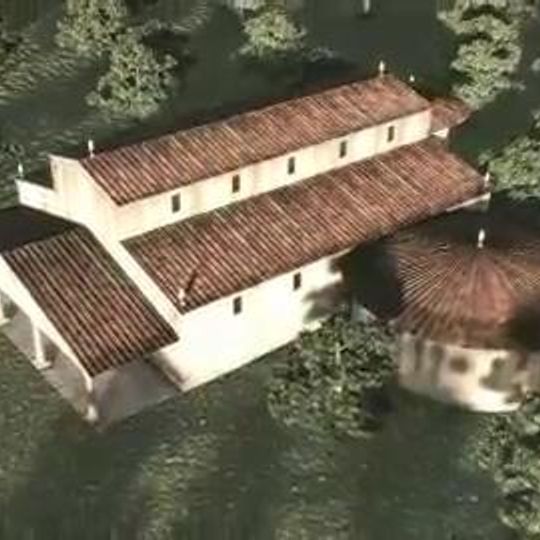
Basílica del Llano del Olivar, Early Christian archaeological site in Algezares, Spain.
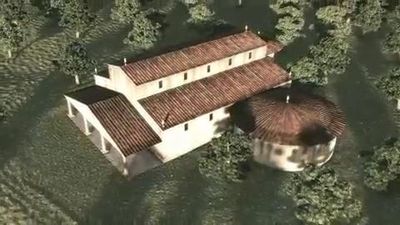
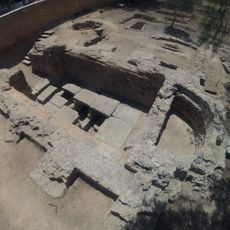
Basílica del Llano del Olivar lies on the northern slope of the Sierra de Carrascoy, at the foot of the Cresta del Gallo in the Murcian district of Algezares. Excavations found three naves separated by columns, a semicircular apse and a possible portico. Attached on the left is a baptistery with a nearly octagonal pool, stone steps on each side, and a small side room.
This complex dates to the 6th century and reflects the late Roman and Visigothic periods in the region. Excavations beginning in 1934 uncovered roughly 40 percent of the original site, leaving much of it still buried beneath the ground.
The baptistery reveals how early Christian communities practiced their rituals, with stone steps built for worshippers to perform full immersion during ceremonies. The layout of these spaces shows what mattered most to the congregation in this period.
The remains lie in the open air beside the old road linking Algezares and Los Garres, on the northern slope of the Sierra de Carrascoy below the Cresta del Gallo. The baptismal pool is preserved in the open, so the site can be examined without entering any building. The excavated area covers only about 40 percent of the complex, so expect partial walls and foundations rather than standing structures.
The site may have belonged to an episcopal city that some authors identify with the legendary Eio, later called Tudmir after the Treaty of Teodomiro with the Muslims. Around the basilica there are traces of a porticoed building, possibly a monumental episcopal palace, and a necropolis.
The community of curious travelers
AroundUs brings together thousands of curated places, local tips, and hidden gems, enriched daily by 94,797 contributors worldwide.