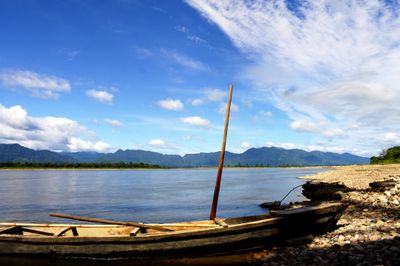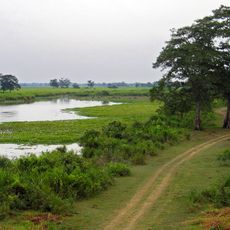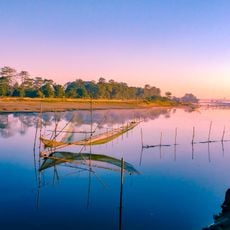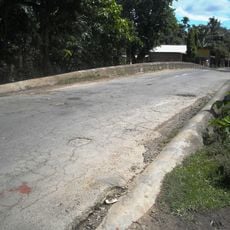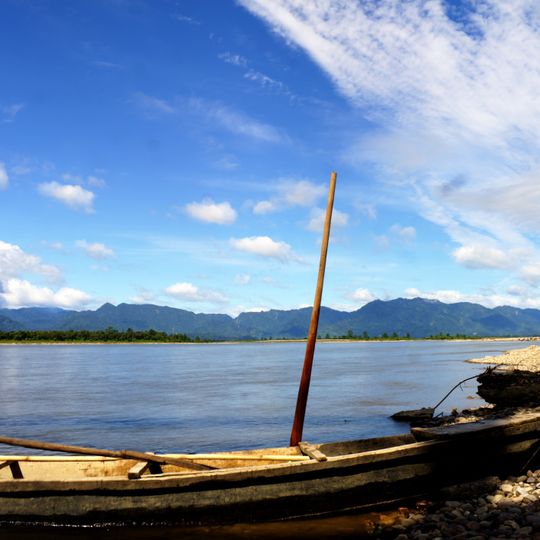
Subansiri River, Transboundary river from Tibet to northeastern India.
The Subansiri is a river that flows approximately 440 kilometers through mountainous terrain, beginning in Tibet and traveling through Arunachal Pradesh and Assam. It eventually joins the Brahmaputra River, forming a major water channel in this region.
The river formed through natural erosion in the Himalayan regions and became an important waterway for the area over time. A major earthquake in 1950 caused landslides that temporarily blocked the flow, leading to severe flooding once the barrier cleared.
The name Subansiri comes from Sanskrit meaning gold, and Tibetan communities call this river section Chayul Chu. The dual naming reflects how different peoples living along its course have shaped their own connection to the waters.
Water levels vary greatly depending on the season, with stronger currents during monsoon months. Access to many stretches is challenging, and traveling with local guides is recommended for safety.
The river supplies a large portion of water to the Brahmaputra, making it one of its most important tributaries. Its water volume is difficult to predict due to the mountain environment constantly bringing changes to the flow patterns.
The community of curious travelers
AroundUs brings together thousands of curated places, local tips, and hidden gems, enriched daily by 60,000 contributors worldwide.