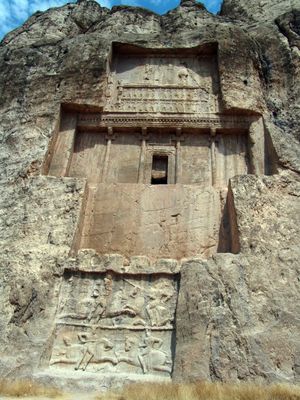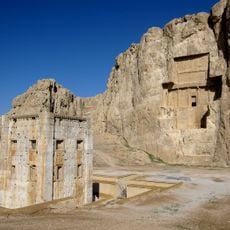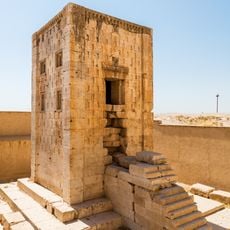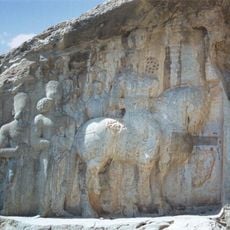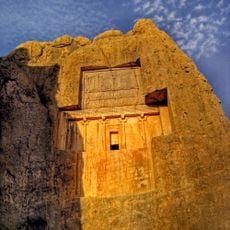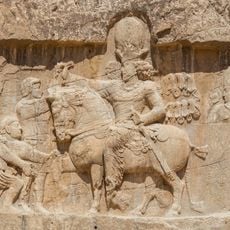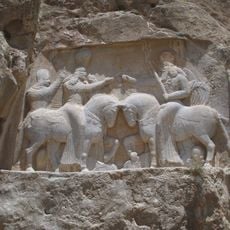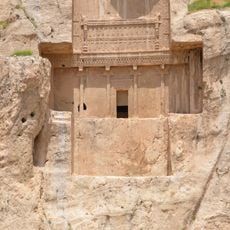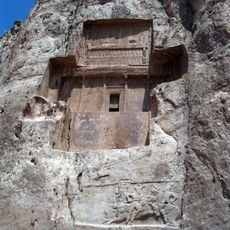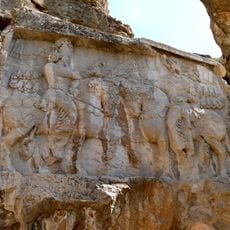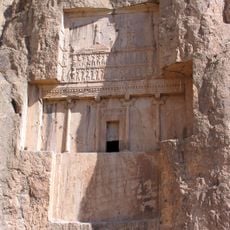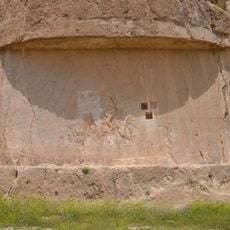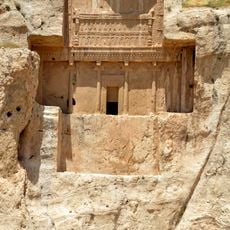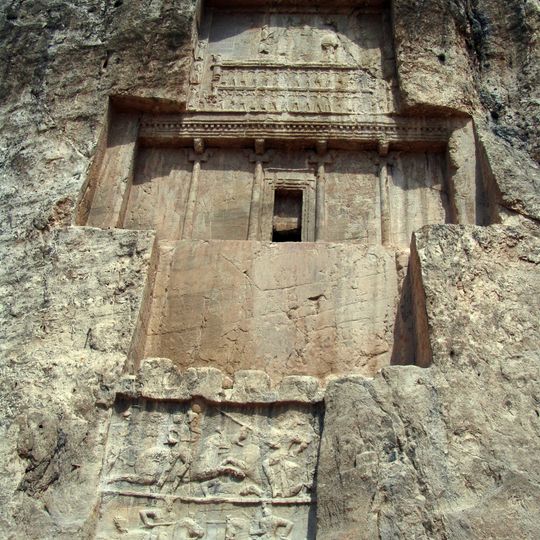
Tomb of Darius I, Rock-cut tomb in Naqsh-e Rustam, Iran.
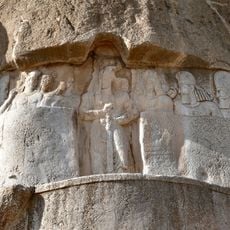
The Tomb of Darius I is a chamber carved from a cliff face with elaborate reliefs and architectural elements from the Achaemenid Empire. The facade displays the king before a fire altar, surrounded by inscriptions and symmetrically arranged ornamental details.
The tomb was built between 522 and 486 BCE as the final resting place for Darius I and his wife Atossa. It represents a peak in Achaemenid burial architecture and reflects the empire's power during that era.
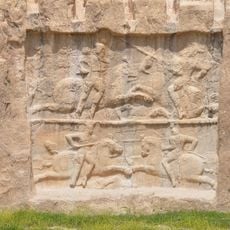
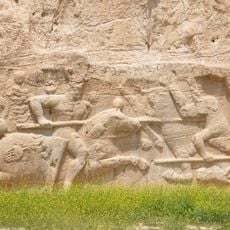
The inscriptions carved here show Darius I as favored by Ahuramazda and reference the 29 lands under Persian rule. Visitors can see soldiers and territorial markers depicted in the stone.
The site sits northwest of Persepolis and is best explored while visiting that ancient city nearby. Access involves walking uphill on mountain paths that require some physical effort.
The dimensions of the central burial chamber match exactly those of the southern entrance to Darius's palace at Persepolis. This geometric connection reveals intentional planning that linked both royal sites.
The community of curious travelers
AroundUs brings together thousands of curated places, local tips, and hidden gems, enriched daily by 91,501 contributors worldwide.