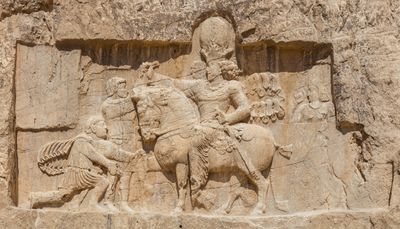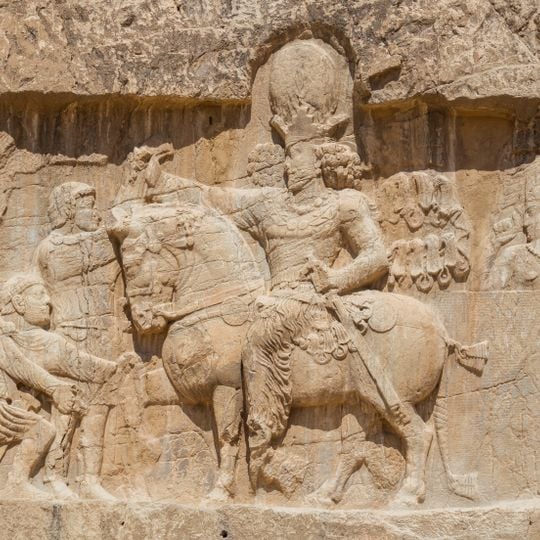
Relief of triumph of Shapur I over Valerian at Naqsh-e Rustam, Rock relief at Naqsh-e Rustam, Iran
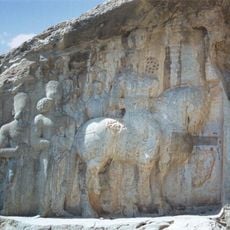
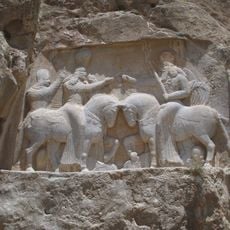
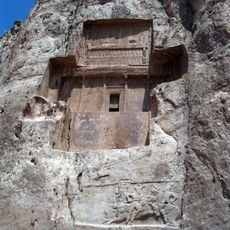
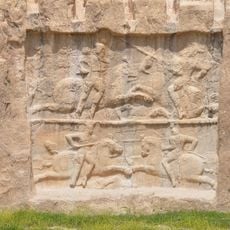
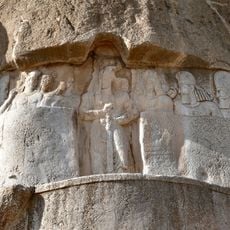
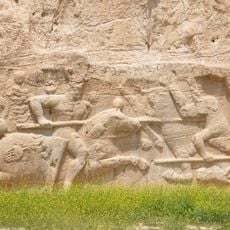
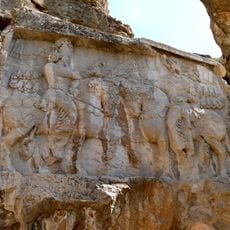
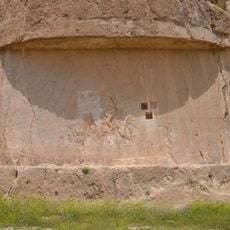
The Relief of the Triumph of Shapur I over Valerian is a rock carving at Naqsh-e Rustam, in Marvdasht County, Iran, showing the Sassanid king on horseback towering over two Roman emperors. Valerian stands before the horse while Philip the Arab kneels, both rendered in the same stone wall that holds seven other Sassanid carvings.
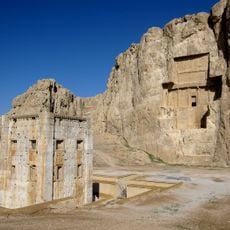
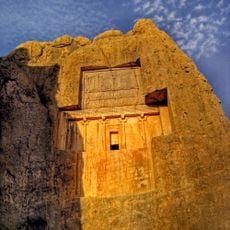
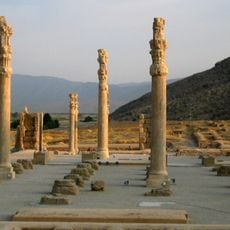
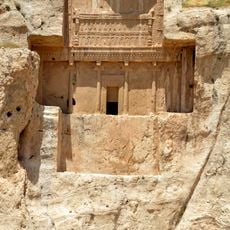
The carving was made after 260 CE to mark the capture of Roman Emperor Valerian at the Battle of Edessa, one of the few times in antiquity that a Roman emperor was taken alive. Naqsh-e Rustam had already been a sacred site used by the Achaemenids, and the Sassanid dynasty chose it deliberately to anchor their own legacy beside older royal monuments.
The carving shows a Persian king on horseback while two Roman figures stand or kneel before him, communicating a clear hierarchy without words. The detail given to garments and armor gives a concrete sense of how power was made visible in Sassanid Persia.
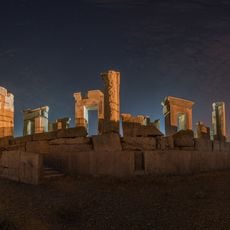
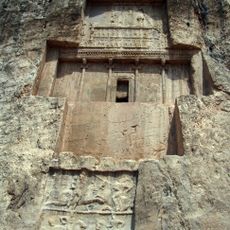
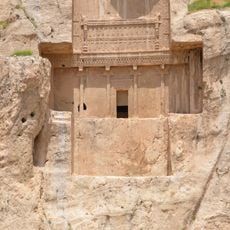
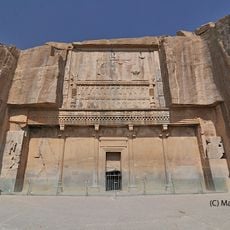
The carving is on the rock face at Naqsh-e Rustam, about 3 miles (5 km) north of Persepolis, and can be seen clearly from ground level. There is very little shade at the site, so visiting in the early morning is a good idea, especially in summer.
Among the figures in the scene is the Zoroastrian high priest Kartir, identifiable by his distinctive headdress, even though he held no royal title. His presence in a royal triumph carving points to the unusual influence he held at the Sassanid court.
The community of curious travelers
AroundUs brings together thousands of curated places, local tips, and hidden gems, enriched daily by 92,640 contributors worldwide.