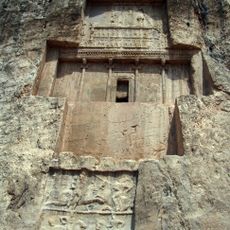
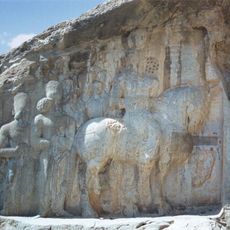
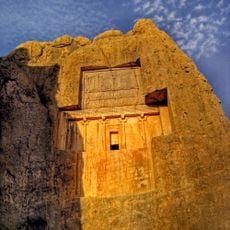
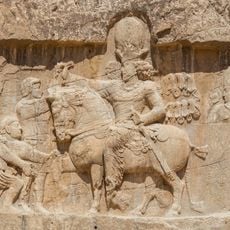
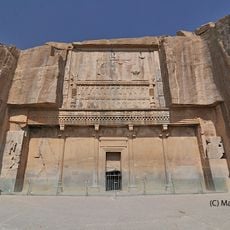
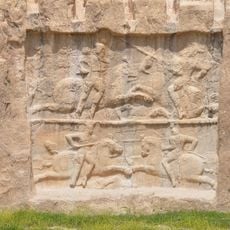
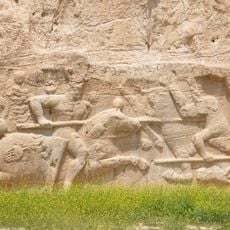
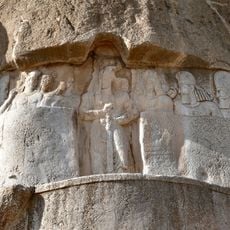
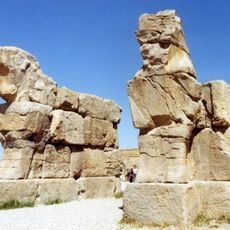
Ahura Mazda and Ardashir I, Ancient rock relief at Naqsh-e Rustam, Iran.
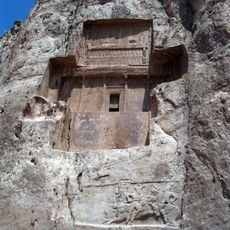
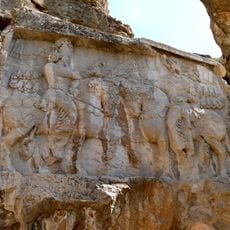
This is a carved relief showing two mounted figures facing each other on the rock face, measuring approximately 6.65 meters (21.8 feet) wide and 2.40 meters (7.9 feet) tall. The scene includes detailed horses and accompanying inscriptions, positioned in the eastern corner of the site about 2 meters (6.6 feet) above ground level.
This relief was created around 235 CE to commemorate the founding of the Sassanid Empire and mark a turning point in Persian rule. It depicts a critical moment when political power passed to a new dynasty through divine approval.
The inscriptions carved alongside the figures appear in Middle Persian, Parthian, and Greek, showing how the Sassanid rulers spoke to different groups of people. This multilingual approach reflects the cosmopolitan nature of their administration and its reach across the region.
The relief is located about 2 meters (6.6 feet) above ground level in the eastern corner of the site and remains clearly visible with its original carved details intact. Visitors should plan their viewing angle accordingly to see the figures and inscriptions from a comfortable position.
Both horses in the carving trample on enemies: one steps on the previous ruler while the other crushes a symbolic representation of evil. This stark imagery communicates messages about power and morality through visual symbolism rather than words alone.
The community of curious travelers
AroundUs brings together thousands of curated places, local tips, and hidden gems, enriched daily by 60,000 contributors worldwide.