Andon-yama Kofun, Ancient burial mound in Tenri, Japan
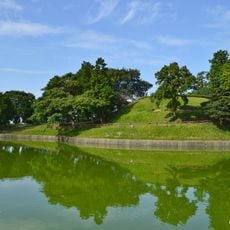
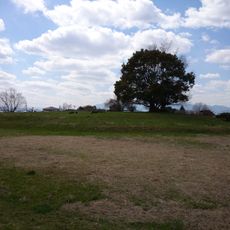
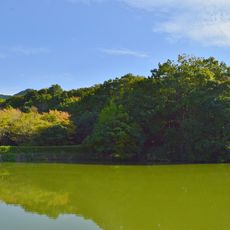
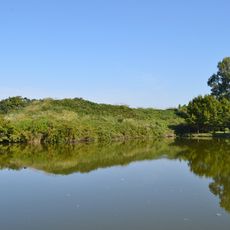
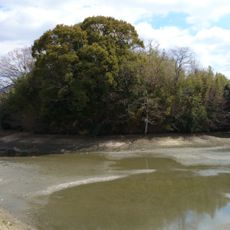
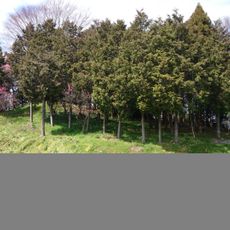
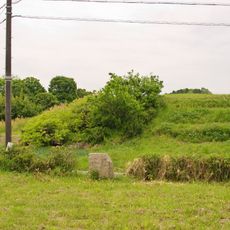
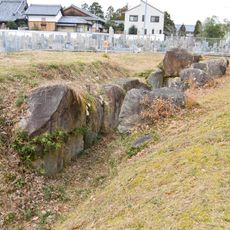
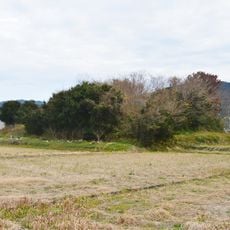
Andon-yama Kofun is a keyhole-shaped kofun in Yanagimoto, Tenri, with the square front pointing northwest. The mound is built in three tiers: the round rear part is 158 m across and 31 m high, the front part 100 m wide and 13.6 m high, and the mound length is 242 m. A shield-shaped moat runs around it, bringing the total length to 360 m.
Built in the first half of the 4th century, this keyhole-shaped tomb is the second largest in the Yanagimoto cluster after the 300-metre Shibutani Mukaiyama Kofun. In 1855 it was designated as Emperor Keikō's tomb, then reassigned in 1865 to Emperor Sujin after Tanimori Yoshitomi's argument in the Yamato no misasagi kō; the Imperial Household Agency still administers it under that name. Its true occupant is unknown.
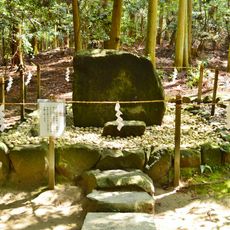
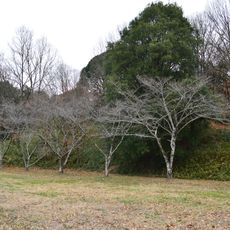
The name Andon-yama is not a village name: it comes from the mound's shape, compared to an andon, a paper-framed lamp. The imperial tomb is formally called Yamanobe no Michi no Magari no Oka no E no Misasagi, and the grounds are managed by the Imperial Household Agency, so visitors view the mound and its moats from the outside paths.
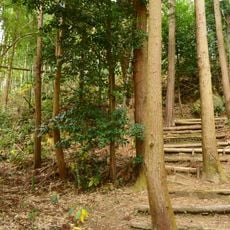
The site is accessible by train to Tenri Station, with clearly marked walking paths running along the famous Yamanobe-no-michi trail. Visitors should wear appropriate walking shoes since the area requires exploration on foot with natural pathways.
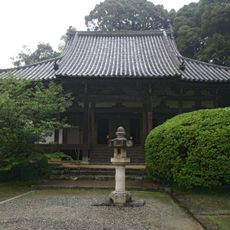
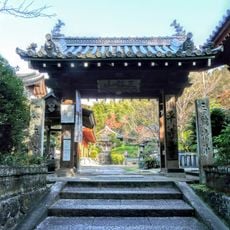
A bronze plate unearthed from the southern moat during the 1864-1865 repairs by the Yanagimoto domain is now lost, but a rubbing survives: it measures 70 by 53.8 cm, with a mirror-like pattern on one face and a grid of field characters on the other. Nearby Chōgaku-ji temple keeps a stone coffin carved with Maitreya that some scholars link to a ceiling slab of this tomb's chamber.
The community of curious travelers
AroundUs brings together thousands of curated places, local tips, and hidden gems, enriched daily by 93,778 contributors worldwide.