Kurozuka Kofun, Keyhole-shaped burial mound in Tenri, Japan
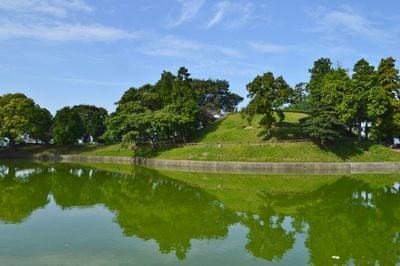
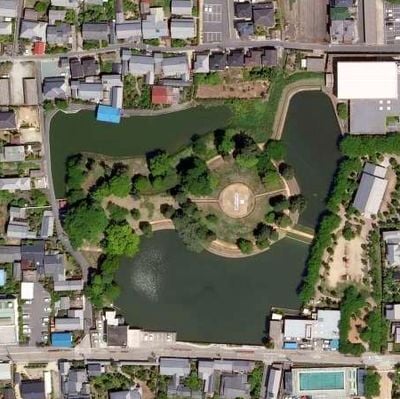
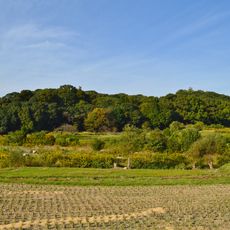
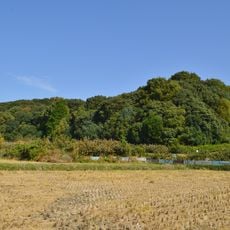
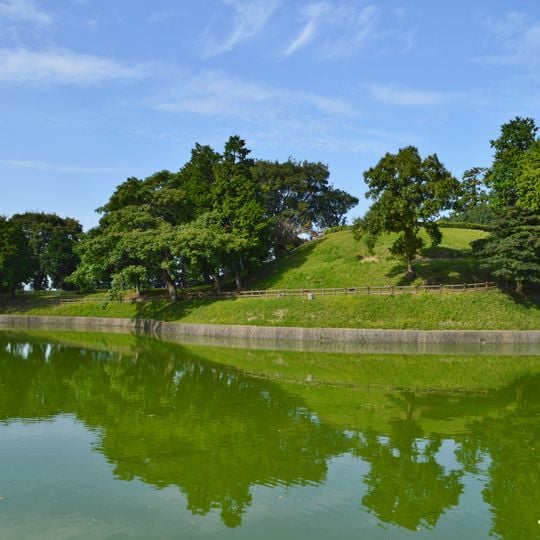
Kurozuka Kofun is a keyhole-shaped burial mound about 130 meters long, with a circular rear mound 72 meters across and 11 meters high and a rectangular front section 48 meters long and 6 meters high. The mound is covered in grass and trees, and a low stone retaining wall runs along its base. No haniwa or fukiishi have been found on its surface.
Built in the late 3rd century, Kurozuka Kofun is a keyhole-shaped mound of the Yanagimoto group in the southeastern Nara Basin. In the Kamakura period an earthquake collapsed its stone chamber, which was later robbed. In the 16th century it was fortified as a branch castle of Yanagimoto, and in the Kan'ei era it was incorporated into Yanagimoto Jin'ya, modifying the mound.
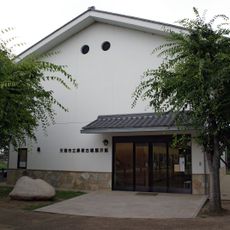
No haniwa have been found on the mound. The name Kurozuka, "black mound," is linked to the 1577 suicide of Matsunaga Kingo here during Oda Nobunaga's campaign against the Matsunaga clan. The site later served as a fort of Yanagimoto Castle and part of the Yanagimoto Jin'ya, and its stone chamber is shown as a full-size replica in the Tenri City Kurozuka Kofun Exhibition Hall.
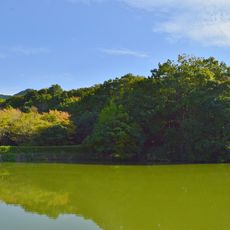
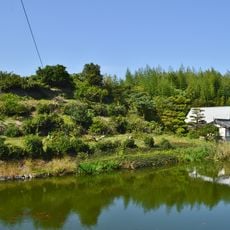
The mound stands inside Yanagimoto Park, about five minutes on foot from JR Yanagimoto Station on the Sakurai Line. The full-size replica of the vertical stone chamber and the grave goods are displayed in the Tenri City Kurozuka Kofun Exhibition Hall next to the tumulus; the original finds are kept by the Archaeological Institute of Kashihara. The mound is ringed by ponds and a modern retaining wall, so visitors walk the paths around it rather than on the grass.
Excavations uncovered bronze mirrors, clay vessels, and metal weapons that reveal the wealth and power of the person buried there. These discoveries offer visitors today a direct look at the craftsmanship and resources of the Yamato era.
The community of curious travelers
AroundUs brings together thousands of curated places, local tips, and hidden gems, enriched daily by 94,383 contributors worldwide.