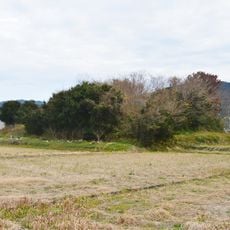
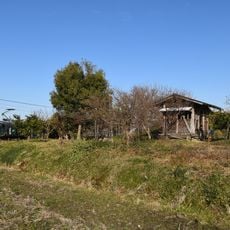
Kushiyama Kofun, Ancient burial mound in Tenri, Japan
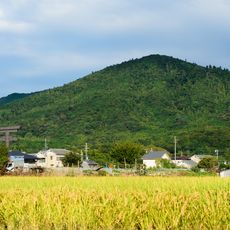
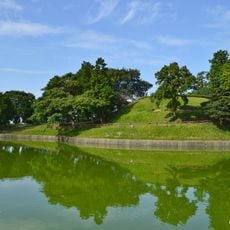
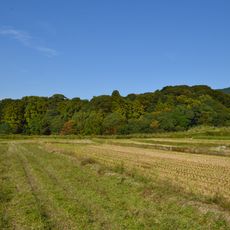
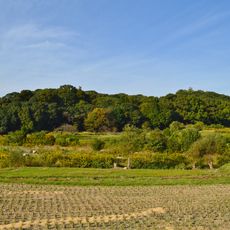
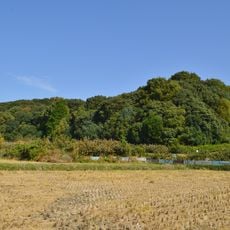
Kushiyama Kofun is a 152-metre-long burial mound in Yanagimoto, Tenri, with a rare double-square-and-central-circle shape: a roughly 90-metre circular core flanked by a 60-metre square front and a shorter 25-metre rear projection. Its three-tiered circle and rear and two-tiered front were covered with flat stones about 30 cm across, and the surrounding moat area survives as rice paddies.
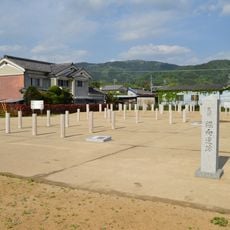
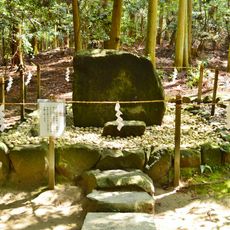
Kushiyama Kofun was built in the late first half of the Kofun period, about a century after the Yayoi-period Tatetsuki mound. During World War II the Japanese army leveled part of the mound while building an airfield nearby; a salvage excavation in 1943 uncovered a 7.1 m by 1.4 m stone chamber in the central circle. The rear square section held no burial but a ritual pit where objects were deliberately broken and thrown in.
The mound's name, Kushiyama, means "comb mountain", after the comb-like profile of its two unequal protrusions. No haniwa line the tomb; instead, the rear mound held a ritual deposit of deliberately broken jasper bracelets, iron tools and clay copies of the ornaments, thrown into a pit after burial.
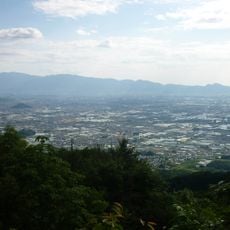
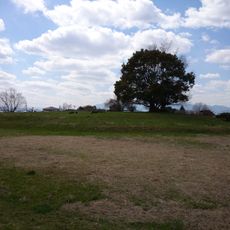
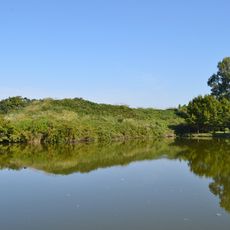
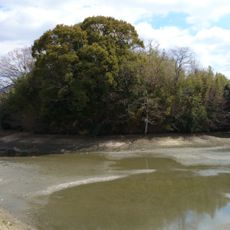
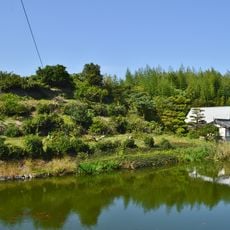
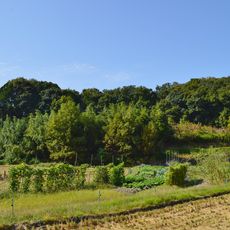
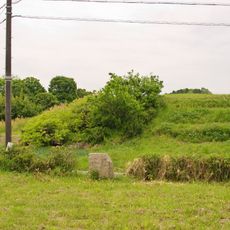
The mound stands on the Yamate road above the Ishizuka path, next to the rear circle of Andonyama Kofun, on higher ground than the neighbouring tombs. Its former moat survives as paddy fields measuring about 190 m east-west and 165 m north-south, so the outline is best read from the surrounding fields rather than from the summit.
The rear mound has no burial chamber; instead it holds a ritual pit where everyday objects, clay magatama and tube beads were deliberately broken and thrown in with stones after the burial. Excavations there also yielded fragments of 107 stone bracelets, 105 wheel-shaped stones and 23 hoe-shaped ornaments of green jasper, all left after wartime looting.
The community of curious travelers
AroundUs brings together thousands of curated places, local tips, and hidden gems, enriched daily by 94,785 contributors worldwide.