Sanbangsan, Lava dome in Seogwipo, South Korea
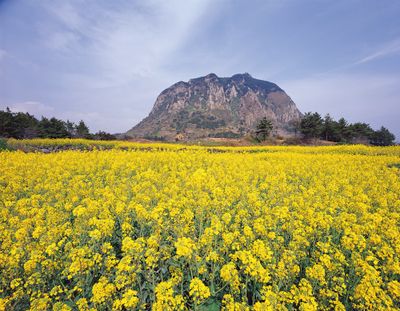
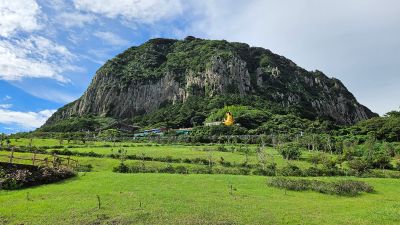
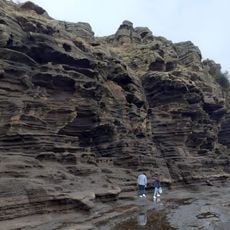
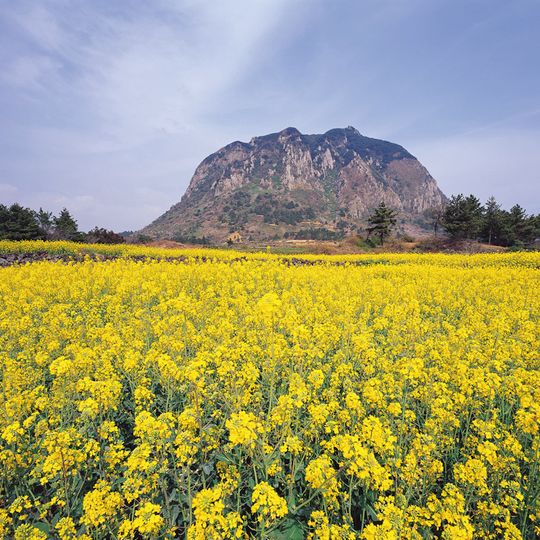
Sanbangsan is a bell-shaped lava dome in Seogwipo, Jeju Province, rising to around 395 meters and formed from volcanic rock that cooled slowly over a very long time. The ocean-facing side shows the rock columns most clearly, and a natural cave opens partway up the slope.
The dome formed roughly 700,000 to 800,000 years ago as lava cooled very slowly and hardened into solid rock. Centuries later, Buddhist monks found the cave on the slope and turned it into a place of worship that is still in use.
Sanbanggul is a Buddhist cave temple carved into the rock partway up the slope, where visitors still come to light incense and leave offerings. The setting, with a shrine tucked inside a natural rock hollow, feels unlike most temples built as freestanding structures.
The path to the cave temple is short and clearly marked, so most visitors can manage it without difficulty. Shoes with good grip are worth wearing because the stone steps can get slippery after rain.
Water seeps through the ceiling of the cave temple and drips into a small basin that is considered sacred. The steady drip has worn visible marks into the stone over centuries and can still be heard during a visit.
The community of curious travelers
AroundUs brings together thousands of curated places, local tips, and hidden gems, enriched daily by 91,391 contributors worldwide.