Ryogoku Bridge, Road bridge in Sumida-ku, Japan
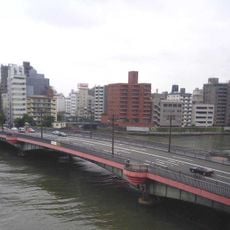
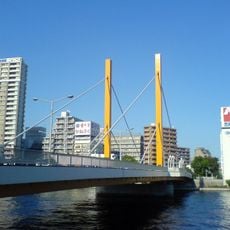
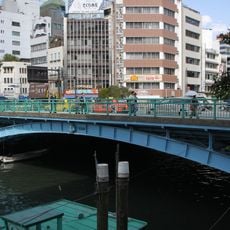
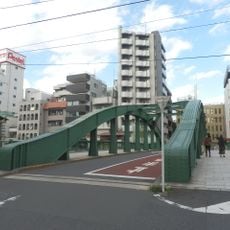
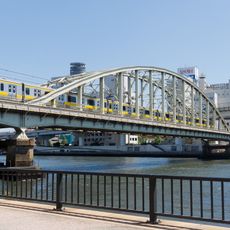
Ryogoku Bridge is a steel and concrete crossing over the Sumidagawa River, linking Higashi-Nihonbashi in Chuo-ku with Ryogoku in Sumida-ku. The structure forms a key north-south route for traffic between these neighboring districts in eastern Tokyo.
The structure was built in 1659 after the Great Fire of Meireki and connected the former provinces of Musashi and Shimousa during the Edo period. The bridge was a key point in rebuilding the city center following this devastating fire.
The bridge appears in many ukiyo-e prints by Japanese masters Hokusai and Hiroshige, showing everyday scenes and celebrations along the Sumidagawa River. These artistic depictions reflect how central this crossing was to daily life and culture during the Edo period.
You can reach the bridge through Higashi-Nihonbashi Station on the Asakusa Line, making it a central point for exploring eastern Tokyo. Pedestrians and cyclists can use the bridge during the day, and access is straightforward from both sides of the river.
The name Ryogoku means 'two countries' and refers to its historical position between the provinces of Musashi and Shimousa. Visitors often overlook how deeply this name is rooted in feudal geography and still carries its original geographical significance today.
The community of curious travelers
AroundUs brings together thousands of curated places, local tips, and hidden gems, enriched daily by 92,717 contributors worldwide.