Ryōgoku Bridge, Historic bridge in Higashi-Nihonbashi, Tokyo, Japan
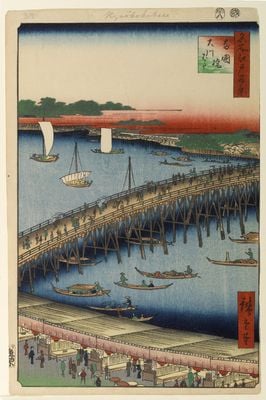
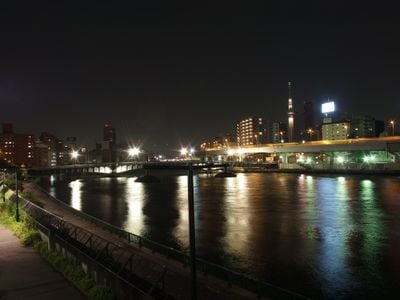
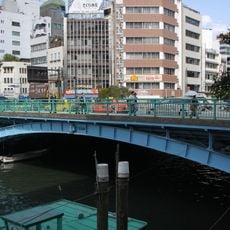
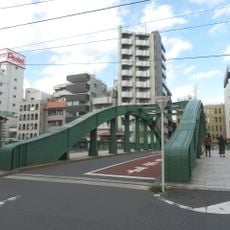
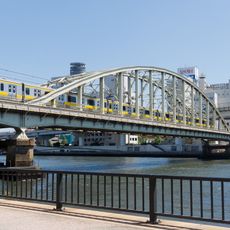
Ryōgoku Bridge spans the Sumida River between Higashi-Nihonbashi and Ryōgoku as a three-span steel plate girder bridge, 164.5 metres long and 24 metres wide, carrying National Route 14. Its rectangular main pillars are topped by spherical bridge lamps, and the walkways include a circular balcony shaped like a sumo ring.
The first structure appeared in 1659 after the Great Fire of Meireki to ease access between both banks of the river. The current steel structure dates to 1932 and replaced the earlier wooden bridges that stood at this spot.
The name translates as "bridge between two provinces" and recalls the old boundary between Musashi and Shimōsa that ran through here. Today people use the walkways on both sides to reach the sumo stadium or the restaurants and shops along the riverbank.
The bridge remains open around the clock and allows pedestrians a clear view of both riverbanks and the surrounding buildings. On sunny days the crossing offers a clear view upstream and downstream along the Sumida.
The bridge's main pillars carry spherical lamps set on rectangular blocks, a design the sources call without parallel elsewhere. The walkways also have a circular balcony shaped like a sumo ring, railings painted with war fans and fireworks, and posts topped with a model of the Ryōgoku Kokugikan roof, all added during later repairs.
The community of curious travelers
AroundUs brings together thousands of curated places, local tips, and hidden gems, enriched daily by 93,140 contributors worldwide.