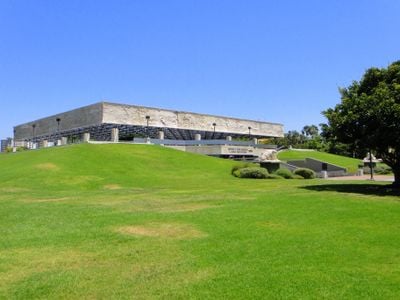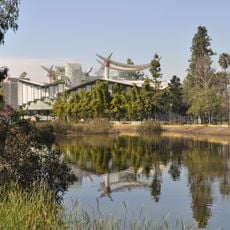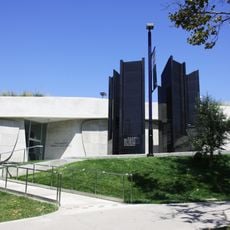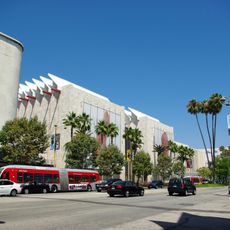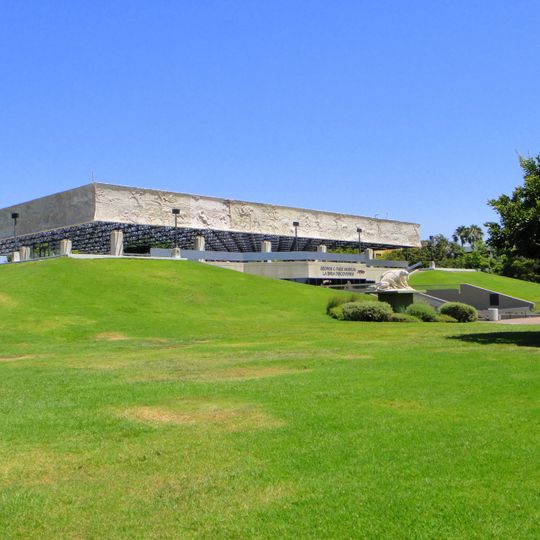
George C. Page Museum, Fossil museum in Hancock Park, Los Angeles, US.
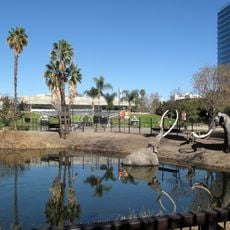
The George C. Page Museum displays a large collection of Ice Age fossils recovered from the adjacent La Brea Tar Pits through ongoing excavations that began in 1905. The exhibits feature bones from extinct animals, alongside information about how these specimens were preserved and what they reveal about prehistoric life.
The museum was built in 1977 with funding from philanthropist George C. Page to preserve fossils discovered in the surrounding tar pits. Excavation work at the site started in the early 1900s and has continued to uncover remains that reveal information about Ice Age ecosystems.
Scientists work visibly in the museum's fossil laboratory, where visitors can watch them clean and study prehistoric specimens throughout the day. This active workspace shows how paleontological research happens in practice.
The museum offers guided tours, workshops, and interactive displays year-round to help visitors understand the fossil collection and paleontological science. The location in Hancock Park provides parking and easy access for visitors arriving by various transportation methods.
Over one million bones have been recovered from the tar pits, including the world's largest collection of dire wolf fossils found at any single location. This exceptional concentration makes the museum a center for research on these extinct carnivores.
The community of curious travelers
AroundUs brings together thousands of curated places, local tips, and hidden gems, enriched daily by 91,284 contributors worldwide.