Pavilion for Japanese Art, Japanese art pavilion in Los Angeles, US
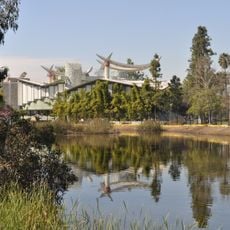
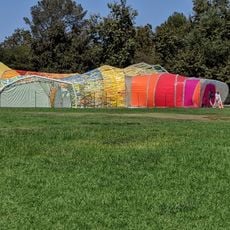
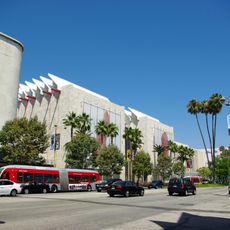
The Pavilion for Japanese Art is a museum building in Los Angeles spanning 32,100 square feet (2,983 square meters) with translucent fiberglass panels filtering natural light through its distinctive triangular walls and cylindrical towers. These architectural features create varied exhibition spaces for different types of artworks.
Collector Joe D. Price and his wife Etsuko Yoshimochi gave about 300 Japanese screens and scrolls, the Shin'enkan Collection, to LACMA in 1983, plus $5 million toward a building. Bruce Goff's design was first meant for Bartlesville, Oklahoma, then for the Metropolitan Museum of Art; his former associate Bart Prince turned it into working drawings for LACMA, where construction cost $13 million. A Peter Zumthor campus redesign schedules the pavilion for renovation.
The East Wing displays rotating collections of screens and scrolls from the Edo period, while the West Wing shows Buddhist sculptures, ceramics, and traditional armor displayed in spaces designed for viewing from different distances.
The spaces are designed so visitors can examine artworks from different distances, following traditional Japanese viewing methods. Allow time to explore the varied exhibition areas at a comfortable pace.
The Raymond and Frances Bushell Netsuke Gallery holds 827 miniature carvings from the 17th to the 20th century, shown so visitors can walk around them for a 360-degree view. In traditional Japan, netsuke served as toggles and counterweights for suspending tobacco pouches and inro from the sash of a man's kimono.
The community of curious travelers
AroundUs brings together thousands of curated places, local tips, and hidden gems, enriched daily by 94,321 contributors worldwide.