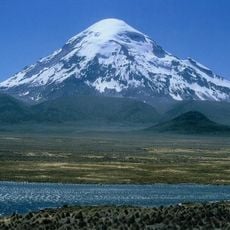
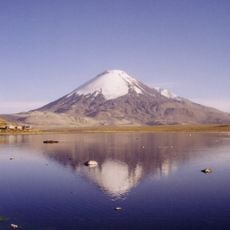
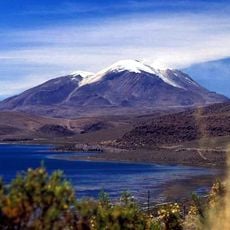
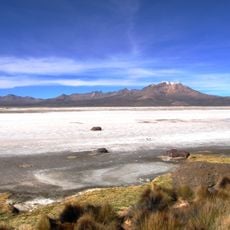
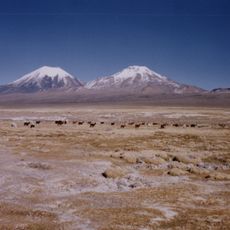
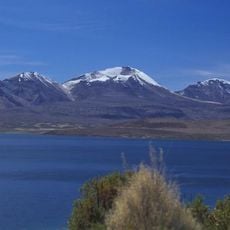
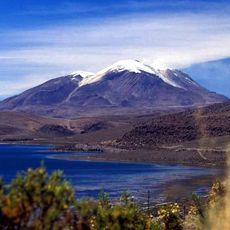
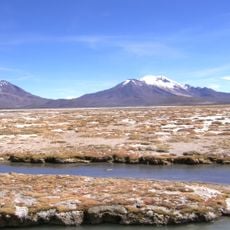
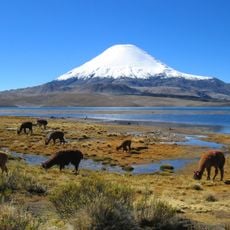
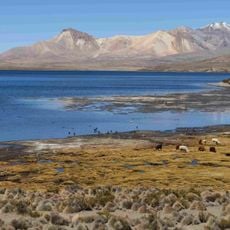
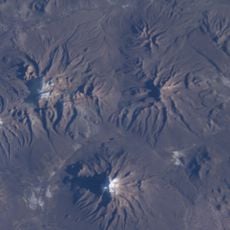
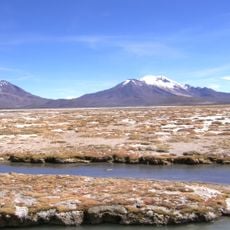
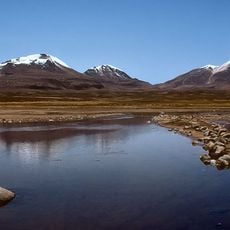
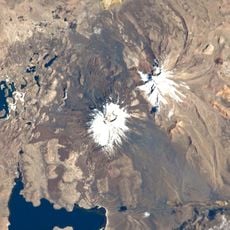
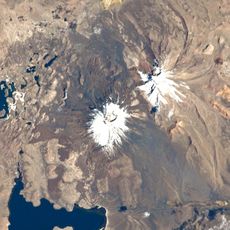
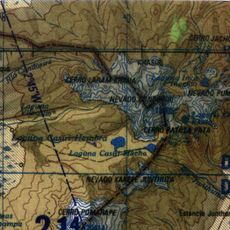
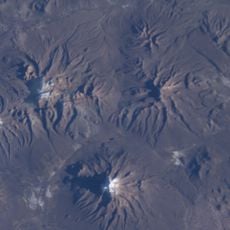
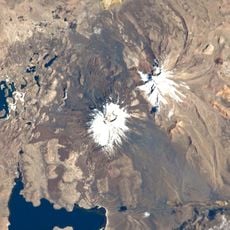
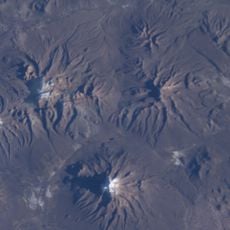
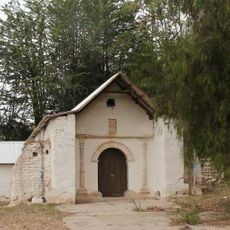
Cerro Capurata, Stratovolcano in Parinacota Province, Chile.
Volcán Capurata is a stratovolcano in Parinacota Province that rises to about 6,020 meters above sea level. The peak displays two distinct crater depressions and varied rock formations running down its slopes.
The volcano was first summited in 1967 by mountaineers Ignacio Morlans and Pedro Rosende, marking an important milestone in regional exploration. This early ascent opened the way for subsequent climbing efforts on the mountain.
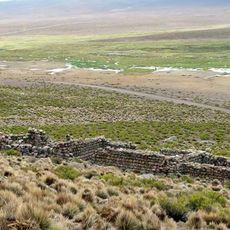
The summit holds remnants of Incan structures, showing that pre-Columbian peoples considered this mountain sacred or important. Visitors walking the peak today can see these traces and appreciate how central the volcano was to ancient Andean life.
Visitors need mountaineering experience, proper gear, and time to acclimatize to the altitude before attempting the climb. The extreme elevation and technical sections demand good physical fitness and careful preparation.
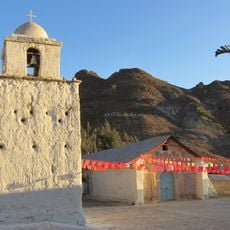
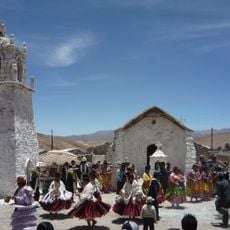
A 10 by 5 metre stone ruin sits near the northern side of the summit, probably built by the Inkas and photographed by Pedro Hauck during his 2014 ascent. Aymara communities also link the peak to a mountain family: Pedro Qapurata to the west, María Qapurata to the east and Elena Qapurata in the centre.
The community of curious travelers
AroundUs brings together thousands of curated places, local tips, and hidden gems, enriched daily by 92,637 contributors worldwide.