Ajman Museum, Historical fort museum in Ajman, United Arab Emirates
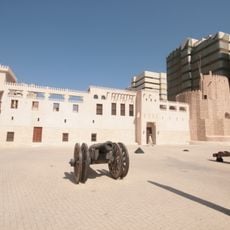
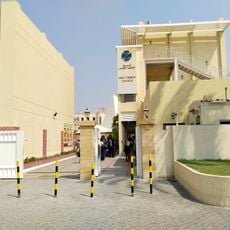
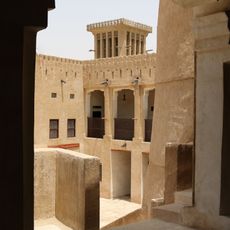
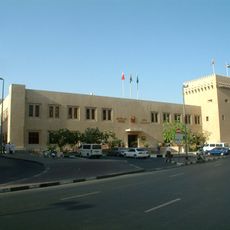
Ajman Museum occupies the 18th-century Ajman Fort, built of coral stone and gypsum with roofs of jandal mangrove poles from East Africa. Two wind towers and two watchtowers remain, and a massive gate flanked by two cannons faces the entrance. Inside, galleries surround a courtyard and cover archaeology, manuscripts, folk costumes, traditional professions and pearl diving.
The fort is thought to have been built in the late 18th century from local coral stone and gypsum, roofed with mangrove poles brought from East Africa. British warships bombarded and destroyed it in 1820, and Sheikh Rashid bin Humaid I (1803–1838) rebuilt it. It remained the ruling family's seat until 1907, when Sheikh Rashid bin Humaid Al Nuaimi moved to Al Zaher Palace; from 1970 to 1981 it housed Ajman's police headquarters, and in the late 1980s Sheikh Humaid bin Rashid Al Nuaimi ordered a three-year restoration before it opened as a museum on 20 May 1991.
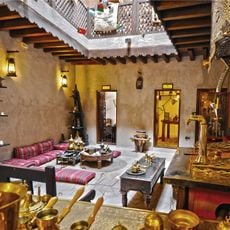
The ground floor recreates a traditional souq with stalls for the pearl trader, the tawwash (pearl dealer), the grocer, the date seller, the baker, the perfumer, the barber and the tailor, plus a folk café. Other sections cover folk music, traditional medicine, the old kitchen, the majlis and the yazra dance, and the first floor holds the Sheikh's room, traditional costumes and women's crafts.
The museum is easy to walk through and rooms are clearly marked so visitors can navigate without difficulty. It is advisable to wear comfortable clothing since you will move between several rooms.
A special collection comes from the Al Muwaihat cemetery and displays pottery and burial items over 5,000 years old. These findings offer insights into early burial practices and the way of life of people who lived in the region long before modern times.
The community of curious travelers
AroundUs brings together thousands of curated places, local tips, and hidden gems, enriched daily by 92,779 contributors worldwide.