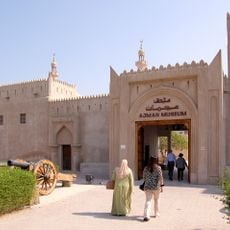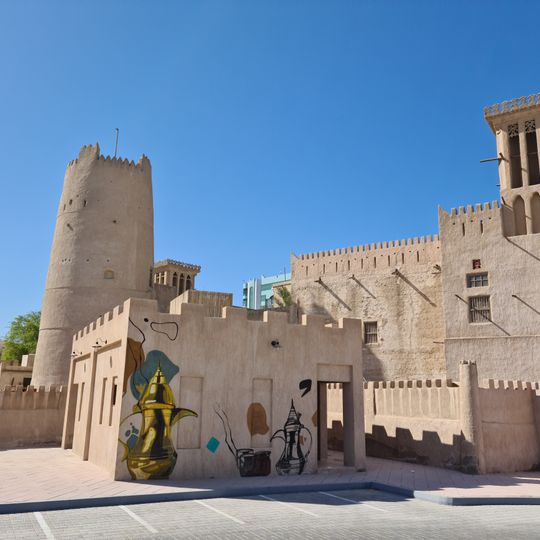
Ajman Fort, 18th century fort in Ajman, United Arab Emirates
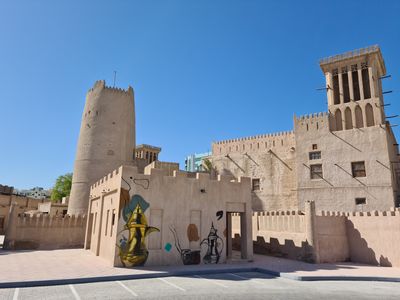
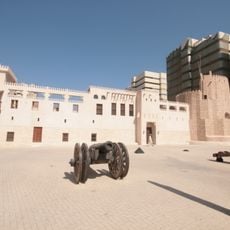
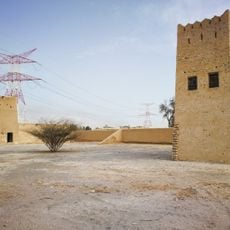
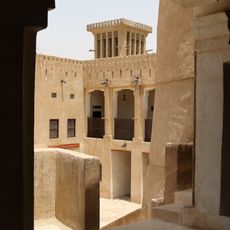
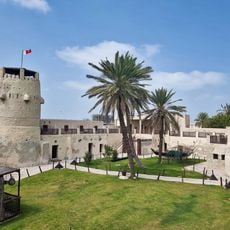
Ajman Fort is an 18th-century fort built from coral stones, rocks, and mudbrick with thick defensive walls and square watchtowers. The two-story structure has narrow rooms, interior courtyards, and solid walls that show typical Arab defensive architecture from that period.
The fort became the center of power in 1816 when Sheikh Rashid bin Humaid Al Nuaimi took control of Ajman after a strategic military action. It then served for many years as the main seat of government and defense for the emirate.
The building became a museum in 1981 and displays traditional weapons, archaeological finds, and regional objects from the emirate. Visitors see everyday items, religious objects, and crafted goods that reflect how people in this region lived and worked.
The fort is open daily and visitors can explore the various sections at their own pace or join guided tours available in multiple languages. It is best to visit early in the day to avoid the heat and to comfortably view the indoor spaces.
The fort features a wind tower structure called barjeel, which is the earliest example of this architectural element in the United Arab Emirates. This natural cooling system was designed to pull air down into the interior spaces, long before modern air conditioning was invented.
The community of curious travelers
AroundUs brings together thousands of curated places, local tips, and hidden gems, enriched daily by 91,526 contributors worldwide.