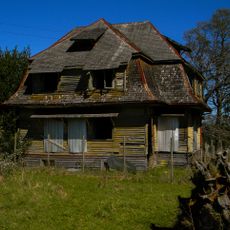
Carrán-Los Venados, Volcanic complex in Los Ríos Region, Chile.
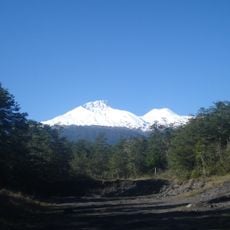
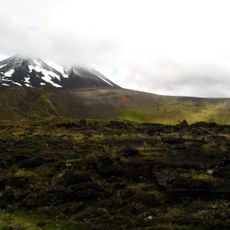
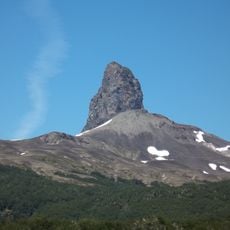
Carrán-Los Venados is a volcanic group southeast of Ranco Lake made up of scoria cones, maars and small stratovolcanoes. Its highest cone, Los Guindos, is an extinct small stratovolcano reaching 1,114 m. The group lies south of Maihue Lake and north of Puyehue Volcano, at the meeting point of the Liquiñe-Ofqui and Futrono faults.
The complex experienced two notable volcanic events in recent times: in 1955 the Carrán maar formed through explosive eruption, and in 1979 the Mirador cinder cone showed activity. These events demonstrate that the system remains geologically active.
The Carrán maar is also called Nilahue, a name shared with the river that drains the area southeast of Ranco Lake. The volcanoes stand between Maihue Lake to the south and Puyehue Volcano to the north, and the 1955 and 1979 eruptions are the events local accounts tie to the group.
The group lies southeast of Ranco Lake, south of Maihue Lake and north of Puyehue Volcano, reached from the Riñinahue and Llifén area. Access is by unpaved roads and trails; the maars and cones have no facilities or marked routes. The thin crust and fault lines mean the ground is unstable in places, so go with someone who knows the terrain.
Carrán is also called Nilahue, and Riñinahue is a maar that never filled with water; it erupted in 1907. The group's craters sit where the Liquiñe-Ofqui and Futrono faults cross, on crust only about 30 km thick. Los Guindos, the highest cone at 1,114 m, is an extinct small stratocone.
The community of curious travelers
AroundUs brings together thousands of curated places, local tips, and hidden gems, enriched daily by 93,001 contributors worldwide.