Sillustani, Archaeological site near Lake Umayo, Puno, Peru
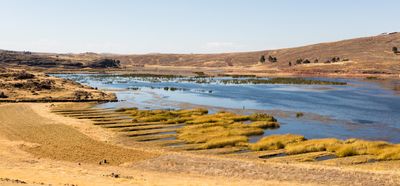
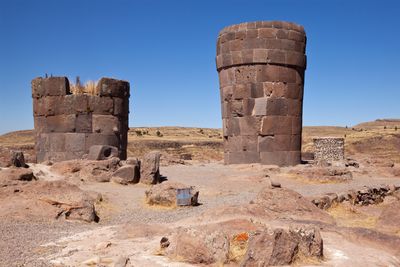
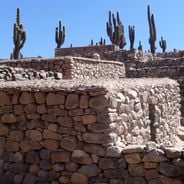
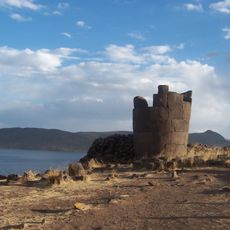
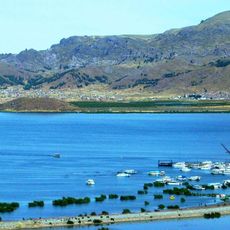
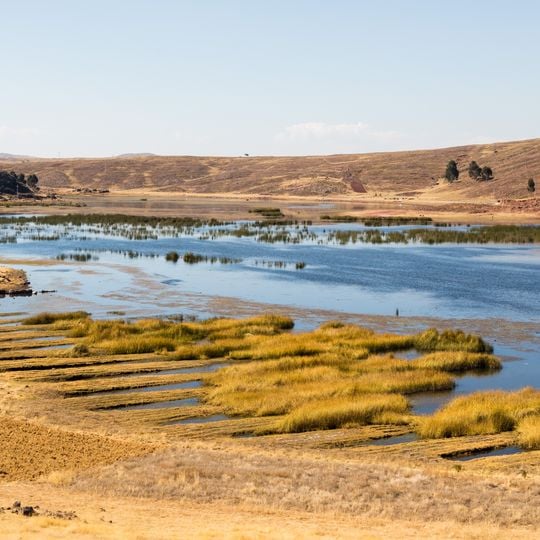
Sillustani is a pre-Hispanic funerary complex on the Umayo peninsula in the Atuncolla district, Puno. Its chullpas, above-ground burial towers, number 91 according to Mincetur and stand at 3,902 metres above sea level. They range from finely cut stone with reliefs to rustic masonry and clay-coated structures, set among terraces, stairways and monoliths.
The Kolla civilization built the first towers between 1200 and 1450, before the area was incorporated into the Inca Empire. The Incas later constructed larger towers with even more precise stone joints, showing their advanced building techniques.
The word chullpa comes from Ludovico Bertonio's 1612 Aymara dictionary, where it named the basket burials of semi-nomadic herders; he called stone towers uta amaya, "houses of the soul". The towers held extended families of the Aymara elite, probably not only nobles. Bodies were not deliberately mummified but dried in the sealed chambers, mostly in fetal position, and the only openings face east, toward the reborn Sun.
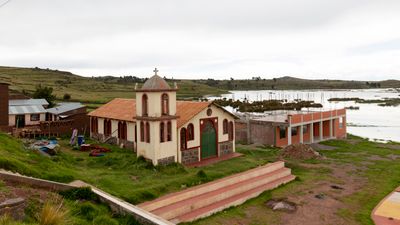
Sillustani lies about 31 kilometers from Puno, reached from the city or the Puno–Juliaca road, with a final stretch toward Atuncolla and the site entrance. The archaeological area covers roughly 60 hectares on the Umayo peninsula, so allow time to walk between the tower groups. Wind on the exposed slope can be strong; bring warm clothing.
Some towers were never finished and still show huge stone blocks that were transported to the construction site and then left behind. The technique for moving these massive stones across the hilly terrain remains a puzzle among researchers.
The community of curious travelers
AroundUs brings together thousands of curated places, local tips, and hidden gems, enriched daily by 94,069 contributors worldwide.