Viracochapampa, Archaeological site in Huamachuco, Peru.
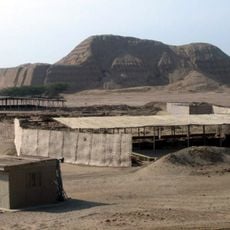
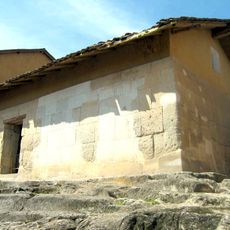
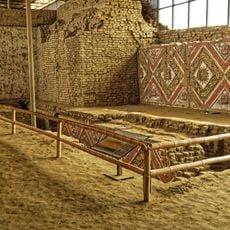
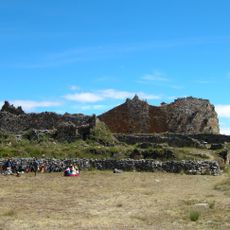
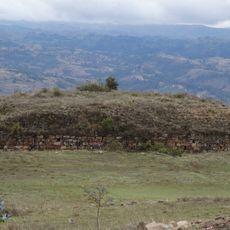
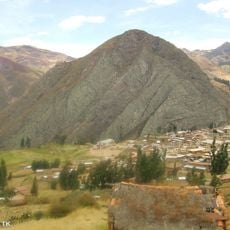
Viracochapampa is a Wari building complex 3.5 km north of Huamachuco at 3,070 m. Its walls enclose a quadrangle of 583 by 566 m, entered from north and south by a straight street 565 m long and 5 m wide. Eight groups of unworked stone set in red clay mortar stand around a plaza; some walls still rise over 5 m, with upper projections thought to have held roofs.
Wari builders raised Viracochapampa in the 7th–8th centuries as their northernmost administrative center, controlling access to resources and people between the Cajamarca valley and the coastal valleys. Construction stopped unfinished, likely after resistance from local groups or the rise of the Cajamarca polity. Nearby Marcahuamachuco later replaced it.
The Quechua name combines wiraqucha, a term for a deity or lord, with pampa, meaning plain, so it reads as "plain of Viracocha". The chronicler Ernst Middendorf's idea that Spaniards built the complex was long ago discarded. The site was a ritual and administrative seat for Wari officials and priests, while most people lived in the surrounding countryside.
Viracochapampa sits 3.5 km north of Huamachuco at 3,070 m, reached by a walk from town. The walled quadrangle measures 583 by 566 m, entered from the north and south through a straight 565 m street 5 m wide. Most walls have collapsed, though some rise over 5 m; wear sturdy shoes and allow for the altitude.
The arrangement of structures follows geometric patterns that reveal how Wari builders applied mathematical thinking to construction. These patterns served both practical purposes and reflected the Wari understanding of order and the cosmos.
The community of curious travelers
AroundUs brings together thousands of curated places, local tips, and hidden gems, enriched daily by 92,788 contributors worldwide.