Conjunto monumental de Belén, Colonial religious complex in Cajamarca, Peru
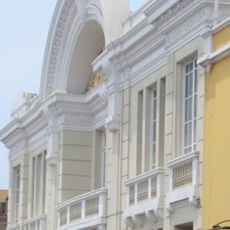
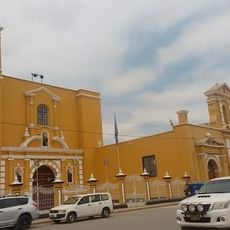
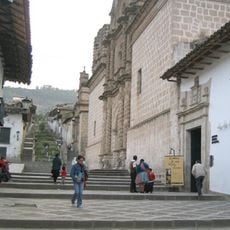
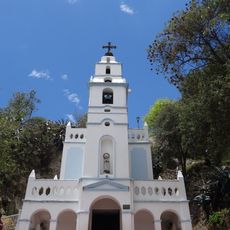
The Conjunto Monumental de Belén is a colonial ensemble on Jirón Belén in the historic centre of Cajamarca, made up of the Belén church, the men's hospital and, across the street, the women's hospital. The stone church has a single nave without side chapels, a carved stone portal, unfinished bell towers, arcades and side buttresses. The men's hospital has thick stone walls, a vaulted ceiling and small niches where patients waited for the last rites.
The complex was built in the 18th century and financed by corregidor Francisco de Espinoza; work was completed in 1774. It comprises the men's hospital with its church and the women's hospital across Belén street. The Peruvian government declared it a National Cultural Heritage site in 1972.
The church's ceilings are painted with polychrome figures, including angels described as particularly strange. The women's hospital, formerly Hospital de Nuestra Señora de la Piedad, has a carved stone doorway whose lintel rests on two caryatids notable for having four breasts, a sign of fertility.
The complex stands on Jirón Belén in the historic centre of Cajamarca, with the men's hospital, church and courtyard on one side and the women's hospital across the street. The men's hospital now holds a museum of traditional medicine and an exhibition of local painters, while the women's hospital houses an archaeological and ethnological museum with three child mummies.
The women's hospital, formerly Hospital de Nuestra Señora de la Piedad, stands across Belén street; its carved stone doorway has a lintel held by two caryatids with four breasts, a sign of fertility. Inside, a small museum keeps three mummified children and pre-Inca objects.
The community of curious travelers
AroundUs brings together thousands of curated places, local tips, and hidden gems, enriched daily by 94,522 contributors worldwide.