Kuntur Wasi, Ceremonial complex in San Pablo, Peru
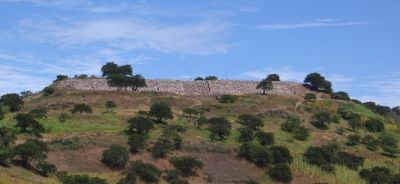
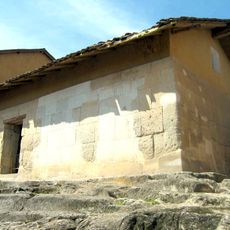
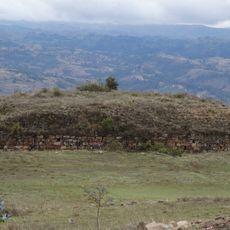
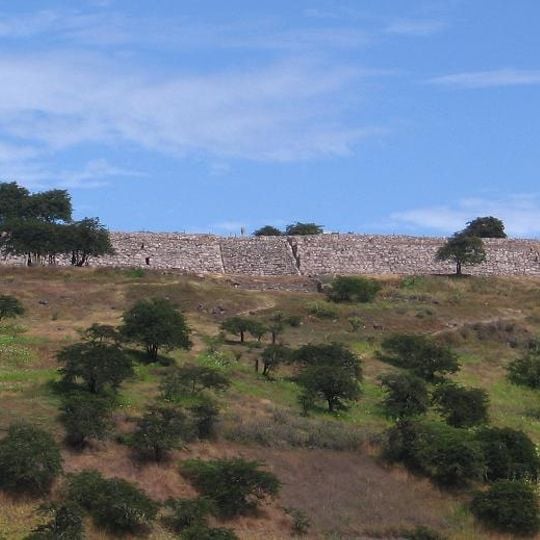
Kuntur Wasi is a hilltop religious complex on La Copa hill, built from plaster-covered stones painted white and arranged as quadrangular platforms, a sunken courtyard with four staircases, and a series of rooms. Its stone walls of closely fitted light grey and tan blocks rise above the grassy slope, with small trees growing behind and below them.
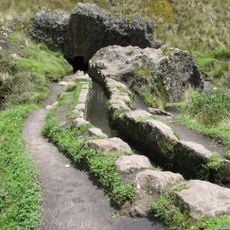
Kuntur Wasi was occupied from about 1100 to 50 BCE. In the Ídolo phase (1100–900 BCE) the hilltop was flattened and platforms and plazas were built from white-painted stone; a clay relief of a feline-faced man, "El Ídolo", gives the phase its name. The Kuntur Wasi phase (900–550 BCE) added a U-shaped sunken plaza, canals and a circular plaza. The Copa phase (550–250 BCE) expanded the plaza and moved monoliths; the Sotera phase (250–50 BCE) saw demolition before the site was abandoned.
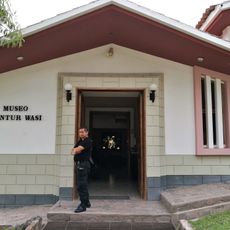
Stone figures show felines and serpents with features that reappear in Chavín de Huántar, suggesting exchange between both regions. Visitors can see these sculptures in the museum, where jewelry pieces repeat the same symbols.
A short footpath leads from the museum to the archaeological area where visitors can walk among the terraces and plazas. The high altitude brings cool weather, so a jacket and comfortable shoes for the stairs are advisable.
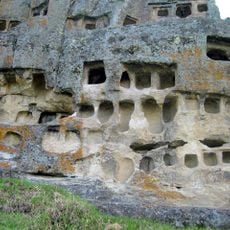
Tombs held chest plates, crowns, and nose rings made of gold combined with stone and shell decorations. These objects were crafted for individuals who likely held religious or political roles across several successive communities.
The community of curious travelers
AroundUs brings together thousands of curated places, local tips, and hidden gems, enriched daily by 92,863 contributors worldwide.