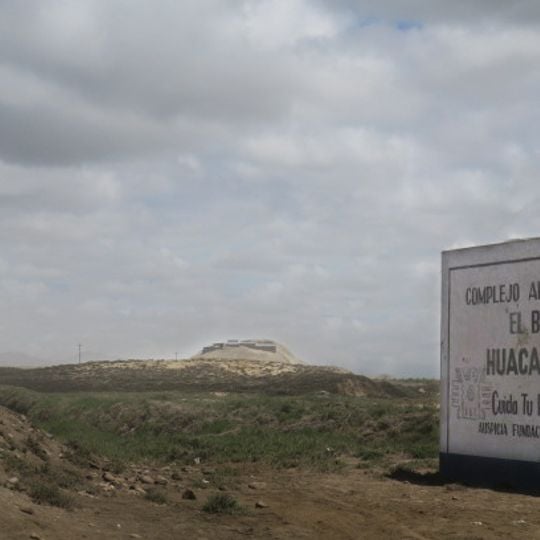
Huaca Prieta, Pre-Columbian archaeological site in Magdalena de Cao District, Peru
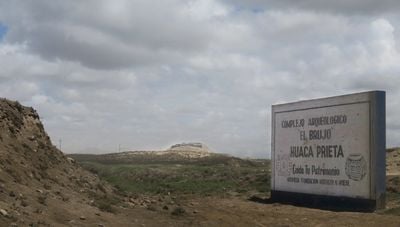
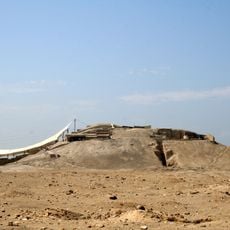
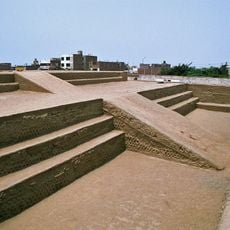
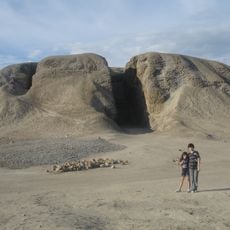
Huaca Prieta is a pre-Columbian site in Ascope Province within La Libertad Department, near the mouth of the Chicama River along the coast of Peru. The mound consists of layers of ash, stones, plant remains, and shell deposits accumulated over thousands of years.
Excavations led by Junius B. Bird starting in 1946 provided evidence of one of the earliest human settlements on the American continent, with traces of human activity from around 14,500 years ago. Later research confirmed the long occupation history and the development of early forms of coastal life.
The site's name comes from the dark colour of the ground, caused by ash and organic refuse accumulated over generations. The cotton textiles were made without a loom, using twining, looping and knotting, and carry zoomorphic motifs such as condors and two-headed serpents. A pyrography gourd bearing a feline face was compared by Edward Lanning with Valdivia motifs from Ecuador.
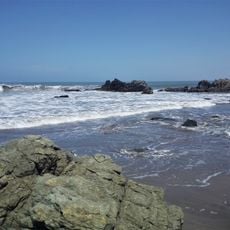
Huaca Prieta lies 5 km north of the Chicama River mouth, in the El Brujo complex alongside Huaca Cao Viejo and Huaca Cortada. The mound is reached from the coastal caleta El Brujo in Ascope Province; the arid surroundings offer little shade, and the flat summit is exposed to wind off the Pacific.
Research from 2016 found cotton fabric with indigo dyeing here that is about 6,000 years old. This discovery is considered the earliest evidence of indigo use in textile production worldwide.
The community of curious travelers
AroundUs brings together thousands of curated places, local tips, and hidden gems, enriched daily by 92,559 contributors worldwide.