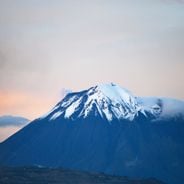
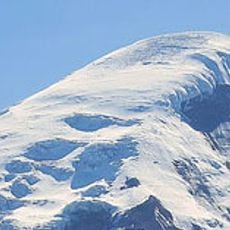
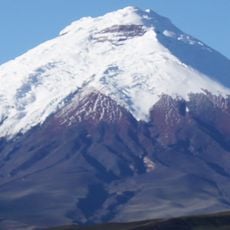
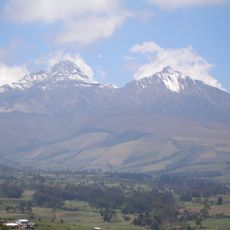
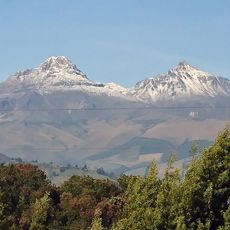
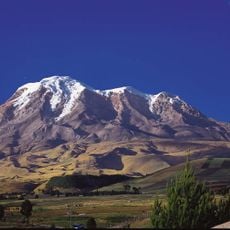
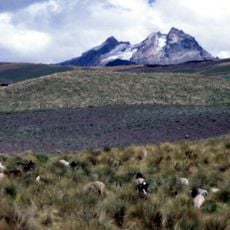
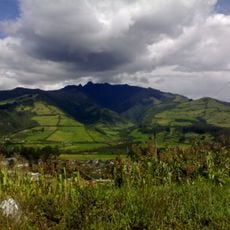
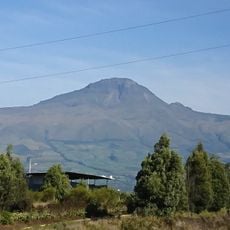
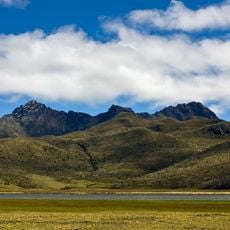
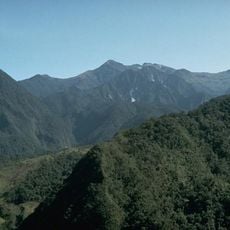
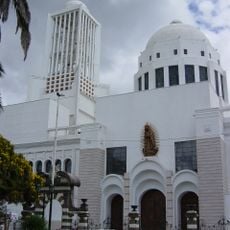
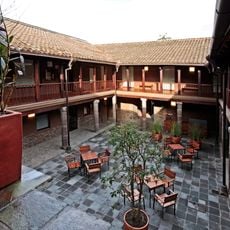
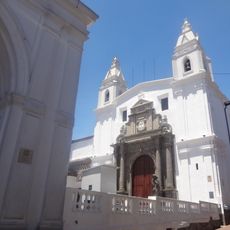
Quilotoa, Dormant volcano in Pujilí Canton, Ecuador.
Quilotoa is a water-filled dacite volcano in Pujilí Canton, Ecuador, whose roughly 3-kilometre-wide caldera collapsed about 800 years ago. The crater lake lies at 3,500 metres above sea level and is 250 metres deep; its dissolved minerals give the water a greenish tone. Steep dark rock walls ring the water, and pale layered slopes with gullies descend to the shore on the near side.
The last major eruption occurred in 1280 and produced pyroclastic flows that reached the Pacific. Ash from this event spread across the northern Andes and shaped the crater landscape seen today.
The name Quilotoa comes from the Kichwa words "quiru" (tooth) and "toa" (princess or queen), giving "princess's tooth". The crater rim is reached from the village of Quilotoa, and the site lies on the Quilotoa Loop, a village-to-village hiking route. Local inhabitants report that the lake level has been slowly declining over the last 10 years.
You can reach the crater rim by bus from Latacunga, and from there a steep path leads down to the lake. The descent takes roughly 30 minutes, but the return climb requires one to two hours and demands some fitness.
Beneath the surface of the lake, fumaroles send gas bubbles up to the water occasionally. On the eastern side of the crater, thermal springs emerge that bring warm water into the cold highland environment.
The community of curious travelers
AroundUs brings together thousands of curated places, local tips, and hidden gems, enriched daily by 92,897 contributors worldwide.