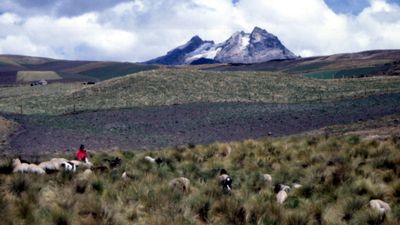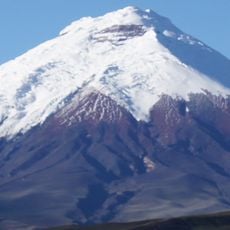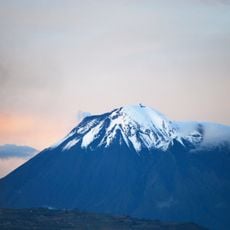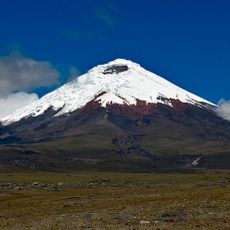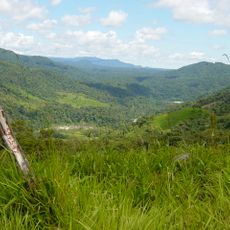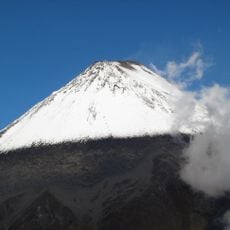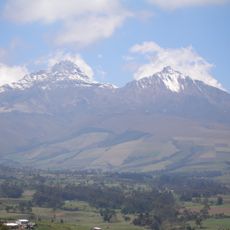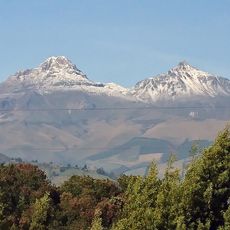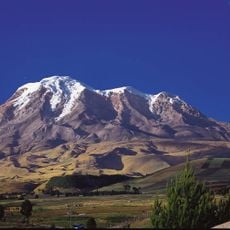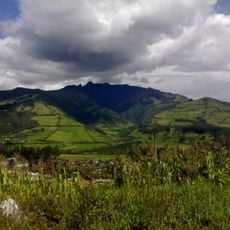
Carihuairazo volcano, Stratovolcano in Cordillera Occidental, Ecuador
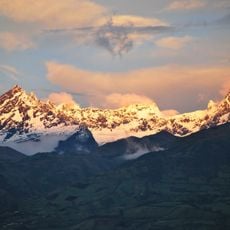
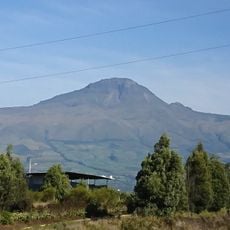
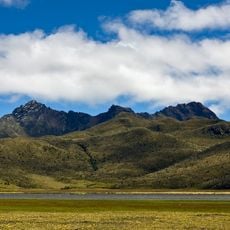
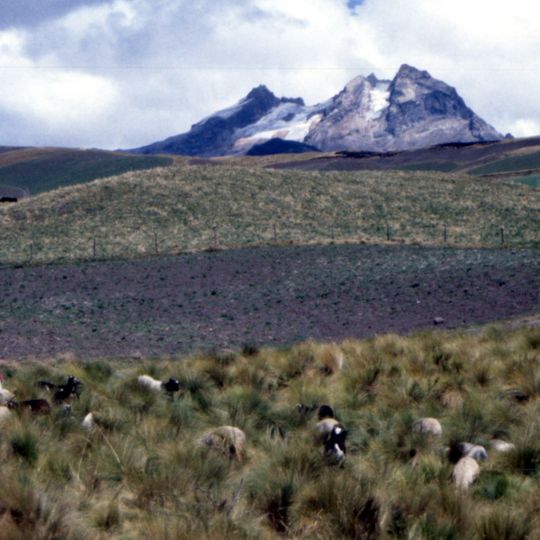
Carihuairazo is a stratovolcano in Ecuador's Cordillera Occidental with a horseshoe-shaped caldera reaching 5,018 meters elevation and two main peaks. The central Maxim summit and the lower Mocha point define the structure of this volcanic formation.
The stratovolcano was first documented to reach its summit in 1880 when Edward Whymper climbed it with the Carrel brothers and local guides David Beltran and Francisco Campaña. This early expedition marked the beginning of modern exploration of the mountain.
The name Carihuairazo comes from Quechua words: Cari meaning man, huay referring to wind, and razu meaning ice or snow. These language elements reflect how local people understood and described this mountain and its nature.
The climb begins at 4,600 meters elevation and demands technical skills plus proper gear to reach the summit. The route follows either the southwest ridge or approaches via the western glacier passage.
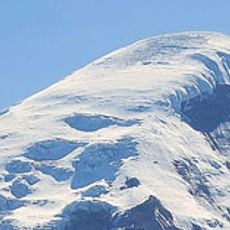
The volcanic caldera opens eastward and measures roughly a kilometer across, with glacial remnants still visible inside. These ice masses are shrinking and scientific projections suggest they may soon disappear entirely.
The community of curious travelers
AroundUs brings together thousands of curated places, local tips, and hidden gems, enriched daily by 91,412 contributors worldwide.