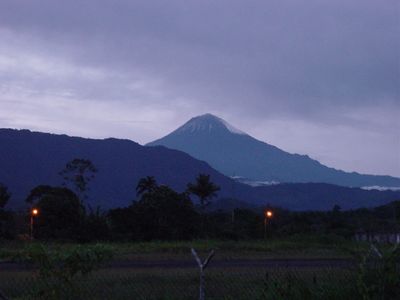
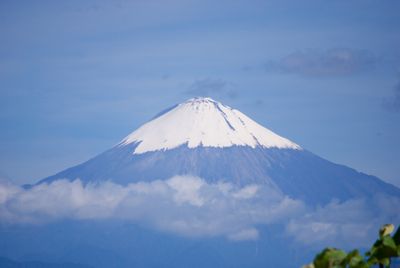
Sangay volcano, Active stratovolcano in Morona Santiago, Ecuador
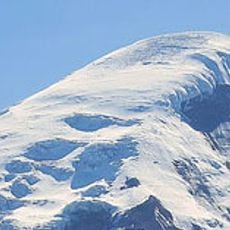
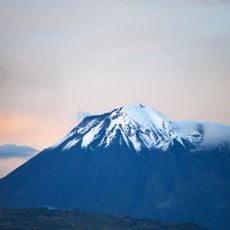
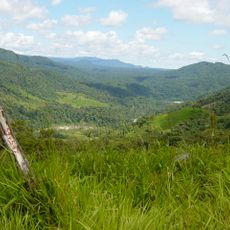
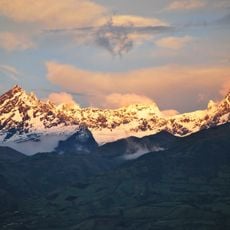
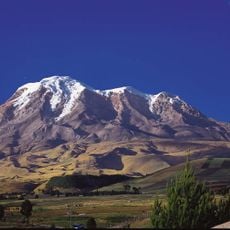
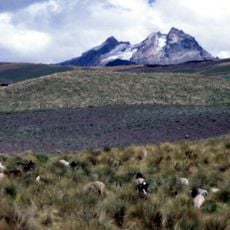
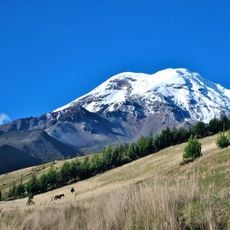
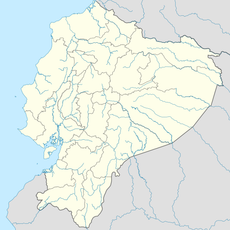
Sangay is an active stratovolcano in Morona Santiago Province in eastern Ecuador, rising to 5230 meters (17160 feet) above sea level. Its slopes are covered with dense cloud forest in the lower sections, transitioning to bare volcanic rock and glacier fields at higher elevations.
Sangay's roughly 500,000-year history includes two earlier edifices destroyed by massive flank collapses, debris from which still lies in the surroundings. The largest recorded eruption, in 1628, covered Riobamba in ash for a day and a half. The current eruptive episode began on 7 May 2019 and continued with ash emissions and explosions reported through 2020.
The name Sangay comes from Quechua (Kichwa) and is translated as "the frightener"; a related indigenous term, Samkay, means "to frighten", given by natives who witnessed violent explosions. Local folklore compared the volcano to a lighthouse in a sea of dense jungle: travellers who lost their way could orient themselves by its ash and steam. Quechua people are today the main native inhabitants of the region.
Access to the volcano is through the town of Alao on the western side or through Macas to the east, with an experienced mountain guide mandatory. Due to ongoing volcanic activity, visitors must check current safety bulletins from monitoring stations before planning any ascent.
The volcano has been continuously active for several years, producing minor eruptions almost daily that researchers worldwide monitor. Its location within dense rainforest makes direct observation difficult, so many eruptions are detected only through seismic instruments or satellite imagery.
The community of curious travelers
AroundUs brings together thousands of curated places, local tips, and hidden gems, enriched daily by 92,597 contributors worldwide.