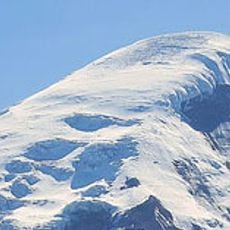
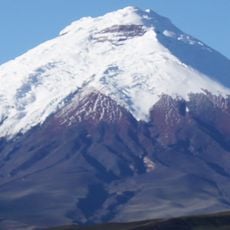
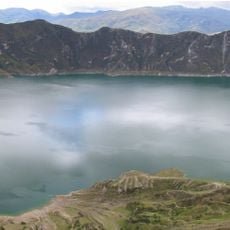
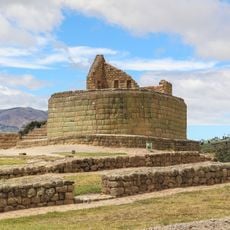
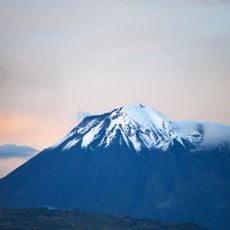
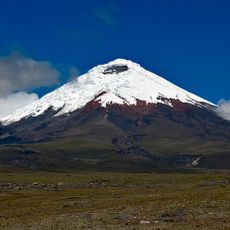
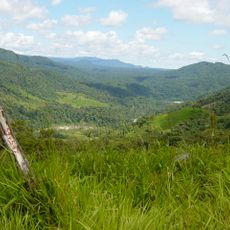
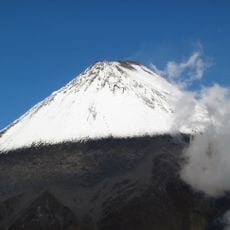
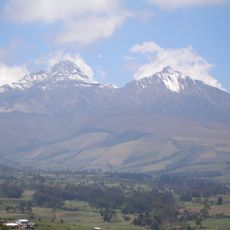
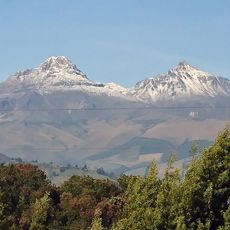
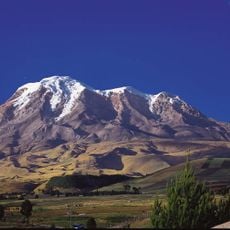
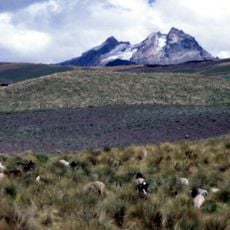
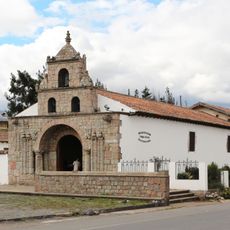
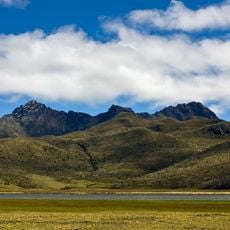
El Altar volcano, Extinct volcano in Sangay National Park, Ecuador.
El Altar is an extinct stratovolcano in Sangay National Park, about 170 km south of Quito. Its nine peaks over 5,000 m form a horseshoe-shaped ridge roughly 3 km across, enclosing a central basin with a crater lake at about 4,200 m, known as Laguna Collanes or Laguna Amarilla. The highest point reaches 5,319 m.
Inca legends say the summit collapsed after seven years of activity around 1460, but geologists consider the caldera far older. The volcano has shown no major Holocene eruptions and has been inactive for at least the last million years. Spaniards named the peaks Canónigo, Tabernáculo and Obispo after church figures.
The Incas called the volcano Capac Urcu, from Kichwa words for principal or great and mountain. Spanish colonists named the peaks after church figures: Canónigo to the north, Tabernáculo to the east and Obispo to the south, so the horseshoe of summits reads as a bishop and clergy around an altar. Inca legends say the summit collapsed after seven years of activity around 1460.
Visitors should bring sleeping bags, sunglasses, sunscreen, trekking shoes, rain gear, and warm clothing due to rapidly changing weather conditions. The area is demanding in terms of altitude and variable climate, so proper preparation is essential.
The caldera lake is called Laguna Collanes or Laguna Amarilla and lies at about 4,200 m, not at the 5,319 m summit. The nine main peaks over 5,000 m form a horseshoe ridge roughly 3 km across around this basin. Inca legends say the summit collapsed after seven years of activity around 1460, though geologists consider the caldera far older.
The community of curious travelers
AroundUs brings together thousands of curated places, local tips, and hidden gems, enriched daily by 92,622 contributors worldwide.