Tungurahua volcano, Active stratovolcano in Tungurahua Province, Ecuador
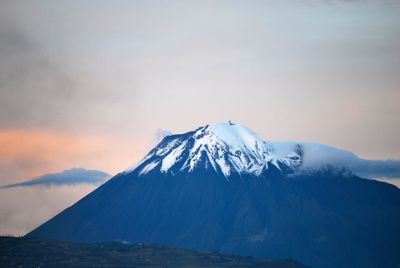
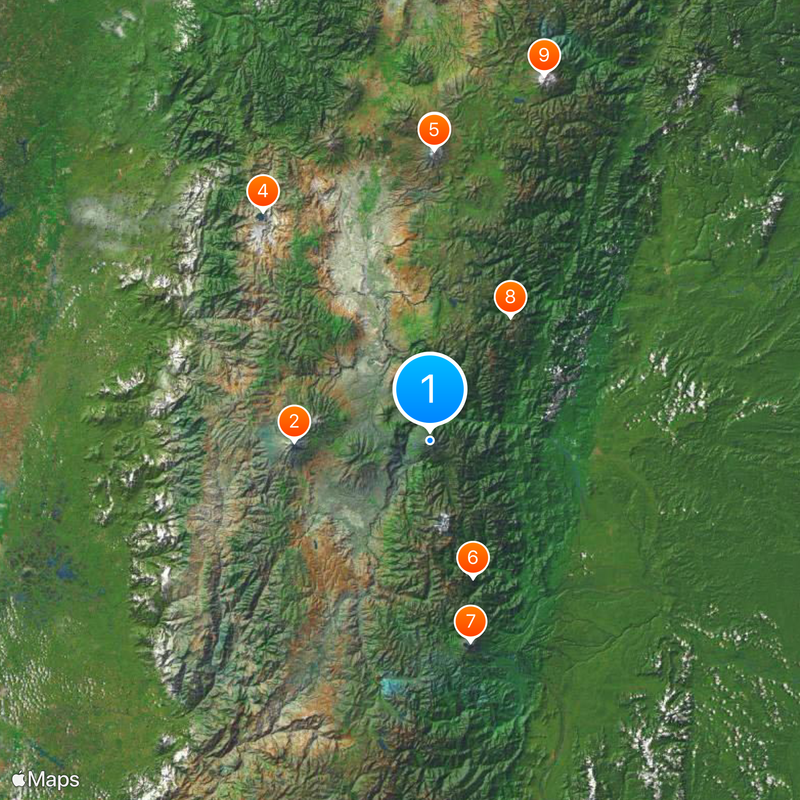
Tungurahua is an active stratovolcano on the border of Chimborazo and Tungurahua provinces in Ecuador, within Sangay National Park. Its summit stands at 5,023 metres, above the snow line, and its steep dark slopes carry irregular snow patches. The cone grew inside the collapsed caldera of Tungurahua II, which fell about 3,000 years ago.
In June 1802 Alexander von Humboldt tried and failed to reach the summit. The first documented ascent came on 9 February 1873, when Alphons Stübel climbed with the guide Eusebio Rodríguez during the seven-year South America expedition he made with Wilhelm Reiss, who had reached Cotopaxi with Angel Escobar on 28 November 1872. Major eruptive phases followed in 1773, 1886 and 1916–1918.
The name comes from Kichwa and means Throat of Fire, which reflects how local communities see this mountain. Families in the area have lived with eruptions for generations and learned to read the signs the mountain gives.
Monitoring stations nearby track seismic activity and gas emissions around the clock. Visitors should check current warnings from authorities as conditions can change quickly.
The summit glacier melted after activity resumed in 1999, yet the top still lies just above the snow line at about 4,900 metres, so snow patches cling to the upper slopes. The volcano's edifice, Tungurahua III, grew inside the collapsed caldera of Tungurahua II roughly 3,000 years ago.
The community of curious travelers
AroundUs brings together thousands of curated places, local tips, and hidden gems, enriched daily by 92,566 contributors worldwide.