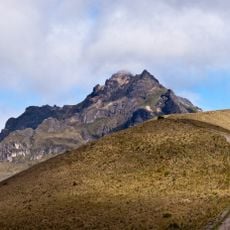
Sincholagua Volcano, Extinct stratovolcano near Cotopaxi National Park, Ecuador.
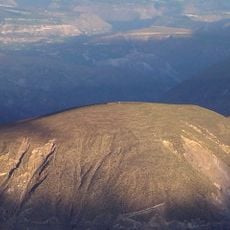
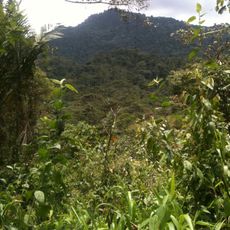
Sincholagua is an inactive volcano in Ecuador, 17 km northeast of Cotopaxi and 45 km southeast of Quito. At 4,899 m it is the country's 12th highest peak, with a sharp summit. Its glaciers melted decades ago, though heavy snowfall can still whiten the top.
Edward Whymper and his companions Jean-Antoine Carrel and Louis Carrel made the first recorded ascent on February 23, 1880. This early climb marked an important milestone in exploring Ecuador's Andean volcanoes.
The name Sincholagua derives from Quichua sinchijagua, rendered as "steep upwards" in Spanish sources and "strong above" in English ones. The peak is rarely visited because access is difficult and the approach hike long, unlike nearby Pichincha and Cotopaxi. Climbers usually enter from the south through Cotopaxi National Park, and the Northwest ridge, the first climbers' line, remains the normal route.
The northwest ridge is the main climbing route and can be completed in about three and a half hours from base camp under normal conditions. Given the altitude and snow-covered surface, visitors should be prepared with alpine gear and mountaineering experience.
On 3 May 1995 a private Gulfstream II of American Jet, inbound from Buenos Aires via La Paz, selected the wrong VOR frequency on a night approach to Quito and flew 19 km too far south, striking Sincholagua at 4,900 m. All seven aboard died, among them YPF chief José Estenssoro and ENAP manager Juan Pedrals Gili.
The community of curious travelers
AroundUs brings together thousands of curated places, local tips, and hidden gems, enriched daily by 92,651 contributors worldwide.