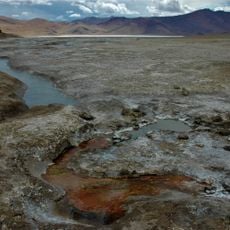
Uturuncu, Dormant volcano in Sur Lípez Province, Bolivia
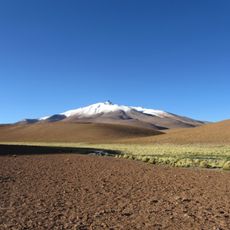
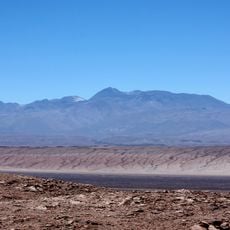
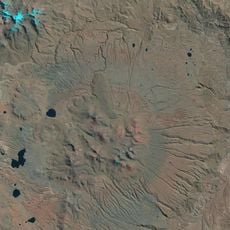
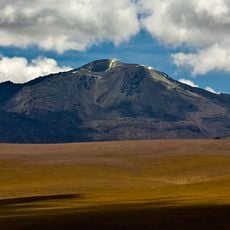
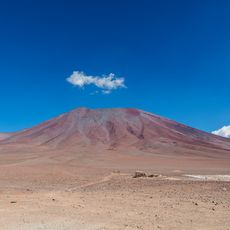
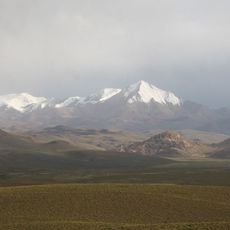
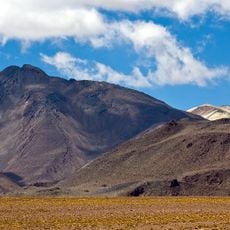
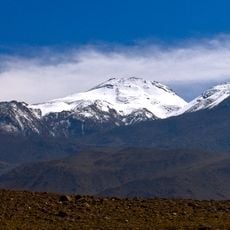
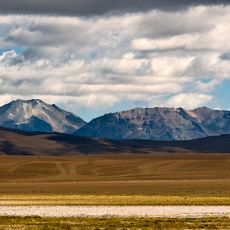
Uturuncu is a stratovolcano in the San Pablo de Lípez municipality, Potosí department, with two summit peaks 1 km apart: one at 6,008 m and one at 5,930 m, separated by a 5,700 m saddle. About 105 lava flows radiate from the central vents, some 15 km long with blocky fronts over 10 m thick; the northernmost, Lomo Escapa, is 9 km long. Five lava domes lie south, west and northwest of the summit.
Uturuncu formed hundreds of thousands of years ago as part of the volcanic activity along the southern Andes. From 1992 onward, scientists detected that the ground around the volcano was slowly rising, pointing to magma moving deep below the surface.
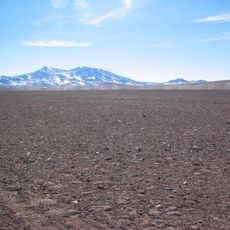
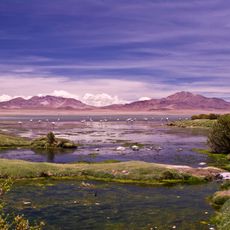
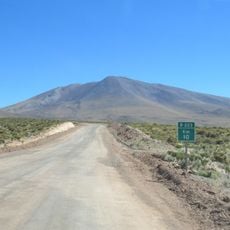
The name Uturuncu means 'jaguar' in Quechua, not Aymara. The volcano stands near Quetena Chico and the Eduardo Avaroa Andean Fauna National Reserve, in a region that is almost uninhabited. Visitors today come for tourism, and a winding road built for the old sulfur mine leads partway up the mountain.
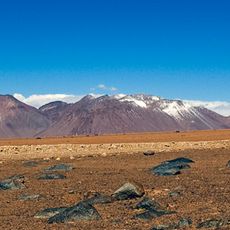
The volcano sits in a very remote area and can only be reached with a four-wheel-drive vehicle, as the tracks are unpaved and rough. The altitude takes effect quickly, so spending several days acclimatizing in the region before attempting to go higher is strongly advised.
A former sulfur mine named Uturuncu sits close to the summit and was considered one of the highest in the world. It reportedly held reserves of 50 million tons of ore, mainly sulfur with some realgar, a mineral rich in arsenic. A winding road built for the mine climbs the mountain.
The community of curious travelers
AroundUs brings together thousands of curated places, local tips, and hidden gems, enriched daily by 94,656 contributors worldwide.