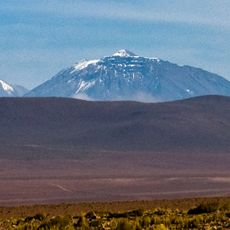
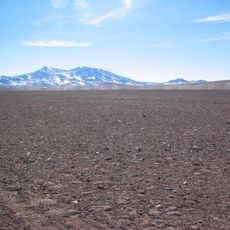
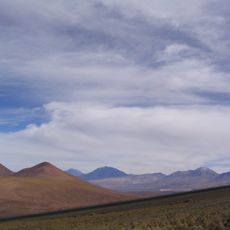
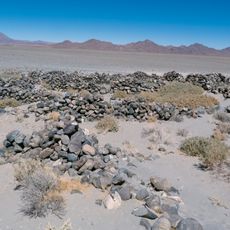
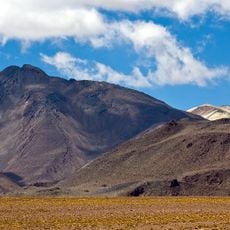
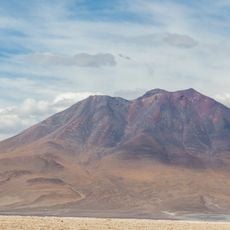
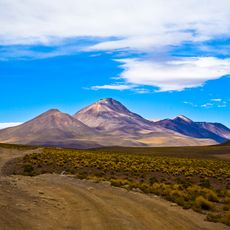
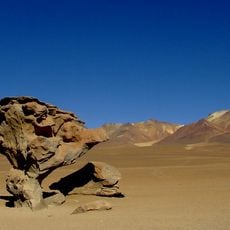
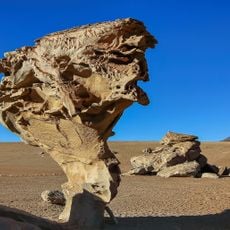
Árbol de Piedra, Rock formation in Eduardo Abaroa Andean Fauna National Reserve, Bolivia.
The Árbol de Piedra is a rock formation in the Siloli Desert shaped by wind erosion over millions of years into an unusual tree-like silhouette. The structure features a narrow base that supports a wider upper section, creating a natural pillar-like monument.
This rock formation originated from volcanic activity that shaped the Andes during mountain building. Its present shape was carved by wind erosion over geological timescales at this extreme elevation.
The Quechua name Sach'a Rumi, "stone tree", is the name by which the formation is also known, alongside the Spanish Árbol de Piedra. Visits are brief stops of no more than half an hour, used almost entirely for photography, the only activity foreseen at the site. It stands in the Siloli desert at the entrance to the Eduardo Avaroa Andean Fauna National Reserve.
Visitors reach this formation through guided tours from Uyuni in this remote desert region. Warm clothing is essential due to significant temperature swings and the thin air at this altitude.
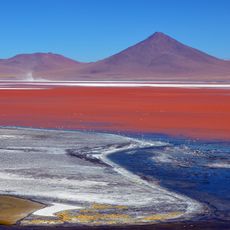
The thin stem is the work of wind carrying sand, which erodes the softer sandstone faster than the harder cap above. The formation stands about 18 km north of Laguna Colorada, at the entrance to the Eduardo Avaroa Andean Fauna National Reserve, and is one of several volcanic rocks of different shapes scattered across the Siloli sand flat.
The community of curious travelers
AroundUs brings together thousands of curated places, local tips, and hidden gems, enriched daily by 93,501 contributors worldwide.