Palácio dos Azulejos, Heritage building in central Campinas, Brazil
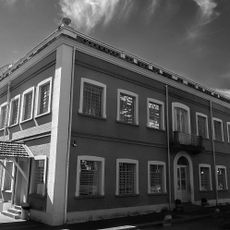
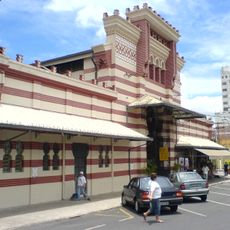
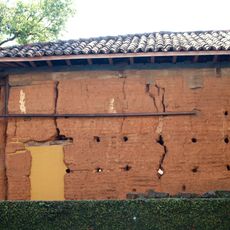
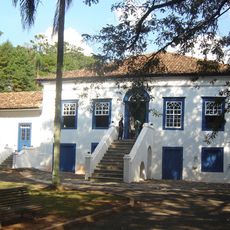
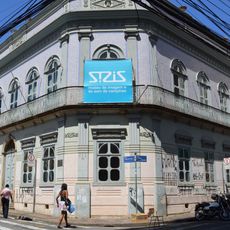
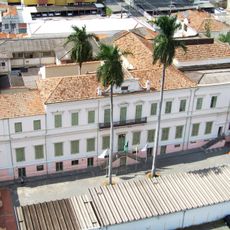
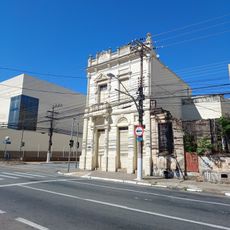
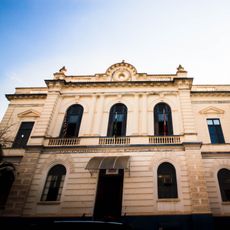
Palácio dos Azulejos is a two-storey townhouse at the corner of Ferreira Penteado and Regente Feijó streets in central Campinas, named for the Portuguese tiles covering its upper floor. It is a paired sobrado: a 1,185 m² corner house joined to a 915 m² two-storey building, 2,100 m² built in all on a lot of about 1,100 m². Its walls mix rammed earth (taipa de pilão) and brickwork, and the roof is hipped in four waters over a U-shaped plan.
Built in 1878 for the Baron of Itatiba, the building served as Campinas City Hall and courthouse from 1908 to 1968. This administrative role shaped its importance in the city's development for over a century.
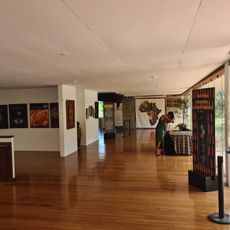
The building houses the Museum of Image and Sound, preserving local history through exhibitions and maintaining sections of the Municipal Archive. This cultural role connects the location's past with present community engagement.
The building stands at the corner of Ferreira Penteado and Regente Feijó streets, in central Campinas, on a lot of about 1,100 m². It is managed by the Municipal Culture and Tourism Department and houses the Museum of Image and Sound and part of the Municipal Archive. A Petrobras-sponsored revitalization project was carried out in 2004.
The original builder and project are unknown, so the mix of techniques is read from the walls themselves: rammed-earth main walls on the ground floor encased in brick, wattle-and-daub partitions and staircase, and brickwork on the upper floor. The roof is hipped on four sides, adapted to the U-shaped plan, unlike most roofs of the period.
The community of curious travelers
AroundUs brings together thousands of curated places, local tips, and hidden gems, enriched daily by 92,790 contributors worldwide.