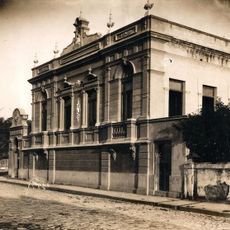
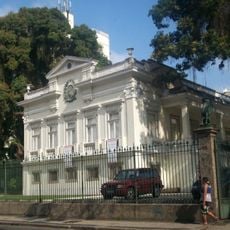
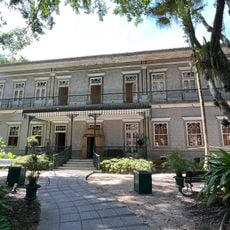
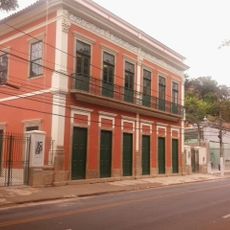
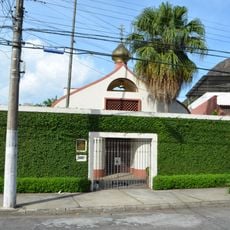
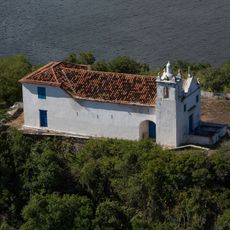
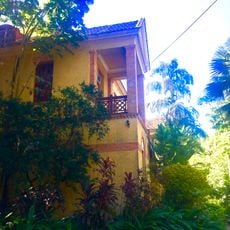
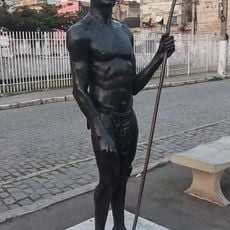
Palácio do Ingá, Historical museum in Ingá district, Niterói, Brazil.
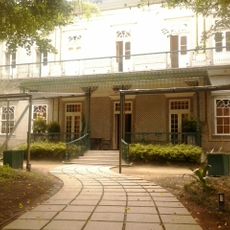
The Palácio do Ingá, officially Palácio Nilo Peçanha, is a neoclassical building on Rua Presidente Pedreira in Niterói's Ingá district. Built around 1860 as the Palacete Sande, it has served as the Museu de História e Arte do Rio de Janeiro since 1977, displaying collections in its former government rooms.
The building was constructed in 1860 as a private residence and later became the seat of Rio de Janeiro state government, serving administrative functions for more than 70 years. This change in purpose shows how Niterói grew in political importance throughout the state's history.
The building is officially named Palácio Nilo Peçanha after the governor who bought it in 1903, while locals know it as Palácio do Ingá, after the neighbourhood and an earlier palace of the same name. Since 1977 it has housed the Museu de História e Artes do Estado do Rio de Janeiro, formed by merging the state history museum with the Museum of Arts and Popular Traditions.
The museum occupies the palace on Rua Presidente Pedreira 78 in the Ingá district of Niterói. The building has two floors and a central staircase, with exhibition rooms arranged around the former state reception halls. Access to the upper floor is by stairs, so visitors with reduced mobility should check entry conditions in advance.
The palace's name honours Nilo Peçanha, the governor who bought the Palacete Sande in 1903 to house the state government after the capital returned to Niterói; the earlier state seat in Ingá, a property of the Barão de São Gonçalo, now houses the Colégio Estadual Aurelino Leal. The last governor to live here was Raimundo Padilha.
The community of curious travelers
AroundUs brings together thousands of curated places, local tips, and hidden gems, enriched daily by 93,013 contributors worldwide.