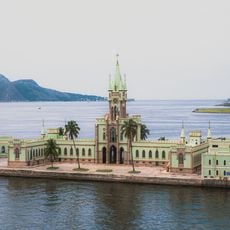
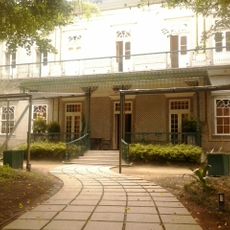
Fort of Gragoatá, Portuguese fortress in Gragoatá, Niterói, Brazil
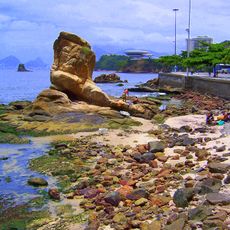
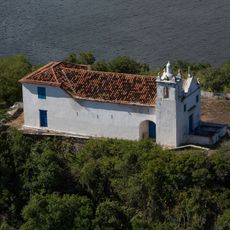
Fort of Gragoatá is a Portuguese fortress on a rocky headland at the end of the former São Domingos beach in Niterói, built to protect the entrance to Guanabara Bay. The structure consists of stone and earthen works equipped with cannons and defensive walls designed to repel naval attacks.
Scholars disagree on the fort's origins: Salvador Mata e Silva dates it to 1610, while IPHAN records note a fort already standing in 1660. The present structure is generally traced to a battery installed from 1696 by governor Sebastião de Castro Caldas, paid for in 1698 and already needing repairs by 1701. In 1863, under Pedro II, the fort was enlarged with a rock-cut powder magazine, rebuilt barracks and tunnels between the batteries.
The fort received official protection status in 1938, preserving its Portuguese colonial military design for future generations. Today, visitors can observe the original stonework and defensive features that shaped this coastal stronghold.
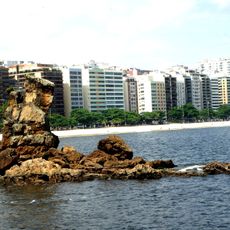
The fort stands on a rocky promontory at the end of the former São Domingos beach, in the Gragoatá neighbourhood of Niterói. Its position overlooked the entrance to Guanabara Bay and crossed fire with the Boa Viagem battery and the Villegaignon Island battery. Visitors reach the site from the centre of Niterói; the sources give no opening times or visitor arrangements.
The 1863 marble inscription over the gate records that the fortification was finished in the 40th year of independence under Emperor Pedro II. The works, led by Major Francisco Primo de Souza, cut a trench in the hill behind the fort, dug a powder magazine into the living rock and opened tunnels between the batteries.
The community of curious travelers
AroundUs brings together thousands of curated places, local tips, and hidden gems, enriched daily by 94,631 contributors worldwide.