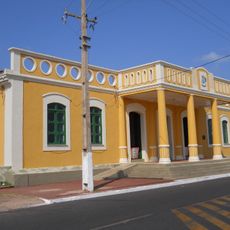
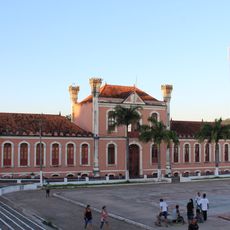
Fort of Óbidos, Fort of Pauxis, Portuguese colonial fortress in Óbidos, Brazil.
The Fort of Óbidos stands on a high riverbank of the Amazon and displays stone walls with colonial military architecture. Its structure shows typical defensive features with reinforced positions and bastions.
Construction began under Governor Antônio de Albuquerque Coelho de Carvalho, who entrusted Francisco da Mota Falcão with four forts built at his own expense in exchange for a lifetime governorship. After Falcão died, his son Manoel da Mota Sequeira finished the Presídio dos Pauxis in 1698 in taipa de pilão, armed with four small-calibre guns. It was renamed Forte de Óbidos when the Pauxis village became a town on 25 March 1758, and it also served as a customs registry collecting royal tithes from river traffic.
The fort's name comes from the Pauxis, the indigenous nation living in the area, whom Franciscan friars of Piedade brought down with people from the Trombetas River to build it; they were settled beside it in the Aldeia dos Pauxis. When that village became a town named Óbidos on 25 March 1758, the fort took the name Forte de Óbidos.
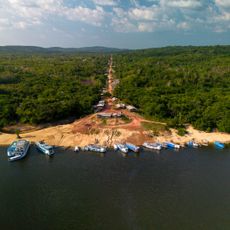
The fort stands on the left bank of the Amazon, above the Óbidos narrows, and is reached from the town centre of Óbidos. The ground by the walls is uneven and the riverbank drops steeply, so keep back from the edge. Rain leaves the earthen ramps and paths slippery.
This fortress controlled the narrowest section of the Amazon River, where ships had to pay taxes and undergo inspection during the colonial period. This made it a valuable trade control point for the Portuguese crown.
The community of curious travelers
AroundUs brings together thousands of curated places, local tips, and hidden gems, enriched daily by 92,817 contributors worldwide.