Fortress of Saint Catherine, Military fort in Cabedelo, Brazil
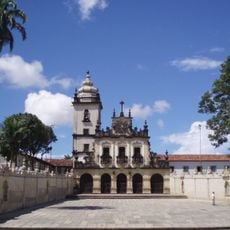
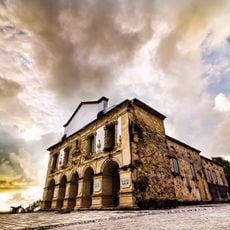
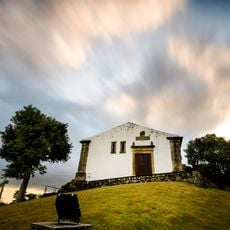
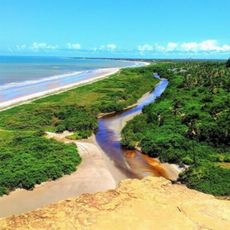
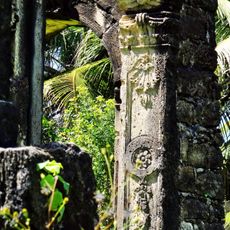
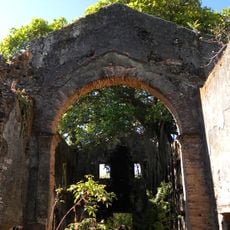
The Fortress of Saint Catherine stands on a sandy elevation on the right bank of the Paraíba River's bar, 18 km from central João Pessoa. Its stone-and-lime walls form a regular quadrangular plan with pentagonal bastions at the corners, as mapped by João Teixeira Albernaz around 1616. The 1974-1978 restoration followed the 18th-century plan and exposed the arches.
A first fort at Cabedelo dates to 1586, held by 220 men under Captain João de Matos Cardoso; built of taipa and loose sand, it was destroyed in 1591 by French corsairs and indigenous fighters. Rebuilt in stone and lime, it was finished in 1597 under Santa Catarina de Alexandria, patron of its chapel, and named for Dona Catarina de Portugal, Duchess of Bragança. Rebuilt again in 1618 by engineer Francisco de Frias da Mesquita, it withstood Dutch assaults in 1631 and 1634 before surrendering; Maurício de Nassau renamed it Fort Margarida.
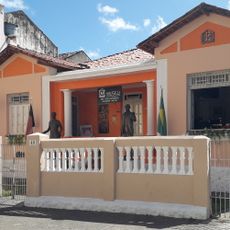
The fort's name honours Saint Catherine of Alexandria, patron of its chapel, and Dona Catarina de Portugal, Duchess of Braganza. The Dutch renamed it Fort Margarida after Maurice of Nassau's sister. Today it is managed by the Artistic-Cultural Association of Cabedelo and the Fortaleza de Santa Catarina Foundation, and it has been added to IBRAM's museum list for archaeological finds exhibited inside.
The fort stands on a sandy rise on the right bank of the Paraíba River bar, about 18 km from central João Pessoa. It is managed by the Artistic-Cultural Association of Cabedelo and the Fortaleza de Santa Catarina Foundation, and since its listing by IBRAM it holds archaeological finds displayed inside. The 1974-1978 restoration followed the 18th-century plan and exposed the arches; look for these when walking the ramparts.
Maurice of Nassau renamed the captured fort Margarida in 1637, after his sister, and had a wider, deeper moat and a parapet added. The Dutch held it until Portugal regained the captaincy. Look for the 1974-1978 restoration, carried out to an 18th-century plan, which brought out the arches.
The community of curious travelers
AroundUs brings together thousands of curated places, local tips, and hidden gems, enriched daily by 92,935 contributors worldwide.