Coopers Cave, Archaeological cave in Gauteng, South Africa.
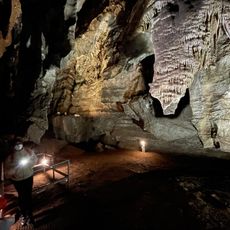
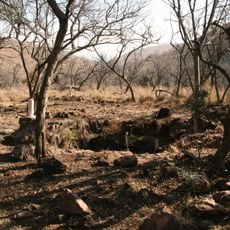
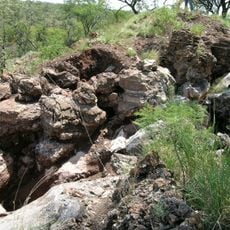
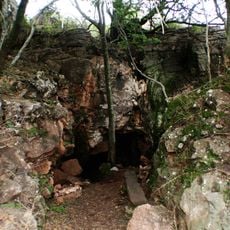
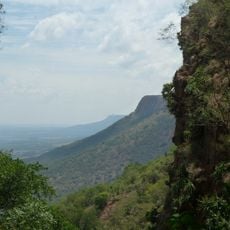
Cooper's Cave is a series of breccia-filled cavities in dolomite, formed in fissures along geological faults, lying almost exactly between Sterkfontein and Kromdraai about 40 km northwest of Johannesburg. Its chambers, including Cooper's D, hold fossil-bearing breccia dated by uranium-lead methods to between 1.5 and 1.4 million years ago.
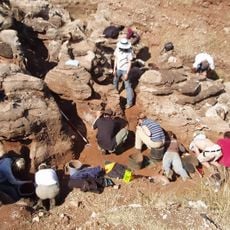
Researchers from the University of Witwatersrand found deposits containing early stone tools and animal bones from a long period. These discoveries show that humans and animals lived in this area for ages.
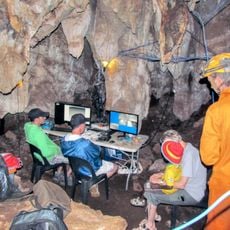
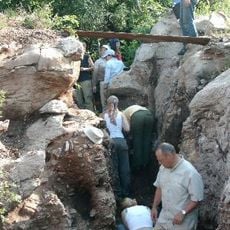
Cooper's Cave holds one of the richest early stone tool assemblages in the Cradle of Humankind, provisionally assigned to the Developed Olduwan culture. The site is the fifth richest hominid locality in the World Heritage Site, after Sterkfontein, Swartkrans, Drimolen and Kromdraai. Excavations are directed by Christine Steininger and Lee Berger of the University of the Witwatersrand.
Cooper's Cave is an active excavation site directed by Christine Steininger and Lee Berger, so there is no public visitor access or guided tour programme. The breccia-filled cavities sit in dolomitic fissures along geological faults between Sterkfontein and Kromdraai, roughly 40 km northwest of Johannesburg. Viewing is from outside the working areas.
Cooper's D has been dated by uranium-lead methods to between 1.5 and 1.4 million years ago, work carried out by Robyn Pickering of the University of Melbourne. Cooper's A, judged from the animals recovered there, is thought to be about the same age.
The community of curious travelers
AroundUs brings together thousands of curated places, local tips, and hidden gems, enriched daily by 94,084 contributors worldwide.