Gondolin Cave, Archaeological site in North West, South Africa
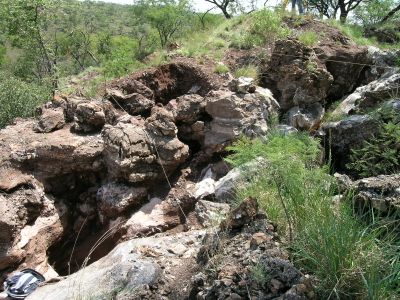
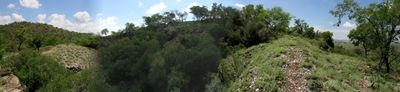
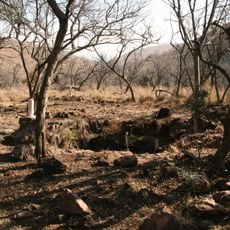
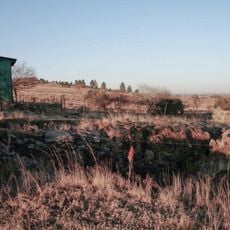
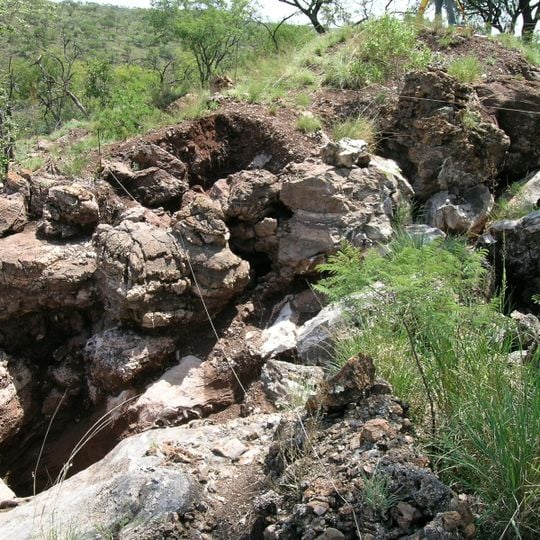
Gondolin Cave is a fossiliferous dolomitic paleocave system in North West, South Africa, formed in the Eccles Formation dolomites. Lime mining in the early 20th century heavily disturbed it, leaving a small active cave, in situ remnant deposits and extensive dumpsites of ex situ calcified sediments. The excavated rock face shows stepped reddish-brown and grey ledges with a pale sediment layer below.
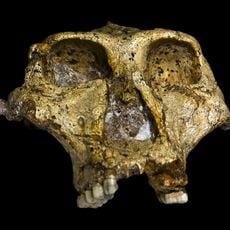
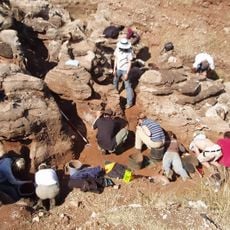
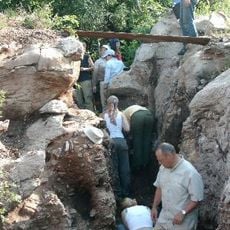
Lime mining disturbed the cave system before the 1950s, though no records, maps or photographs of that work survive. Fossils were noted by the 1970s, and Elisabeth Vrba and David Panagos of the Transvaal Museum began excavations in early 1979, removing about 2 m3 of calcified sediment from the northern wall. A 1997 trench through the mining dumps yielded two hominin teeth, and further digs followed in 2003 and 2004.
The name comes from J.R.R. Tolkien's Gondolin, given by the early 1970s. The fossil-rich breccia was processed with acetic acid at the Transvaal Museum, and the 1993 description covered only 4,344 of 90,663 specimens. The site lies on private land within the Cradle of Humankind.
The cave lies on privately owned land and is not accessible to the public; there is no visitor access to arrange. The site consists of a small active cave, remnant in situ deposits and extensive dumpsites of calcified sediment left by early 20th-century lime mining, so the surface is disturbed ground rather than a show cave.
Excavations between 2003 and 2004 recovered nearly 100,000 individual bone fragments, including teeth from early human ancestors. This unusually large collection helped scientists piece together more of our evolutionary story.
The community of curious travelers
AroundUs brings together thousands of curated places, local tips, and hidden gems, enriched daily by 93,010 contributors worldwide.