Plovers Lake, Archaeological and paleontological site in Gauteng, South Africa
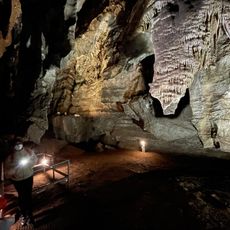
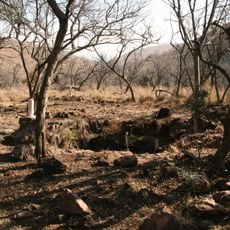
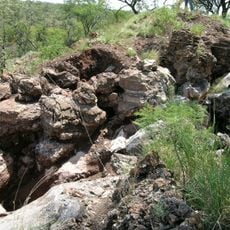
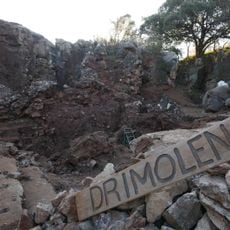
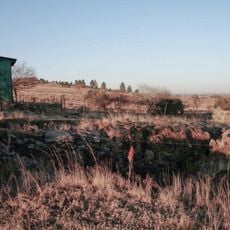
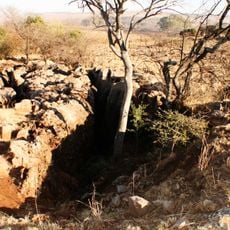
Plovers Lake is a fossil-bearing, breccia-filled cave in Gauteng, about 4 km southeast of Sterkfontein and Kromdraai and some 36 km northwest of Johannesburg. Its deposits follow huge fissures in a checkerboard pattern: the Outer Deposit is a de-roofed dolomitic cave, while the Inner Deposits keep most of their roof and run for several hundred meters.
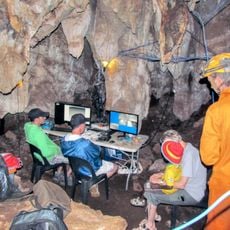
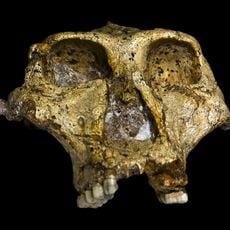
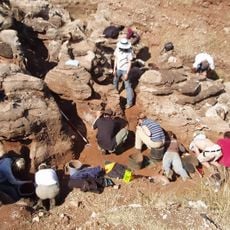
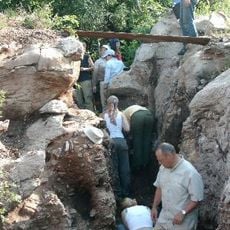
Plovers Lake was excavated in two campaigns. C.K. "Bob" Brain and Francis Thackeray of the Transvaal Museum worked the Outer Deposits in the late 1980s and early 1990s, finding a fossil baboon with a healed wound above the eye, many other animals and indeterminate stone tools, but no hominid fossils. Lee Berger of the University of the Witwatersrand and Steve Churchill of Duke University dug the Inner Deposits between 2000 and 2004, recovering over 25,000 fossil remains, hundreds of knives and spear points, and fragmentary hominid remains dated to around 70,000 years ago.
The name Plovers Lake refers to a fossil-bearing breccia cave, not an open lake. Excavations in the Inner Deposits recovered over 25,000 fossil remains and hundreds of Middle Stone Age tools, including knives and spear points, alongside fragmentary hominid remains dated to around 70,000 years ago. The site is a South African National Heritage Site.
Most of the site has never been excavated, and the Inner Deposits lie beneath an intact roof extending several hundred metres, so the deposit is not a walk-through cave. The Outer Deposit is a de-roofed, breccia-filled dolomitic cavity. Plan around research access rather than a visitor route.
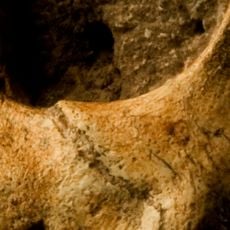
The baboon skull from the Outer Deposits carries a healed wound above the eye, evidence that the animal survived an attack by a leopard or a sabre-toothed cat before it died and its bones entered the breccia.
The community of curious travelers
AroundUs brings together thousands of curated places, local tips, and hidden gems, enriched daily by 94,420 contributors worldwide.