Gunung Padang Megalithic Site, Megalithic archaeological site in Cianjur, Indonesia
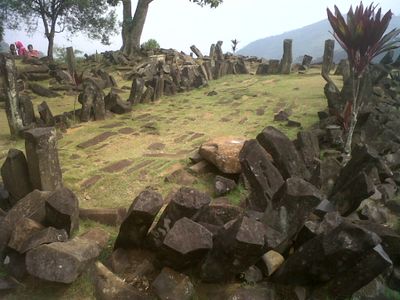
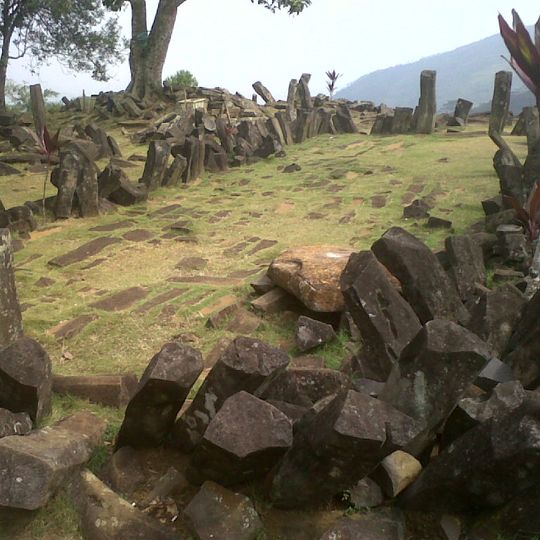
Gunung Padang is a megalithic site on a hill in Karyamukti, West Java, with five terraces of dark grey and brown andesite blocks. The blocks, some upright and grooved, lie scattered on grass or form stepped mounds and curving rows. The main complex covers about 900 square metres at 885 metres above sea level.
Gunung Padang was first mentioned in 1891 by Dutch historian Rogier Verbeek, based on an 1890 visit by M. De Corte, and again in 1914 by archaeologist Nicolaas Johannes Krom. After decades of neglect, local farmers Endi, Soma and Abidin reported the site in 1979, prompting studies by Puslit Arkenas. Carbon dating suggests parts date to 500–200 BCE, while other researchers propose the 2nd–8th centuries CE; claims of a 27,000-year-old pyramid were retracted in 2024.
The local population connects this site with King Prabu Siliwangi from the Sunda Kingdom, who according to tradition tried to build a palace here in one night. This oral tradition still shapes how people in the region view the complex and explains why many visitors approach the stones with particular reverence.
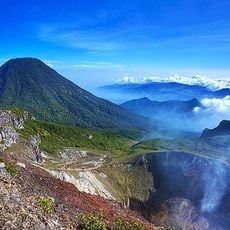
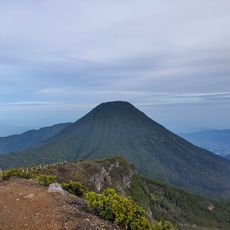
The main complex is reached by a staircase of 370 andesite steps rising about 90 meters at roughly a 45-degree angle from the valley floor. The site lies 30 kilometers from Cianjur and 115 kilometers south of Jakarta. The hill is steep and the path can be slippery after rain.
Several of the megalithic stones produce different musical notes when struck, suggesting possible acoustic properties or ceremonial uses in ancient times. This feature is rare among other prehistoric sites and can still be experienced on location today.
The community of curious travelers
AroundUs brings together thousands of curated places, local tips, and hidden gems, enriched daily by 92,724 contributors worldwide.