Mount Gede, Active volcano in West Java, Indonesia
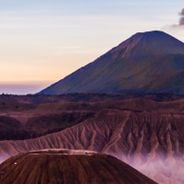
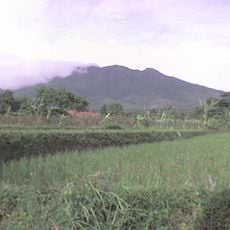
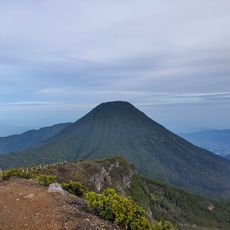
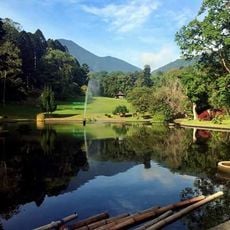
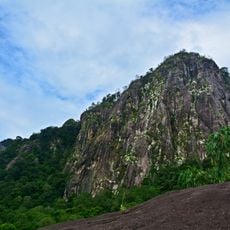
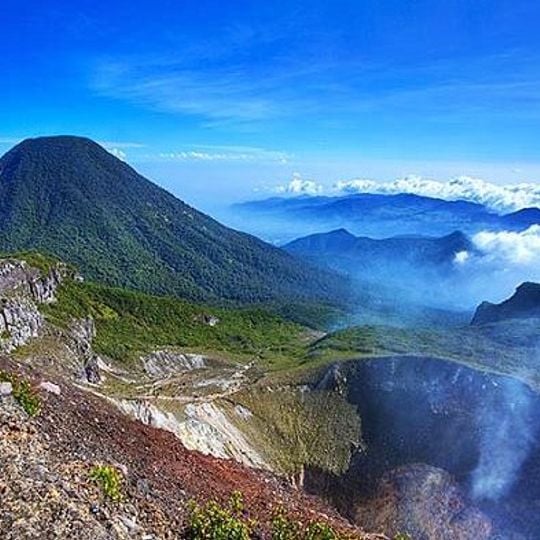
Mount Gede is a stratovolcano in West Java province between Cianjur, Sukabumi and Bogor regencies. The summit sits at 2,958 meters (9,705 feet) elevation and offers several hiking routes through forests at different altitudes.
The first recorded eruption came in 1747, a VEI-3 event that sent two lava flows visible from Lanang crater, followed by smaller eruptions in 1761, 1780 and 1832. On 2 November 1840 a VEI-3 blast at 3 a.m. woke sleeping residents and lasted until March 1841. The 1853 eruption devastated Cianjur, prompting the Dutch colonial government to move the Priangan residency capital to Bandung, official in 1864. The last major eruption was in 1957 (VEI-2).
The name Gede means "big" in Sundanese, and the mountain is also called Gunung Gumuruh, "the rumbling mountain". The Cibodas route passes the blue-tinted Telaga Biru, a five-hectare lake coloured by blue algae, and the Cibereum waterfall, about 50 metres high, where red moss endemic to West Java grows nearby.
Temperature ranges from eighteen degrees Celsius during the day to five at night, so warm layers are necessary. Main trail access points lie at Cibodas, Cipanas and Salabintana.
The Suryakencana meadow lies at high elevation and shows natural fields of edelweiss flowers, which grow in few tropical mountain ranges. The forests around the volcano host 251 bird species, including several endemic to Java.
The community of curious travelers
AroundUs brings together thousands of curated places, local tips, and hidden gems, enriched daily by 92,722 contributors worldwide.