Ngempon Temple, Hindu temple in Ngempon, Central Java, Indonesia
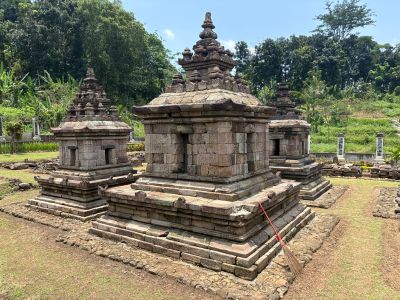
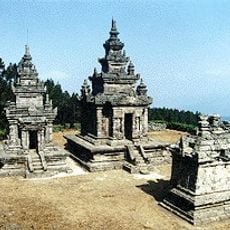
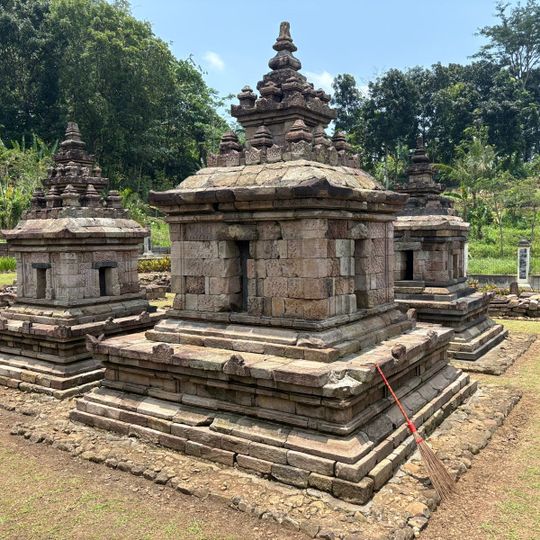
Ngempon Temple, also called Candi Muncul, is a Hindu temple complex in Ngempon village, Bergas, Semarang Regency. Nine foundation points were found, but only four small andesite shrines have been rebuilt; one is larger than the others. The architecture resembles the Gedhong Sanga and Dieng temple groups.
In 1952 the farmer Kasri found plain andesite blocks and about ten statues while hoeing his rice field with his grandfather. The Archaeological Service reassembled one temple from the rubble that same year, and in 2006 the Central Java conservation office rebuilt a second, smaller one. Kasri served as caretaker from 1966 to 1999.
The name Ngempon comes from empu, as the area was believed to be where brahmin candidates trained as mpu in martial arts, literature and spirituality. Since 2009 the temple has hosted the Pamarisuda Candhi Ngempon ritual at Galungan, with physical cleaning by BP3 Central Java staff and spiritual purification by PHDI Central Java.
The complex lies in Ngempon village, Bergas district, about two kilometres from Karangjati market. Four of the nine temple bases have been rebuilt; the rest remain exposed stone outlines. A warm-water petirtaan, Derekan, sits about 200 metres away and is reached on foot. The site is also used for Hindu ceremonies, so some areas may be closed during Galungan rites.
The farmer Kasri, who found the first stones while hoeing with his grandfather in 1952, later served as guardian of Ngempon Temple from 1966 to 1999. The land he worked, measuring 52 by 39 metres, was bought by the Semarang Regency cultural service because the temple complex lay buried beneath it.
The community of curious travelers
AroundUs brings together thousands of curated places, local tips, and hidden gems, enriched daily by 94,023 contributors worldwide.