Ubirr, Rock formation in Kakadu National Park, Australia
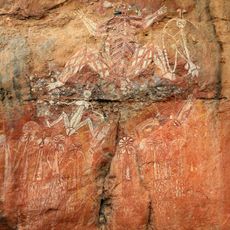
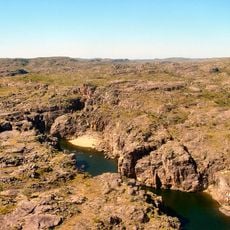
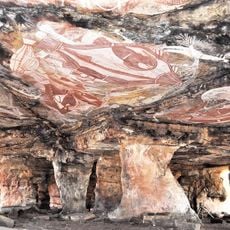
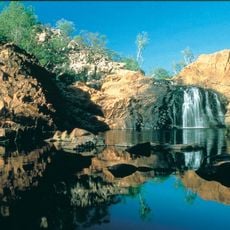
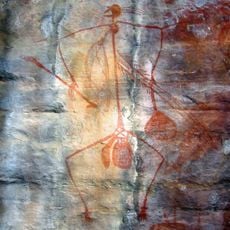
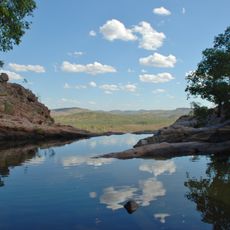
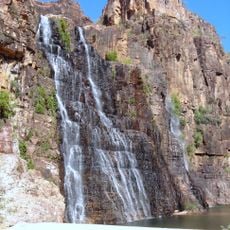
Ubirr is a group of rock outcrops at the edge of the Nadab floodplain in Kakadu National Park. Natural shelters in the outcrops hold Aboriginal paintings, including X-ray art of barramundi, catfish, mullet, goannas, long-necked turtles, pig-nosed turtles, rock ringtail possums and wallabies. Three main galleries are accessible to visitors, and the top of the rock gives a panoramic view of the floodplains and escarpments.
The rock art here includes depictions of thylacines, suggesting the paintings date back over 2000 years to when these animals still lived on mainland Australia. This long time span indicates continuous artistic and cultural presence at this site across millennia.
The main gallery displays X-ray art depicting animal anatomy, revealing how Aboriginal artists understood their subjects across generations. This artistic approach held deep meaning for hunting and spiritual life, and local communities continue to value this tradition today.
Visitors can reach the site via a sealed road from Jabiru, with a circular walking track of about 1 kilometer leading to the art galleries and a lookout point. The best time to visit is during the drier months, when paths are easily accessible and the floodplain is less waterlogged.
The Rainbow Serpent Gallery preserves ancient paintings of Garranga'rreli, a spiritual being believed to have created the surrounding landscapes through song according to local beliefs. This specific artwork reveals how Aboriginal spirituality and landscape formation are deeply woven into their understanding of the world.
The community of curious travelers
AroundUs brings together thousands of curated places, local tips, and hidden gems, enriched daily by 94,550 contributors worldwide.