Beaumont House, Historical house in Beaumont, South Australia
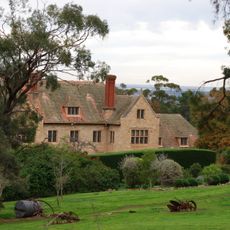
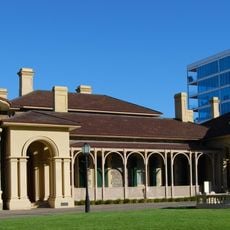
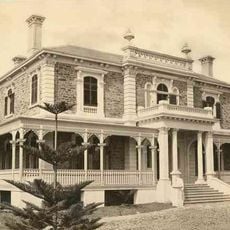
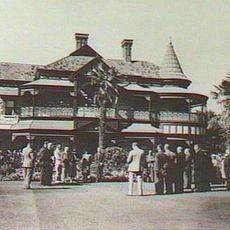
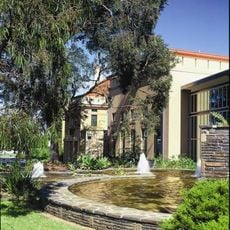
Beaumont House is a two-storey brick residence at 631 Glynburn Road in Beaumont, built between 1849 and 1851 for Bishop Augustus Short. Its eclectic Romanesque-Classical design includes a red Tuscan-style roof and a pillared exterior, with later alterations by Sir Samuel Davenport. The estate was originally named Claremont.
Augustus Short, consecrated in 1847 and arrived in Adelaide that December, had Beaumont House built between 1849 and 1851 on land bought from Samuel Davenport, naming the estate Claremont. Short lived there until 1856, when Davenport purchased it; Davenport died there in 1906. Major Vincent, owner from 1907, made the main structural additions, and the National Trust received the house in 1968.
Samuel Davenport planted olives at Beaumont House in 1852 and later propagated trees and cuttings to his other Adelaide Hills properties; he also planted mulberry trees for silk. The olive groves are no longer cultivated, but the plantings recall his experimental agriculture.
Access to the house is via Glynburn Road and interiors can be explored during guided tours arranged by the National Trust. It is best to check in advance when tours take place, as visits are offered only on certain dates throughout the year.
Samuel Davenport, who bought Claremont in 1856, travelled to the world expositions held every two years in different cities, and the influences he picked up there are reflected in the house. He also planted olives around it in 1852 and mulberry trees for silk production.
The community of curious travelers
AroundUs brings together thousands of curated places, local tips, and hidden gems, enriched daily by 93,359 contributors worldwide.