Blue Mountains National Park, Nature reserve in New South Wales, Australia.
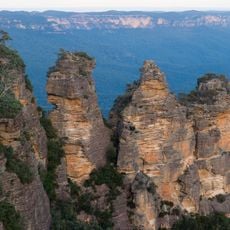
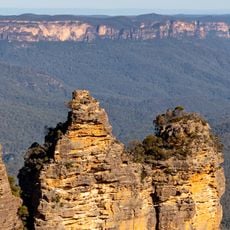
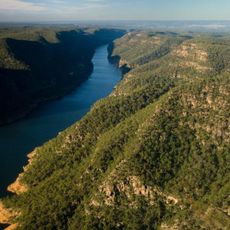
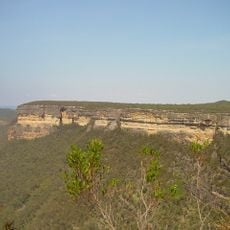
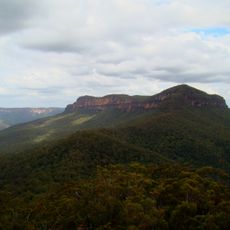
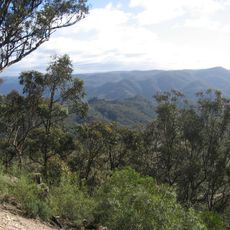
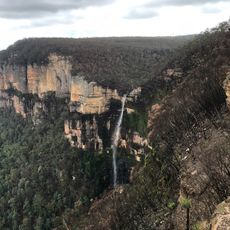
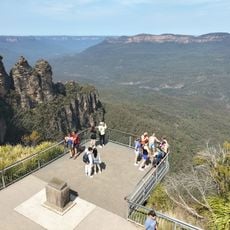
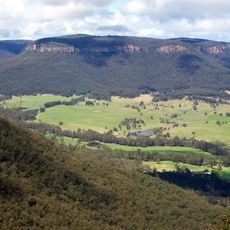
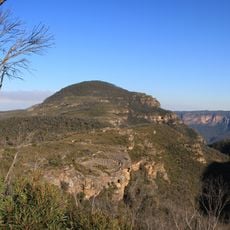
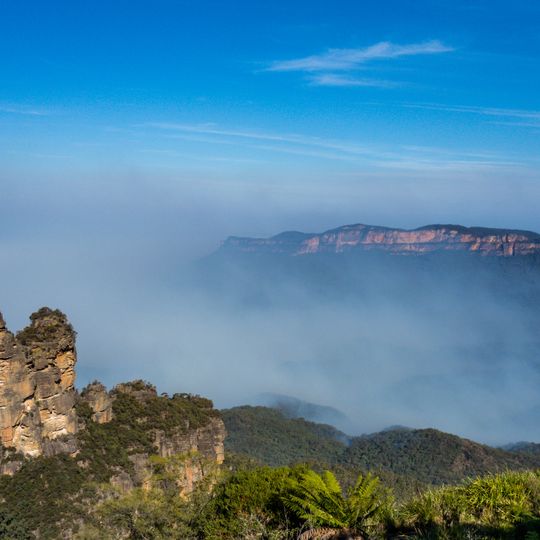
Blue Mountains National Park is a 267,954-hectare protected area about 80 km west of Sydney, an uplifted plateau cut by the Wollangambe, Grose, Coxs and Wollondilly rivers. Its highest point is Mount Werong at 1,215 m and its lowest the Nepean River at 20 m. Tall sandstone outcrops with horizontal tan and grey bands rise above mist-filled valleys, and a flat-topped plateau with pinkish-grey cliffs and a tree line along its rim stretches across the background.
European explorers Blaxland, Lawson, and Wentworth crossed the mountains in 1813, opening the interior to British settlement. This passage became important for European expansion inland from Sydney.
The Gundungurra and Darug peoples maintain connections to this land through ancient rock art sites and cultural practices that continue today. These places show their long relationship with the landscape.
The park has around 37 walking tracks suitable for different abilities, ranging from easy family walks to demanding long-distance hikes. Some of the more remote sections require full-day expeditions through wilderness areas.
The park protects fewer than 100 wild Wollemi Pines, a conifer known only from this area. The species was rediscovered in 1994 in a rainforest gorge; its exact location is kept secret to protect it from visitors and disease.
The community of curious travelers
AroundUs brings together thousands of curated places, local tips, and hidden gems, enriched daily by 94,410 contributors worldwide.