Jenolan Caves, Limestone cave system in Blue Mountains, Australia
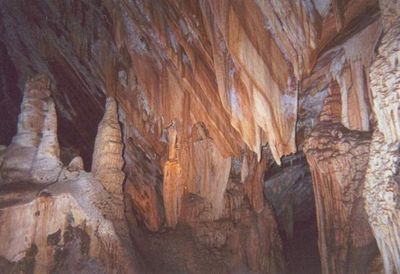
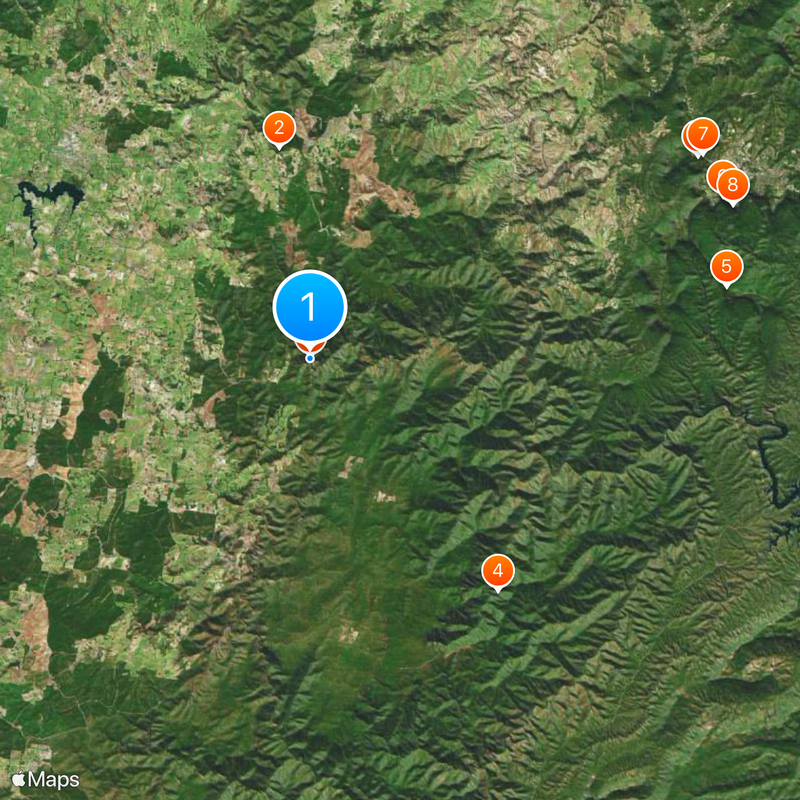
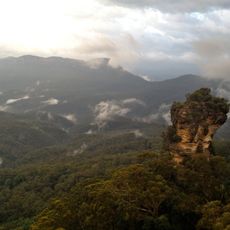
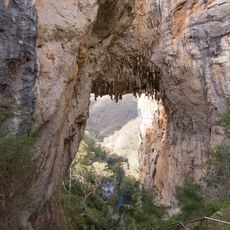
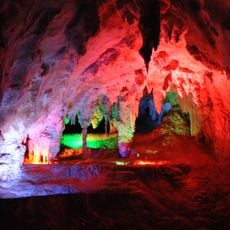
Jenolan Caves is a limestone cave system in the Central Tablelands of New South Wales, about 175 km west of Sydney, with more than 40 km of multi-level passages and over 300 entrances. The network follows a subterranean section of the Jenolan River. Inside, calcite formations range from pure white to banded tan and amber, with long curtain-like stalactites hanging above dark, uneven floors.
European settler James Whalan came across the caves in 1838 while pursuing a thief, and the government placed the area under protection in 1866. This made the caves one of the first officially protected natural sites on the Australian continent.
The name Jenolan comes from the Tharawal language and points to the deep connection of the Gundungurra and Wiradjuri peoples to this site. In the oral traditions of these groups, the caves appear as part of the creation story that remains alive today.
Due to road repairs and facility upgrades, the entire Jenolan Karst Conservation Reserve remains closed to visitors until 2026. Information about reopening and conditions afterward will be announced by the responsible authorities in good time.
The 340-million-year age was only established in 2006, when a variant of the potassium-argon method used in oil prospecting was applied; until 1999 the caves were thought to be a few thousand years old, then about 100 million. The Nettle Cave's "crayfish tail" stalagmites are fossilised stromatolites, estimated at least 20,000 years old, formed where cyanobacteria interacted with the growing crystal.
The community of curious travelers
AroundUs brings together thousands of curated places, local tips, and hidden gems, enriched daily by 93,482 contributors worldwide.